Yet the international spreading of mime school culture probably could not have happened without the enormously popular, commercial performances of Marcel Marceau (1923-2007), the most famous of all Decroux’s students. Marceau’s performances, many of which occurred on television, made the world aware of mime as a distinct genre of performance that justified motives for studying mime. Many of those who came to Paris to study mime in the 1960s and 1970s were residents of other countries; Leabhart says that most students in Decroux’s classes were foreigners (2003: 432). Marceau was born in Strasbourg. His parents were Jewish; he joined the Resistance in 1944, after the Nazis had murdered his father in Auschwitz. Though he spoke several languages, he developed an intense attachment to pantomimic performance while working for the Resistance, where he mimed the role of a scout leader while smuggling Jewish children to safety in Spain. He always regarded the silent films of Charlie Chaplin as the greatest influence in his life. In 1945, he enrolled in Dullin’s dramatic arts school, where he studied under Decroux. The following year, he appeared as Arlequin in Barrault’s production of Baptiste. This experience inspired him to produce his own “mimodrama” the same year, Praxitele et le poisson d’or, in which he introduced a prototype of the Bip character that became his lifelong performance persona. Marceau then appeared in 1947, at the tiny Théâtre de Poche, in a performance of several Bip sketches. The performance prompted Decroux to expel Marceau from the school, for Decroux felt that Marceau’s desire to entertain corrupted the goal of corporeal mime. However, Marceau’s goal was to produce more mimodramas in which Bip only occasionally appeared merely as one of several ensemble characters played by other actors. After presenting Bip in a rather somber mimodrama, Mort avant l’aube (1948), he formed (1949) a company to produce more mimodramas: Le Manteau (1951), an adaptation of the 1842 overcoat story by Gogol; Pierrot de Montmartre (1952), “inspired by the black Pierrot of Alphonse Willett”; Les Trois Perruques (1953), another comedy set in the 1840s; Loup de Tsu Ku Mi (1956), an archaic, Kabuki-like drama in an abstract Japanese setting; Paris qui rit, Paris qui pleure (1958), in which Marceau played a Parisian street newspaper vendor in what appear to be bygone days; Don Juan (1964), an adaptation of the 1630 play by Tirso de Molina (1579-1648). In all these works and others, Marceau collaborated with the actor Pierre Verry (1913-2009), also a former student of Decroux; and Etienne Bertrand Weil (1919-2001), who had photographed some of Decroux’s demonstrations, photographed Marceau’s productions, and later became notable for using multiple and time-lapse exposures to capture the movement of stage performers. While the narrative organization of action in Marceau’s mimodramas remains incomplete (he never published any scenarios), the photos of them show an investment in simple scenery and fairly complex period costumes, with the stage containing up to ten characters (Les Trois Perruques) [Figure 97]. Joseph Kosma was one of the composers who wrote music for the productions. All the productions, even Paris qui rit, Paris qui pleure, evoke a nineteenth century atmosphere. He also made a short film, Au Jardin (1954), shot in a studio with a rather elaborate set and accompanied by impressionistic orchestral music, in which he appeared as nine characters, only one of which vaguely resembled Bip, who visit or work in a city park. But after the Don Juan production, he stopped producing mimodramas, although when he opened his school in 1978, he called it the Ecole Internationale de Mimodrame de Paris Marcel Marceau. He said the reason he stopped producing mimodramas was because, despite his international success as a solo mime, he could not secure government subsidies for his company (Fifield 1968: 156). In 1955-1956, he toured Canada and the United States, performing his solo act featuring Bip. Audiences in cities across America responded euphorically, adoringly, and this incredible triumph propelled him to worldwide acclamation. From then on, he toured prodigiously throughout the world almost until he died. He performed everywhere on television and people everywhere who otherwise knew nothing about mime or pantomime knew of Marcel Marceau. Over the decades, his solo programs consisted of a series of “sketches,” each usually about three to five minutes long, in which Bip mimed his relationship to invisible objects against an empty background, as if he inhabited a space without any context. Bip changed only slightly from when Marceau invented him in 1946: in addition to the white face and Pierrotesque makeup, he wore white sailor pants, a white or dark half-jacket, a striped T-shirt, and often, though not always, a shabby opera hat with a large red carnation. The sketches presented Bip in a variety of activities: catching a butterfly, with his fluttering left hand simulating the insect, a lion tamer frustrated by the failure of his lion to leap through a hoop, a waiter serving a dish to a dissatisfied customer, Bip trying on different masks that distort his face, Bip dancing a comic tango, Bip playing a matador. Bip was not always in a comic mood and occasionally slipped into moments of pathos, as in a sketch in which he mimed the stages of life from birth, to childhood, to youth, to maturity, to old age, and to death; “The Cage” showed Bip attempting to break through invisible walls that surround him and finally sinking into apparently fatal resignation. Nearly all of the sketches dated from the 1950s, and even sketches produced after then remained faithful to what Bip was in the early 1950s. Bip’s immense popularity seemed to derive from his power to signify the unchanging, eternal solitude of “humanity” without speech, the charming and even absurd “innocence” of humanity when speech did not corrupt it. Yet Marceau was well aware that Bip entirely controlled his pantomimic imagination and prevented him from achieving much success outside of Bip, such as the mimodramas: “But I am a prisoner of my art. People do not want to see me as a character other than Bip” (Andriotakis 1979: Paragraph 7).
Figure 152: Scenes from Marcel Marceau’s production of “Le manteau” (“The Overcoat“), Paris, 1951. Photos: Etienne Bertrand Weil; Gallica, Bibliothèque nationale de France.
No one in the mime culture ever achieved the popularity of Marcel Marceau; it was as if the world needed no more popular or even equally popular mime artist than Marceau or needed any larger idea of mime or pantomime than that represented by Bip/Marceau. Bip projected a harmless, charming, friendly, congenially “segmented” image of solitary human innocence unencumbered by words or contaminated by any despoiling context. He was amusing, without being particularly funny, for to be funny, Bip would have to traffic in nasty caricatures, display some satiric bitterness, disclose people or situations worth ridiculing, reveal a disillusioned attitude toward life. The postwar theater and literary worlds assumed that audiences had no interest in seeing pantomime explore the sometimes demonic, sometimes grandiose, but always adventurous paths opened up earlier by the Austro-German pantomime culture, the silent film, or even the Cercle Funambulesque. Postwar ballet and modern dance could move into shadowy, disillusioning, or at least not “innocent” zones of human experience without losing their audiences, as seen, for example, in the work of Martha Graham, Jerome Robbins, Peter Darrell, or Dore Hoyer. It seems incredible that theater people everywhere could not imagine pantomime as anything more than the French idea of it as a very small scale, nostalgic, repetitive remodeling of Pierrot and Chaplin’s “Tramp” figure; otherwise, it was an activity left for schools to do as “preparation” for something more ambitious than pantomime itself. Marceau conveniently embodied the limits or summit of pantomime, which implicitly were the limits of the unregulated, speechless body in performance. The English novelist Mave Fellowes (b. 1980), the author of a novel, Chaplin & Company (2013), about a young woman who desires to become a mime like Marcel Marceau, has insightfully remarked that “after Marceau, there was nowhere left to go. I think he took his particular style—he was the best at it there could ever be. There was no room for further evolution, and no one has yet come up with another version of mime which is as appealing” (Hartnett 2014: Paragraphs 6-7).
On June 27, 1945, with the success of Les enfants du paradis well affirmed, Barrault and Decroux, with two students, Éliane Guyon (1918-1967) and Jean Dorcy (1898-1978), presented a program of “corporeal mime” performances at the Maison de la Chimie in Paris, which was and remains a large lecture hall primarily used for scientific conferences. Leabhart (1989: 48) contends that more than a thousand persons attended the presentation, although the Maison de la Chimie website designates the hall as containing only 851 seats. The guest of honor was the English theater theorist and apostle of an abstract-symbolic theater, Edward Gordon Craig (1872-1966), who had lived in France since 1931, having since then retired from any active involvement with theater. A purpose in inviting Craig was “to show up the doctrinal links from Craig to Copeau, from Copeau to Decroux, from Decroux to Barrault” (Leabhart 1989: 49). Craig had become famous in the early years of the century for promoting the idea of the stage director as the defining figure of theatrical performance, determining all production elements to create an emotionally powerful visual experience in which actors became scenic details, “marionettes,” within the director’s omniscient vision. It may seem odd that the actor-centered Copeau-Dullin school of theater would link itself to Craig, but Decroux’s ambition was to transfer the absolute authority over the actor from the director in the theater to the teacher in the studio classroom. The 1945 program contained eight pieces followed by Decroux’s lecture on the theory of corporeal mime. Several of these pieces, which Decroux devised in the 1930s, he and his students performed in sometimes slightly revised versions for decades to follow. Barrault performed his horse wrangling scene from Autour d’une mere; Decroux, Barrault, and Guyon performed a choral piece, “a panoramic evocation of famine, mass movements of population, revolution and finally peace”; the final performance piece was the Combat antique, performed by Decroux and Barrault, which the two had developed for a production of Shakespeare’s Anthony and Cleopatra at the Comédie-Française earlier the same year, although Barrault and Decroux had worked on it since 1933 (Leabhart 1989: 50-51; Kurkinen 2000: 110). For Decroux, this single performance was more a demonstration of his mime technique, a “work in progress,” than anything one might call a theatrical production. Yet it is doubtful that, if Leabhart is correct about the attendance, Decroux ever again had such a large audience for anything he performed as corporeal mime. The event generated much publicity for Decroux’s pedagogic approach to mime, but this approach soon separated him from his greatest students. In 1946, Barrault produced, under the title Baptiste, a stage version of Cot d’Ordan’s Marchand d’habits pantomime from Les enfants du paradis, with music by Joseph Kosma (1905-1969); with the Compagnie Renaud-Barrault, he revived the production in 1948, again at the Marigny Theatre. The production involved elaborate costumes and stage décor that emulated those in the film [Figure 150]. Decroux regarded Barrault’s use of pantomime as retrograde and trivial, while Barrault believed Decroux had become single-mindedly obsessesed with achieving an absolute purity of bodily signification that was antithetical to the pleasures of theatricality (cf. Dobbels 1980: 54). But after Baptiste, Barrault abandoned pantomime altogether and devoted himself to building a grand career as an actor and director in spoken drama and films. In 1948, Decroux forbade another of his famous students, Marcel Marceau, from entering his school, because Marceau had cultivated an interest in pantomimic characterizations, particularly his Pierrot-like “Bip” character, which he had introduced with great success to Paris at the Théâtre de Poche in 1947 (Benhaim 2003: 266). Meanwhile, Éliane Guyon “perfected the creations of Decroux, L’usine, L’esprit malin, La statue,” but in 1949, while touring with Decroux in Switzerland, she met her future husband, the painter and scene designer Jean Monod (1922-1986), and quit Decroux’s ensemble. She and Monod went to Rome with an actor, Marcel Imhoff (1922-1979), to do movement research at the Alessandro Fersen Theater Academy. There, she, Monod, and Imhoff began constructing cabaret performances that involved an interaction between pantomime and puppetry: Guyon was especially gifted at creating characters with her bare hands. In 1952, she returned to Paris and worked for a month with Decroux and his son Maximilien (1930-2012) demonstrating some of Decroux’s pieces. But her focus was on her own production at a small theater of her “mimodrama,” Le Tribunal, which involved pantomime and marionettes constructed by her husband. Decroux disapproved of her use of masks, costumes, dramatic narrative, and characterization. Guyon therefore “distanced” herself from Decroux and went on to stage further marionette dramas, and in 1954, in Lausanne, she appeared as the Soldier in her production of Stravinsky’s Histoire du Soldat (1918), which used giant puppets (Chercher 2005: 774-775; Poletti 2011: 32-33). Her work deserves greater scrutiny, if it can be excavated, because of its strange combining of pantomime, puppets, and marionettes, but also because it exposes a unique tension between a female student and Decroux, whose hallowed legacy rests heavily upon an overwhelmingly male sector of his student corps.
Figure 150: “Marchand d’habits” scene from Jean-Louis Barrault’s production of Baptiste, Paris, 1946. Photo; Gallica, Bibliothèque nationale de France.
Decroux established a small school in Paris in 1947 that enabled him to receive invitations to give demonstrations and workshops, which sometimes lasted months, on corporeal mime in Amsterdam (1949), Lausanne (1949), Israel (1950), the Sorbonne (1951), the Netherlands (1952), England (1952), Milan (1953), Stockholm (1954), Zurich (1954), Oslo (1955), and Stockholm again in 1956. After Marceau discussed mime with American interviewers, the Actors Studio in New York City in 1957 invited Decroux to teach for eight weeks, apparently as part of an effort to prepare actors to handle assignments associated with the “theater of the absurd.” He gave further demonstrations at the Dramatic Workshop and at Baylor University in Texas. In 1959, he returned to New York, opened a school, lectured at ten universities, and taught a course at New York University. Much of the film documentation of Decroux’s demonstrations and “evocations” took place in the United States. He did not return to Paris until 1962, when he opened another small school, but many of his students opened their own small schools in Sweden, Italy, Israel, Canada, and the United States. An International Festival of Mime in Berlin sought to honor him as a “great pioneer of modern mime,” but he refused the invitation (Benhaim 2003: 266-267). In 1963, he published his only book, Paroles sur le mime, which was mostly a manifesto for a radical redefinition of theater. By the mid-1960s, Decroux had achieved an international fame that circulated primarily through mime schools established by his students and through educational institutions seeking to incorporate corporal mime into their curricula, with the mime school culture producing work for “public” audiences mostly at international mime festivals attended mostly by mime students and educators.
Decroux developed a severe, ascetic pedagogy that complemented his intense aversion to any public performances of corporeal mime. He separated mime from pantomime, for he regarded mime, as he defined it, as a completely modern phenomenon, while pantomime was an archaic, “ridiculous, and indecent” form of theatrical performance that attempted to tell stories through gestures and was therefore a corrupt form of writing (“thought corrupts movement”) rather than a new vision of the body’s expressive power (Decroux 2003: 61, 202). Mime, however, has no existence of its own: “for mimes to exist, there have to be schools of mime” (92). To be a mime or to perform mime requires the appropriate education in a mime school to achieve the goal of mime, which is to perform “research” on bodily expression rather than to perform for people who have no experience of the research mission. Decroux demands total, exclusive focus on the body as the goal of study. The student learns what the body can “evoke” absolutely and free of attachments to things or even other bodies. A profound distrust and distaste for theater pervades the learning environment. Like Copeau, Decroux practiced a sequestering of the student from the world outside of the studio classroom. The bare studio is the ideal space for mime performance or, preferably, “demonstration.” This space contains no scenery, no costumes, no masks, and no props; the lighting is always flat and even; music is unnecessary and obtrusive; texts have no place here. The research goal of the actor is to “evoke” a relation to the world, to things, to others entirely through the body. If a mime wants to show that he climbs a ladder to retrieve a tool with which he builds a chair on which he will sit, he should “demonstrate” these actions entirely with his body, although for Decroux, the “purest” aim of mime is simply to evoke the act or concept of building without representing it. “Evocations” in Decroux’s pedagogy were free of drama, avoided showing conflict, and did not tell stories or represent characters. In performing demonstrations, students should wear loincloths or neutral body stockings, although in early demonstrations, Decroux wrapped a thin veil around his head. In the film documentations of his own demonstrations done around 1960-1961 in Texas and New York, Decroux appears alone in a loincloth or white body suit against a dark or white background. His demonstrations evoke numerous abstract actions through stylized movements that emphasize a balancing of weighted and counter-weighted pressures (pushing and pulling movements) within the body, usually within about twenty seconds: “The Weight Lifter,” “The Rope Puller,” “The Boxer,” “The Bell Ringer,” “The Offering,” “Melancholy,” “The Effect Becomes the Cause,” “Transporting a Glass of Water,” “Placing Plates between the Guests,” “Inclining with Respect and Shaking Hands.” In one of the longest (one and a half minutes) demonstrations, “Greeting the Collectivity,” Decroux makes expansive gestures with his arms while shifting his weight from right foot to left and pivoting, as if surrounded by persons he must acknowledge in an elaborately formal manner. Decroux hardly ever moves more than three or four steps away from the initial standing pose of equilibrium. Indeed, the goal of the demonstrations is to display a ceremonial formality in the performance of basic actions like greetings and lifting or setting down imaginary objects. Kathryn Wylie and Maarjana Kurkinen suggest an influence on Decroux of the elaborate stylization of bodily movement in Japanese Noh theater dating from Copeau’s 1924 experiment in Noh aesthetics, Kantan, which Decroux himself acknowledged as significant (Wylie 1993: 111-112; Kurkinen 2000: 111-113; De Marinis, 2003, 272-274; Decroux 1963: 18). But the demonstrations also remind one of the elaborate ceremonial gesturing introduced at the court of Louis XIV and his successors, a ritual dignification of humble bodily effort, and Sklar (1985: 73) notes a student who observed that studio sessions with Decroux resembled a ritual designed exclusively for initiates.
While Decroux focused largely on the education of the solitary body, he did construct some evocations involving two or more bodies. These date mostly from the 1930s and 1940s, but students afterward performed them for decades. With these evocations, he supplied musical accompaniments. In La Statue, about three and a half minutes long, Decroux appears as a sculptor in black while the female statue wears a white leotard. The piece develops a Pygmalion theme: the sculptor rises inspired from a slumber with his lumpen material (the female partner), makes commanding gestures to which the female figure responds with dancelike movements, then applies hammering and chiseling gestures that bring the statue to life. Impressed with his creation, he picks up the statue and carries it exultantly, until it embraces him. He slips out of the embrace and sinks exhausted to the floor as the statue stands smiling. L’Usine, about five minutes long, used three performers of indeterminate sex wearing hooded black body suits contoured with a white stripe. Here the performers wore silver masks and performed movements evoking the operations of machines: stamping, pendulum, hacking, sawing, flipping movements synchronized with mechanical sound effects devised by Decroux. The piece had no dramatic structure, no concept of struggle between or within machines or between the body and the machine; rather, it straightforwardly demonstrated the ability of human bodies to emulate the geometric movement patterns of automated factory machines, which was hardly innovative even in the 1930s. Le Matin, with harp accompaniment, and Le Duo Amoureux, accompanied by the slow movement of Rachmaninoff’s Second Piano Concerto (1901), were more lyrical demonstrations, four and six minutes long respectively, in each of which a male-female couple in white body stockings slowly exchanged or shared ardent, picturesque poses of devotion, as if they were statues moving in a kind slow motion trance, always remaining within a couple of feet of the places in which the pieces began. One of his most interesting demonstrations, Les Arbres, dating from 1946, lasts about nine minutes and features his largest documented ensemble—four persons wearing white body stockings and veils covering their heads, the face never having any importance in his aesthetic. The piece does not imitate the movement of trees; rather, it evokes, so to speak, the lives of trees and of groves through continually shifting configurations of flowering, blooming, branching, bending, reaching, fluttering, swaying, arching, canopying, bobbing, and lilting motions, sometimes in unison, sometimes individually, mostly with the arms and hands [Figure 151]. The performers do not move more than two steps beyond their intial and concluding “grove” position. In one film document, the first movement of Beethoven’s “Moonlight” Sonata (1801) accompanies the action, but in another film document, Decroux uses unidentified postromantic orchestral music, which suggests he did not conceive the piece in relation to any specific musical source. In Combat antique, one of the earliest demonstrations, from about 1933, about four minutes long, two men, bare-chested, enact a physical combat brandishing imaginary swords and spears and making lunging, feigning, darting, stabbing, shielding, dodging, tangling, leaping, and taunting motions until one of them, almost inadvertently, stabs the other, who falls. The victor prods the body to make sure it is dead, then walks away. Though somewhat less abstract than other Decroux demonstrations, the Combat antique has remained a popular exercise in mime schools dedicated to Decroux’s philosophy, in part because it emphasizes his enthusiasm for “masculine,” sport-inspired movement themes, which has proved effective in making corporeal mime more attractive to male students than dance. But as Decroux’s ideas about mime became more abstract, he responded to the question of what differentiated mime not only from pantomime but from modern dance in a quite long-winded, abstruse manner, deciding eventually that “the need to dance is not the need to narrate” and that “dance is an evasion, mime is an invasion” (Decroux 2003: 110-116, 194). In practice, dance movement consumes much more space than mime movement as he taught it. He believed that the torso anchored the body, whereas in dance, the torso functioned like a motor to animate the arms and legs into movements that pretended it had no weight. Sculpture provided a huge inspiration for Decroux, and he regarded mime as a kind of “mobile statuary” (Lecoq 2006: 44). “I think often of Rodin, never of Deburau,” he claimed, and according to Petra Kolařova, who has written an enormous dissertation on Decroux’s relation to Rodin, “the work of Rodin appeared to [Decroux] as the antithesis of classical dance” (Kolařova 2015: 127, 132-133). Yet his evocations never disclosed a serious “need to narrate.” They show instead a need to sculpt the body with movement.
While Decroux described his work with students in his studios as “research,” he had no interest in sharing the results of his research with the public, through performance or publication. His little book Paroles sur le mime consists entirely of essays written in the 1930s and 1940s. The film documentation exists because universities wanted it. He relied on his students to “publish” his work through interviews with him and their own memoirs of working with him. A cult atmosphere emerged that, as Kurkinen has remarked, encouraged “the zealousness of the students of Decroux” to produce a discourse on him in which “one is let to understand that writing or doing research on Decroux’s art without having first-hand experience on his mime disqualifies the scholar altogether” (2000: 14). Yet he deserves credit for initating the international expansion of mime culture from the 1950s to the 1980s, even if much of this global expansion was due to the performance success of a few students who had departed from the master’s teachings. The mime culture spread primarily through schools established by students of Decroux and through universities that sought to incorporate corporeal mime into their performing arts curricula: schools provided a more reliable source of income than the production of performances for which audiences were willing to pay enough to see. Mime education, with its minimalist aesthetic of the bare studio, was less expensive than traditional theater arts, with their costly scenic technologies, costuming requirements, complex collaborations, theater facilities, royalty payments, marketing obligations, and intricacies of casting. Perhaps, too, many students found mime less intimidating than conventional theater or dance studies, which often encourage demoralizing competitiveness, although numerous actors and dancers have studied mime as a way of enhancing their competitiveness. Decroux’s socialism was attractive. Mime, he contended, was something one could only learn and learn only through the application of the appropriate technique; it was not a “talent” given by genetic predisposition or biological determinism. The learning of the technique came from the teacher and the pedagogical regime, not from an intuition or “instinct” or even from mere exposure to art or performance. Ostensibly, an egalitarian spirit pervaded the studio, for the purpose of mime was not to produce art consumed by public audiences, but to create a way of living with the uniqueness of one’s body, regardless of whatever “talent” the body may possess. Most students studied mime to become teachers of mime and to reproduce the studio classroom environment that defined the life of the mime. One learned technique above all through exercises, and exercises often resulted from a process of improvisation that resisted any “complete” idea of an action. The chief product of mime study was therefore not performance nor was it the analysis of performance, but exercises, the discovery, development, and compiling of exercises, the deployment of exercises that showed a student how to “use” a part of the body as a sign. But using a body part as a sign is hardly the same thing as using the body to signify, to narrate, or to build a representation of the world. It is somewhat like learning a vocabulary without learning to compose an essay or a story. Decroux himself, however, never published any compilation of studio exercises. In interviews, Decroux discusses mime in broad, philosophical terms, sometimes referring to great authors, like Hugo, or great artists, like Rodin, and often in an aphoristic style: “The mime must not detest technique […] The technique is the proof of personality. It is an obligation, a language, and it tells us: ‘You have to do it like this and not like that.’ […] Monsieur Paul Bellugue [1892-1955] was professor at the Academy of Fine Arts […] One day he said to me: ‘Technique is the obedience of the hand to the spirit.’ I was struck by the clarity of this reflection […]” (Decroux 2003: 119). But he never described his technique or particular relations between body parts, “counter-weights,” rhythms, and signs. He introduced theoretical terms like “body lines,” “segmentation,” and “immobility,” without showing their applicability to particular bodies in relation to particular “evocations.” Leabhart mentions an exercise in which “students manifested the five qualities that [Decroux] associated most with corporeal mime: pause, weight, resistance, hesitation, and surprise” (Leabhart 2003: 437). But he doesn’t describe this exercise or any others, which apparently he derived from his old demonstrations and evocations. Instead, his students compile his many aphoristic statements: “The feet are the proletariat of the body” (Decroux 2003: 202); “Immobility is indissociable from the law that says ‘one thing at a time’” (347); “The mime is no longer a mime if he uses music” (136). One of his most prominent students, Thomas Leabhart (b. 1944), a professor at Pomona College, has described the classroom atmosphere when he studied under Decroux from 1968 to 1972. But the discussion of the classroom atmosphere does not include examination of the pedagogic system or technique applied by Decroux; it focuses instead on identifying the teacher’s personal qualities, his way of interacting with students, his style of communicating: Because he “insisted first on technique and that improvisation and inspiration came only afterwards, he tended to show us how what he humorously called dry and boring technique worked in an improvisation. He did this by first giving us a philosophical context for work (the conference), and then allowed us to realize how this technique could enslave the imagination and work ‘from within to outside’”; “Decroux responded differently to our efforts to transcend ourselves: mockeries, warm praise, tender compassion […] Often a long cold silence followed our efforts [… then] commentaries such as: ‘You must sing with your muscles’ or ‘You have not found the rhythm of the thought’ […]” (Leabhart 2003: 437). In other words, exercises were “proof of a personality” insofar as they revealed the mysterious or “elusive” charisma of a teacher in sculpting the minds and bodies of students (cf. Soum 2003: 405ff.). Mime physicalized the mysterious, unwritten relationship between teacher and student, which was the thing the student could best reproduce rather than any relationship to something outside the studio.
Figure 96: Etienne Decroux’s Les arbres (1947), as filmed in his New York studio in 1960. Photo: screen capture from projectomimicas YouTube channel, posted on December 19, 2012.
Even though “mime cannot be learned from books,” according to Samuel Avital, because “it is passed down from teacher to student,” nevertheless, the period from the 1960s to the 1980s saw a prodigious publication of books on mime (Avital 1977: 101). Nearly all of these books explain how to do mime and how to be a mime; they emphasize mime as a technique learned by performing exercises or “routines” recommended or described by the author. They avoid analyzing or evaluating mime performances or the history of pantomime. They also tend to focus on mime as a solitary activity, somewhat like a hobby that opens the path to a more creative life. One of the most imaginative of these publications is Mime Work Book (1977), by Samuel Avital (b. 1932), a Moroccan-born Jew, who migrated to Israel before moving in 1958 to France to study with Decroux, Barrault, Marcel Marceau, and Maximilien Decroux, who had established his own school and company in Paris in 1955. In 1964, Avital moved to the United States, where in 1971 he founded his mime school, Le Centre du Silence, in Boulder, Colorado. Mime Work Book is a montage of texts and photographs including autobiographical statements, interviews with Avital, interviews with other mimes, brief reflections on the history of mime as it derives from the commedia tradition, Pierrot/Deburau, Decroux, Barrault, and Marceau, quotations from mime students, polemical essays on mime (“Not every white face in a town square gesticulating hopelessly is a mime”), and remarks on the mystical relation of mime to Kabbalah (“In our Jewish culture in Morocco we have days that we don’t speak. We fast from speech.”) (Avital 1977: 20, 137). But much of the book consists of advice on how to do mime, including numerous exercises and philosophical aphorisms in the manner of Decroux grouped under thirteen headings, such as “Staccato and Slow Motion,” “Snail Movement,” “Bases and Fixations,” “Trips,” “Gravity”: “Work the traject in staccato rhythm. Break down the everyday movement into pieces of movement like a camera lens opening and closing. Walking in staccato send a telegram to one part of the body and move it. Be careful the movement is not tense. Breathe the movement” (33). Some advice relates to habits of living as a mime: “Fast from words once a week, choose a day and keep it steady” (86). “The Singing Plastique Cycle” consists of eleven exercises that the mime should perform daily; No. 7: “Pelvis: first lift each hip straight up, alternating; then Belly Dancing, i.e., swirling hips in a circle, 26 times” a day (87). Avital also provides a “Language of the Thinking Body” that lists words under four categories of “communication” between teacher and student, such as “Exercises: spiral, withdrawal, interwinding […] caress the space, steal the space […]” (90) and “Expressions” that the mime should keep in mind as motives for making a sign with the body: “the body as a brush,” “shower on fire,” “don’t be too nice with yourself,” “embrace the opposites,” “heels kissing,” “rewind the film,” “be your own mirror,” “vigorously, not violently” (92-94). Then, “Samuel Says” offers several pages of teacherly aphorisms: “The slower the breathing, the more relaxed,” “A teacher is one who takes what is given and gives what cannot be taken,” “Orgasm is freezing,” “When you think you can do it, your progress stops,” (110-111, 116-117). Avital is more open to theatricality and public performance than Decroux, and his book includes numerous photographs of himself, in circus-like costumes, and his students, in white face, performing in public spaces. But the book avoids analysis of mime performance itself or the aesthetics of mime performance. The focus is always on how to improve one’s life through the practice of “mime work.” In all these ways, the book is typical of the many books on mime that appeared from the 1960s onward and established mime as an individualistic enterprise in self-development, an actor-centered life that only incidentally intersected with theatrical performance.
The most impactful pantomime performance in the 1940s was Jean-Louis Barrault’s performance as Baptiste Duburau in the French film Les enfants du paradis (1944-1945), directed by Marcel Carné (1906-1996). Regarded by many film critics as one of the greatest films ever made, Les enfants du paradis (Children of Paradise) makes pantomime as the French conceived it a central, motivating force in the narrative. The idea of making a film about the mime Deburau came from Barrault when he met with Carné and his longtime collaborator, the poet and screenwriter Jacques Prévert (1900-1977) while on holiday in St. Tropez in 1942 (Forbes 1997: 11; Barrault 1972: 167). The three-hour, two-part film takes place in Paris over a period of several years, roughly 1828 to 1836, with nearly all of the action occurring in the theater district or “Boulevard of Crime.” The story depicts how performances at the Funambules Theater draw four men to an enigmatic, elusive woman, Garance, who works as an idealized “living statue” in pantomimic performances. Prévert based the characters of the four men on historical personages: the actor Frederick Lemaitre (1800-1876), the criminal and would-be dramatist Pierre François Lacenaire (1803-1836), the Duke of Morny (1811-1865), presented in the film as Comte Édouard de Montray, and the pantomime Jean-Gaspard Deburau (1796-1846), presented in the film as Baptiste Deburau. Played by Arletty (1898-1992), Garance conducts amorous relations with all four men, but the only one she loves is Deburau. She becomes the mistress of the Comte de Montray and leaves Paris for several years to live in London and Scotland. When she returns to Paris, she nightly and secretly attends pantomimic performances by Deburau. Discovering her presence at the theater, Lemaitre, Lacenaire, and de Montray compete with each other to claim her attention, but when Lemaitre learns that she has only loved Deburau, he contrives to have the mime rendezvous with her at the theater in which Lemaitre is performing the role of Othello. The social/class animosity between de Montray and Lacenaire reaches its peak when, during an intermission, Lacenaire, weary of de Montray’s contempt for him, exposes to the public the romantic tryst between Garance and Baptiste on a terrace of the theater. De Montray in turn humiliates Lacenaire by having him thrown out of the theater. A few days later, Lacenaire completes his revenge by murdering de Montray in a Turkish bath and awaiting the police to arrest him for the crime. Garance and Baptiste share a night together in the hotel in which years before they first communicated their romantic feelings for each other. But in the morning Baptiste’s wife Nathalie, played by Maria Casares (1922-1996), appears and tries to persuade him to return to her. She is as much in love with him as he is in Garance. As she embraces him, Garance flees the room. Baptiste follows her into the street, but loses her in the jubilant crowd of carnival celebrants. She disappears forever from his life.
The film projects a powerful romantic grandeur, but a tragic logic drives the narrative: for the main characters, love never achieves fulfillment, reciprocation, or even happiness that is more than of the utmost brevity. The only love that seems enduring and mutual is that exchanged between the actors and their audience (“the children of paradise”). As Lemaitre explains to Lacenaire (Marcel Herrand [1897-1953]), when the criminal visits the actor in his apartment with the idea of extorting money from the man he thinks has robbed him of Garance: “To hear and feel your heart beat at the same time as the audience” is what makes acting “the finest” profession. Theater here mobilizes “passions” in the characters and brings them into contact with each other. The performances on the stage do not “mirror” the life of the film characters. Rather, they represent a “poetic” life that the characters seek to intrude upon and assert themselves as “authors” of it, a point made most humorously by Lemaitre when in the performance of a bad melodrama, he ceases to speak the lines written for his character and begins improvising a critique of the play, leaving the stage altogether and assuming the position of spectator in a loge, from which he addresses the audience and the actors with his extravagant criticisms. Pantomime is the most “poetic” form of theater insofar as it creates “more love”—that is, it awakens the love of Garance and Baptiste for each other and Nathalie’s love for Baptiste, whereas the other men, who disdain pantomime, only desire Garance, who loves none of them. Lemaitre, played by Pierre Brasseur (1905-1972), gets his start in the theater by performing small roles in Baptiste’s pantomimes, but he feels profoundly stifled by not being able to speak with the bombast and grandiosity that come more naturally to him than from the authors of plays: “I’m dying of silence!” Prévert, however, was reluctant to write the screenplay because of his aversion to pantomime, and he agreed only after Barrault said that he and Decroux, who played Baptiste’s father in the film, would supervise all the pantomime scenes, which they did with the help of Georges Wague (Turk 1989: 220). Yet Baptiste is more than the role he plays on stage, and indeed, his love for Garance is an expression of a doomed desire to escape that role.
The film presents three scenes in which Baptiste performs pantomime. In all three scenes, he enacts the figure of a “white” Pierrot. The first scene, however, which introduces the character of Baptiste, takes place in the street before the theater and presents a proto-Pierre. Anselme Deburau addresses the crowd and invites people to attend the theater. He introduces his son, Baptiste, sitting before the crowd, as “someone you will not see on stage,” for Baptiste is a “know-nothing, a dolt, a sleepwalker, an unbelievable nincompoop, a blockhead, a good-for-nothing, a famous father’s despair” whom the father clubs on the head. Baptiste sits forlornly, as if catatonic. Instead of the typical Pierrot white pajama costume with large buttons and a black skullcap, Baptiste wears a white waistcoat, a white vest, white baggy pants, a large, floppy white hat, and long blond hair, although he paints his face close to that of the typical Pierrot. While Anselme speaks to the audience, Baptiste sees Lacenaire steal a watch from a man watching the presentation. Anselme goes into the theater, leaving Baptiste alone on the street stage. When the man discovers that his watch is stolen, he accuses Garance, standing next to him, of having stolen it. The police arrive and seize Garance, but Baptiste intervenes and demonstrates through comical pantomime how Lacenaire stole the watch. The police release Garance, which inspires the audience to cheer exuberantly the skill of the pantomimist. The pantomime is unusual in that in reconstructing the crime Baptiste impersonates, with caricatured gestures, the man with the watch, the thief, and Garance. Garance thanks Baptiste by giving him a flower and blowing him a kiss as she wanders away, which inspires the smiling Baptiste to see in her the great love of his life. But this scene also establishes Baptiste as a superior pantomime artist who replaces his abusive father on the stage of the Funambules. In contrast to the other ambitious male characters in the film, who love to talk in a poetic, philosophical, aphoristic, literary manner, Baptiste embodies ambition as a “silent” phenomenon, as a thing unspoken, undeclared but merely manifested through a gesture, a movement, a glance, a posture that others cannot perform so well or so “poetically.”
The second pantomime occurs somewhat later, after Baptiste has become a star. This time he wears the typical white Pierrot costume with huge sleeves, huge buttons, billowing pants, and the black skullcap. The rather modernistic painted scenery depicts a city street with the statue of a goddess (Garance). Pierrot becomes enamored of the goddess, although a police officer (Anselme) enters and discourages his unwholesome attraction to the statue [See Film Series A below]. Pierrot retrieves a bouquet of roses that he offers in vain to the immobile goddess. Depressed, he falls asleep beside the statue. Harlequin (Lemaitre) appears, picks up the roses, and offers them to the goddess, who comes alive, floats down to him, and accepts the roses as he guides her away. When the policeman awakens him, Pierrot becomes distraught to see that the goddess has disappeared, and he dives off the stage. The curtain falls only to rise almost immediately. The scenery now depicts a drab countryside. Pierrot sees the beautiful woman with Harlequin in a boat gliding past him on the river. He longs for her, but she vanishes beyond his impotent, tormented reach. He decides to kill himself with a rope, but as he prepares to hang himself from a tree, a little girl appears and asks to use his rope to skip rope. When he retrieves the rope from the girl, a woman, played by Nathalie, appears and asks to use the rope to hang laundry with Pierrot holding one end of the rope. While holding the rope, Baptiste sees Garance chatting intimately with the harlequin Lemaitre in the wings, which causes him to freeze with jealousy and Nathalie to cry out in alarm: “Baptiste!” a violation of the law that forbids pantomime theaters from uttering anything on stage. Backstage, Nathalie explains to her father, the manager, that Baptiste has changed, that he is “lost,” and that only she can see his “torment,” because she loves him. The pantomimic scene represents only a tiny fragment of pantomimic action that the Funambules would have presented in a show, yet the scene is not in itself particularly interesting. What is interesting is how the film shows characters outside the pantomimic scene intruding upon the lives of the characters in the pantomimic scene: from his box, the Count de Montray (Louis Salou [1902-1948]) sees Garance and becomes infatuated with her; Lemaitre and Garance in the wings disturb the performance and partnership of Baptiste and Nathalie. In costume backstage, Baptiste expresses gentle, quiet concern for Nathalie’s “distress,” while she confides that she has “faith” that someday he will love her. In costume backstage, Lemaitre and Garance discuss their dying relationship: neither is happy with the other, and in her sleep, Lemaitre observes, she calls out “Baptiste!” As he leaves her dressing room, de Montray enters, bringing with him an enormous wreath and proposing to her, using grandiosely flattering euphemistic language, that she become his mistress. While changing from her goddess costume into her street dress, she explains that her life is fine as it is, but she accepts his card, which proves useful when dealing with the police again, who suspect her of having conspired with Lacenaire to commit another crime. When the Count leaves, Baptiste enters, still in costume. He treats the wreath as a symbol of his own funeral, which is better than a wedding for a groom without a bride. The memory of his happiness when he danced with her in the tavern and escorted her to the hotel room he found for her never leaves him. He dances momentarily and sadly with himself, then draws a sword from a prop rack and hacks violently at the wreath, confessing his hatred of the Count, Lemaitre, and himself. Garance asks why he assumes she does not love him. But Nathalie enters; she declares that Garance does not love him, only she loves him, no one else can love him, and no one else can break the invincible truth that she and Baptiste belong to each other. The point here is that the pantomime performance extends beyond the stage to include a drama that no single character can see as completely as the action on the stage. This drama bestows a power on pantomime that is really not in the pantomime performance itself, which consists almost entirely of simple, childlike, exaggerated gestures whose “poetic” quality rests upon the assumption that no one would perform them except on a stage the characters explicitly say has “changed” them. As a result, the pantomime performance on stage appears much simpler and less sustainable than the dramatic and much more subtle performances that unfold before the camera off stage. The film propagates the idea of pantomime as a “poetic” or romantic art, but this idea depends on the cinematic representation of Baptiste, for example, carrying the Pierrot image into dramatic scenes off the stage in which he performs bodily movements of a far greater refinement and subtlety while also speaking.
The third pantomime occurs several years later, after Garance has returned from Scotland and watches nightly, from her private box, the pantomime performances at the Funambules. This pantomime is a heavily abbreviated version of the old Le Marchand d’habits scenario from 1842.The scenery here is handsomer, more costly, indicating a rise in the fortunes of the theater and of Baptiste. At night, a luxurious carriage, pulled by a mechanical horse, glides across the stage, with Pierrot stealing a ride on the rear bumper. An elegant, aristocratic woman, the Duchess, played by Nathalie, descends from the carriage and ascends the steps admitting entrance to an opulent mansion. Through a window, the spectator can see the silhouettes of couples dancing. Pierrot hops off the carriage as it pulls away and, in his white pajama costume and skullcap, jauntily struts toward the mansion entrance. But a pair of guards blocks him and then tosses him on his butt, causing a great roar of laughter from the “gods,” the “children of paradise,” the crowd in the cheap seats of the top balcony. The dejected Pierrot signifies his unhappiness at having the wrong costume to gain entrance to the ball. He dances momentarily with himself, emulating the dancing silhouetttes in the window. He then hears the call of an itinerant clothes merchant bearing a rack of secondhand garments. Leaping exuberantly, Pierrot prances around the merchant, who tosses him a pair of items. But when the merchant extends his hand for payment, Pierrot plunges his hand into a big pocket and comes up empty. The merchant tussles the clothes from Pierrot and moves away. Pierrot draws a sword from the merchant’s scabbard and stalks him with a chilling intensity, causing Garance in her box to remark to Lemaitre: “He is gentleness itself. How does he manage to look so cruel?” Pierrot plunges the sword into the merchant, elegantly watches him fall, leaps over the body, and gathers up the clothes he wanted. He stealthily tiptoes away with large steps as the curtain falls. But the film intercuts the pantomime performance with scenes of Garance talking with Lemaitre in her box, where the production manager has escorted the actor, who wears his arm in a sling as a result of his duel with the author he insulted on stage. The dialogue between these two updates the viewer on Garance’s life over the past few years, then drifts toward other themes: Baptiste’s “marvelous” artistry, her current non-happiness, Lemaitre’s jealousy over Garance’s persistent love for Baptiste, his willingness to inform Baptiste of Garance’s desire to see him during her brief stay in Paris, and his realization that his jealousy has now enabled him to play Othello. Backstage during the intermission, many things happen that effect the performance of the pantomime on stage. Lemaitre and Baptiste meet after many years and praise each other’s success as theater artists. They join Baptiste’s wife, Nathalie. The actor praises Nathalie for her beauty, though Nathalie says she is not beautiful but happy. Lemaitre also meets the couple’s young son. The insidious ragpicker Jericho (Pierre Renoir [1885-1952]) arrives, urging Baptiste to move away in disgust with Lemaitre. An informant, a spreader of malignant gossip, and dealer in contraband goods, Jericho complains to the stage manager about Baptiste “murdering” him every night in the pantomime and then complains that his sad fate is to inspire no one’s love. He informs Nathalie of Garance’s presence in Box 7, and she sends her little son to the box to inform Garance that his family is very happy, the implication being that Garance should stay away from Baptiste. As Baptiste in the wings prepares to go back on stage, Lemaitre reveals that Garance is watching the show and would like to see him again. The pantomime resumes inside the ballroom of the mansion with many couples waltzing and the Duchess (Nathalie) at the center. The Duchess drops her fan, which is the cue for Baptiste, in his new toreador-like costume but retaining his skullcap, to sweep onto the stage and retrieve it. He takes a position to dance with the Duchess, but freezes, thinking of Garance. In tight close up, Baptiste, with a memorable expression of painful renunciation, turns his white face away from the frightened Nathalie. He rushes off stage, abruptly terminating the performance and arousing dismay from the audience. He goes to Garance’s box, but she has gone. In a subsequent scene, Baptiste broods in the hotel room where he first declared his love for Garance. When the concierge brings him supper, she suggests that he cure his depression by attending a performance of Lemaitre’s Othello. It is during the intermission of the play that Baptiste and Garance run into each other, observed by Lacenaire, who turns the rendezvous into a humiliating “scandal” for de Montray and himself. Here, more than in the rope pantomime, the actions of characters outside of the pantomime overwhelm the action on stage and even destroy it. Pantomime seems too fragile to absorb or even to survive the “passions” of those who perform or watch it, although the same might also be said of Lemaitre’s bombastic performance as Othello. Pantomime mobilizes the passions of the characters without representing the passions beyond a perfunctory, stereotypical set of gestures. This is not a weakness of the film, for which pantomime is merely a sign of a “poetic” spirit that actually conceals what only the film can see: the destructive interlinking of real and simulated passions. Barrault performs Pierrot masterfully, but as Baptiste outside of Pierrot, he is powerfully captivating, his speech exquisitely economical (compared with nearly everyone else), his movements elegant, precise, delicate, cautious, his smile, his gaze, even a slight turn of his head or a shift of his eyes, all seem like the inflections of a sublimely gifted artist who brings a majestic poetry to the body, to the character of Baptiste. It is Barrault/Baptiste, not Pierrot, who brings about the redemption of French pantomime. This point is fundamental in understanding how the film almost single-handedly rehabilitated the decadent, nearly extinct Pierrot figure, which then inspired, in the postwar years, the emergence of the mime school culture, guided by Decroux, that succeeded in dominating international perception of pantomime until the end of the century (cf. Him-Aquili 2012) [Film Still Series A].
The haunting romantic aura projected by Barrault is the heart of the film, even if other characters, though splendidly acted, are more interesting or complex as characters (rather than as acting performances). Postwar audiences for the film, which were very large, believed that Barrault’s enchanting performance was due to his training in pantomime under Decroux, a belief reinforced by the partnership of Barrault and Decroux in constructing the pantomimic scenes. Indeed, the film earned for Barrault the reputation of being a great mime, even though after the film he seldom performed any pantomime. But Barrault’s enchanting performance became entangled in the strange political significance of the film, which further contributed to the rehabilitation of Pierrot. The making of the film in Nice and Paris during the Occupation entailed tremendous difficulties that Turk and Forbes have described extensively: film production resources were curtailed, weather, personal conflicts, and financial problems hobbled production, and both collaborators and members of the Resistance participated in the production, which necessitated much devious, stressful maneuvering on the part of Carné and his associates to avoid German interference (Turk 1989: 180ff.; Forbes 1997: 10-16). Upon its release in March 1945, the film simultaneously symbolized the Liberation of France from Nazi tyranny and France’s “tragic” accommodation of the Nazi Occupation. Arletty spent eighteen months in prison for treason because of her brazen love affair with a German Nazi officer. Carné himself faced interrogation because the film received financing from collaborationist and German sources. However, the immense popularity of the film assured its place in history as a monumental achievement that restored cultural glory to a humiliated France. The film takes a distinctly and entirely French subject, the theatrical milieu of the Funambules, and uses it as a metaphor from which the viewer may discern a political significance: in a milieu, in a society consumed by theater, pervaded with masked or concealed identities, and smothered with deceptions, illusions, dreams, and failures to love or inspire love, pantomime makes the act of “not speaking out” seem deeply poetic and romantic, the sign of an epochal tragic loneliness insofar as the solitary, melancholy figure of Pierrot totally dominates the film’s representation of pantomime. Les enfants du paradis perhaps represents best what Turk regards as the “unmitigated sadness” of Carné’s film work as a whole: “Equating individualism with abject solitude, [Carné’s films] suggest that human fulfillment resides not in maturity, critical consciousness, and emancipation, but in regression, dependence, and disengagement from the material world” (1989: 433). While one may easily apply this statement to the characters of Les enfants du paradis, with theater on stage, backstage, and in the audience signifying an ironic, collective desperation to negate this tragic loneliness, Barrault/Baptiste/Pierrot represents this “abject solitude” in its most romantic vein, as the heritage of a nation, a poetic defiance of societal constraints and yet a glamorous incarnation of defeat and lost happiness. But as Turk’s treatise demonstrates, this “unmitigated sadness” pervaded Carné’s films of the 1930s. The Occupation did not cause it; rather, the Occupation allowed it to achieve monumental, heroic grandeur in Les enfants du paradis. The abject solitude of the Barrault/Baptiste/Pierrot figure functioned beautifully as an icon of the existentialist philosophy that emanated from Paris across the Western world in the postwar years and defined much of Western culture until the 1970s. This philosophy, as explicated especially by Jean-Paul Sartre (1905-1980), proposed that human beings are fundamentally alone and responsible for their actions; they are “free” and cannot use God or the state or society to absolve them of responsibility for their own actions or the actions of others, otherwise they justify totalitarian catastrophes like Nazism in the name of some “higher meaning” for existence. Freedom is a condition of existence, not an ideal toward which humanity strives. Freedom makes one alone, yet obligated to respect the freedom of others, which means, as Sartre so memorably put it in the last line of his play No Exit (1944): “Hell is—other people!” But Les enfants du paradis invests this existential alienation—the failure of love to dissolve an inescapable aloneness—with a romantic grandeur and historical credibility that ironically and incongruously encouraged audiences to see the philosophy in continuity with the past and therefore as the persistent basis of a unified national identity. The film’s representation of pantomime helps explain why the mime culture that flourished in the postwar years was so backward looking, a restoration of a premodern “poetic” civilization, a variation on the solitary Pierrot figure that completely ignored modernistic developments in pantomime from outside of France and even from the huge adventure in pantomime provided by silent films. Decroux himself said: “I have invented nothing […] because I am hostile to novelty. […] I do not like novelty. When someone proposes something new, it is because they do not have the courage to value something old” (Decroux 2003: 80). Barrault brought pantomime to the film, but the film made pantomime in France as Decroux and Barrault defined it.
12345678910
Film Still Series A: Scenes from Marcel Carné’s Les enfants du paradis (1944-1945). 1) Pantomime scene at the Funambules Theatre, with Nathalie (Maria Casares), Anselm Deburau (Etienne Decroux), and unidentified actor in lion’s costume. 2) Pantomime scene with Pierrot (Jean-Louis Barrault) falling in love with the statue of an ideal woman (Arletty). 3) In pantomime, Pierrot sees his ideal woman sail away with Harlequin (Pierre Brasseur). 4) Pierrot holds up the wash for Colombine (Maria Casares) with the rope by which he intended to hang himself. 5) Baptiste crosses out his Pierrot image in the mirror when he realizes that Garance cannot love him as he desires. 6) In the Marchand d’habits pantomime, Pierrot’s love for the ideal woman makes him vicious when he has no money to buy nice clothes to gain entry to the party where his love awaits; so he steals the clothes seller’s sword and stabs him. 7) Offstage, Pierrot usurps or effaces Baptiste as the center of domestic life. 8) In portraying Baptiste offstage, Jean-Louis Barrault’s performance is much more restrained physically than when he portrays Pierrot in the pantomimes on stage. Except when he takes a sword to the huge bouquet of flowers Count de Montray has given Garance, Baptist appears as a quiet, introspective, melancholic figure defined by his alluring economy of gesture. 9) Much of Baptiste’s character, as opposed to Pierrot’s characters, Carné and Barrault reveal through luminous close ups of greater emotional resonance and subtlety than any of the exaggerated actions performed by Pierrot in the Funambules pantomimes. The film was of immense importance in creating the “mime culture” of the 1950s to the 1980s, but it was Barrault’s romantic performance as Baptiste rather than his performance as Pierrot in the Funambules pantomimes that drove the enthusiasm for mime. 10) The Funambules pantomime performance with audience as imagined by Carné and art directors Léon Barsacq and Raymond Gabutti. Photos: Carné (2002).
Nevertheless, in the darkest days of the war, theater people in London did manage to produce a large-scale pantomime: Robert Helpmann’s extraordinary version of Hamlet (1942). Born in Mount Gambier, Australia, Helpmann (1909-1986) began acting and dancing as a child, sometimes performing with his younger sister Sheila (1916-1994), who had a long career as an actress in Australia. In Adelaide, he studied social dancing with Nora Stewart, who in 1923 opened a dance club in the city. When the famous Russian dancer Anna Pavlova (1881-1931) toured Australia in 1926, Helpmann’s father was able to arrange for her to meet with his son. She invited him to tour with her throughout Australia and New Zealand, and he took ballet lessons with her dance partner, Laurent Novikoff (1888-1956). Pavlova’s performances so impressed him that he decided at the rather late age of seventeen to become a ballet dancer. She advised him to study the art in Europe, but his father’s death in 1927 compelled him to stay close to his mother. For several years, he acted and danced in musical comedies in different Australian cities. He did not reach Europe until 1933, with the goal of becoming a ballet dancer. But the classes he took in Paris were so stressful that he began to doubt that he had any talent for ballet. He went to London to obtain work as an actor. Another actor gave him an introduction to the Irish-English dancer Ninette de Valois (1898-2001). Formerly a member of the Ballet Russes, de Valois had formed (1931) the Vic-Wells ballet company as a component of the Sadler’s Wells Theatre Company, managed by Lilian Baylis (1874-1937), who wanted the theater to perform separate drama, opera, and ballet programs. De Valois needed male dancers for her company, and she immediately recognized Helpmann’s potential. He performed in many ballets, and by 1935 he was starring in most of the works produced by the company (Walker 2009: 9-23). But he did not begin choreographing for the company until 1942, when he produced three major works, Comus, Hamlet, and The Birds. Comus, an adaptation of John Milton’s 1634 masque libretto, featured Helpmann as Comus, the sinister forest demon who attempts to seduce the lost Lady into a life of debauchery and depravity, and in the piece Helpmann spoke lines from the poem as he danced. What made Helpmann unique as a dancer and then as a choreographer was that he regarded dance as a form of drama that required acting skill as much as movement technique: “the dancing interest is subservient to that of the story” (Brahms 1943: 28). Because he never had much training in ballet technique, he did not regard stories as opportunities to introduce dances that displayed technique; rather, he saw dance as a means of characterizing bodies in relation to other characterized bodies. But in Hamlet, he dispensed with danced movement almost entirely and built the narrative out of pantomime.
Helpmann’s adaptation of Shakespeare’s Hamlet was about twenty minutes long, accompanied by Tchaikovsky’s Hamlet Overture-Fantasia (1889), which invoked moods inspired by the drama rather than depicted musically specific scenes from it. As a counterpoint to the music, Helpmann’s pantomime invoked specific scenes from the drama, a kind of monumental dumb show of key moments in the play. The piece begins with the dying Hamlet being carried off stage by four monks, and what follows, after a blackout, are a succession of “swift cinematic images, economical in movement but rich in significance; each one translates visually some key passage in Shakespeare’s text” (Walker 2009: 54). Hamlet encounters the Gravedigger with Yorick’s skull, and this image precipitates the Ghost of Hamlet’s father, who reveals that his father has been murdered. Court ladies enter and perform a dance. Polonius and Laertes, Claudius and Gertrude, and then Ophelia appear: “They waver and fade and replace one another and bloom afresh before him. He makes to hold one and finds he is clutching the other” (Brahms 1943: 29). “In Shakespeare’s Hamlet, Gertrude, the Queen, is an amiable but silly woman. It is the King who is the villain [… but Helpmann] and the personal beauty of Celia Franca [1921-2007] who dances the Queen, put a different emphasis on the play’s characterisations: the Queen flowers triumphantly upon her second marriage like a lovely evil orchid, while the King dwindles to a puppet’s stature with a puppet’s potentialities” (Brahms 1943: 40). As Laertes bids farewell to Ophelia, they perform a “kittenish pas de deux,” which Polonius interrupts to press her toward Hamlet. Ophelia and Hamlet perform their own “tender and lyrical” duet until Hamlet realizes that Polonius and the King are spying on them. The Court returns, the Page assembles everyone for a performance of the play-within-a-play: the Ghost plays the murdered King, Ophelia the Queen, and Hamlet Claudius. Ophelia/Gertrude hands the poisoned chalice to Claudius/Hamlet to pour into the King’s ear. As Hamlet/Claudius points accusingly at the real Claudius, he embraces Ophelia/Gertrude while the Court rushes away in horror. Claudius kneels, Hamlet draws his dagger to kill him but cannot slay a man in prayer. Polonius intrudes upon the scene and Hamlet stabs him. Gertrude and the Ghost return; Hamlet collapses unconscious on a stairway. Laertes and Claudius enter “struggling,” but Ophelia, “stark mad in white satin,” interrupts them: she dances, handing flowers to Laertes, Claudius, and Gertrude, before embracing Laertes “passionately.” She departs, and Laertes rushes after her. Hamlet awakes: a funeral procession approaches, led by a woman. “As she reached him, she opened her veil to reveal herself as Ophelia and not the Queen.” But the blue veil represents the river in which Ophelia has drowned. Pulling aside the shroud over the bier, Hamlet sees his mother’s body. He sinks to his knees, while Claudius restrains Laertes from killing Hamlet, and both retreat from the scene. The Court returns, carrying goblets. Laertes, Claudius, and Gertrude greet Hamlet. As Gertrude drinks the poisoned wine, Laertes and Hamlet receive the foils from the Page. Laertes stabs Hamlet in the back, but Hamlet spins and stabs Laertes, who accuses Claudius of poisoning the sword tips. Hamlet turns his sword upon Claudius, but “seeing that Gertrude has been poisoned by the wine, he forces Claudius to drink its dregs.” The drunken Gravedigger appears and offers Hamlet a drink from the skull he uses as a cup. But Hamlet dies, and the four monks lift his body and carry him away, so that the piece ends as it began (Walker 2009: 54-55; Brahms 1943: 29-30).
It is astonishing that Helpmann could weave together so lucidly so many tragic actions in under twenty minutes, but that is because of his use of economical pantomimic actions rather than dances (or words, for that matter) to construct the narrative. The dances never last more than a minute. Helpmann used complex arrangements of arm movements, especially for the Court scenes, to create what Brahms (7) calls “a superb sense of line,” a kind of kinetic architectural relationship between bodies. The production exuded a heavy aura of expressionism. As always, Helpmann paid close attention to theatrical effects. The makeup was intensely white, luminous, with dark eyes and lips, like faces in films from the early 1920s. The costumes, beautifully detailed, even for the Court women in claret-colored gowns, evoked a late fifteenth century grandeur; Hamlet wore a black body suit with a white belt and an ornamental chain and cross over his chest; Ophelia wore a luxuriously luminous gown, “a lovely shade of lime-green,” while Gertrude was ominous in a dark, bluish-green gown and a crown with exaggerated spikes. The Ghost also wore a disturbingly spiked crown, but his mask and costume appeared “alien” within the historicized costume suite, like a figure from Chinese opera. The sleeves for all the characters were asymmetrical, producing a sense of imbalance in them. The reclusive artist Leslie Hurry (1909-1978) designed the costumes and the set. Helpmann invited Hurry to design the Hamlet production after he had seen an exhibition of the artist’s work, but Hurry was “doubtful as to his ability to design for the theatre.” When Helpmann outlined his concept for the production, Hurry consented to trying his hand at designing for the theater. In Britain, Hurry had the reputation of being an “ultra surrealist,” apparently because he studied briefly in Paris in 1938. But his work strongly favors the subjective distortions of expressionism over the incongruous juxtapositions of surrealism. His décor for Hamlet, “certainly the most original setting for ballet seen in recent years,” was a masterpiece of expressionist “representation of the subconscious.” Combining a large painted backdrop and architectonic entrances with steps on either side of the stage, the set depicted a gloomy and fantastically baroque interior of a palace in red, orange, crimson, ochre, and green. The pillars of one entrance ascended to form a huge hand holding a dagger and wine cup; the pillars of the other entrance rose to form a large, spiked crown. A huge, helmeted, nearly nude figure brandishing a sword leapt forward from the backdrop, which showed arched doorways and a staircase receding into abysmal depths. Huge, obelisk-like daggers mounted on ornate pedastals framed the limits of the proscenium. “Above the great staircase [was] a vortex ring of flame from which leapt tongues and spurts of fire.” “Mysterious, ominous, and filled with a sense of open and lurking menace, few spectators can look upon it for the first time without an involuntary catch of the breath” (Beaumont 1947: 7-9). [Figure 94]. Although Helpmann specified that he wanted an “overpowering” set that “dominated” the dancers and reduced them to “pygmy stature,” such an extravagantly linear design actually allowed the performers to move, gesture, and act with an extravagant, undulant rapidity without appearing excessively exaggerated. Powerful scenic effects did not “distract” from the pantomimic action; they enhanced it. Helpmann’s production showed images passing through Hamlet’s mind as he moved toward death. This mind approaches its end without any verbal poetry, for the passage to death is a concatenation of memories performed in pantomime within a distorted frame.
Hamlet opened at the Theatre Royal York on December 26, 1942, with Helpmann playing Hamlet and Margot Fonteyn (1919-1991) as Ophelia; Alexis Rassine (1919-1992) was the Ghost. The cast included several other performers who later became distinguished as actors or dancers: Moira Shearer (1926-2006), Moyra Fraser (1923-2009), Margaret Dale (1922-2010), Beryl Grey (b. 1927), Pauline Clayden (b. 1922), Lorna Mossford (1924-1972), David Paltenghi (1919-1961), and Julia Farron (b. 1922). What an amazing ensemble of youthful artistic adventurers facing the terrible proximity of death in the middle of a terrible war! Constant Lambert (1905-1951) and Julian Clifford (1903-?) alternately conducted the orchestra.
Figure 94: Scenes from Robert Helpmann’s production of Hamlet, London, 1942, with Margo Fonteyn as Ophelia, bottom left, and Celia Franca as Gertrude, bottom right, right. Photos by Russell Sedgwick, from Brahms (1943).
On the program, the piece followed Helpmann’s one-act ballet The Birds, set to music by Respighi, and preceded scenes from Tchaikovsky’s Nutcracker ballet, in which Helpmann also danced. Critical response was largely quite enthusiastic about the production, with The Dancing Times, an arch defender of classical ballet, unique in complaining about the lack of dancing (“one can scarcely call it a ‘ballet’”) and the morbidity of the piece. The dance critic and novelist Caryl Brahms (1901-1982) published a generous sampling of press comments (1943: 31-37) that describe well the great excitement provoked by the production, and she asserts that audiences were “overwhelmingly enthusiastic.” Her own monograph on Helpmann, published months after the performance and containing many beautiful photographs of the production by Russell Sedgwick, is itself evidence of the tremendous power of the production to stir the viewer. She believed that in fifty years, Hamlet would remain one of the works still performed (10). Helpmann revived the piece for the now Sadler’s Wells Ballet in 1947-1948, with himself and Fonteyn playing their original roles with an otherwise new cast. In 1964, the Royal Ballet, which was the name of the Sadler’s Wells Ballet after 1956, revived Hamlet again, with Rudolf Nureyev (1938-1993) as Hamlet, Monica Mason (b. 1941) as the Queen, and Lynn Seymour (b. 1939) as Ophelia. The production used Leslie Hurry’s set and costumes. Here, as in Helpmann’s original production, the ballerina playing the Queen was younger than the woman playing Ophelia and younger than the man playing her son. However, it is not clear how much of Helpmann’s pantomimic approach remained in this production, for Nureyev was an ardent believer in classical ballet technique and carefully constructed his roles to display his virtuosity to the fullest, although in his 1966 production of Sleeping Beauty, he did employ some pantomimic scenes that did not include himself. Yet it is difficult to see how all the scenes in the piece could appear within the twenty-minute time frame without the efficiencies of pantomimic action: so it’s remarkable that Nureyev even chose to perform the piece. Reviews of the production—“a remarkable ballet by any standards”—matched in excitement the response to the 1942 production (Walker 2009: 127). The Royal Ballet revived Hamlet yet again in 1981, with Anthony Dowell (b. 1943) as Hamlet, Monica Mason again as the Queen, and Antoinette Sibley (b. 1939) as Ophelia. This production, again using Hurry’s set and costumes, had many more performances than any previous production. Anna Kisselgoff (b. 1938) reviewed the production for The New York Times (June 22, 1981) and called it “one of the season’s most interesting works.”
It is 1940’s modern and 1940’s in its Freudian approach. The action is so fast-paced and seemingly straightforward that one has to look carefully for the interpretation of Shakespeare’s play that is actually there. It is one in tune with, possibly in advance of, Ernest Jones’s famous psychological view of a Hamlet with an Oedipus complex.
In the hallucination scene that makes up this entire ballet, the Helpmann Hamlet is in love with his mother. He cannot tell the difference between her and Ophelia. The two women exchange places in a doorway, and at Ophelia’s funeral the body on the bier is the Queen’s. Ophelia herself has an incestuous hankering for Laertes – with Miss Sibley’s Ophelia giving [… him] a passionate unsisterly kiss on the lips.
The production used different dancers to perform the roles of Hamlet, Gertrude, Ophelia, and Polonius, causing Kisselgoff to remark that, “the beauty of this acted dance-drama is that it allows for diversity of interpretation,” with each cast different in excellent ways (“Monica Mason’s Queen had wonderful unconcealed passion toward her son in the evening, while Sandra Conley in the afternoon was more of a distant ideal”). In a review of a biography of Helpmann a couple of months earlier, Kisselgoff (NYT April 12, 1981) observed that Hamlet “is exactly the kind of ballet one would have thought past revival,” and “it would be foolish to presume that the present concentration on pure-dance values is not going to make room for dance-drama again.” Yet Hamlet has not had any production since 1981, and the focus on “pure-dance values” since then has become, if anything, even more intense and inhospitable to Helpmann’s actorly-dramatic aesthetic. In 2009, David Bintley (b. 1957), formerly a choreographer for the Royal Ballet and currently a choreographer for the Birmingham Ballet, asked the Royal Ballet the status of Hamlet in the repertoire in connection with the centenary of Helpmann’s birth. But the Royal Ballet told him that it had “got rid of it, which is not really forward-thinking at all. If you want to eradicate ballets then there are plenty that can be got rid of but a heritage ballet like that with those great designs? I would certainly have kept that” (Bintley 2015).
Hamlet moved Helpmann much deeper into acting. In 1944, he played Hamlet in Shakespeare’s play at the Old Vic in a production directed by Tyrone Guthrie (1900-1971) and Michael Benthall (1919-1974), Helpmann’s lifelong partner. He alternated with Paul Scofield (1922-2008) in the role, creating a contrast between a “cerebral, aloof” Hamlet (Helpmann) and a “passionate, romantic” Hamlet (Scofield) (Rosenberg 1992: 138-139). The production was so successful that Helpmann and Benthall revived it in 1948, and Helpmann even performed sections of the play on the radio. Helpmann continued to choreograph and dance with the Sadler’s Wells Company, including the extraordinary and controversial Miracle in the Gorbals (1944), a dark, violent expressionist ballet set in the slums of Glasgow. He choreographed the dances for the fascinating ballet film The Red Shoes (1948) and started acting in films. But he never returned to the sort of pantomimic drama he created with Hamlet. The reasons were probably political. Another major choreographer for Sadler’s Wells, Frederick Ashton (1904-1988), became deeply resentful of Helpmann’s success. Despite his own fame, Ashton was intensely insecure. His popularity with audiences and critics derived in large part from the “lightness” and glittering charm of his ballets. He favored a pure dance approach to ballet, with many of his pieces avoiding narrative altogether to emphasize the elegance and abstract beauty of movements in themselves. He feared that Helpmann’s much “darker,” expressionistic approach to ballet, with its heavy reliance on pantomimic acting at the expense of classical virtuosity, would cast a deep, dominant shadow over the company, although Helpmann, not one to worry much about his power over others, continued to perform in Ashton’s ballets, most notably when he and Ashton played the grotesque stepsisters in Ashton’s production of Cinderella (1948). Ashton conspired with members of the company to insure that “his importance to Sadler’s Wells Ballet would never be jeopardized” (Walker 2009: 56). His success in reaching this goal depended on tightening his relationship with the director of the company, Ninette de Valois, who was quite a crafty administrator as well as an important choreographer. De Valois realized that Helpmann, as an actor, dancer, and choreographer, would always find opportunities outside of the company, whereas Ashton would never find a life outside of the company. Ashton’s aesthetic prevailed, and in 1963, he replaced the retiring de Valois as director of the Royal Ballet until 1970, when he, too, retired. By 1960, Helpmann’s days as a dancer in the company had begun to wane, but just before she retired, de Valois commissioned him to do a short ballet, Elektra (1963), with an exceptionally violent musical score by Malcolm Arnold (1921-2006). The wildly acrobatic expressionism of the piece, “associated with ‘adagio dancers’ in nightclubs and cabarets,” provoked turbulent controversy and a severely divided critical response, while audiences apparently found the “volcanic passions” of the piece quite thrilling (Walker 2009: 122-123). Soon after, Helpmann moved back to Australia to develop a series of innovative, sometimes very controversial projects for the Australian Ballet in Sydney, where he would remain for the rest of his life. Hamlet was a great pantomime inspired by the war and the threat of extinction. Postwar revivals of the piece stirred audiences unforgettably. But the circumstances that created the work were inimitable: a company struggling to survive, a choreographer-director whose education in classical ballet technique was weak and whose love of acting was as strong as his love of dancing, a profound, “serious” uncertainty about the future, the sense that if “what comes next” (narrative structure) depends on what one remembers, then the future is death, and people just starting to choreograph, to dance, to design. This tragic pantomime about the sinister majesty of death was the work of an utterly unique configuration of young people who did not have a clear idea yet of what “English” ballet should be. By the 1980s, such a combination of circumstances was impossible anywhere within ballet. The standard of proficiency for the performance of classical ballet technique had become so high that ballet has become an art almost entirely fixated on the virtuoso display of dance skills. After Helpmann, the postwar development of pantomime would not find innovative nourishment from the ballet.
Figure 148: “Zum vierzehnten Geburtstag” (1922), bizarre fantasy drawing by Fritz Herzmanowsky-Orlando. Photo courtesy of Bozner Kunstauktionen.
PerversePantomime Fantasies in Nazi Germany
One might assume that during World War II, theater artists lacked the resources or opportunities to “experiment” with pantomime, assuming also that artistic experimentation is a “luxury” reserved for times of peaceful prosperity. It does seem that pantomime of any sort almost ceased to exist during the entire decade of the 1940s. Yet the war produced two of the greatest moments in pantomime history: Robert Helpmann’s pantomimic production of Hamlet in London in 1942 and Jean-Louis Barrault’s performance as Deburau in Marcel Carné’s film Les Enfants du paradis (1944). By 1940, Western societies had become fixated, perhaps to the point of addiction, on talk as the primary variable for representing experience through performance. Radio and talking films showed how voices, speech patterns, dialects, accents, inflections, intonations, and dialogic interplay revealed a vast inner realm of being that purely visual representations concealed. Authors had always tended to stuff their plays with more talk than most spectators could endure, in large part because, to be heard on stage, voices had to project an intensity that was tiring and “artificial.” But radio, talking films, and (in the late 1940s) television provided a huge range of “natural” voices that animated, soothed, seduced, or gripped the listener to such a degree that pantomime seemed an incomprehensible, severely crippled form of representation. It was apparently unrewarding to understand the world through the unnecessary “silence” of voiceless bodies. The talkiness of films from the 1940s seems astonishing: a naïve trust in speech to explain the world often props up an excessive and even lazy dependence on speech to tell a story, as if a story was worth telling only when filled with enough voices to prevent expectations placed on the revelatory value of the image itself from becoming too exorbitant. Within this cultural ideology, in which technology strengthened faith in the power of speech to reveal a kind of “inner world” occluded by the image, pantomime receded into a virtually dormant state.
Nevertheless, the pantomimic imagination was not altogether extinct. Neither the war nor media fixation on talk deterred the aristocratic Austrian writer and artist Fritz Herzmanowsky-Orlando (1877-1954) from composing two pantomime scenarios in 1941. A man of great, inherited wealth and chronically poor health, he spent much of his life in an insulated world he was able to make for himself. He wrote prolifically in several genres: novels, short stories, dramas, ballet scenarios, and even a radio play. Yet the only thing he published in his lifetime was the comic fantasy novel Der Gaulschreck im Rosennetz (1928), which he wrote in 1917. Neither did he publish or exhibit any of the many bizarre color drawings he made throughout his life depicting grotesque encounters between weird humans and fantastic creatures. Only well after his death did the Austrian cultural world recognize him as a master of grotesque comic fantasy. By 1913, he belonged to a Munich circle of writers engaged in the promotion of mystical-occult theories of identity, body, and social organization, including Karl Wolfskehl (1869-1948), Ludwig Klages (1872-1956), Alfred Schuler (1865-1923), and the artist of macabre fantasy Alfred Kubin (1877-1959), with whom he corresponded for half a century. He was also a disciple of the reactionary Austrian apostle of the neo-pagan, racist, anti-modernist, and anti-feminist esoteric philosophy of “Theozoology,” Jörg Lanz von Liebenfels (1874-1954), and in 1922, he became a priest in Liebenfels’ neo-pagan cult religious group, Neutempler-Orden, founded in 1900. In his writings, however, Herzmanowsky-Orlando veered toward the fantastically comic rather than toward the mystical. In the 1920s, he and his wife cultivated the companionship of “androgynous” young women, to whom Carmen became intensely attached. He claimed to have joined the Nazi Party in 1932, yet evidence for his activities on behalf of the Party is difficult to excavate. When the Nazis annexed Austria and launched the war in 1939, Herzmanowsky-Orlando did not inscribe his attitudes toward these events, even in his correspondence (Goldberg 1988; Holeschofsky 2012: 3-4). He seems to have regarded writing and art as ways to insulate himself from a larger world over which he was powerless to exert any influence; writing and drawing in his Austrian and Italian castles confirmed his aristocratic sense of being able to live according to fantasies that were immune to the perturbations of world events effecting everyone else. He felt no need to share these attitudes by publishing his writings, for the mere act of writing was sufficient to affirm the aristocratic authority of his imagination. His two pantomime scenarios from 1941 are examples of a pantomimic imagination unconstrained by any need to represent life as anything other than a bizarre fantasy–something imagined rather than lived.
Youghiogheny, set in the Prater fairground of Vienna in a “timeless era,” entails an enormous cast of characters, fifty-eight altogether, although it consists only of a brief prelude and one long act. The prelude depicts preparations for the performance of a ballet in a coffeehouse garden, with the ballet master and the program director arranging dancers and escorting visitors (two old counts, Bobby and Buby), while workers arrange scenery, trees, a throne, and while the dancers move about to the accompaniment of a triangle and drum. With the sound of ovation, a ballerina escorts Bobby, who, raising his monocle, pinches her on the cheek as the curtain falls only to rise immediately. The point of the prelude apparently is to imply that persons for whom the narrative is intended to entertain and some figures on stage who are preparing to perform are also in the narrative, although the narrative that subsequently unfolds is not the ballet. The entire act consists of an incredible profusion of actions performed by a multitude of characters, many of whom remain on stage the entire time. Many of the actions occur simultaneously, and characters appear and depart with a sudden arbitrariness that suggests they exist simply to disrupt someone else’s performance. The act feels like sitting in a fantastic, expressionist coffeehouse where a strange variety of people come and go and it is difficult to make a coherent story out of the scene. It is like one of Herzmanowsky-Orlando’s bizarre drawings come to life: eccentric human forms interact with an exuberance that overrides any other motive for action or any further need to understand character. Here character is nothing more than the status assigned a body by a costume or racial attribute, although the coffeehouse society seems to lack any hierarchy of identity. Everyone in the piece exists only to contribute to an ecstatic chaos. Here is a half-page sample of the profusion of actions the author compiles in an act that contains twenty-two pages of a similar level of craziness:
The Photographer leaps from the table and, his upper body still covered with the black cloth, begins to crawl on hands and feet. He disappears to the right. The four [Persian] magicians and the Page-girls appease the audience. The Nymph throws them a hand kiss. Loud calls from the garden. The stage music intones the nymph hymn. The Flower Girls rush up against the new arrival [Youghiogheny, the little female dragon]. At the table, the fat Married Couple has placed the Trumpeter. The Oriental [Mauretainian] dancer gives the fat man a kick, because the Trumpeter had leaped up protestingly, and he falls. The Blonde [dancer] leaps over him, and [the Mauretainian and Blonde dancers] join the embracing Page-girls with the golden bow. The Pikkolo pulls the napkin from the desperately floundering Lady. The Pension Chaperon finally frees herself from the flypaper. It remains hanging on a branch. The Flute Player leaves her after a bow. She indicates to her [four] Pupils to curtsy before the nymph. The little Reporter is again rebuffed. The [coffeehouse] Manager wants to lead the Nymph, from whom the Moor takes off the fur coat, to the throne chair. The Reporter, notebook pulled out, stops the Moor and touches the fur. A bow-carrying Page-girl sticks him from behind with a gold arrow. Suddenly there appears, through the entrance to the coffeehouse, an old-fashioned tramcar, pulled by false horses. From it emerge not entirely satisfied coffee guests. Foremost, an old-fashioned Lord, who slouches toward the nymph in the throne. He immediately unfolds a newspaper. The last to appear [from the tram] is a Pifferari [an Italian shepherd, who here has a poodle as a companion] (Herzmanowsky-Orlando 1991: 130-131).
This bewildering level of action is continuous throughout the act, with three times as many other characters participating. Amazing things happen: doves flutter in and out of the scene; flowers fall from above; gold coins pour from the table; cannon shots explode; a man lights a cigarette from a torch, and each time he inhales he expands to great size and when he exhales he shrinks to a small size. Different characters perform dances: a Hungarian czardas, a “macabre Fandango-caricature,” a belly dance, Youghiogheny’s dance to the accompaniment of a glockenspiel, and Ravel’s Bolero (1927) accompanies much of the second half of the act, although other music, such as an ocarina-playing child, sometimes occurs at the same time. But the most fantastic figure is Youghiogheny, the little female dragon, who accompanies the Nymph and bears a “grim but somehow piquant mask,” whose eyes are shifting colored lights. The dragon uses a lorgnette to observe people and waves a fan. She appears about a third of the way into the act, and for a while she participates, “radiating fire as the demonic-graceful central figure,” in dances with Fan-girls and dervishes before performing her solo glockenspiel dance, without, however, diminishing the multitudinous actions performed by many other characters, including Bobby and Buby and the Director. The Lord reads his newspaper throughout all this madness. But when a “friendly, big-headed Chinese family” arrives from the tram, the chaos escalates, with the Nymph dancing “seductively” with four Page-girls and the dervishes, into a “kind of bacchanal of the coffeehouse guests.” Thunder resounds. The Page-girls decorate Youghiogheny in bridal veil and myrtyl. The Chinese lead Buby to the table, which is a fountain of gold coins. In the midst of many other actions, it becomes clear, from the gestures of the Nymph, now named the Fairy, that Buby should marry the dragon, but he refuses the money to do so. The now golden-haired Moor and the Pikkolo kneel before the Fairy and offer themselves as the groom, but the Fairy waves them away. The dragon, now possessing a “graceful girl’s body,” snuggles up to Buby, and the Fairy urges him to kiss her, but he refuses. Youghiogheny removes her mask to reveal a “delightful girl’s face” that enchants Buby, and he kisses her. However, the Flower-girls and the Page-girls surround Youghiogheny and “shoot their gold arrows to the sky,” roses fall from the sky, Bobby and Buby lead the Fairy to Youghiogheny, and the Fairy throws her arms around Youghiogheny’s neck. The piece ends with bon-bons thrown to the audience. The guests compel the Lord, sitting on the throne reading, to bow before the Fairy and Youghiogheny before he is thrown out of the final tableau (Herzmanowsky-Orlando 1991: 121-164).
The scenario presents the coffeehouse as a bizarre, manic society in which people, regardless of their eccentricies or otherness, may behave in a friendly, exuberant, and libidinous manner without risking any punishment. Speech is completely unnecessary in this environment where one physical action ignities another and another. The Lord, the stereotypical Vienna coffeehouse newspaper reader, gets thrown out at the end because he really doesn’t belong there: he’s too normal—he buries himself in his newspaper without paying attention to the peculiar life around him. In this wild society, even the concept of marriage becomes subverted. The Nymph suddenly decides that Buby should marry her partner, the dragon, by placing his hand in Youghiogheny’s, and the dragon, who has put on gloves for this action, makes encouraging gestures. Only when the dragon entirely reveals herself as a girl is he willing to kiss her. But this revelation compels Buby and Bobby to see the Nymph-Fairy as the proper partner for Youghiogheny, so that it seems the audience witnesses the celebration of a homosexual marriage. Homosexuality also seems hinted at in the pairing of Buby and Bobby, the Mauretainian and the Blonde dancers, and the Moor and the Pikkolo, and in the quartet of Persian magicians. It doesn’t matter to the Nymph that her partner is a “demonic-graceful,” fire-spewing, sexually aggressive female dragon and a charming, delightful girl. Thus, in addition to its extravagant density of physical action, the scenario shows a pantomimic imagination cheerfully glorifying a “friendly” reorganization of sexual desire. Obviously such a scenario would not find a place on any stage in the Third Reich or even in print; most likely it would not have found a place on a stage anywhere else in the world. But for Herzmanowsky-Orlando, the mere writing of the scenario was sufficient to show that a happy, friendly society is also a wild, fantastic society best represented through an ecstatic excess of pantomimic action.
Herzmanowsky-Orlando’s second pantomime scenario from 1941, Der Raub der Europa, is somewhat less difficult to describe than Youghiogheny, although it contains an even larger cast of characters. The piece contains three acts, yet it is shorter than Youghiogheny. The basis for the scenario narrative is the ancient Greek myth of the god Zeus, who abducted the Phoenician princess Europa by appearing to her as a white bull. But Herzmanowsky-Orlando only uses a few elements from the mythic material—or rather, he transforms the myth into a bizarre fantasy of an ethnically diverse society pursuing eccentric forms of sexual happiness. Though the action takes place during the “age of the bull” (“Tauruszeitalter”), anachronisms crop up, such as a large photographic group portrait of the heroes of Troy under the skull of an ox in the breakfast room of King Agenor, the use of matches, the reading of a newspaper, the swinging of golf clubs, and female harlequins on the deck of Zeus’s ship. The long first act unfolds in the breakfast room of King Agenor’s palace in Phoenicia and depicts the hectic environment in which the King enjoys his breakfast. It is similar to Youghiogheny in its extravagant profusion of pantomimic actions. Servants bring in food and drink, the Ceremony Director ushers in various guests and envoys, a morning concert plays, Kadmos, the son of Agenor, appears with seven of his athletic friends, Europa, the King’s daughter, appears with her own entourage of seven friends to ask her mother, Agraule, who has a mustache, permission to go to the beach, half-naked black African female dancers—“an improvised Laokoon group”—perform a “wild, acrobatic and—unfortunately—not entirely morally unobjectionable act.” While these things happen among others, a pair of dwarves play different musical instruments, eunuchs attempt to police the unruly visitors, a large “dog’s head” rises over the breakfast table to snatch food, the chief eunuch sings a song by Schubert, Agraule signals to prevent people from irritating her husband the King, but she herself sometimes irritates him, Europa plays the lyre, Moorish servants (one with a gold wig) hand things to others, the androgynous youth Gygax brings a bouquet for Agraule, the Ceremony Director performs a “passionate” dance while Kadmos’s friends engage in athletic contests, Gygax hurls a spear, but it goes awry and bounces off Agenor’s head, and an ape in a cage—presumably a chimpanzee—performs various actions throughout that comment on the actions of the humans: “One of the black maids dusts the bricks […] so that the other [maid] stealthily [performs] a bit of a little belly dance according to Radaukles’ rhythm. Agraule, who does not see this with pleasure, wipes a tear of emotion from her eyes and gives the ape a piece of sugar. The ape whistles loudly with two fingers toward the door, which the two dwarves, who had hidden under the table, have opened.” The act eventually ends with several of the characters, including the ape, bowing before the audience and throwing kisses. The curtain falls, but the dog’s head pokes underneath it to sniff a soufflé pot. In the second act, Europa and her entourage are at the beach. “Grandiose music” performed by Tritons resounds. A ship approaches, its crew consisting of “half-naked maritime Girls” and female harlequins. With circus-like ceremony, a young steer emerges from the ship, greets Europa courteously, kisses her hand, and summons his crew to toss flowers and confections to the girls. Europa responds by offering her hand for the steer to kiss. A group of fish heads, bobbing in the waves and holding notebooks, sing tunes conducted by a “chief fish head.” The steer (Zeus) sinks to all fours, Europa climbs on his back, and the entourage places a rose necklace around his neck. From a great laurel tree, the crew tosses flowers, then scampers onto the ship. Europa and the steer board the gold shining ship with the purple tent. The tent closes as Europa and the steer enter it; the harlequins perform acrobatics on the golden nets as the ship sails away, leaving the entourage behind. The third act takes place in a palace on the island of Crete. Zeus lies in bed with Europa, as Moorish dancers perform for them. Europa kisses her beloved. Then Zeus removes his steer mask: Europa is “delighted to see a beautiful young man before her.” He summons his assistant Hymenäos and his Negro bureaucrats to bring the scepter by which the god will officially designate Europa queen of Crete. But Mercury appears with a message: Agenor and Agraule have arrived to take back their abducted daughter. The King and his wife are in an angry, impatient mood, to which Zeus responds inscrutably, while the dancing girls offer the royal couple sweets. Thunder rumbles, Agenor pulls out an umbrella, Europa sobs, and a three-headed hellhound, Cerebus, rises up growling from the floor in red light, but Agenor scares him away with his umbrella. Agraule sees that Europa loves the young man, and she submits to the urge to kiss him, but he waves her off, “darkly and majestically.” Finally, lightning strikes: the scene reveals that the youth has transformed into a stone monument of Zeus. Ganymede appears in a pink cloud, painting his lips and spraying perfume all over Europa, who sobs on her mother’s breast. Agraule and Agenor perform several actions (whispers) of negotiation, until Agraule realizes she has a “quite passable plaster for her daughter’s wounded heart”: “Who dances prettily and with victorious confidence […] a chirping, masked little figure—is it a boy, a girl, or in the end a eunuch?” It is the androgynous Gygax, Agraule’s favorite. She presents Gygax to Europa, who does not seem keen on him. But Agenor and his ministers find the idea appealing. Europa and Gygax kneel before him, he blesses them, and Mercury brings a crown to place on Gygax’s head. Cerebus growls again. The parents embrace and kiss their children. A “gold-klanging” ballet, directed by Mercury, concludes the pantomime (Herzmanowsky-Orlando 1991: 165-183).
Der Raub der Europa presents a society animated by “peculiar” sexual desires: Agenor is married to a woman with a moustache, and she is fond of the androgynous Gagyx; Europa becomes enamored of a steer, and the god Zeus pursues a sexual relationship with a human but can only consummate the relationship by transforming into a beast; Kadmos and his gang of sporty friends exude an aura of homoerotic camaraderie that Gagyx tries to join; the two Moorish servant girls form an erotic pair, as do perhaps the pair of dwarves; the girl crew on the ship showers Europa’s girl entourage with affection and gifts; Ganymede’s blatant homosexuality annoys Zeus, though not Agenor and Agraule, who dislike the hyper-masculinity embodied by Zeus as a steer (“Roastbeef Lohengrin”), as an unmasked playboy, and as a stone monument, and they show no fear of him; they agree that Gagyx is a superior partner for Europa. Crowding the stage with so many characters, many more than mentioned here, serves, as in Youghiogheny, to create the impression of a busy, glamorous society suffused with a warm erotic narcissism, in which characters whimsically interrupt the actions of others or perform actions simultaneously but separately, like the dog heads that pop up seemingly inconsequentially. Pantomime here constructs an image of society that is otherwise invisible to the spectator when language, speech, is superimposed over the actions representing social relations. The abundance of pantomimic action signifies a current of erotic feeling motivating the “work” or responsibilities of all the many figures belonging to the mythic society, including even the caged ape, who “trembles with lust” at the approach of an “old Austrian woman” wearing pants. But obviously this is not a pantomime that seeks to recover an archaic, primeval mythic experience of communal rapture buried by modernity. Rather, the pantomime sabotages the archaic myth by infusing it with a modernist (and anachronistic) idea of sexuality that is almost pornographic: the old myth is merely the inspiration for a utopian sexual fantasy, for an image of an “unspeakable” need for a new, happier society. In a sense, though, Herzmanowsky-Orlando is close to the ancient Roman pantomime in his transformation of mythic material, in his modernist treatment of pantomime as a bodily “metamorphosis” of a society (myth) rather than as a myth’s metamorphosis of a body. His two scenarios represent a pantomimic imagination far in advance and far more uninhibited than people in the theater anywhere are likely to regard as feasible for production, even though his scenarios do not require material resources any greater than those for a large-scale ballet. But to stage such an abundance of unique pantomimic actions does require an equal abundance of acting and directorial talent that probably even the richest theaters cannot assemble. This is not because Herzmanowsky-Orlando has written purely literary “closet pantomimes” that take no account of the realities of theatrical production; it is because people in the theater are unable to think, to narrate, pantomimically—it is not “natural” to them. But, as a terrible war unfolded, for Herzmanowsky-Orlando, the unnaturalness of pantomime was perfect for imagining an unnatural but happier and much more productive, action-flooded society than those invoking “reality” ever allow.
Figure 147: Pierrot (1932) by Estonian artist Johannes Greenberg (1887-1951); photo from Hilja Lähti, “Johannes Greenberg,” Tallinn: Kirjastus “Kunst,” 1990.
The Hibernation of Pantomime in Paris
The most significant development in pantomime during the 1930s took place in Paris, and even this development did not produce much in the way of performance until the 1940s. A new, modernist conception of pantomime emerged there through its chief theorist, the actor Étienne Decroux (1898-1991), whose ideas about pantomime dominated the practice of the art from the 1950s until the late 1980s. But Decroux was the product of a peculiar French theatrical milieu. Born in Paris to a family of modest circumstances, he did not benefit from any privileged access to education. In his youth, he worked for years as a mechanic and construction worker, and this “long confrontation with the material world” instilled in him “a profound respect for physical effort, the conviction that the spirit finds in the material the site of its supreme achievement.” His father’s friendship with a family of Italian sculptors was also an important influence insofar as sculpture, this “Promethean […] struggle of man with a brutal element,” was “a refusal to accept the world as it is, as a will placed in rivalry with God” (Benhaim 2003: 242). In 1923, after his release from the army, Decroux earned admission to the new theater academy established by the actor and director Jacques Copeau (1879-1949), the Vieux Colombier, which was an adjunct to Copeau’s Vieux Colombier Theater and ensemble. Although Decroux and Copeau differed hugely over political values, the Vieux Colombier was enormously influential in forming Decroux’s approach to pantomime. Copeau came from an upper middle class mercantile family, but he early developed a deep aversion to business. After studying at the Sorbonne, he became drawn to the theater by writing theater criticism. By selling family business assets, he was in 1911 able to finance his ambition to form his own theater company, Vieux Colombier, which he sought to build as an alternative to what he considered the excessively commercialized mainstream theater and the artificial acting that prevailed there. Beginning in 1913, the Théâtre du Vieux-Colombier inspired abundant critical acclaim and for the most part large audiences in Paris and in the United States, where the company spent the war. After the war, Copeau restored the theater to Paris, where it continued to attract critical praise and devoted audiences. To present a large repertoire of classical and contemporary plays in a simpler, less artificial style, Copeau believed it was necessary to create an entirely new system of education for actors. The theater, however, quickly sank into serious financial debt, in spite of Copeau’s prodigious fundraising activities and in spite of his desire to use very spare set designs, simple costumes, and minimal technological effects. The Vieux Colombier School, launched in 1922, provided a stream of revenue that helped sustain the theater. But by 1924, he had to dissolve the theater and move the school to a rural village in central eastern France. The school attracted passionate students, but it did not attract enough funding to achieve Copeau’s educational scheme, and by 1929 the school ceased to exist.
Copeau devised a rigorous curriculum that in effect sequestered the student from the corrupting influences of theater external to the school (Kurtz 1999: 74-75). He invited distinguished intellectuals, such as Paul Valery, Edmond Jaloux, André Gide, and Henri Ghéon, to lecture to the students. He incorporated the rhythmic exercises developed by the Austrian-Swiss pedagogue Emil Jaques-Dalcroze (1865-1950), who promoted the doctrine that bodily wellness and the healthy social integration of the individual depended on the body’s ability to respond in synchrony to musical rhythms. Copeau also included mime as an area of instruction, but, like Meyerhold, he regarded pantomime as an exercise, rather than as a mode of performance: the study of mime helped the actor to become aware of his or her body as a thing that he or she must synchronize “naturally” with the voice, with the language issuing from the text; the body must not be in tension with the text, as was so often the case with “artificial” forms of acting. Copeau’s concept of “mime” derived almost entirely from the commedia format, which itself derived from the ancient Roman mimus, the street theater, not from the imperial pantomime, of which he betrayed no serious awareness. He saw mime as an exercise in improvisation that compelled the actor to “live” in the moment rather than to anticipate or remember words or actions, which was always an element of artificiality in acting. He showed no interest in the complexities and innovations of modernist Austro-German pantomime, if he was even aware of them, and the huge repertoire of plays performed by the Théâtre du Vieux-Colombier contained almost nothing German. He especially disliked the complex technological innovations in theater production and the radical emotional turbulence spawned by German expressionism. In his estimation, modern theater needed to become more “human,” which meant more actor-centered. But the “humanness” of theater ultimately depended on the voice of the actor, on the voicing of the theatrical text, for theater was the “natural” voice of literature. Pantomime estranged audiences from humanity; an art that focused perception on bodily action without the intervention of the voice created the image of an alien identity. The famous actor Charles Dullin (1885-1949) was a student of Copeau and then a teacher for Copeau, and all the major French mimes of the twentieth century, including Decroux, studied under him. Dullin advocated a kind of poetic realism on the stage, which occurs through the process of “transposing” the reality of the play into the reality of theater. Transposition results above all through the actor’s poetic relation to his or her voice and body, rather than, as with Stanislavski, through his immersion in the dramatic narrative or, as happens with many stars, through finding a unique identity as a performer by watching other performances. But the actor achieves this poetic relation to his or her body through exercises designed by a master teacher who can discern the poetic qualities unique to the actor’s voice and body: exercises supposedly expose these qualities (cf. Surel-Tupin 1984: 60-63). The poetic actor is the product of an academic environment.
One of Dullin’s students, the poet-actor Antonin Artaud (1896-1948), was the most important French theorist of theater in the 1930s, although his ideas had little impact until decades later. Many of his most salient ideas appeared in his short book Le Théâtre et son double (1938), a collection of essays written between 1931 and 1937. Like Copeau and Dullin, Artaud condemned what he regarded as the commercialization (“prostituting”) of theater, but the worst aspect of theater is its fetishization of the dramatic text, which leads to an obsession with talk on the stage, for “actors do nothing but talk and have forgotten they ever had a body in the theater.” “No one in Europe knows how to scream anymore” (Artaud 1958: 141). For the theater to free itself from “falsehood and illusion,” it had to abandon its reliance on textual “masterpieces” to bestow value on the theatrical experience (74-79). Inspired in part by a 1931 performance in Paris of a Balinese theater ensemble, Artaud proposed that a truly modern theater is performer-driven rather than text-driven and requires a new architecture. He envisioned the “elimination of the stage” and replacing it with a sensuous architecture that “will physically envelop the spectator and immerse him in a constant bath of light, images, movements, and noises” (125). The goal of theater was to create an intensely visceral, convulsive awareness of a repressed, poetic self that Western civilization had stigmatized or poisoned by “the lie, the slackness, baseness, and hypocrisy of our world; [theater] shakes off the asphyxiating inertia of matter which invades even the clearest testimony of the senses” (31-32). Throughout his life, Artaud suffered from various illnesses and diseases, both physical and mental, and his precarious health shaped his understanding of the body in performance. The default condition of the human body in the modern world was sickness. Therefore, theater achieved its highest purpose, not as entertainment, but as a mysterious form of therapy. The theatrical event was a kind of medical procedure, visceral like a surgery, intoxicating like a powerful drug, “hallucinatory,” inoculating, as the plague, to use his metaphor, inoculates those who survive it. The immersion of the spectator in “fiery fusillades” of light and powerful sonic vibrations (“sonorisation”) was necessary to achieve a visceral impact on the body, to “ensnare the organs” (91). The actor models this visceral shock to the body. But in spite of his experience as an actor for silent films, Artaud did not see pantomime as a major component in his “theater of cruelty.” He indeed observed that “in our theater which lives under the exclusive dictatorship of speech, this language of gesture and mime, this wordless pantomime, these postures, attitudes, objective intonations, in brief everything I consider specifically theatrical in the theater, all these elements when they exist apart from text are generally considered the minor part of theater; they are negligently referred to as ‘craft’ […]” (40). Yet he was suspicious of bodies that acted without using their voices, as if pantomime signified bodies that were insufficiently ailing or tormented. “It would be meaningless to say that [the theater of cruelty] includes music, dance, pantomime, or mimicry. Obviously it uses movement, harmonies, rhythms, but only to the point that they can concur in a sort of central expression without advantage for any one particular art” (90-91). But Artaud never developed any concrete ideas about physical action other than to remark, in a Dalcrozian fashion, that, “all movements will obey a rhythm” (98); otherwise, he relied on metaphors to describe the “umbilical, larval” movements of the Balinese theater that have an abstract beauty in themselves: “A rippling of joints, the musical angle made by the arm with the forearm, a foot falling, a knee bending, fingers that seem to be coming loose from the hand, it is all like a perpetual play of mirrors in which human limbs seem resonant with echoes, harmonies in which the notes of the orchestra, the whispers of wind instruments evoke the idea of a monstrous aviary in which the actors themselves would be the fluttering wings” (56). But Artaud does not explain how he would apply these observations, which seem to refer more to dance than to pantomime, to his own performance ambitions. The body should become an “animated hieroglyph,” but he could not imagine the animation of the body without the voice—an “incantory” voice that distorted words, utterances, glottal vibrations, which in turn distorted or convulsed the body: “There is no transition from a gesture to a cry or a sound: all the senses interpenetrate” (57). For Artaud, language always signified pain, an ailment. Language, speech, the voice issued from the body like blood from a wound. This attitude was not inclined to see in pantomime a significant component in the therapeutic mission for theatrical performance, for pantomime with any power showed what the body could say but the voice could not; pantomime was about the animation of the body by something “outside” of language, of the impulse to speak, of the vibrational pressure that produces utterance. Artaud’s idea of theater was much closer to modern forms of poetry than it was to modernist storytelling or narrative structuring: a profusion of images and sensations, a sensual “anarchy,” as he put it (79), rather than the building of a new type of logic or motive for the sequencing of actions. But this way of thinking limited his ability to put anything on the stage or even to compose scenarios for this “alchemical theater.” He proposed as “the first spectacle of the Theater of Cruelty” a piece dealing with “The Conquest of Mexico,” which never achieved production; the notes for this project didn’t even appear in print until after his death. He envisioned an enormous four-act spectacle about the conflict between Cortez (Europe) and Montezuma (anti-Occident), but his notes on the project constitute a poem, not a scenario (126-132). He described impressions and effects but not the physical actions that would produce the effects: “The spirit of the crowds, the breath of events will travel in material waves over the spectacle […] Montezuma cuts the living space, rips it open like the sex of a woman in order to cause the invisible to spring forth […] Lights and sounds produce an impression of dissolving, unraveling, spreading and squashing […] This unrest and the threat of revolt on the part of the conquered will be expressed in ten thousand ways […] And in the collapse and disintegration of the brutal force […] will be delineated the first inkling of a passionate romance.” But this describes a theater that exists only in the mind of the poet. Artaud proposed other projects that never moved beyond a listing in a dream program for his proposed theater: “an extract from the Zohar”; “the story of Bluebeard […] with a new idea of eroticism and cruelty”; “The Fall of Jerusalem”; “a Tale by the Marquis de Sade”; “a play of extreme poetic freedom by Léon-Paul Fargue” (1876-1947); and so forth (99). His historical-poetic treatise Héliogabale ou l’anarchiste couronné (1934) contains startling and fascinating descriptions of connections between physical actions and ideas within an innovative (montage) narrative account of the young Roman emperor’s “anarchistic” life and bizarre religious cult, but Artaud never seems to have considered either the book or the emperor’s life a suitable subject for “transposition” into theater. Instead, in 1935, he mounted at the Folies-Wagram Theater in Paris an adaptation of a five-act verse tragedy of incest and murder, The Cenci (1819), by Percy Bysshe Shelley (1792-1822), with Artaud himself playing the maniacal Count Cenci; the modernist conductor Roger Désormière (1898-1963) arranged the music, and the artist Balthus (1908-2001) designed the sixteenth century costumes and the large, semi-abstract but not spacious or deep set. The glamorous socialite and part-time actress Iya Abdy (1897-1993) played Beatrice, the Count’s violated daughter, and also financed the production, which Artaud claimed “is not Theatre of Cruelty yet but is a preparation for it” (Artaud 1972: 103). But the production was a great failure, partly because of poor acoustics, but also because of Artaud’s inability to stage physical action effectively: he resorted too often to tableaux vivants postures while actors spoke in a stilted, amateurish manner (Artaud 1972: 128-145). Henceforth, his work for the theater remained confined to the manifesto essays gathered in Le Théâtre et son double. He went to Mexico in search of mystical, drug-induced therapies; he became progressively sicker. The Cenci production, however, seriously undermined the credibility of his ideas within the Parisian cultural milieu; he envisioned a theater that required the resources of a highly advanced scientific medical research center, but the justification for such resources seemed dubious to a society that hardly as yet saw itself as profoundly sick. Yet Artaud nevertheless exerted a strong influence on Decroux and his students, for his writings galvanized the idea of the performing body as a poetic phenomenon. But Artaud’s attention to the voice (as the chief sign of illness) obscured the poetics of the body. In a sense, pantomime was for Decroux an antidote to the “affliction” of language, a sign, not so much of health, as of resilience, of immunity to the depredations of language and speech. At any rate, the pantomime aesthetic cultivated by Decroux could survive, he assumed, only by showing that a poetic body was not the same thing as a diseased body. His idea of pantomime therefore avoided the morbid themes, the pathological states, or the violence and “cruel” exorcisms that Artaud regarded as inescapable to the therapeutic mission of theater. Decroux took from Artaud the notion of the therapeutic mission, but he sought a more benign form of healing that linked therapy to political values.
Copeau’s royalism and devotion to the rightwing doctrines of Charles Maurras (1868-1952) provoked tensions within the student cadre of the Vieux Colombier. Decroux’s way of thinking about how to make theater more “human” and actor-centered diverged significantly from that of his mentor and became more aligned with the views of Dullin, who had broken with Copeau, at least as a collaborator on theatrical projects, by 1920. In his youth, Decroux, like Artaud, developed an enthusiasm for anarchism, but by the end of the 1920s, he pivoted toward a socialist world-view, having reached the conclusion that “above art, there is politics” (Benhaim 2003: 244). Throughout the 1930s, he dedicated much of his time to political activism, including affiliations with communist organizations, which, starting in 1931, sponsored agit-prop productions through an ensemble he formed called “Une graine” (247). These productions, filled with oratory, choral scenes, and polemical dialogue, only occasionally and very briefly included pantomimic scenes (247-248). However, information about these productions is very scant. Although the great actor Jean-Louis Barrault (1910-1994) became his student in 1931, Decroux did not actually form his own school until 1938, but the outbreak of war quickly brought an end to this project. In the 1930s and during the Occupation (1940-1944), Decroux found work as an actor in plays and occasionally in films. It was a period of time spent thinking about pantomime and performing improvised, pantomimic experiments in Dullin’s Paris studio. In 1930, Decroux, in collaboration with his new wife, Suzanne Lodieu, composed a three-part pantomime that corresponded to the three economic ages of humanity: the primitive life, the artisan life (Middle Ages), and the industrial life (“the forces of super animals”). This piece evolved over many years and only achieved public form in the late 1940s: Decroux performed only for small, invited audiences of “two or three people” in Dullin’s studio or in his own home (Benhaim 2003: 254-255; Leabhart 2007: 11). In 1933, Barrault broke away from Decroux and aligned himself more closely with Artaud’s psychoanalytical, trauma-oriented theater than with Decroux’s socio-economic philosophy of “corporeal mime.” The rift seemed profound when, in 1935, Barrault staged at Dullin’s Théâtre de l’Atelier Autour d’une mère, a pantomime adaptation of the novel As I Lay Dying (1930), by William Faulkner (1897-1962). The narrative depicts the dismal, nearly catastrophic struggle of a poor, rural Mississippi family to bury their mother, Addie, as she wished, in the town of Jefferson. The novel presents this struggle through the perspectives or monologues of fifteen different characters across 59 chapters to show that none of the characters has a complete or accurate or even shared history of Addie or of each other. How Barrault transformed this modernist literary, stream-of-consciousness narrative into a pantomimic narrative is not clear, even from Barrault’s description of it (Barrault 1951: 30-45). Barrault played Jewel, Addie’s favored but illegitimate son, film actor Jean Dasté (1904-1994), Copeau’s son-in-law, played Jewel’s brother Darl, and eleven other actors played almost as many characters as have monologues in the book. The Belgian surrealist painter Felix Labisse (1905-1982) designed the set, continuing the French habit of infusing theater with modernism by using scenery that placed the action against a backdrop of modernistic painting. But commentators do not discuss clearly, if at all, how Barrault constructed the different perspectives of the characters through pantomimic action. Barrault received much praise for a scene in which he showed Jewel wrangling a horse and played both Jewel and the horse, becoming a “centaur.” Another scene that inspired delight showed the family crossing a river in a wagon bearing Addie’s coffin: the actors conveyed the presence of the river and the difficulty of traversing it entirely through bodily gesture. Artaud wrote enthusiastically about the production, which opened a month after his own Cenci production and enjoyed a much more favorable response from the press (cf. Plana 2004: 50-51). He saw Barrault bringing great “magic” to the theater because he possessed access to a “primitive,” pre-rational level of experience (Artaud 1958: 144-146). The production seemed to demonstrate the viability of pantomime even in relation to a densely literary work, which probably very few who commented on the production had actually read, and the piece greatly enhanced the esteem with which the Parisian cultural milieu held Barrault. Yet the production, this “synthesis of drama and music hall for intellectuals,” had only four performances, far fewer than for Les Cenci (Artaud 1990). The relentlessly ambitious Barrault never again attempted such a large-scale pantomimic narrative, despite eventually gaining a reputation for being one of France’s greatest mimes. Though it was daring, exceptionally innovative, and close to Artaud’s therapeutic rather than political belief in the tormented, convulsive basis for action, neither Barrault nor anyone else ever revived the piece, although in 1948, the American dancer-choreographer Valerie Bettis (1919-1982) staged, in New York with her own company, a ballet-modern dance adaptation of Faulkner’s novel. One gets the impression that Barrault saw in Autour d’une mère the opportunity to demonstrate the power of the actor’s body to “transpose” literary language into a theatrical poetry rather than to open up a new path for pantomimic theater or even for a more successful realization of Artaud’s “cruel” aesthetic. Having demonstrated this power, he felt no need to sustain it by constructing any more pantomimic narratives of even remotely similar magnitude. He could subordinate pantomime to his larger goal of revealing his manifold capabilities as an actor and director. Almost no actor was as skillful at using his body to play any role. So, in spite of its small audience, the production of Autour d’une mère was quite good for Barrault’s career as an actor without being much help, if any, to the development of pantomime. Yet without this production, pantomime in France during the 1930s had no real existence on the stage, and without Barrault’s captivating and beloved performance as the nineteenth century pantomime Deburau in the 1944 film Les Enfants du paradise, it is most likely that Decroux, who also appeared in the film as Deburau Senior, would not have found his path to establishing a distinctive French school of “mime” in the years following the war.
Meanwhile, Pierrot seemed to have vanished from the Parisian theatrical scene. The last of the Pierrots descended from Deburau’s configuration of him, Maurice Farina (1883-1943), had retired from the stage in 1928, ailing from wounds he received during the war. He made his debut in 1899 collaborating on “cantomimes” with Georges Wague. After serving in the army in Morocco and Algeria (1905-1907), he returned to Paris, where he collaborated with Adolphe Willette on Pierrot pantomimes; he toured extensively, but by 1912, he began appearing in ballets produced by the Opéra de Paris. He became a soldier again during the war; in spite of his severe wounding by mustard gas, he returned to the stage in 1920, working with Séverin at the Olympia Theater, appearing with the Opéra (1923), and performing at the Paris Exposition Internationale des Arts Décoratifs et Industriels Modernes (1925). His performances attracted much praise from prominent Parisian literary figures in the 1920s. Pierrot was always the center of his theatrical life. According to the biographer Albert Keim (1876-1947), who composed some Pierrot scenarios for the mime, Farina’s face “has the tormented, ravaged face of an emaciated Beethoven, or that of a light-hearted and naive Pierrot figure with candid blue eyes that surprise vice and infamy, and sometimes also [he presents] the profile of a hunched, tortured daemon” (Driant 2012: 6-7). Just as importantly, he collected an enormous archive of documents, images, and artifacts related to the history of Pierrot, which in 1947 his widow donated to the Bibliothèque Nationale de France (9-12). The archive served in part to resolve the “debate” about the future of pantomime between Wague, who advocated the abandonment of Pierrot, and Séverin, who remained attached to the belief that pantomime was Pierrot. Farina himself was ambivalent, uncertain, but he did not welcome the Futurist pantomime that Prampolini offered Paris in 1927 (13). However, by 1930, it was evident even to those outside of Decroux’s tiny circle that the future of French pantomime depended on a way of thinking about the art that did not stem from either Wague or Séverin.
Although Decroux’s success after 1947 in establishing his emphatically “humanistic” conception of pantomime owed much to peculiar postwar conditions and to the rise of existential philosophy and the aesthetics of “absurdism,” much of this conception was the product of ideas and convictions already formulated in the 1930s and even the 1920s. World War II was not the catalyst for a new conception of “mime”; rather, it was the catalyst of a “liberated” or liberal political spirit for which mime was a convenient humanist emblem. Decroux was important as a teacher, not as an artist, of mime, and he established mime as an experience produced by schools rather than by authors or artists exploring the body’s power to narrate. Like Copeau and Dullin, Decroux believed that reform of the theater was necessary to save it from commercialization, which in his mind was synonymous with technologization and the Wagnerian concept of integrating various scenic and sonic performance elements into a “total work of art” that supposedly displaced the actor as the dominant element of theatrical performance. Of course, an excessive amount of talk on stage was a major problem, but the solution was not to build shows around technological effects or music hall spectacles. The solution was to build performance around actors rather than around texts or scenic splendors. But actors required a systematic, institutionalized education to achieve the confidence to build performances around themselves. Schools were essential to the fight against commercialization, but, as Copeau realized, they also could provide a more reliable revenue stream than actor-centered theater productions. Decroux only slowly grasped that the school experience of the actor could have a greater impact on the perception of pantomime than theatrical pantomime productions driven by authors and artists who believed more in the authority of their narratives than in the authority of actors to attract audiences. After World War II, “mime” became above all an educational activity, a process of teaching actors to free their bodies from the pressures of commercialization, from the pressures to narrate and technologize performance according to tastes learned outside of school. The academic environment placed a high value on the studio performance of exercises, often of an improvised nature that stressed the excitement of the present moment rather than the authority of structural relations between the past and the future. The education of the mime became a never-ending process of devising exercises that tested the performer’s skill at creating “moments” unique to or within the performer rather than to some larger “scene” containing the performer. Mime education was not about theorizing the relations between pantomimic imagination and the constraints imposed on that imagination by linguistic, social, political, economic, cultural, and biological circumstances that motivate or depress the desire to construct or consume speechless bodily performance. Exercise-based education in the performing arts invariably makes the display of technique the dominant aesthetic value of performance. Bodily technique emerges as the counterforce to technologization and to domination of the performer’s body by authors, by narratives, by persons outside of the mime “community.” Dullin’s concept of theater as a “community” was another idea from the 1930s that Decroux (as well as Artaud) found helpful in developing his mime pedagogy. But by community, Dullin implied a collective activity that remained closed off to other communities and lived according to rules, values, and aspirations unique unto itself. He did not mean that a theater community was indifferent to political, social, and artistic issues outside of itself; rather, the community existed as a unique collective processing of these issues, yet it could only survive through a sequestering of itself, through a collective sense of purpose that was indifferent to the value placed on it by “outsiders” (cf., Surel-Tupin 1984: 76-77). Decroux “transposed” this idea of the theater community to the studio classroom. The history of mime after World War II is largely a story of mime teachers and their students, of mime schools, of mime companies formed out of mime schools, of mime communities formed out of teacher-student networks with a shared education in mime. It is not a story of powerful theatrical productions, daring narrative or technological innovation, significant transformation of the entertainment industry, or certainly any more ambitious idea of pantomime than the history of pantomime had already offered. Exercises were fundamental in building the mime community. Exercises strengthened the bond between teacher and student by making transparent the technique that bestowed the greatest value on the act of miming, a value that was not dependent on anything outside of the community performing the exercises. Mime became a technique identified with schools and controlled by teachers. With exercises, teachers and students were simultaneously performers and spectators of the pantomimic action, of the technique that authorized, so to speak, the pantomimic action. Through exercises in the studio, students built audiences for mime out of their shared appreciation of the technique that brought them together. As with ballet and the academies that sustained it, the core audience for mime consisted of students who had studied mime. This audience would never be large enough to control theater culture, but it was large enough to sustain an international community that did not depend on “masterpieces” of its art to grow or attract the support of “outsiders.” It was an art of distinctive personalities, solo artists, masters of technique, and revered teachers. This way of thinking about pantomime was what made Decroux such an important figure after the war. Pantomime thrived during the Roman Empire because Tiberius abolished in effect the academies that purported to educate pantomime artists according to a “standard” determined by the academic community. Since then, pantomime had constructed a long, disorderly history of experimentation and unsystematic, unregulated efforts to define itself instigated by people educated to do something else. Decroux’s achievement in redefining pantomime as “mime” receives closer attention in the section dealing with the pantomime culture from the 1950s to the 1980s. The point here is that the ideological framework defining mime was a product of the 1930s and of a small French community of teachers and students formed in the 1920s.
Figure 146: Richard Beer-Hofmann about the time he published his pantomime scenario “Das goldene Pferd” (1930). Photographer unknown; source: Zeisl-Reichmann family album.
Das goldene Pferd (1930)and the Impact of Sound Film on Pantomime
Throughout the 1920s, serious pantomime in the theater functioned internationally as an experimental form of performance, and as experimentation, pantomime maintained an affiliation with modernism. But as an experimental form of performance, pantomime had an unreliable, unstable existence without any secure institutional “home,” even within the large network of immature ballet companies attached to the German opera houses. By 1930, however, pantomime and the use of the word “pantomime” and of synonymous words (“Tanzspiel,” “Tanzdrama”) to describe these performance experiments had disappeared almost entirely in Germany, and it is difficult indeed to find applications of the term to performances elsewhere. The desire to experiment with voiceless performance had come to an abrupt end, even though experimentation and modernism in the theater continued to thrive. But an account of pantomime in the 1920s does not seem complete without a glance at an ambitious pantomime scenario that never achieved performance or even publication during the decade but which shows the unprecedented scope of the pantomimic imagination stimulated by the postwar cultural environment: Das goldene Pferd, by Richard Beer-Hofmann. The composition of this piece occurred between 1921 and 1922, nearly thirty years after his previous pantomime scenario, Pierrot Hypnotiseur (1892). But Beer-Hofmann continued to work on it throughout the decade. He corresponded (1922) with Reinhardt and his brother about a possible production of the work, and with the Bulgarian composer Pantscho Wladigeroff (1899-1978) about composing the music; in 1926, he considered inviting Richard Strauss to compose the music (Vollmer 2011: 472-474). Ostensibly production of the piece did not happen because it was too costly, although a production of it does not seem like it would have cost more than the production of numerous modernist operas staged during the Weimar Republic. The action takes place in an archaic society apparently on the coast of the Black Sea, a sort of Scythian culture. The plot deals with a young man, Bahadur, who longs to travel the world in search of adventure. However, in the courtyard of the landowner Bilal, he agrees to marry Bilal’s daughter Halimah, which the couple confirm when Halimah gives Bahadur a necklace with a medallion bearing her image. As the engagement ceremony unfolds, a troop of warriors arrives, led by an Emir mounted on a horse covered in gold armor. The Emir invites Bahadur to join them, which excites the young man until he sees the sadness in Halimah’s face and rejects the offer. Night falls and Bahadur sleeps. The warriors return, with the Emir on the golden horse, accompanied by a giant and a dwarf. The Emir proposes that he and Bahadur trade places: Bahadur will receive the horse, all the splendid garments, the weapons, and the power of the Emir in exchange for the medallion necklace with Halimah’s image. Bahadur agrees. After a musical interlude, the action moves to the gate before the royal city. Bahadur/Emir returns from his adventures accompanied by the giant and the dwarf. The dancer-lute player Tarkah reveals her attraction to Bahadur, but she already has a lover, Ghajur. When Ghajur strikes Bahadur in a jealous rage, Bahadur stabs him to death. The giant and the dwarf extricate Bahadur from the angry crowd of Ghajur’s friends, and Bahadur rides the golden horse into the city followed by the giant and the dwarf. In the throne hall, the childless King and the Queen Mother expect the arrival of the King’s nephew, the Emir. During the ceremonial encounter, the dwarf presents Tarkah, who appears in a silver veil, which she briefly opens to reveal her nudity to the King. This action causes consternation in the court, including Bahadur and the Queen Mother, who inspects Tarkah and compels her to return with her to the “women’s house.” In a long ensuing scene, the giant and the dwarf bring Tarkah back to the King in the throne hall. She plays the lute and gives a kind of speech-song (“Sprechstimme”) explanation of herself and him that is seductive without being romantic, analytical and ominous, yet voluptuous: “Youth flown! – What hope is left? Feel, how your life drains from you! […] See—I want to be more! From evening until morning, you shall, my restless King, rest quietly on my breast […] Only death shall separate us!” While she intones this song, the King drinks from a poisoned chalice given to him by the dwarf. When the King realizes he has been poisoned, he tries to flee, but Tarkah casts her veil over him like a net and finishes him off by pressing her knee against his head. Bahadur, who has watched this scene from behind a curtain rushes to prevent Tarkah from continuing her violence, but the giant stops him. When the commotion summons the Queen Mother and her entourage, Bahadur defends Tarkah and claims authority as the new king. In the fourth scene, the action moves to the sumptuous royal garden by the sea. As Bahadur, Tarkah, the giant, and the dwarf luxuriate in the performance of female dancers, the Queen Mother and her entourage appear and the sky darkens. The Queen Mother questions the identity of Bahadur, which leads to a potentially violent confrontation. Halimah seizes the medallion from Bahadur. The Queen Mother then makes a signal, and the Emir’s ship appears, and then the Emir himself. The Emir commands deference from the court, but Bahadur challenges him, after Tarkah, the giant, and the dwarf have thrown themselves at the feet of the Queen Mother. The Emir points to a youth on the mast of the ship bearing a golden bow and golden arrows. Bahadur throws off his helmet and commands the Emir to kill him. The Emir gives the signal, but Halimah rushes in front of Bahadur and receives the arrow in her chest. But Bahadur manages to escape with Halimah when rioting Negroes break into the courtyard. In the castle courtyard, Bahadur removes the arrow from Halimah and tries to comfort her, but she dies, and he goes into shock. Six Negroes carry away Halimah’s body to a grave; Bahadur seeks to join her but the Negores hold him back. The giant and the dwarf appear, and they invite Bahadur to mount the golden horse that now appears at the gate. Bahadur rushes toward the horse, but the golden armor falls off and reveals instead the skeleton of the horse. The gate collapses, and on the wall stands Tarkah, in her silver net-cloak, “glistening in the light.” She plays the lute, and he follows her until she sings-chants “… As I swore to you—Bahadur, I’ve kept so: Loyal until your death!” She casts the net over him; he struggles to free himself; the stage grows dark and echoes with a “blaring cry from the deep.” The scene shifts to the courtyard of Bilal’s estate. Bahadur wakes up; all was a dream. The morning sun bathes the scene. Halimah enters and holds his head with both hands and kisses him on the mouth. In the Epilogue, the entire cast appears. Tarkah takes her place with Bahadur and Halimah. She plays the lute and, smiling, sings a song about dreams that concludes with her “wish from me: May the forms of your dreams not be uglier than us.” The stage goes dark, leaving only the Drunkard, who wishes the audience “Good dreams—good night.” The curtain falls, and from behind the curtain a choir repeats: “Good Night!” (Beer-Hofmann 1963: 467-519).
But this overview of the plot hardly covers everything in the scenario. Beer-Hofmann provides an astonishing amount of detail regarding production of the piece for the stage. He includes interludes between scenes that involve a Blind Singer commenting on the actions that precede and will follow the interlude, a device somewhat similar to the interpellator in ancient Roman pantomime. But the Blind Singer, along with the Drunkard, appears in the action as an outside figure who represents a detached perspective on the characters. Many details refer to the music in the piece, which occurs on stage as well as in the pit. The orchestral music should never rise above mezzoforte and perhaps never below it. In Wagnerian fashion, the text specifies the use of a harp, a horn, an oboe, timpani, a tuba, gongs, and a violin for specific effects or motifs—for example, a harp arpeggio should accompany the firing of the arrow—and the author indicates tempo and rhythmic changes in the music. He also indicates various sound effects, such as the rumbling of the storm in the garden scene, the rumbling of the sea, “a dull tone, as if someone were striking iron in deep darkness.” Occasionally, in the midst of much pantomimic action, characters abruptly utter one or two-word phrases: “The lute player!”; “Yes!”; “I command it!” These phrases are unnecessary as clarifications of motives; these function as startling sound effects that disturb the pantomimic action—or rather, make words and voices seem like shards of humanity engulfed by pantomimic action. The visual detail is extravagant. Beer-Hofmann describes costumes in detail, with much gold and silver ornamentation, purple cloaks, the dwarf wears at the end a turban containing a skull, the King wears black silk, as does the Queen Mother, while the giant wears “poisonous green with thickly woven silver,” and the warriors in the tower wear silver in contrast to the Emir and his troop, who wear gold. The characters in Bilal’s courtyard wear “southern Slavic or Near Eastern peasant costumes, while the characters in the King’s court and city dress in an “oriental” manner, with turbans, silken garments. The cast includes many—well more than twenty, perhaps as many as forty—Negroes, many of whom are naked except for gold loincloths, and who are slaves, warriors, or eunuchs. No other pantomime explicitly requires so many black bodies for performance, although Beer-Hofmann does seem to regard them as an ominous decorative element in the overall visual design, the signification of a “dark,” alien civilization. The action also makes use of startling, technically complex visual effects with torches, the fiery electricity of Tarkah’s veil-net, the arrow shot into Halimah’s chest, the riding of the golden horse, and the entrance of the ship with the “golden” archer on the mast. The scenery is monumental for each scene, requiring multiple levels, terraces, steps, balconies, towers, pillars, walls, a grandiose throne “made of black basalt,” immense doors and gates, trellises, curtains, and niches, into the shadows of which the giant and dwarf retreat, and Beer-Hofmann makes sure action occurs in all these places. The pantomimic action is also immensely detailed. But the scenario describes pantomimic actions that do more than construct the narrative; these actions provide a meticulous, anthropologically precise image of physical interaction within an archaic, imaginary society, as if the purpose of pantomimic action is to reveal how the entire organization of a society, the hierarchical distribution of power, desire, and identity rests upon particular gestures, actions assigned to particular bodies. Tarkah’s gestures, dances, actions create havoc within the society because both the King and Bahadur fail to grasp that their desires bring death, they summon a fatal music, a deadly voice, a lethal body that prevents them from differentiating the true Emir from the false Emir, from separating dream from reality. In each scene, Beer-Hofmann devotes so many pages to detailed descriptions of pantomimic actions integrated with scenic effects that it seems as if a major goal of the pantomime is to show how the mysterious interplay between bodily movement, props, environment, lighting, music, and physiognomy is inevitably the revelation of doom, a movement toward death that enters a scary territory of beauty that speech always makes invisible:
At the same moment, as the cupbearer enters the woman’s house, the dwarf becomes visible. He waves in the hallway—and past him file the group of black porters hauling the gifts. Behind him the dwarf with Tarkah’s lute. Bahadur, without turban or weapons, enters the hallway—Tarkah from the women’s house. She glances at him, and rushes joyfully from the background and throws herself on his breast. He embraces her for a moment, then pushing her away, shows a dark glance; with a sharp tilt of his head to the [the dead] King: “And he?” Tarkah wildly shakes her head decisively: “Never!” And again throws herself on Bahadur’s breast; she pulls him so deeply into the dark passageway that the embracing couple are no longer visible. The blacks have loaded up the gifts. Darkly coiled, scampering soundlessly on naked soles, the group presses forward in feverish haste. Weightless shine the silver instruments. The distant sleepy song growls now in the manner of a muted echo that escorts the blacks upward into the night (491).
This kind of intensity of description of physical action can overwhelm the reader page after page, but in performance this constant energy of pantomimic action integrated with scenic and musical elements can be exhilarating, as gripping as a powerful drug. The scenario is an engine of continuously inventive pantomimic action, some of which is quite complex:
The King takes his seat again. Bowing deeply, everyone else pulls back. While his court leaves through the right door at the back of the hall, the Queen Mother strides through the left pillar door of the women’s house. Near the pillar, next to which the captain of the bodyguard is at his post, stands Tarkah in her veil. The Queen Mother notices her. With a commanding gesture, she lifts Tarkah’s veil with the point of her walking stick. Tarkah throws the veil back, the captain recognizes her and flinches. The two princesses and the Queen Mother notice this. With a wave from the Queen Mother, the female slaves lead Tarkah into the women’s house. The princesses draw close to the captain. With scarcely moving lips, he divulges information. The princesses urgently convey the information to the Queen Mother. She frowns and strides with her entourage into the women’s house. Two slaves have placed wine vessels and a platter on the table […] (489).
Beer-Hofmann introduces simultaneous and overlapping pantomimic actions to show the intricate interlinking of physical actions that create what one might call the movement of a society. Freksa and Reinhardt attempted this kind of complicated action in Sumurun, but they saw simultaneous pantomimic actions arising from the assumption that each individual on stage has a unique character that causes him or her to move uniquely—an actor-centered approach. Beer-Hofmann prescribes the actions, the gestures, the qualities of movement more precisely because he sees physical action defining character—the character comes out of the action: the action comes out of the society’s structural positioning of the body within it—an author/spectator-centered approach. This approach seems more dramatic, because it establishes a structural (power/class) relationship between physical actions and bodies rather than a unique relationship between physical actions and characters. For example: the dwarf “waves,” the giant “waves,” Tarkah “waves,” and the Queen Mother “waves”: regardless of their unique physiognomies and regardless of their unique characters, the “waves” bestow on all these bodies an authority to initiate obedient actions performed by others, even though the “wave” does not specify what action the others should perform. Each actor might come up with an individual “wave” for the character he or she plays, but the scenario treats the “wave” as a sign of status rather than as an attribute of character. Tarkah, the giant, and the dwarf all behave deferentially toward the King and the Queen Mother, but their “waves” indicate to the spectator that they possess a power over everyone in the story, not because of their physiognomies, but because a larger force than social hierarchy, Death, invests their bodies with that power. Perhaps the most complex pantomimic action occurs in the garden scene. Here physical actions unfold on multiple levels. While Bahadur, Tarkah, the giant, and the dwarf sit at a large table, with a cupbearer standing behind them, an orchestra of female musicians performs, and a group of ten female slaves, with golden baskets filled with grapes on their heads, moves from left to intersect with a line of ten Negroes moving in march formation, with the movement of both groups “colored” by dancelike rhythms. On the terrace, another group of slaves and their supervisors operate a wine press, with all this work integrated with the tempo of the music, which begins slowly but becomes faster. Through the tree-covered path the Queen Mother, veiled in black, enters with her entourage of women, a doctor, and the bodyguard captain. Bahadur starts to rise to greet the Queen Mother, but Tarkah presses him down and rises instead to signal the musicians to continue playing. The dwarf and the giant “wave” the grape slaves to work stronger, faster. Tarkah “waves” yet another group of Negroes to come forth from the tree-covered path, and each female slave now has a Negro on the left and the right of her and has her arms around the neck of each Negro. All of these actions occur “rapidly.” At the same time, the sky slowly shifts from a perfect blue to an intrusion of clouds that gradually develops into a great storm. Much pantomimic action develops the interactions between the Queen Mother and those sitting at the table, while the slaves and Negroes continue with their actions. Eventually the Emir’s ship glides into view and the storm explodes, leading to the arrow shooting and the riot. Beer-Hofmann evidently understood that a long, almost two-hour pantomime narrative required increasingly complex pantomimic action to sustain the attention of the spectator. Pantomime narratives of more than a half hour in duration demand an innovative approach to physical action. By 1920, a film pantomime could extend well over two hours, as long as the spectator saw rapidly changes views of the action, without which no one would watch a film at all. In the theater, a scene could change, as it does in Das goldene Pferd, but as the time of narration increases beyond a half hour, a larger range of actions performed by more bodies is necessary to preserve the attention of the spectator. As with Prampolini’s Paris program of pantomime, spectators can enjoy nearly three hours of pantomime as long as they are watching a series of different narratives. A two-hour pantomime narrative requires a unique style of pantomimic imagination, a way of thinking about physical action, as complex as any style of writing necessary to write spoken drama. Beer-Hofmann displays this style with, among numerous other devices, his interesting use of the “wave” gesture. Although many other pantomime creators obviously displayed imaginative use of pantomimic action, Beer-Hofmann, by the immense scale of his scenario, suggests that the longer the narrative, the more detailed and varied the pantomimic action must become, unlike dance, which depends on repetition of movement to signify its detachment from the narrative. Dance frequently finds a place in pantomime, as it does in Das goldene Pferd, but it is always in the background, an incidental element, which only serves to foreground the pantomimic action, those physical actions that add to the narrative, that allow bodies to tell a story that cannot be told better, if at all, any other way (cf. Scherer 1993: 67-75; Elstun 1969: 181-191; Vollmer 2011: 472-483).
The fifth scene of the scenario seems to undermine the darkness of the narrative by making all the action that preceded it merely the content of a dream, although the Epilogue, in which Tarkah, the figure of Death, wishes the spectator good dreams and good night, seems ironic enough to undermine the supposedly happy ending wherein Bahadur wakes up to a long, unadventurous country life with Halimah. But Das goldene Pferd is a doppelgänger story that shows how “another life” inhabits the body of the protagonist, and this dream life is a presentiment of death, an image of a desire for freedom that is self-destructive. Beer-Hofmann saw pantomime as an optimum representation of a dream state, and from his perspective as a literary author, the dream state was where language was powerless, silent, against the beautiful actions of Death: Pantomime makes death visible, a point emphasized by the Blind Singer, who sings the “reality” of the protagonist’s situation but cannot see the action unfolding before him. The astonishing visual complexity of Das goldene Pferd shows the impact of film on pantomimic imagination insofar as Beer-Hofmann sought to create in the theater a visual experience that was impossible to achieve on film. Pantomime in the theater, not on film, created the most accurate connection between dreaming and death, because pantomime on the stage was the most transparent revelation of “another life” within the body. This view of pantomime is close to the ancient Roman idea of pantomime as a story of the body’s “metamorphosis.” Yet Das goldene Pferd has never reached the stage. The economic resources, the technology, the rehearsal time, and the pantomimic talent required to realize the scenario belong to film, not to theater. The scenario takes pantomime into a theater that has existed, if at all, only briefly under Viganò. In spite of its archaic subject matter, its Wagnerian soundtrack, and its ostensibly conservative resolution of a tragic “fate” by merely waking up, the scenario represents the modernist pantomimic imagination at its most ambitious level of inscription.
As long as pantomime in the theater remained an experimental form of performance, its appeal rested upon innovation, upon extending the possibilities of performance into “modern” understandings of bodily signification, and upon creating instability rather than stability within theater culture. Innovation occurred through imaginative use of stage technology, stage design, musical accompaniment, pantomimic action, and narrative. On the narrative level, the most significant innovation was the abandonment of Pierrot and the commedia format as the primary basis for pantomimic action. As a result, pantomime became a much more serious art that inspired a complex technological and musical support, and, in Germany especially, a far larger number of people and theaters than was ever conceivable in the excessively stable, hermetic realm of Pierrot connoisseurship. Pantomime moved speechless performance well beyond the boundaries imposed upon it by dance, especially ballet, with its conviction that only beautiful movements performed by beautiful bodies can justify performance devoid of the power of speech to tell a story and “explain” why people on stage are there. The creators of pantomimes, focused on actions rather than movements, tended to find interesting the actions of a much wider range of bodies than the creators of dances in the theater. Modernist pantomimes therefore included dwarves, freaks, older bodies, self-consciously mechanized bodies (Futurist robots), monsters, nude bodies, black bodies, or roles taken by people who also performed in plays or cabaret or dance or appeared in silent films. But the pressure to innovate takes a steep toll on the pantomimic imagination. To construct a narrative out of pantomimic action is intensely challenging if the spectator has very limited or most likely no ability to change views of the action, as happens in a film. The narrative must come out of the pantomimic action, out of the body, not the image. It is a very stressful activity to construct a logical sequence of physical actions that tell a story or communicate ideas better than speaking or writing, because human society, in its constant need to regulate the body, does not encourage, so to speak, thinking with the body—that is, seeing what the body “says” when language cannot help one see. Playwrights can crank out one play after another; choreographers can produce one dance after another, composers can churn out composition after composition, because they all rely on some sort of language that subordinates the body to it and causes us to see something other or “more” than the body in performance. But creators of modernist pantomime were unable to sustain themselves in the genre. Innovative pantomime exhausted them; it was remarkable if they wrote or produced more than one pantomime. Beer-Hofmann attempted his second pantomime scenario thirty years after the first, and after the monumental Das goldene Pferd, any further venture into pantomime seemed utterly inconceivable.
But after 1930, pantomime itself seemed unimaginable, at least in relation to anything resembling the magnitude of experimentation and productivity of the previous four decades. In 1932, Reinhardt briefly revived Das Mirakel and a theater in Munich revived the 1924 Vienna version of Wedekind’s Die Kaiserin von Neufundland. But these productions now seemed like curiosities from a vanished era. The urge to experiment with new pantomimes had disappeared. The most likely reason is that silent films had also disappeared. Silent films signified a vast public appetite for pantomimic performance, and creators of modernist pantomime sought to accommodate this appetite with pantomime narratives and productions that filmmakers failed to make or that film was incapable of making. With the advent of talking films, the appetite for film pantomime was suddenly no longer large enough, at least according to the film industry, to justify the cost of producing silent films. Sound film technology encouraged some filmmakers to produce films that combined imaginative use of sound and strong musical soundtracks with naturalistic pantomimic action while containing hardly any speech, for example: Earth (1930), directed by Alexander Dovzhenko (1894-1956); Vampyr (1931), directed by Carl Dreyer (1889-1968); City Lights (1931), directed by Charlie Chaplin (1889-1977); Emil und die Detektive (1931), directed by Gerhard Lamprecht; Das blaue Licht (1932), directed by Leni Riefenstahl (1902-2003); Päikese lapsed (Children of the Sun) (1932), directed by Theodor Luts (1896-1980); Ecstasy (1933), directed by Gustav Machatý (1901-1963); Amok (1934), directed by Fedor Ozep (1895-1949); and Modern Times (1936), also directed by Chaplin. Despite the success of such films, filmmakers overwhelmingly saw sound technology as the foundation for speech-driven storytelling. The unity of voice and image amplified public faith in technology to create more realistic representations of life and thus bring humanity closer to reconciling or somehow even diminishing the great distance between reality and the imaginary. Perhaps, too, audiences felt that talking films, as opposed to sound films, prevented the bodies of performers from signifying that which is stranger than anything they speak. This cinematic power of the voice to restrain, to control the body further implied that technology strengthened faith in language to sustain social unity or at least to assure that the body performed within the limits of language rather than outside of it. At any rate, pantomime in any modernist idiom disappeared because of a technological innovation rather than because of, say, the world economic crisis of the 1930s or the tempestuous political crises afflicting the Western democracies even in the 1920s. The theatrical pantomimic imagination simply could not respond to cinematic innovation with any greater innovation than it had already achieved in response to silent film.
Figure 145:Scene from Cocktail, pantomime by Filippo Tommaso Marinetti, as performed in the Futurist pantomime show in Paris, 1927. Photo: Iwata Nakayama.
In Italy, pantomime had largely disappeared after the death of Salvatore Viganò and his Napoleonic era spectacles. French pantomime derived from the Italian commedia dell’arte, but Italians saw no benefit to a commedia without voices or to an expansion of commedia beyond what it had been for centuries. The Italian theater world found no inspiration in the ancient Roman art of pantomime, if, indeed, theater people were even aware of it. Pantomime appeared here and there in whatever remained of ballet. By 1900, the theater culture was pervasively stagnant, ramshackle, and moribund, heavily dependent on itinerant ensembles that lacked incentive to depart from the conventions and expectations that attracted deeply conservative audiences. Opera was the most vibrant and dynamic aspect of the Italian theater. Italians seemed distrustful or at least dissatisfied with voiceless performance on stage. Yet with the invention of cinema, Italians were guiding innovators in pantomimic film performance and in developing the narrative possibilities of film. In relation to the theater, however, Futurism (ca. 1909-1939) provided Italy’s strongest contribution to the early phase of European modernism. The Futurists, inspired by their charismatic founder and default leader, Filippo Tommaso Marinetti (1876-1944), pursued a radical transformation of theater, and they possessed a keen sense of how to transform all their activities into attention-grabbing performances. Futurism was a movement driven by manifestoes, grandiose pronouncements, and loud advertisements of its presence. While numerous members of the Futurist movement, including Marinetti, produced a huge number of theatrical tracts, dramatic works, scene designs, theater technology schemes, and innovative performance projects, pantomime held almost no interest for them, probably because they associated it with an archaic form of theater that deserved to be obsolete, along with so much else in theater. The Futurists composed many sintesi, as they called their often very short texts for theatrical performance, but these “syntheses” of modernist theatrical actions rigorously avoided voiceless bodies in performance. Sintesi became voiceless when the performance included no human beings but instead consisted of the actions of machines, technology, the movement of lights in the performance space, the mechanized movements of objects, the choreography of marionettes, “electric dolls,” automatons, and robots, the “ballets” performed by squadrons of airplanes, and the “music” of turbines, machine guns, railway cars, and the intonarumori (noisemaking devices) invented by Luigi Russolo (1885-1947). Voiceless human bodies on the stage did not help the Futurists promote their important concept of “words in freedom,” whereby freedom from an oppressive heritage and diseased cultural institutions depended on detaching language, in writing and in speech, from the syntactic laws, typographic rules, literary conventions, and clichés of linguistic communication that “imprisoned” the mind and obfuscated any liberating view of the future. The only Futurist to describe his work for the theater as pantomime was the visual artist Enrico Prampolini (1894-1956).
While studying painting in Rome, Prampolini became involved with Futurism in 1913 as a result of reviewing and publicizing Futurist art exhibitions. Futurism opened up for him an interdisciplinary approach to artistic production, and, like other Futurists, he initiated his affiliation with the movement by publishing theoretical essays and manifestoes, beginning with a statement, Chromophony (1913), on the relations between sounds and colors. Sculptor Umberto Boccioni’s (1882-1916) ideas about architecture as an extension of painting and sculpture urged Prampolini to explore scene design for the theater, and in 1915, he published an essay on “Futurist Scenography,” in which he introduced his ideas for a “dynamic” theater architecture wherein performance arose out of the kinetic interplay of architecture elements—colors, lights, shadows, planes, beams, panes, and “chromatic emanations from a luminous source” (Kirby 1986: 203-210). But Prampolini ran into difficulties with Marinetti and other Futurists because of his intense, impolitic competitiveness, and he suffered ostracism and a failure to gather any support from the movement for the realization of his ideas. He worked for a while in the commercial theater, where he gained considerable knowledge of European advances in scenic technology. For his friend, the Futurist photographer Anton Giulio Bragaglia (1890-1960), he designed sets for the films Thais (1916) and Perfido incanto (1917). When the Ballet Russes visited Rome in 1916, Diaghilev sought a partnership with the Futurists, who suddenly found dance a promising subject for the application of Futurist performance theories. But Marinetti would not allow Prampolini to participate in the Futurist negotiations with the impresario. As it turned out, the financial difficulties of the Ballet Russes prevented any realization of the partnership. Prampolini then developed an alliance with the French avant-garde poet, dramatist, and editor Pierre Albert-Birot (1876-1976) to design the scenery and costumes for a production of the poet’s marionette play Matoum et Tevibar (1918) at the Teatro dei Piccolo (Teatro Odescalchi) in Rome in 1919 (Berghaus 1998: 264-290). Prampolini’s innovative colored lighting, combined with his startlingly abstract set design and robotizing costumes for the marionettes, overwhelmed discussion of the production: Marinetti invited him back into the Futurist club, and he received numerous opportunities to exhibit his work internationally with the Futurists and commissions to design productions of Futurist sintesi, “mechanical ballets,” and theater experiments, including a couple of works by Marinetti. In 1925, Prampolini exhibited in Paris his designs and model for a “magnetic theater” in which an entire theater, not just the stage, would be kinetic, with multiple platforms and planes capable of moving, rotating, ascending, and receding in relation to chromatic distributions of light. The designs won him the Grand Prix d’Art Théâtrale at the Exposition Internationale des Arts Decoratifs. Dissatisfied with the theatrical resources available to him in Italy, Prampolini would move to Paris in the same year. There, at the Théâtre de la Madeleine, he established his Théâtre de la Pantomime Futuriste, whose aim, he explained, was to “demonstrate 1) the machine as a symbolic guardian of universal dynamism […] 2) the aesthetic virtues of the machine and the metaphysical meaning of its movements […] 3) the plastic exaltation of the machine and of mechanical elements […] 4) the stylistic expressions of mechanical art which spring from the machine as an intermediary between the spiritual concept of the object and the plastic evaluation of the subject.” “In this new type of spectacle, which is the expression of unreal life in movement, all the scenic elements converge in a dynamic exaltation of rhythm, in an orchestration and interpenetration of visions in freedom” (Berghaus 1998: 450-451).
Of course, grand intentions always produce an unforeseen reality. Prampolino gathered together an unusual assortment of prominent talents to produce his program of performances. Günter Berghaus (1998: 451-458) gives a comprehensive description of the program of ten pieces that premiered on May 12, 1927. Many of the pieces embodied aesthetic qualities that contradicted the aesthetic principles that Prampolini claimed to define the identity of the Théâtre de la Pantomime Futuriste, and reviewers of the production did not fail to point out that much of the program evoked the past rather than intimated the future (e.g., Le Ménestrel May 20, 1927). La Naissance d’Hermaphrodite, with music by Ottorino Respighi (1879-1936) from a scenario by Vittorio Orazi, was a neo-classical pantomime on a mythological theme, featuring an androgynous figure encountering her/his lover in a luxurious dream world. L’Agonie de la rose, by composer Vincenzo Davico (1889-1969), was apparently an “elegant” miming of the death of a flower accompanied by Davico’s impressionist music reminiscent of Debussy. Vladimir Golschmann (1893-1972) conducted the orchestra. Les Trois Moments, with scenario by poet Luciano Folgore (1888-1966) and composer Franco Casovola (1891-1955), who would soon renounce Futurism, employed film décor on behalf of a three-part narrative: in a forest, a satyr seduces a nymph with his syrinx and takes her to the big city; in a hotel lobby, a ventilator and a gramophone make love while being watched by a voyeuristic elevator with red and green lights for “eyes”; in a hotel room, noises behind a door assail the satyr and nymph, in Japanese dress, and eventually compel them to go through the door and leave behind their clothes, which dance as marionettes (Lista 1976: 112). This piece used Russolo’s intonarumori, and Prampolini designed an abstract forest that, along with “polychromatic lights,” dissolved distinctions between nature and mechanized urbanity. Popolaresca, by Prampolini and composer Francesco Pratella (1880-1955), used photographic projections, combined with “folkloric tunes” to narrate an Italian woman’s fantasy of being kidnapped by a Japanese officer. Le Dame de la solitude, by Folgore and Guido Sommi-Picenardi (1892-1949), was an expressionist piece featuring dancer-mime Maria Ricotti (1886-1974), formerly a student and partner of Georges Wague, playing a queen wandering in a gloomy, nocturnal castle dominated by immense caryatids; when she embraces one of the caryatids, it strangles her. The mood changed abruptly with Arlequin et le travesties, by Francesco Scardaoni, who actually remained attached to the Symbolist idea of theater as a “temple of beauty” (cf. Goldberg 1920: 150). Arlequin visits a department store, where he mistakes two mannequins for Rosanna and Colombine. When he learns they are mannequins, he switches his affections to living models. But when he discovers how much their clothes cost, he flees. Le Marchand de coeurs, with scenario by Prampolini, music by Casavola, and choreography by Valclav Veltchek (1896-1967), involved three scenes in which a merchant pursues the ideal woman as embodied by three female archetypes, a country/nature woman, an erotic, lascivious woman, and an emotional, romantic woman. In the third scene, the merchant “encounters their spiritual doubles, performed by marionettes.” The women reject him, so he chases away both the “real and simulated forms” of womanhood and “returns to his cave of eternal dreams” (Berghaus 1998: 454). Veltchek performed the role of the merchant, described by Prampolini as a “type d’ephebe astral.” Prampolini designed an abstract set of screens of different colored surfaces that could move and project silhouettes and photo imagery (by Brunius and Greville). The female costumes were allegorical (peasant, sexy bikini, Roman chiton), while the merchant wore an expressionist black body suit with a kind of red target sewn onto the chest. The acting, according to one reviewer, entailed the “marionettization and mechanization of the person represented” (456). With Interpretations mimique, Maria Ricotti returned to the stage to perform three slow, moody dances to music by Schmitt, Albeniz, and Grieg. Then Toshi Komoro (1887-1951), a Japanese modern dancer who had worked with Charles Griffes in New York during the war, performed Urashima, his adaptation of a Japanese fairy tale concerning a fisherman who discovers that the turtle he has saved is a princess. He follows her underground, but when he returns to his life above ground, he discovers that he is three hundred years old. Armande de Polignac (1876-1962) wrote the music in the dark, postromantic style she had adopted by the end of the war, if not before. The final piece on the program was a performance of Cocktail, a pantomime scenario by Marinetti. The scenario, like nearly all Futurist scenarios, was less than a half-page long (Lista 1976: 113). Silvio Mix (1900-1927) wrote the accompanying jazz score. The action takes place in a cocktail bar, where ten human bodies impersonate bottles of liquor, placed on two shelves, next to which is a giant siphon operated by a black barman, played by Veltchek. A black spectator, played by the Swiss Laban student Gilbert Baur (1903-1988), ascends to the stage from the audience and orders a cocktail. The order animates the bottles, which swirl around trying to mix the cocktail, while the swiveling siphon releases colored lights. The barman and the customer attempt to catch the bottles, but it all ends as “chaos and inebriety triumph” in a manner similar to Grosz’s Baby in der Bar (1928). The piece was “a joyous panegyric of mechanized life, where the primitive and sophisticated merge, humans become objects, and machines turn into intelligent beings” (Berghaus 1998: 457-458; cf. Martinez 2008: 216-227).
Prampolini faced manifold technical and interpersonal difficulties in producing the program, but it proved quite successful, even if reviewers observed that the program contained pieces that were antithetical to the Futurist aesthetic agenda and represented performance styles that Paris had already seen years ago (cf. Zanotti 2015: 10). Prampolini planned another production in Paris, as well as a tour of European cities. But none of that happened. Instead, he toured three Italian cities, Turin, Bergamo, and Milan in 1928 with a ten-piece program that included only four pieces from the Paris program: Tre momenti, Popolaresca, Il mercante di cuori, and Cocktail; these he supplemented with pieces he deemed much more Futurist than what he had replaced. These new pieces emphasized the mechanization of humans and the interaction of humans with machines (Teatro Torino 2017): L’ora del fantoccio, pantomime by Luciano Fologre, with music by Alfredo Casella (1883-1947), who was a modernist without being a Futurist; Volutta geometrica, by Folgore and Guido Sommi-Picenardi; Ritmi spaziali, a “phono-dance” involving records on a gramophone, Prefazione, “grotesque pantomime” by Prampolini, with intonarumori soundscape by Luigi Russolo; another “grotesque pantomime,” Il pesce meccanico, by the same pair; and La salamandra (1924), a “dream pantomime,” by Luigi Pirandello (1867-1936), with music by the poet-composer Massimo Bontempelli (1878-1960). Pirandello’s two-page scenario in “five tempos” takes place in the atrium of a country villa and involves eight performers, including a dog (Pan) and a salamander. Pan guards a nymph against a large salamander by chasing it away with fire, but the salamander leaps out of its hiding place under a mill and attacks Pan, who manages to kill the salamander by playing the saxophone. Pan and the nymph bury the salamander and the saxophone, but flames arise from the grave. So they and the other shepherds start drinking and cooking over the fire (Pirandello 1924). But this piece seems quite out of place with the rest of the program, and in Milan, it was not even on the program, replaced by the Prampolini-Russolo mechanical pantomime Santa velocita, described by one reviewer as “without action, without characters, without scenery, and without music” (L’Impero, March 9, 1928: 3). Magito, Veltchek, Komori, and Wisiakova participated in the Italian tour, while Casavola conducted the orchestra. But the Italian tour was not a success. Reviewers insinuated either that Futurism was not respectful of Italian audiences or that Italian theaters lacked the resources to achieve the Futurist glorification of technology (Il Teatro Torino 2017; Berghaus 1998: 458-459). Prampolini’s Paris program may not have represented accurately the Futurist principles he ascribed to the Théâtre de la Pantomime Futuriste, but the program nevertheless offered an innovative, emotionally diverse, and even wild type of variety show that was much more complex structurally than any program with a more unified Futurist aesthetic. The Paris program revealed Prampolini’s gift for seeing the future of theater as something greater than technological or mechanical effects: the future was also a matter of a new type of structuring of the theatrical experience involving complex collaborations across a variety of works that shifted abruptly from one mood to the next and established the point, perhaps inadvertently, that the beauties of technology do not unify bodies, scenarios, actions, themes, images, or sounds across time and space; they create a much more fragmented or disunified image of the world than the manifestoes acknowledged or the Italian theater culture cared to embrace. Prampolini never again attempted a project with the magnitude of the Paris program. To gain access to greater theatrical resources, Marinetti and many other Futurists, including Prampolini, attempted to build an alliance with the Fascists, but Mussolini saw the future of Italian theater, not in relation to a belief in the transformation of Italian society through technology, but in relation to the glorification of a kind of populist humanism, a monumental neoclassicism, provincial comedies, the celebration of operatic traditions, and state-Fascist centralization of theater culture. Fascism seriously marginalized Futurism even before 1930, and after 1930, speechless performance was nearly extinct except for the “aerodanze” (her famous propeller dance) and “physical culture” solo dances performed by Giannina Censi (1913-1995) in 1930-1933 (cf., Vaccarino 1998; Bonfanti 1995). Prampolini shifted to a rather conventional career as a scene designer (Berghaus 1998: 462-463). Yet he was a major figure in pantomime history, because, more than anyone else, he saw that pantomime was, more than any other art, the most capable of revealing the future as the technologization not only of performance and narrative, but of human identity itself.
Figure 142: Performance of Bela Bartok’s “The Miraculous Mandarin” (1926) April 7-10, 2016, Severance Hall, Cleveland. The Cleveland Orchestra conducted by Franz Welser-Möst. The Joffrey Ballet: Ashley Wheater, artistic director choreography and stage direction by Yuri Possokhov, set, lighting, and projection design by Alexander V. Nichols, costume design by Mark Zappone. Photo by Roger MastroianniFigure 143: Figur im Raum – Schattenpantomime (Figure in Space – Shadow Pantomime, (Pantomime with Figures and Translucent Walls) (1927), photo by Austrian artist Herbert Bayer (1900-1985), depicting an experimental pantomime using lighting effects directed by Oskar Schlemmer (1888-1943) at a Bauhaus studio in Dessau, Germany. Photo: Stedelijk Museum, Amsterdam, The Netherlands. According to Schlemmer: “since we don’t want to simulate forest, room, mountains, water, we create white-covered walls out of wood and canvas, which we … stagger on parallel rails and project our light onto them. or we create a transparency of the walls and thus an illusion in a higher sense… [we] let the light work for what it is… and open eyes and nerves to the pure power of colors and light” (Dirk Scheper, “Das Triadische Ballett und die Bauhausbühne,” Berlin: Akademie der Künste, 1988, p. 144.
Pantomime Hybrids
Kool’s retreat from composing music for pantomimes in 1926-1927 may have resulted from his fear of competition from composers more gifted than himself. In 1926, numerous modernist composers published a prodigious amount of dance music in Germany, including music for pantomimes and hybrid forms of speechless performance encouraged by a society that avoided clear distinctions between ballet and other forms of theatrical dance. In this environment, guided by composers rather than scenarists, composers could label works pantomime when they were not. For example, composer Paul Hindemith (1895-1963) achieved much success after 1924 with his two-scene “Tanzpantomime” Der Dämon (1922), using a scenario by the expressionist theater journalist Max Krell (1887-1962) that depicts, in about thirty minutes, the imprisonment of two sisters by a demon, whose poisons undermine their power to resist him. While he sits on a throne with one sister shackled behind him, the other sister attempts to seduce him so that she can free her sister. But the seduction fails, and the demon, now bored with his captives, abandons them in the prison he has made for them. The action, however, unfolds through thirteen short dances thematically labeled: “Dance of the Oppressed Swallows,” “Dance of the Poison,” “Dance of Pain,” “Dance of Sorrow and Longing,” “Dance of the Closed Orchid,” “Dance of Red Rage,” and so forth. The sisters do all of the dancing, while the demon, primarily a sadistic spectator of the sisters’ alternately tormented and seductive movements, does pantomime. Yet the premiere production of the piece in Darmstadt in December 1923 was the work of a director, not a choreographer, the young Albrecht Joseph (1901-1991), later to become a prolific screenwriter and film editor. In this atmosphere of genre ambiguity, productions become pantomimes when actors perform dances or directors choreograph dances. In mid-1920s Germany, when modern dance schools sought to produce ensemble pieces that moved away from story narratives and toward more formally abstract, anti-theatrical narrative structures, any speechless theatrical performance could be pantomime if the action followed a scenario, a story requiring characterization but not ballet technique. Universal Edition advertised Vittorio Rieti’s (1898-1994) Barabau (1925) as a “pantomime with chorus in one act,” even though the Ballet Russes had premiered this peasant farce in Paris as a ballet choreographed by George Balanchine. Numerous ballets appeared, but so, too, did some works explicitly designated as pantomimes or dance pantomimes about which information remains very difficult to extract, even though various German cities produced them: Der Spiegel (1925), by Albert Siklós (1878-1942), scenario by Mohácsi Jenő (1886-1944); Pierrots Sommernacht (1925), by Hermann Noetzel (1880-1951), Pantea (1921), “symphonic drama and dance pantomime” for female dancer, invisible chorus, and orchestra by Gian Francesco Malipiero (1882-1973); Tahi (1926), pantomime in one-act by Felix Petyrek (1892-1951) with scenario by dancer Julian Algo (1899-1955); Prometheus (1927), “heroic dance pantomime,” by Hubert Pataky (1892-1953), with scenario by Max Terpis; Tragödietta (1927), pantomime by Austrian composer Max Brand (1896-1980), who the same year attempted to establish a “Mimoplastisches Theater für Ballett” in Vienna; Der und Der (1928), pantomime by baritone Max Spilcker (1892-1954); Der Ozeanflug (1928), a “Tanzpantomime,” by American composer-conductor Antonio Modarelli (1894-1954), from a scenario by Dutch dancer and later film actress Ery Bos (1908-2005); Baby in der Bar (1928), a “Tanzspiel,” composed by Wilhelm Grosz (1894-1939), from a scenario by Béla Balázs (1884-1949), and choreography by Yvonne Georgi (1903-1975), produced in Braunschweig, featured a jazz band on stage in a comic story about a distraught woman who abandons her baby in a luxurious nightclub. Stirred by the jazz music, the baby suddenly grows big and starts dancing to the different dance tunes, causing others in the club to lose their inhibitions. In 1925, composer Kurt Weill (1900-1950) composed a one-act opera, Der Protagonist, based on the 1920 expressionist play of the same name by Georg Kaiser (1878-1945); productions of it in Dresden (1926) and Berlin (1928) inspired much enthusiasm. Weill and Kaiser originally planned a three-act pantomime, but decided that so much “silence” was “wearisome.” Set in “Shakespeare’s England”, the opera depicts an acting troupe preparing a pantomime for presentation to a Duke. The actors at first rehearse a comic pantomime, about six minutes long, dealing with marital infidelity, “performed entirely balletically and unrealistically, with exaggerated gestures.” But when the actors learn that the Duke has invited a Bishop, they decide they must prepare a tragic pantomime, about seven minutes long, “performed with vivid expression and passionate movements,” depicting a woman deeply estranged from her oppressively affectionate husband and longing to be free of him. The protagonist of the opera and the pantomimes is an actor with an incestuous attachment to his sister. The actor’s life parallels that of the pantomimes insofar as he pursues an adulterous relation with a woman while struggling with jealousy over his wife’s infidelity. His emotions overwhelm him to the point that he cannot distinguish himself from the character he plays. While rehearsing the tragic pantomime, he stabs his sister to death when she declares her affection for another man (Hinton 2012: 70-77; Gilliam 1994: 7-8). As might be expected, the music for the first pantomime conveys a playful, rather mischievous quality, while the music for the second pantomime contains much more dramatic contrast and emotional intensity, but it is all music in an aggressively modernist style, determined to create a new sound for the representation of an old time that is actually not so remote from our own time in which violent emotions like jealousy destroy a person’s capacity to function as a protagonist of his own or another’s story. While some reviewers and scholars have asserted that the pantomimes in Der Protagonist show the influence of silent film and Caligari, the opera is actually a rare example of a modernist application of the Shakespearean dumb show.
Finally, in 1925, with her students and the Brag Folk Dance Group, the Finnish modern dancer Maggie Gripenberg (1881-1976) staged in Helsinki a “dance pantomime,” Metsolan tanhuvilla, with music by Otto Ehrström (1891-1978) and a scenario by the popular novelist and short story writer Juhani Aho (1861-1921). The folklorish scenario depicts the efforts of of village boys and girls to kill a bear that menaces the cattle in a communal forest. Prodded by the girls, the boys go after the bear, but forest maidens, aligned with the bear and the forest gods, seduce the boys and separate them from their weapons. The girls then go after the bear, and the leader of the girls, aided by the forest maidens, hurls a spear that kills the bear. But once the spear strikes the bear, she loses her power. The piece concludes with a wedding dance and then a mournful tribute to the bear skull that fragments the community in the “lamenting silence of the night” (Gripenberg 1952: 192). Aho wrote the scenario in 1909, and Gripenberg approached Jean Sibelius to write music for a pantomime production in 1914, but Sibelius declined. The production provoked an enthusiastic response from critics, who, nevertheless, believed a better production would have resulted if Sibelius had written the music. Gripenberg regarded the production as a major personal triumph insofar as critics saw her work as comparable in “poetic” imagination to Sibelius’s music. But she also observed that pantomime achieved this poetic power when the performance treated all elements of performance—decorations, lighting, and costume—as “intimately” integral to the “dance” or movement of bodies (Gripenberg 1952: 193-197; see also Helavuori 1997: 24-25; Kurki 2020:28).
Musikblätter des Anbruch regularly announced impending pantomimes that the composers never completed: Die Verfolgung (1926), a pantomime by Hanns Eisler (1898-1962), with a scenario by screenwriter Béla Balázs (cf. Hohmaier 2012: 53-64); Die Idee (1928), a six-scene pantomime, by Berthold Goldschmidt (1903-1996), presumably based on the 1920 wordless expressionist novel in woodcuts by the Flemish artist Frans Masereel (1889-1972), which eventually became a tragic, expressionist animated film (1932) by Berthold Bartosch (1893-1968), with music by Arthur Honegger that included the first use of an ondes martenot in a film soundtrack. But from the perspective of the German music press, the term “pantomime” described not only ballet, but any form of wordless theatrical performance that included dances or identified itself as a dance, as long as the dancers impersonated characters in a story and performed unique, “modern” movements—that is, movements specifically linked to the peculiar modernity of the music rather than to an academic technique imposed on the music. Pantomime thus applied, in critical discourse, to Egon Wellesz’s twenty-minute Persisches Ballett (1920), with a scenario by the original choreographer, dancer Ellen Tels (1885-1944) and dedicated to Arnold Schoenberg, and to his thirty-minute “dance symphony” in nine scenes Die Nächtlichen (1923), with a scenario by Max Terpis and a highly unusual opening scene accompanied exclusively by percussion instruments. Examination of the score for Persisches Ballett explains the semantic ambiguity. Tels’ scenario is a rather conventional “oriental” tale of intrigue, jealousy, and murder within a Shah’s royal tent. The action is clearly and primarily pantomimic, interrupted by two dances performed only by “the Shah’s favorite” female companion, Djamiljeh, who murders her jealous lover (Wellesz 1922). But while Persisches Ballett achieved some popularity in Germany, Die Nächtlichen, similarly pantomimic, was a great failure in Berlin under Terpis’s direction: reviewers and audiences found the music too harsh and intimidating. Wellesz discovered with these productions, and even with his music for Hofmannsthal’s properly designated ballet Achilles in Skyros (1921), that, in this theatrical environment, appreciation for the modernity of his music depended on an equivalent modernity of the scenario. He subsequently focused his love of theater music on operas using his own libretti.
The idea that wordless theatrical performance in a modernist vein required new forms urged composers, rather than scenarists, to invent new names for projects that critical discourse still called pantomimes, such as the term “mimodrama,” as if this term would escape whatever negative associations audiences held in relation to the words “pantomime,” “dance,” or “ballet.” Composer Wilhelm Mauke (1867-1930) introduced the idea of “mimodrama” in 1917 with the premiere in Karlsruhe of his two-act pantomime Die letzte Maske, which had productions in at least a dozen German cities into the late 1920s. Novelist Kurt Münzer (1879-1944) wrote the scenario, which tells “the touching story of the traditional lovers, Pierrot and Colombine. Colombine, amidst a gay, masked assemblage, is haunted by the spectral visions of approaching death and finally falls a victim to her own dire apprehensions. Pierrot in the wild ecstasy of pain and dolorous exaltation, takes his own life” (Musical Courier May 6, 1920: 48). However, Hans Schorn, a critic for Neue Zeitschrift für Musik, reviewing the premiere in Karlsruhe, complained that “mimodrama” merely meant the transformation of a banal story into a vulgar movie on stage. Every aspect of the production—the music, the scenario, the scenic design, the acting, and the costumes—was hopelessly conventional and boring (Vol. 84, No. 21: 175-176). Yet German composer Albert Noelte (1885-1946), writing for the American journal Musical Courier (May 6, 1920: 48), described the Munich production, directed by the ballet master Heinrich Kröller (1880-1930), as “fascinating from first to last,” with “music of a rather eruptive nature.” But he referred to the piece as a pantomime, not a mimodrama or a ballet, even though an “unknown dancer” and eventual film actress, Charlotte Krüger, played Colombine. Reviewing the 1918 Frankfurt production, Karl Holl praised the “pantomimic action” and the “lyrically and religiously sublime expressiveness of the music” supporting a gripping Doppelgänger story culminating in “a modern dance of death with the bitter color-strength and sublimity of old master paintings.” But he warned that the “musical mimodrama,” in seeking to liberate musical theater, had to develop a new style (“Eigenleben”) of music that moved bodily expression away from “old types of dance” and “the jargon of naturalistic music dramas.” The implication is that music, not the scenario, is the key to establishing the power of mimodrama and pantomime … but Wellesz discovered that powerful, modernist music with its “own life” will only make a conventional or not especially modern scenario seem weak (Holl 1919:309-310).
In 1918, a musicologist, Max Steinitzer (1864-1936), used the term “mimodrama” to describe contemporary non-singing dramas that used (mostly orchestral) musical accompaniment. He saw mimodrama as supplanting the older concept of melodrama as it had evolved since the eighteen century, but he mentioned pantomime only as a category of mimodrama, which encompassed spoken drama requiring actors to move in relation to music as well as the language of the text. Mimodrama as he understood it included pantomime, “Tanzspiel,” plays with orchestral accompaniment and no singing, and film dramas (Steinitzer 1918: 50-58). A more precise idea of “mimodrama” soon appeared with Todes-Tarantella (La Tarantelle de la Mort) (1920), by the Austrian composer-lawyer Julius Bittner (1874-1939), from a scenario by the Austrian songwriters and librettists Bruno Warden (1883-1954) and Ignaz Michael Welleminsky (1882-1942). This is an unusual work insofar as it combines singing, dance, and pantomime on behalf of a dark, expressionistic treatment of the relation between music and death. A “black Pierrot,” played by a female soprano, sings ballad-like songs about the main character, Ninon, from a visible position on a wing of the stage but does not participate in any of the action, somewhat like a singer in ancient Roman pantomime, except that the songs here do not accompany any action on the stage. The action takes place in Paris at the time of the Revolution, beginning with a scene in a catacomb containing the sarcophagus of Ninon, presided over by the tomb guardian, Der Kastellan, a spidery, demonic figure. One of Ninon’s lovers, the Bohemian, visits the tomb to grieve and sink into an alcoholic stupor. In his trance-like state, Ninon emerges from the sarcophagus to the sound of a sinister tarantella performed on the violin by Der Kastellan. The scenario, aided by Pierrot’s songs, then narrates the life of Ninon, as she changes from being a simple country girl to a sophisticated cosmopolite through her encounters with different men, her lovers, beginning with the Bohemian, followed by the Dandy, the Old Man, and the Young Duke. But her ascending relations with these men result from the help of another set of men: Der Kapellan, the Street Musician, the Ballet Master, the Clown, the Jacobin, and the Executioner. These men are all figures of Death. One actor plays all the lovers, and one actor plays all the figures of Death. The relations between Ninon, her lovers, and Death, unfold through separate scenes of pantomimic action, while Pierrot describes her motives and emotions through songs. Pantomime: “Ninon bows, the Young Duke lifts the diadem, crowns her, draws her up, and kisses her hand. The Clown accompanies this with exaggerated gestures. Ninon cannot look enough at herself in the mirror. She wonders how she can repay him. The Young Duke wishes to see once more the famous dance on pointe. The Clown hastens with grotesque leaps to grab the wreath, place it on his head, take a violin from the wall, and begin to play. Ninon dances on pointe for the Young Duke [waltz]. Now the art that was merely indicated in its first image has fully matured.” Dance: eighty bars long, concluding with Ninon standing triumphant, the Duke sinking to his knees before her, and the Clown “creeping” behind them with “cutting grimaces. Song: forty-five bars long, describing Ninon’s now luxurious life and concluding with the curtain drawn on Ninon asleep in her opulent bedroom, with baldachin, illuminated with a “magical” pink glow. Pantomimic action reveals that the Duke enjoys a submissive relation to Ninon, now dressed in a negligee. But a Jacobin interrupts the erotic interlude to arrest the aristocrat. Ninon stabs the Jacobin, which outrages the crowd of revolutionaries, who seize the pair. After a lamentation song from Pierrot, Ninon prepares for execution on a scaffold, and she performs a “wild dance,” a tarantella, that concludes, in silhouette, with the swing of an axe that separates her head from her body as a blood-red curtain falls. In the final scene, all is as it was at the opening scene: the Bohemian sleeps, and then awakes from his dream. He leaves the tomb in the grey morning light. The spidery Kastellan returns, performing a macabre dance, “the Triumph of the Annihilator.” Ninon appears at the entrance of the catacomb; her movements are “stiff and marionette-like,” and blood circles her neck. The Bohemian follows her, as if hypnotized. Ninon lies down in the sarcophagus, the Bohemian prays before it, and the Kastellan stands above them. When the sounds of morning bells shift to the rumble of thunder, the Bohemian flees, the lid of the sarcophagus closes, and the Kastellan disappears (Bittner 1920). Todes-Tarantella was fairly popular through the mid-1920s in Germany and even received productions in Sweden and Slovenia, though perhaps it did not achieve the popularity of Die letzte Maske. Yet with this thirty-minute piece the concept of mimodrama came to an end. Bittner, Warden, and Welleminsky never worked again on a pantomime, and no one used the term “mimodrama,” despite the imaginative formal qualities of Todes-Tarantella. Bittner longed to achieve success in large-scale musical forms—the symphony, opera, and grandiose religious works. Todes-Tarantella was perhaps too strange, too perverse, for the concert public to believe him a master of conventional forms: a reviewer of the 1924 Bremen production complained that the scenario was a species of “unnatural morbidity,” utterly unworthy of Bittner’s orchestral music, and one “very much hopes that this decadence is not a symptom but only an anomaly” (Fehling 2007: 154-155). But in the postwar cultural environment, pantomime, whether embedded in “mimodrama” or not, upset conventional forms, undermined stable distinctions between formal categories. A pantomime exerted power to the extent that it was indeed an “anomaly,” a thing that resisted becoming a convention, a model of representation: every pantomime must somehow achieve such a level of compelling singularity that authors find it extremely difficult to come up with another, surpassingly or even equally compelling manifestation of the art.
The most famous or lasting of the pantomimes produced in the Weimar Republic is The Miraculous Mandarin (Der wunderbare Mandarin) (1924), by the Hungarian composer Bela Bartok (1881-1945), with a scenario based on a story by fellow Hungarian Melchior (Menyhért) Lengyel (1880-1974). The piece had its premiere in Cologne in November 1926. The composer had completed an earlier version in 1918, and in 1931, he did another revision that incorporated elements from both the 1918 and 1924 versions. In all three versions, Bartok labeled the piece as a “pantomime,” and in correspondence, he referred to the work always and only as a pantomime, but Lengyel called it a “pantomime grotesque.” The scenario explicitly indicates when dances occur, and the only female character in the story performs all of them. The music constantly changes time signature, sometimes from measure to measure, to create an atmosphere of continuous unsteadiness, imbalance, and failure of the body to maintain control of itself or over others. While productions of the piece still occur regularly throughout the world, the music enjoys a far more popular, independent life in the concert hall and in recordings. Although The Miraculous Mandarin has only seven roles, none of which requires virtuosity as a dancer, only ballet companies attached to opera houses have performed the piece because the complex musical accompaniment requires a large orchestra that only opera houses can afford. Bartok himself, while composing the first version, had in mind for the female role the actress Elsa Galafrés (1879-1977), the new wife of the composer Ernst von Dohnányi (1877-1960), whose own music for Schnitzler’s pantomime Der Schleier der Pierrette, produced in Budapest in 1910, was apparently influential in shaping Bartok’s much different approach to pantomime. For this 1918 version, Bartok gave the girl a name, Mimi, and made her somewhat more sympathetic than in the published version (Lebon 2012: 95-98). After the Berlin and Budapest opera houses had refused to produce it, The Miraculous Mandarin ended up at Cologne, where the conductor, the Hungarian Eugen Szenkar (1891-1977), was an advocate for modern music. The production took place under the direction of Hans Strohbach (1891-1949), who was a scene painter and costume designer and only infrequently directed plays. Rehearsals were stressful because the music was so difficult for the orchestra. The premiere caused a scandal, with spectators walking out, hissing, or hooting throughout the performance. The next day, the mayor of Cologne, Konrad Adenauer (1876-1967), who did not see the production, forbade further performances of the work on moral grounds, and it received no further performances in Germany until 1953, and until 1945 had productions only in Prague (1927) and Milan (1942) (Lempfrid 2018; Bauchhenss 2016: 70-76). The spare scenario was the cause of censure. Three men, “tramps,” and a young woman live together as a criminal gang in a tenement. One tramp finds no money in his pocket, the second finds no money in a drawer, and the third urges the girl to stand at the window to entice a man into the room, where the tramps can rob him. At first, she refuses, but the tramps insist, and she goes “unwillingly and hesitatingly” to the window. She soon lures a “shabby old rake” up to the room, which the score indicates as a “decoy game,” not a dance. In the room with the man, the woman inquires if he has money, but the man replies, through gesture: “Never mind money … What matters is love!” The tramps leap from their hiding places, seize the old rake, and throw him out. They angrily compel the girl to go to the window again. She begins another “decoy game,” which attracts a “confused” young man to the “door.” The woman “strokes” him for money, but finds “not a penny!” Nevertheless, she “draws him toward her” and begins to dance “shyly,” in 5/4 rhythm, although the scenario does not state if she dances with or for him. As the dance becomes more “passionate,” the tramps leap out and throw out the young man. The impatient tramps order the girl to get someone “suitable.” The third “decoy game” occurs, which soon attracts a “weird figure in the street” up the stairs. When the mandarin stands immobile in the doorway, the terrified girl runs to the other end of the room. The tramps in their hiding places urge the girl to approach the mandarin; she overcomes her “repugnance,” and invites him closer and closer, until she gets him to sit in a chair. But she remains frightened and indecisive. Finally, she begins a dance, which “gradually becomes livelier” and ends in “wild erotic” excitement, which the mandarin watches with a “fixed impassive stare.” The girl embraces him, and he trembles with “feverish excitement,” which causes her to shudder and break free of him. The mandarin chases her around the room; every time he stumbles, he jumps up quickly until he catches her. They fight. The tramps leap out, seize the mandarin, and strip him of his jewelry and money. They decide to kill him, first by smothering him with pillows and blankets on the bed. But when they pull the covers back, the mandarin continues to stare longingly at the girl. Horrified, the tramps drag him out of the bed, and one of the tramps stabs the mandarin three times with a “rusty old sword.” He “totters,” he “sways,” and then charges again at the girl. The tramps grab him and debate how to dispose of him. “They drag the resisting mandarin to the center of the room and hang him on the lamp hook.” But the lamp falls to the floor and “the body of the mandarin begins to glow with a greenish blue light.” The mandarin continues to gaze at the woman, while the gang stares in terror. The girl signals to take the mandarin off the lamp hook. But once he falls to the floor, he leaps again at the girl. She accepts his embrace. “The mandarin’s longing is now stilled, his wounds begin to bleed, he becomes weaker and dies after a short struggle” (Bartok 1999).
The Miraculous Mandarin dramatizes the difficulty of awakening “passion,” resisting it, killing it, or surviving it. The narrative links sexual passion to the affliction of violence and victimization. The “fulfillment” of passion is a kind of self-destruction insofar as it involves the desire for a complete stranger whose motive for making herself desirable is mercenary and dishonest. The girl/woman performs her “decoy games” and dances as a test of her power to stimulate passion in others rather than to express it. She overcomes her repugnance of the mandarin and her resistance to the gang’s insistence that she present herself as a prostitute because, evidently, she cannot survive independently of the gang. The passionate man is an “alien” creature of tenacious strength, yet he is a “mandarin” only in that he represents a person of higher status and prosperity than anyone else in the story—his passion makes him seem like a ferocious, predatory animal that counter-acts the predatory viciousness of the gang. Julie Brown sees the greenish-blue light emanating from the mandarin as he hangs from the lamp hook, not as symbolic of a powerful “life force” inherent within “love,” as previous commentators have somehow managed to suggest, but as evidence of the mandarin’s “electric body,” which she reads as a metaphor for big city electrification, modernity that turns the mandarin into a “grotesque” parody of “the tragic sacred body of Christ” combined with the “ambivalent spiritual sign of Buddha” (Brown 2007: 106; cf. Downes 2000). But it seems more likely that the light further reveals how alien the man of sexual passion is to those guided above all by mercenary goals. The old rake and the young man embody sexual desires that have no cash value, so these two may be “thrown out,” since the girl indicates no willingness to protect either of them. The mandarin doesn’t care that the girl is responsible for the theft of his money, for the attempts to kill him, and for his humiliation; he doesn’t care that she finds him repugnant and frightening. This is how sexual passion imposes a powerful, “alien” value on another person that is neither economic nor redemptive: it is self-destructive, like a monstrous disease, not only for the mandarin, but for the gang, whose turn to thievery and deception has suddenly plunged them deeper into an abyss of criminality. For theater and government administrators of the time, this disturbing story apparently lacked a sufficiently helpful moral “lesson” for audiences, but it inspired one of Bartok’s greatest and most complex scores. Yet the high status of the score since World War II has kept theatrical productions of it within ballet companies, who invariably transform the pantomime into a ballet in their never-ending ambition to “free” ballet from pantomime. To repeat again: the point of ballet is to show how an external system of movement subordinates narrative to dance and thus reveals a human beauty that “transcends” the power of narratives to make the body a sign of imperfection. Making The Miraculous Mandarin into a ballet “redeems” the supposedly morbid story. Allowing all the characters to dance diminishes the unique perversity of the two dances that Bartok specifically assigns to the girl and which differentiate her from all the other characters. His music does not create opportunities for the “flow” of movement generally expected of ballet performance; such a “flow” results from the application of movement tropes derived from the movement system defining ballet rather than from the music. But Bartok’s half-hour score contains numerous time signature changes, tempo changes, harmonic shifts, melodic and thematic changes, and elaborate orchestral effects. All of these musical choices function as cues that allow music and pantomime to combine to tell a disturbing, disillusioning story, to unveil a reality, rather than to provide opportunities to dance. But it is far easier for choreographers to come up with movement tropes than to imagine pantomimic actions unique especially to this story and to this music. The Miraculous Mandarin is perhaps the greatest pantomime produced during the Weimar Republic, yet since its ill-fated premiere, theater-ballet culture has never allowed it to be a pantomime. Quite deservedly, the music prospers independently of theatrical performance, but that music comes out of a dark understanding of humanity.
Figure 144: Eva Hemming and Kaarlo Hiltunen in Scaramouche (1913), by Jean Sibelius and Poul Knudsen, in the production staged in 1946 at the Finnish National Opera by Maggie Gripenberg. Photographer unknown; public domain (Wikipedia).
A couple of Finnish composers also ventured into the realm of pantomime. In 1913, Poul Knudsen (1889-1974), a Danish screenwriter for the Nordisk Film Company, invited Jean Sibelius (1865-1957) to compose orchestral music for a two-act “tragic pantomime” he had written, Scaramouche, which he planned to stage in Copenhagen. Sibelius agreed, but then became dismayed by the amount of music he had to compose, about seventy minutes. The composition of the score became a nightmare for Sibelius, in large part because of Knudsen’s devious behavior in expanding, revising, and releasing the scenario, which faced accusations (including from Sibelius) that Knudsen had plagiarized Schnitzler’s Der Schleier der Pierette, although Knudsen claimed to have written his scenario before Schnitzler had published his (Kurki 2020: 17). Eija Kurki (2020) has published a detailed essay on the composition of Scaramouche, and this essay is essential reading for a comprehensive understanding of Sibelius’s peculiar contribution to pantomime history. Sibelius completed the music according to contract in December 1913, but the production never took place. The first production of the piece occurred nearly a decade later, in 1922, at the Royal Theater (Det Kongelige Teater) in Copenhagen, directed by Johannes Poulsen (1881-1938), a prominent actor and director for the Royal Theater as well as an actor for silent films. He himself performed the role of Scaramouche (Kurki 2020: 21). Emilie Walbom (1858-1932), a choreographer for the Royal Danish Ballet, supervised the dance sequences (Kurki 2020: 20; Vedel 2012; Vedel 2014). The Norwegian dancer and film actress Lillibil Ibsen (1899-1989) played the lead female role, Blondelaine, and choreographed her own dances. Georg Hoeberg (1872-1950) conducted the orchestra. The production was quite successful, inspiring much critical acclaim, as did subsequent productions in Helsinki (1923), Oslo (1923), Stockholm (1924), Gothenburg (1926), Dessau (1927), Paris (1927), Helsinki (1935), Riga (1936), and Helsinki (1946) (Kurki 2020: 22-25; Caron 1997: 205-207). In the 1923 Helsinki production, the Finnish modern dancer Maggie Gripenberg (1881-1976) was responsible for both the direction and choreography, and Sibelius’s daughter, Ruth Snellman (1894-1976) played Blondelaine. Poulsen directed the single performance for the Théâtre du Champs-Élysées in Paris, with Poulsen’s ballerina wife Ulla Poulsen (1905-2001) in the role of Blondelaine, and Elna Ørnberg (1890-1969), another star ballerina for the Danish Royal Ballet, apparently in the role of the female member of Scaramouche’s troupe or perhaps as a solo dancer in a separate item on the program sponsored by the Société Universelle du Théâtre (Claude Prévost, “La vie qui passe,” Le Gaulois, 10 June 1927, 1; Kurki 2020: 25). Ørnberg was scheduled to play Blondelaine in the 1922 premiere but fell ill and Lillebel Ibsen replaced her. But Ørnberg appeared as Blondelaine in subsequent productions in Copenhagen in 1922 and 1923; she later appeared, in 1930 and 1932, with the Royal Ballet in ballet scenarios (Hybris, Astra) written by Knudsen.
Scaramouche is not entirely a pantomime. The scenario contains brief passages of dialogue that do not always seem necessary, but nevertheless possess charm when spoken over Sibelius’s continuous orchestral score. The effect feels like watching a silent film with spoken rather than written intertitles, as if the characters speak in a dream. Despite its title, the pantomime bears almost no affinity with commedia dell’arte and seems much closer to Austro-German inclinations toward “dark” or demonic pantomime. All the action occurs between evening and dawn at the country home of Leilon, “a tall, slender, somewhat decadent young man.” As a feast unfolds, Leilon resists dancing with his beautiful wife Blondelaine because he feels that “dancing is only for those whose soul is in the dance.” Blondelaine dances solo, inspired by the music. The guests, curious about the music that animates Blondelaine, summon the musicians, whose leader is Scaramouche, “a little hunchbacked dwarf dressed in black.” Leilon asks Scaramouche to play a bolero. Blondelaine continues dancing, but now it is evident that Scaramouche stares at the woman obsessively; he plays fanatically and Blondelaine dances wildly until Leilon, alarmed, orders Scaramouche to stop playing. He throws gold coins on the floor, but Scaramouche tells a boy not to pick them up, and the musicians leave the scene. Mezzetin, inflamed by Blondelaine’s dance, declares his desire for her, for “a woman dances thus only for one—for him she loves” and it is “cruel to dance so for the others.” Leilon approaches with the flowers she dropped during her dance, but she remains remote, self-absorbed. Tired from the dance, she asks to be alone for a moment while everyone else leaves for supper. Scaramouche’s seductive music returns and carries Blondelaine into a trance, compelling her to throw away the flowers and leave the room into the garden. When Leilon and the guests return, the empty room overwhelms them with astonishment. Act 2 begins with Leilon sitting depressed in the same room. His friend Gigolo reminds him that the carriage taking them away “to the South” arrives in an hour. Blondelaine, he says, will never return; the trip will lead him to a happier life. The scene exudes a vaguely homoerotic aura. But Leilon dismisses him and instead, alone, sits, rises, pours himself a glass of wine, sits again, takes out a small portrait, “looks at it long, then bowing his head in his hands, he sits bent forward, without moving,” all of this occurring, dolce espressivo, with music in 6/4, 7/4, and 3/2 time signatures. Blondelaine enters, her hair wild and wet. When Leilon, drawing his dagger, demands to know where she went, she says she does not know. The music cast a spell over her and she had to follow it. Leilon kneels before her, and she kisses him. He tells her she makes him happy, and he wants to honor this sentiment with a glass of wine. But the bottle is empty, and he leaves to get a new one, after she presses the flowers to her breast and kisses his hand. Alone, Blondelaine sits as the lights go out and moonlight fills the room. She hears a sound, gets up, goes to the door to the garden, looks for a candle, finds none, returns to where she sat, passes before a mirror, looks at herself in the mirror, “laughs nervously,” looks “long and earnestly at her face, then passes her hand over it.” While she tries to arrange her hair, the face of Scaramouche appears behind the door leading to the garden. Blondelaine sees him in the mirror, but thinks it is a hallucination. Scaramouche approaches, grasps her hand. She presses him to leave, but he reminds her “Have you forgotten how you lay warm in my arms, how you cried, have you forgotten, what you whispered to me as we met?” Blondelaine insists that he leave, but he won’t go without her. Scaramouche forces a choice, leave with him now or he will wait for Leilon to return. Blondelaine agrees to go with him, but she grabs the dagger, and as he bends down to pick up a gold coin, she stabs him in the neck. Terrified, she pulls herself together to hide the body behind the drapery and hurls the knife into the garden. Leilon returns, in merry spirits, but discovers he needs his dagger to open the bottles. Blondelaine says she threw it into the garden, and she won’t let him leave to find it: she’s cold, and he leads her to the armchair, wraps her in a cloak. Leilon wants to open the curtain, after Blondelaine sees it moving, but she persuades him instead to play on the spinet “all the old melodies.” The first melody compels her to recall “walking one summer evening with you under the jasmine,” but a second melody urges her to dance. As she dances, she slips, and discovers blood streaming from under the curtain, but she urges Leilon to play on. The melody shifts to the tune to which she danced so wildly in the first act. But she doesn’t move, then points to the curtain. Leilon goes to the curtain, draws it, and reveals the body of Scaramouche in the “yellow daylight.” As the dance music comes nearer, Leilon stands paralyzed. Blondelaine says: “Yes, I will dance for you, I will do all you ask—I am yours!” She dances wildly while Leilon tries to catch her and stop her, but she pushes him away. He cries for help. Blondelaine dances up to the corpse, where she suddenly stops and falls down beside it. Leilon rushes to her, kisses her, “then suddenly realizes that she is dead, and with a mad laugh he throws his arms about her.” The flutist enters, as the “feast is at its height,” sees the corpse of Scaramouche, crosses himself and exits (Sibelius 1919).
Scaramouche is another of those pantomimes in a Germanic vein in which female dancing represents a fatal, “forbidden” sexual desire. The by now familiar German trope of the hunchback dwarf is also here. The piece may be understood as an expressionist representation of marriage from the wife’s perspective: despite claiming to love her husband, she yields to an impulse, stirred by a demonic music, to experience some sort of orgasmic wildness that leads her outside of the cozy room, outside of marriage, and into death. Her attraction is not to the dwarf, but to the music. The “decadent” husband, refusing to dance himself, is unable to subdue the power of the music to control her, even when he plays it. The demonic music goes on, although the dwarf is dead. The scene before the mirror suggests that her own image drives Blondelaine toward an ecstatic apotheosis of herself through dance. Her dance draws men (Leilon, Scaramouche, Mezzetin) toward her, yet it frees her from them. It also releases her capacity for degradation and murder, and this fundamental paradox of her identity kills her. The scenario embeds the idea that music can be “too much” for the (female) body—it is a male fantasy of anxiety toward female masturbation. Sibelius’ music achieves a dark-hued, melancholy, shimmering charm, but it is not “wild” or “demonic” in any conventional sense, as if he wished rather to invoke trembling shadows playing across a dappled surface. Leah Broad (2017: 127) contends that Sibelius composed “an intensely sexual score.” She proposes that in writing the score, Sibelius musically dramatized his own struggle to clarify changes in his attitudes toward sexuality and a new awareness of the fragility of masculine identity (Broad 2017: 128-132). But she goes further in suggesting that the work is “an allegorical depiction of dance’s dependence on music” and a critique of “vitalist” concepts of bodily identity; Scaramouche, she says, presents “alternative masculinities and sexualities” that “lie outside the masculine ideals of their society” (152). She then provides a detailed analysis of the music to explain how Sibelius connects sexual themes to particular harmonic structures, rhythmic configurations, and instrumentation (159-180). Scaramouche is unusual in combing pantomime with dialogue, and Sibelius may have wanted music that interacted precisely and effectively with dialogue without obscuring it. As in The Miraculous Mandarin, the scenario clearly differentiates pantomime from dance and includes haunting pantomimic actions involving sitting, standing, moving about a room, handling wine glasses and bottles, staring at the mirror, standing still, holding flowers, kneeling, and hand kissing. The dialogue, spare as it is, seems to intrude upon pantomimic action and would probably be more effective if there were even less of it. Reviewers complained about the dialogue and Sibelius himself became irritated with Knudsen for having included dialogue in a scenario he thought would be free of it (Kurki 2020: 11). Sibelius found the process of writing the music a torment, probably because of the difficulty of weaving melodic and instrumental motifs with the words rather than simply settling for pedal points or vamps (Barnett 2007: 234). While the score has since the 1970s enjoyed some popularity through recordings of both the concert suit, arranged in 1957 by the composer’s son-in-law, conductor Jussi Jalas (1908-1957), and the complete incidental music, revivals of the pantomime with the music have occurred only occasionally, the first in 1946, when, on behalf of a festival to celebrate Sibelius’s eightieth birthday, Maggie Gripenberg produced a ballet version at the Finnish National Opera in Helsinki, which proved to be a much greater challenge than she expected, because she had to rely on a ballet vocabulary with her dancers rather than on pantomimic invention (Gripenberg 1952: 318-320). Prima ballerina Eva Hemming (1923-2007) played Blondelaine at Gripenberg’s invitation (she had once been a student of Gripenberg), and she described Gripenberg’s choreography as “in many ways difficult—small, fast movements, jumps and runs. The music helped give the movements strong emotional accents and nuances. Soon my body got used to the style leaving room for interpretation. The part of Blondelaine [. . .] is not easy. I had to be delicate, light and soulful, but also bring out the dramatic side” (Hemming 2015: n.p.). In 1951, the Ballet Cuevas, staged Scaramouche at the Théâtre de l’Empire in Paris, with choreography by American ballerina Rosella Hightower (1920-2008), who also danced the part of Blondelaine in a production that the Cuevas Ballet performed 58 times between 1951 and 1954 (Kurki 2020: 25-26). In 1955, the Finnish National Ballet performed the work with choreography by prima ballerina Irja Koskinen (1911-1978). Both of these productions severely cut the scenario from seventy to about thirty-five or forty minutes to accommodate other works on the program. As happened with The Miraculous Mandarin, ballet companies have treated the scenario as a ballet rather than as a pantomime with two dances performed only by Blondelaine. Moreover, ballet companies invariably transform the hunchback dwarf into a diabolically and glamorously handsome man, completely undermining the complex perversity of Blondelaine’s sexuality [Figure 144]. Sibelius always referred to the work as a pantomime, not a ballet or even a ballet pantomime (Kurki 2020: 13). But a postmodern attitude toward the material is probably not any more exciting than whatever seems sufficient reason to discard Knudsen’s story: in 2015, the Tapiola Sinfonietta in Espoo, Finland, celebrating the 150thanniversary of Sibelius’s birth, performed forty minutes of the music accompanied by video images showing Sibelius’ composition desk, a Finnish wheat field, Scaramouche’s viola, and various shots of fire. Instead, of Knudsen’s text, spectators heard “dialogue inspired by letters between Jean Sibelius and his wife Aino Sibelius, and excerpts from the diaries of Jean Sibelius” (Kroma Productions 2015). But this sentimental, biographical, nationalistic use of the music undermines its own objective—to honor the composer—by completely rejecting the international pantomime scenario that, despite its many limitations, inspired one of the composer’s most fascinating scores.
As early as 1909, Sibelius considered pantomime as “my genre,” a category of performance for which he was uniquely gifted to write music (Kurki 2020: 9). But his experience of working with Knudsen effectively extinguished his desire to collaborate again with an author to produce a pantomime. He rejected Knudsen’s efforts to recruit him to compose music for four other pantomime scenarios. In 1921, the Swedish-German novelist, playwright, and film scenarist Adolf Paul (1863-1943) attempted to persuade Sibelius to write music for a “big pantomime” that Paul would stage in Berlin, but Sibelius showed no interest. Instead, in 1928, he suggested that Paul write a new, dialogue-free scenario for the Scaramouche music. But Paul was not interested (Kurki 2020: 25). Poul Knudsen continued as a screenwriter for Danish silent films until 1928, and for a while he was married to another screenwriter, Johanne Skram Knudsen (1889-1972). But he always had ambitions to write for the theater. He published plays from at least 1919 on but without achieving any notable success in the theater. As a result of Scaramouche’s success, he completed in 1925 the scenario for a ballet pantomime, Okon Fuoko, which attempted to go beyond Scaramouche by combining pantomime, dance, singing, and dialogue over a somewhat larger span of time and with a much larger cast. The scenario is set in ancient Japan and tells the story of a doll maker, Okon Fuoko, who brings to life one of his beautiful dolls and then falls in love with her, inflaming the jealousy of his wife. The piece ends tragically with the doll, Umegava, performing a “demonic” sword dance during a storm and killing her creator. Knudsen invited Sibelius to write the music for the scenario, but the composer was so unhappy working with Knudsen’s previous scenario and with the long delay in its production that he turned down the opportunity. Sibelius’s publisher, Edition Wilhelm Hansen, invited another Finnish composer to take on the project, Leevi Madetoja (1887-1947), who accepted and completed in 1927 an orchestral score comprising 35 separate scenes. However, Knudsen’s plan to get the work performed in Copenhagen failed, despite strong support from Georg Hoeberg, who had conducted the premiere of Scaramouche. Eventually the work had its premiere at the Finnish National Opera in Helsinki in February 1930. The production was a failure, cancelled after only three performances. Finnish reviewers blamed Knudsen’s scenario, which ineffectively combined too many elements and went on too long. But they praised Madetoja’s music, which contained numerous innovative instrumental effects to produce the eerie, “Japanese” atmosphere of the story (Salmenhaara 1987: 246-260). The music seemed resolutely “modern,” while the story belonged to an old-fashioned art nouveau taste for Japonisme, even though it does explore the theme of robotic identity. After many years of neglect, the music now enjoys very high esteem within the Finnish music world as one of its greatest masterpieces. But the scenario has fallen into oblivion. In 2015, the Finnish choreographer Alpo Aaltokoski (b. 1958) staged the scenario with his own dance company in Helsinki using a 2005 recording of the music by the Oulu Sinfonia. This was not a ballet but a modern dance production, which, on the evidence of video clips, does include some pantomime. Aaltokoski “modernized” the scenario by discarding the alien culture theme and focusing instead on the theme of technological transformation of human identity: “The internet is the [cornucopia] of wishes in which we can build the ideal partner for ourselves or try ourselves to become one. This is not, however, a phenomenon only characteristic to our time: since [for] centuries people have projected their dreams to various images and artificial constructions” (Okon Fuoko –see me 2015). Meanwhile, as sound movies replaced silent films, Knudsen became a prolific writer of plays and opera libretti. He wrote ballet scenarios, Hybris (1930) and Asra (1932), which received performances at Det kongelige Teater. His collaboration with Emil Reznicek on a one-act opera (1930) led to several more collaborations with German composers as well as numerous plays written in German or translated into German. He found many friends in the Third Reich, and his political drama, Blut und Feuer, 9 Bilder aus dem Leben des Volkes (1936), was apparently an attempt to ingratiate himself with the regime. He also wrote in German, sometime around 1935-1936, another pantomime, the three-act Der rote Tänzer, which, like Okon Fuoko, contained singing and dances. But this piece never got beyond being a manuscript, the only copy of which is deposited in the Danish National Library, so it is very difficult to determine what he planned to do with pantomime in the Third Reich, which otherwise was utterly barren of anything resembling interesting pantomime. Knudsen’s congenial relations with German theater people of the 1930s help explain why he became one of the screenwriters for the great Danish film Vredens Dag (Day of Wrath [1943]), directed by Carl Dreyer (1889-1968): he could make sure the film didn’t contain anything that would disturb the Nazi administration running Denmark. But he produced his own film scenarios that did not get made, including the curious Amleth (1939), an adaptation of the Hamlet story as inscribed in the twelfth century Gesta Danorum. After the war, he turned his attention to writing novels, film aesthetics, and literary history. Yet Scaramouche and Okon Fuoko were the only works that gave him any distinction as an author, and it was the music for these works that allowed for that distinction. Knudsen’s limitations as a pantomime scenarist perhaps clarify why he could not achieve much distinction in the entertainment industry. He never committed himself to pantomime: he always had to combine pantomime with dance, speech, song, and ballet with orchestral music, for pantomime needs “help” in attaining its mysterious charm. He never trusted pantomime to drive the narrative, which meant, in the case of outstanding composers, that the music could thrive independently of the scenarios. This does not mean that pantomime must exclude speech, dance, or song, only that pantomime must “say” what these media do not and make these media dependent on pantomimic action to tell the story that includes them. Throughout his career, Knudsen shifted easily from one medium to another—film, plays, translations of plays, ballets, pantomime, opera, novels, literary history—because he had opportunities to do so, not because he had a special gift or aesthetic vision for integrating these media. He could move across media with ease without exerting serious power over any of them. The stories he conjured as “pantomimes” may not have been strong examples of modernism, but that was not the problem with his scenarios. The problem was that, instead of developing a modern way of thinking about pantomime, he believed that modernity entailed a freedom to move from one medium to another to supplement the “weaknesses” of pantomime rather than to show how pantomime subordinates these media to the freedom of the body to tell his story.
The long, strained tension between ballet and pantomime collapsed, in the 1920s, into a grand muddle of uncertainty about the difference between the two genres, and the point of this uncertainty, presumably, was to drive innovation in each that would clarify the difference. Ballets could contain pantomime; pantomime could contain dance; ballet companies could perform pantomimes as if they were ballets, although the great majority of pantomimes were never performed as ballets; but no one seems to have imagined that ballet scenarios could be performed as pantomimes. Most unusual is the case of a Dutch ballet about ancient Roman pantomime, Irail Gadescov’s Bathyllus (1927). Ancient Rome has inspired an enormous amount of entertainment—plays, operas, ballets, films, novels—in which it is amazingly difficult to find any representation of pantomime as the Romans understood it, Richepin’s ballet scenario L’Imperatrice (1901), discussed earlier, being a lonely example. Gadescov’s ballet dramatized the conflict between Bathyllus and Pylades that initiated the centuries long public fascination with pantomime in the Roman Empire. Born in Leiden to a modest civil service family, Irail Gadescov, whose real name was Richard Vogelesang (1894-1970), from early childhood displayed a strong aptitude for music, dance, and drawing. But he faced enormous obstacles in developing this aptitude. His father rigidly objected to his pursuit of an artistic career; then Gadescov suffered severely from tuberculosis, which prevented him from studying anything for several years. A dance concert in The Hague in 1912 featuring the ballet dancer Andreas Pavley (1892-1931) and his partner, the modern dancer Lili Green (1885-1977), deeply impressed him, and he decided to abandon his job as a postal clerk and pursue a career in dance. Financed by his aunt, Gadescov attended classes, in 1913, at the Dalcroze-Duncan school in The Hague run by two sisters, Helena and Jacoba van der Pas. While at the school, Gadescov befriended another young man with theatrical aspirations, an English textile heir, Edgar Franken (1894-1971). When the war broke out, Franken and Gadescov traveled to England on a five-day family pass. There, in December 1914, Gadescov (under this name) and Franken each performed two solo dances on a lengthy program of songs and dances to raise money for gifts to send to British troops. These two dances, created while he was studying with the van der Pas sisters, were Gadescov’s debut as a performer. In these dances, Funeral March (Chopin), and Spring (Grieg), he wore the costume of an imperial Roman aristocrat, although the program identified him as a “Russian dancer.” Franken and Gadescov traveled to New York, where Franken’s mother organized benefit concerts for Allied soldiers. When Gadescov returned to the Netherlands in 1918, he embarked on a long career of organizing his own dance concerts and became one of the very few men to pursue a performance career in modern dance (Fehling 2007: 13-20). In effect, Gadescov had very little formal education as a dancer and none in ballet. In the early 1920s, his concerts, many of which occurred in Germany, consisted mostly of short solo dances and pair dances constructed with one of his many female partners, including the Swiss dancer Ami Schwaninger, who played Ninon in the 1924 Bremen production of Bittner’s Todestarantella. His concerts received much praise wherever he performed. In Bremen in 1923, Gadescov and Schwaninger introduced their version of Schnitzler’s Der Schleier der Pierrette, directed by Max Semmler. Schwaninger had studied ballet, and Gadescov learned much from her. Thus, the two of them, with the help of Semmler, began (1924) performing their own versions of the Richard Strauss ballets Josephs Legende and Schlagobers in Gera and Rostock respectively. He continued to perform solo and pair dances with female partners as well as in theater productions until he became friends with Fritz Fleck (1880-1933), a music critic for the Rheinische Zeitung. Fleck had written a couple of expressionist pantomimes, Aischa (1920) and Die Nabya (1922), as well as an opera and a drama, none of which were published or performed (Fehling 2007: 192). He also had written (1926) a scenario and music for an “expressionist theater of pantomime and dance drama,” Bathyllus. Due to Fleck’s connections with the Cologne Opera, Bathyllus premiered there on March 16, 1927, after a performance of Flotow’s opera Alessandro Stradella (1844). Gadescov played Bathyllus and did the choreography, while Fritz Rémond (1864-1936), the artistic director for the opera and an advocate for modernist opera, did the staging. Gustav Zeiller, who assumed the title role in the 1926 Cologne production of The Miraculous Mandarin, played Pylades. The plot is cinematic melodrama and has little to do with the actual history of Bathyllus and Pylades. In the luxurious garden of his estate, the wealthy Maecenas sponsors a party in which Bathyllus and Pylades will compete against each other. Emperor Augustus’s daughter Julia and her husband Agrippa are spectators. Maecenas and Julia favor Bathyllus, while Agrippa supports Pylades. When Julia wants to give Bathyllus the golden wreath, Agrippa threatens to leave the party. Maecenas indicates that Bathyllus will dance without music. Agrippa agrees to stay. Dressed as Narcissus, Bathyllus dances before a magically illuminated mirror that causes him to move according to his unconscious desires: he falls into the arms of Julia, who knows the effect of the mirror. Inflamed with jealousy, Agrippa decides that Bathyllus should die, and he arranges for Pylades to hand Bathyllus a goblet of poisoned wine. During his dance, Bathyllus saw the poisoning of the wine; he strikes Pylades with the goblet, but then falls dead. A squad of Roman soldiers carries away the corpse and Julia collapses impotently (Fehling 2007: 91-93). Because neither the scenario nor the score ever reached publication, it is difficult to know what else was in the narrative besides what is in the summary, from the Cologne Stadt-Anzeiger, cited by Fehling. A brief review in Die Musik (XIX 9 June 1927: 675) remarks that Bathyllus appears as a favorite of the imperial court, while Pylades is the choice of “the people.” Production photos show luxurious costumes and a scene featuring an ensemble of eleven women. Fleck’s music, “full of southern, sensually warm melody,” was unusual in deploying both an oboe d’amour and a piano as solo instruments, as well as a mandolin and castagnetts for the female ensemble dance. It is unfortunate that more information is not available about this production or even about its performers: Hans Salomon (Maecenas), Rose Sinitsch (Julia), Hans Robert (Agrippa), and Wilma Aug, who played the girl in The Miraculous Mandarin. Aug and another female dancer, Ripelli, performed solos that apparently paralleled those of Bathyllus and Pylades. It would be good to know how Gadescov and Rémond differentiated the movements of Bathyllus and Pylades or the movements of the solo female dancers, especially if the movements embodied a political-erotic significance. Fleck introduces an exciting theme: the idea of physical movement as a competition for power and sexual attraction complicated by the treacherous actions of spectators for whom the performances are merely instruments of a larger, deadly power game. The concept of the mirror releasing an unconscious and self-destructive self is another provocative device in this adventurous work. Reviews of the production were quite favorable, and these reported that the audience in Cologne was also enthusiastic. Yet Bathyllus never had another production and never had a performance outside Cologne. But the production is an excellent example of how an extraordinary cultural era, the Weimar Republic, could create a work of fascinating artistic imagination that becomes buried in historical obscurity simply because those who made it could not rise out of obscurity in their own time.
In societies less turbulent and open to modernism than the Weimar Republic, cultural institutions regarded pantomime either as an archaic, obsolete art or as simply unimaginable. Hélène Beauchamp has published an article on pantomime in Spain between 1900 and 1930. She describes how Spanish literary authors, inspired by the Pierrot culture in late nineteenth century Paris, Maeterlinck’s “theater of silence,” and the clown acrobatics of the Hanlon-Lees, published encouraging theoretical articles on the possibilities of pantomime for their own culture. But the actual writing and production of pantomimes remained almost non-existent. Beauchamp focuses on the use of pantomime in spoken dramas by famous Spanish authors, such as Ramón del Valle-Inclán (1866-1936) and Federico Garcia Lorca (1898-1936) (2009: 179-195), although Vega (2015) has a great deal to say about Lorca’s interest in the Pierrot archetype. Or rather, assuming an influence of pantomime, Beauchamp observes how these authors describe physical actions performed by speaking characters in their plays: these descriptions are more like stage directions in German or English language dramatic texts. Spanish literary authors followed the classical tradition of dramatic writing by confining themselves to the inscription of dialogue and the indication of entrances and exits. The Symbolist influence of pantomime on the writing of plays was innovative insofar as it granted literary authors permission to inscribe physical actions performed on stage that conventionally were decisions left to actors and directors. But these are not manifestations of pantomimic imagination. Emilio Vega (2008) has written at greater length on the history of pantomime in Spain from 1890 to 1939, but most of the book describes the influence of Pierrot, Symbolism, and silent film on a Spanish literary imagination that hesitated to compose actual pantomimes. Ramón Gómez de la Serna (1888-1963) published in 1911 what he called a “pantomime in one act and two scenes,” La Bailarina. But this is not really a pantomime scenario. Rather, it is a kind poetic meditation on how the narrator sees, interprets, and fantasizes the lives of performers he sees backstage, where it is “forbidden to speak,” preparing for a production of an opera about Hamlet; the narrator tries to enter the minds and emotions of performers who do not speak to him or say anything he can hear. It is a prose poem or present tense short story that allows the narrator to speculate on the attitudes, emotions, motives, and circumstances of strangers performing behind the scenes before they perform what they are not on stage (Gómez de la Serna 1911). Another member of the Spanish literary “avant-garde,” Tomás Borrás (1891-1976), wrote a pantomime, El Sapo enamorado (1916), which the Teatro Eslava, in Madrid, staged in December 1916, with music composed for it by Pablo Luna (1879-1942), a prolific composer of zarzuelas. Dramatist-director Gregorio Martínez Sierra (1881-1947) staged the production, while opera singer María Ros (1891-1970) choreographed Bella’s dance. Actors employed by the Teatro Eslava performed the eight roles in the scenario, although Borrás dedicated the piece to the immensely popular Russian ballerina Lydia Lopokova (1892-1981). The scenario resembles a fairy tale; as a prologue speaker informs the spectator, the goal of the pantomime is to “enter a watery land of dreams” that will “intoxicate you with unreal visions.” In a great forest, the beautiful Bella lives in a little house. A “grotesque, inflated” Toad has fallen in love with Bella, but she directs her affections toward a beautiful, mandolin playing adolescent. Toad consults with his only friend, the water god or “genie,” Neptune, who advises him to win Bella’s affection through treasure. But Bella spurns the spectacular jewels and gold Toad offers her, and she rejects also Toad’s efforts to impress her with military glory or proof of physical strength. Bella’s female friend, the plain Amiga, takes an interest in Toad’s treasure, but Bella becomes annoyed with her, and demands that Amiga ignore Toad, which leads to a quarrel between the women, as Amiga is willing to seduce Toad. Bella cannot stand for another woman to triumph over her in stimulating a man’s desire. The piece ends with Bella and Toad kissing in silhouette as the mandolin-playing adolescent enters to discover that Bella has replaced him with another. But Amiga consoles the weeping teenager under a “moon with the face of Pierrot” (Borrás 1921). The scenario hardly seems like a serious venture into modernism; as the prologue speaker says to the spectator, it is a piece in which “you will recognize friends who you have not seen since you stopped being children.” The fanciful art deco drawings accompanying the published text, by José Zamora (1882-1950), who designed the sets and costumes for the stage production, are more modern than the text.
Somewhat closer to the modernist spirit was Borrás’s fascinating book Tam-Tam. Pantomimas. Bailetes. Cuentos coreográficos. Mimodramas(1931) with its brilliant, cubist-art deco color illustrations by Uruguayan artist Rafael Barradas (1890-1929). It is a curious collection of texts. Borrás begins with a series of small essays about several female dancers who represent particular kinds of ballet, such as Anna Pavlova, who embodies the “literary ballet,” while Josephine Baker represents the “wild ballet” and Tortola Valencia the “oriental ballet.” The rest of the book consists of fifteen brief stories that Borrás imagines as pantomimes, ballets, choreographic tales, or mimodramas, but he never identifies any story according to any of these performance categories. It is therefore difficult to ascertain which of the stories are pantomimes. The texts seem like small, present tense short stories that describe scenes without any speech; Barradas’s illustrations show a stronger sense of theater than Borrás’s writing. Yet the stories strive to invoke a sense of performance. They wander across time and location. One piece (“Su Sombra”) depicts a man’s struggle against his own shadow (“What most exasperates him is that his shadow imitates him, converting all his gestures of harmony and joy into gestures dark and horribly blurred”) (36-37). “El romantico molinero” presents a melancholy Pierrot’s encounter with an astronomer to gaze at the moon, while “Nacimiento” is a kind of Spanish inflected nativity play. “El pintor cubista” satirizes the snobbery inspired by modernist art currents: in his studio, a cubist painter and his wife entertain a snobbish couple, his patrons, with his latest strange creation, but when they leave, he retrieves from behind the canvas a photograph of his wife, which he “contemplates ecstatically.” But when his wife reappears, she resembles the cubist sculpture admired by the snobbish pair. Jazz music accompanies the scene. “El Niaou” is a kind of travelogue depiction of scenes on a parched African veldt and jungle, a vast silence, interrupted by the sounds and movements of wild animals; a tribe of humans appears, performing a death dance: the tribe “beats the drum with an anguished call […]. But the jungle does not respond” (80). “La Botella Borracha” takes place in an American bar and depicts the interactions between a poet and a “fatal woman”; they enact gestures of tormented passion “in the style of 1830,” which leads to the projection on a mirror of “synthetic” poems composed of six words. Other pieces briefly depict scenes from Spanish life in times long ago or in places that seem not to have reached the twentieth century. Only one of the pieces, “Juerga,” actually achieved performance, in 1929, at the Opera Comique in Paris, with the flamenco-folkloric dancer Antonia Mercé y Luque, “La Argentina” (1890-1936), as the focus of a voiceless scene that evoked the atmosphere and mannerisms of a Madrid street in 1885, although the scenic décor for the Paris production, photo-documented in the book, is rather expressionistic. However, the piece most closely resembling a theatrically organized pantomime scenario is “Nueva Danza de la Muerte,” for which the book provides no accompanying Barradas illustrations. In twelve scenes, the piece envisions how, on a bright spring day in the countryside, Death, evidently a female figure, encounters various persons and leads them in various ways to extinction: the King, the Lovers, the Businessman, the Mother and Her Son, the Clown, the Alcoholic. Death gathers her victims in a flower boat; the boat sails down a river accompanied by her out of tune violin, which “calls desperately.” She follows behind the boat but does not catch up to it as it sails away with a dog barking “insolently.” A medieval aura pervades the piece, yet the idea of Death seducing different persons through various unusual, “delicate” gestures seems modern. All the pieces in the book might work well as pantomimes on the stage, even if some require complex scenic effects, but apparently the point of inserting the vivid illustrations was to create a kind of “performance” for the reader to compensate for the Spanish theater’s utter disinterest in performing such pieces, before or after the fascist takeover of Spain. Yet even since the end of the fascist regime, the Spanish have not shown an interest in performing Borrás’s eerie little speechless scenes, perhaps because of his ardent support of fascism, which of course always entails a compromised or deeply ambivalent attitude toward modernism.
By contrast, the most famous piece of speechless performance to come out of Spain during this period was the one-act “ballet pantomímico” El amor brujo (1915/1924), by composer Manuel de Falla (1876-1946), from a scenario by Gregorio Martínez Sierra. But de Falla struggled for years with its composition. Originally the piece contained much spoken dialogue and a set of flamenco songs, but with the failure of the premiere, de Falla revised the work by eliminating all the dialogue and reducing the number of songs to three, scored for a mezzo-soprano. In 1924, he transformed the entire piece into a ballet, accompanied by a large orchestra, so that work shows how dance releases, contains, and overcomes supernatural powers. But pieces of pantomime were still necessary to tell what was left of the story. It is a folkloric, not a modern story. An Andalusian gypsy girl, Candela, dances nightly with the ghost of her husband, though she remains in love with the man she originally wanted to marry, Carmelo. Even though she learns that her husband had an affair with Lucia, the husband’s ghost still haunts her. Candela and Carmelo consult a sorcerer, who recommends that she perform a “Ritual Fire Dance” to exorcise the ghost, but this action fails. Candela then lures Lucia into a nocturnal rendezvous with Carmelo. The nightly dance with the ghost begins, with Lucia mistaking the ghost for Carmelo. Candela moves away from the ghost, and Lucia takes her place. The ghost and Lucia dance away into death, and, in the light of dawn, Candela and Carmelo begin new lives together. The ballet had its premiere in Paris at the Théâtre des Arts (Théâtre Hébertot) in 1925, and since then has enjoyed, along with de Falla’s other Andalusian ballet, El sombrero de tres picos (1919), a long life on stages around the world. El sombrero de tres picos was also originally a “ballet pantomímico” until Sergei Diaghilev told de Falla to rewrite it as a ballet. While de Falla’s orchestral music creates a modern sonic richness in both pieces, the narratives depict an emphatically non-modern mode of living, reinforced by choreography and musical devices that magnify the presumption of “flamenco dance” as an ahistorical form of movement. De Falla had to excise pantomime from the works, because pantomime would historicize the narrative too much, making the action seem either too archaic and old-fashioned or too modern, too incongruous with the theme of the mysterious power of dance to intersect with the realm of the supernatural. In effect, when compared with La Bailarina, El Sapo, and Tam-Tam, the composition history of El amor brujo dramatizes the defeat or suppression of pantomime in Spain during the early history of modernism, for pantomime would create an image of Spanish life that was too alien for audiences, too modern for what audiences assumed Spain, defined so narrowly through the folkloric flamenco, should be. For this reason, as Beauchamp phrases it, pantomime belonged to an “impossible theater.”
Figure 145: American dancer Charles Weidman (1901-1975) as Pierrot, by Japanese photographer Ichiro Hori (1879-1969), New York City, USA. Photo from Shadowland, December 1922.
But even in a country as open to modernism as the United States, pantomime, at least in a modernist vein, did not thrive. In an article on “Recent American Pantomime” for The Drama, William Lee Sowers (1919: 21-37) surveyed the variety of pantomimes on American stages imported from Europe and described experiments in pantomime performed in American schools (Harvard, New England Conservatory) and “Little Theaters” dedicated to the performance of modernistic or at least new theatrical works. However, nearly all of the American pantomime activity Sowers mentions has fallen into oblivion because documentation of it is lacking. Only a few of these pantomimes reached publication. In addition to writing numerous one-act plays, Stuart Walker (1881-1941), later to become a successful producer and director of Hollywood films, produced a couple of pantomimes through the Portmanteau Theater he established in New York City in 1915. This theater traveled about the city performing without commercial motive for “the homeless … and the despairing” until Walker found a home at Madison Square (MacKay 1917: 39-40). There he produced his pantomime The Moon Lady, which he originally wrote in 1908. “It told how Pierrot met in the wood an old hag who sought his kisses, for she was a Moon Lady condemned to be ugly until she was kissed by one who had never kissed before. At Pierrot’s kiss she became so beautiful that he fell madly in love with her, but she eluded him. His love-making was cut short by the dawn, when the Moon Lady went away to her own land, leaving him disconsolate.” Walker produced a free, open air Christmas pantomime in Madison Square, The Seven Gifts (1915) in which an Emerald Queen receives gifts from seven persons of different social status, but finds only a doll given by a child to be acceptable (Sowers 1919: 29). But Walker went no further with pantomime. Founded in 1914, the Washington Square Players in New York City also experimented with pantomime, beginning with The Shepherd in the Distance (1915), by Holland Hudson. This was a Middle Eastern fantasy, “a romance in black and white […] somewhat in the manner of Aubrey Beardsley drawings” (27) about a shepherd and a princess who fall in love while overcoming the tyranny of a Wazir and his Vizier. It was “quaint” entertainment, as Sowers puts it, designed for performance by amateurs for an undemanding audience. The text synchronizes each gesture performed by a character with a sound made by one of a large array of percussion instruments (Holland 1921). But Hudson went no further with pantomime. The Washington Square Players produced another pantomime, The Red Cloak (1916), by Josephine Meyer and Lawrence Langner (1890-1962), a lawyer and co-founder of the theater company. This was “was an imitation of a marionette pantomime, the actors assumed the jerky movements of puppets in acting out an Italian story of fond lovers and irate parents.” But what impressed Sowers was the set design by Lee Simonson (1888-1967), which was “especially happy in bringing out the humor of the piece,” including “fantastic portraits of the simpering lovers, and above, a grotesque drawing of the assassination that formed a climax of the story” (28). But neither Meyer nor Langner went further with pantomime. The company attempted a third pantomime, Yum Chapab (1916), presented as a “Maya grotesque,” which “related in the spirit of broadest burlesque how the dwarf, Yum Chapab, prospered in seeking the princess and the throne,” creating a “caricaturing of the primitive” (28). But then the Washington Square Players went no further with pantomime. Sowers mentions other pantomimes, mostly by women, produced in the Little Theaters: Yoku-ti, by Florence Bernstein; The King of the Black Isles, by Sara Yarrow; The Myth of the Mirror and Pierrot in the Clear of the Moon, by Gretchen Riggs. But information about these works and their authors has vanished. In 1916, composer Charles Griffes (1884-1920) adapted an 1893 story by French occult novelist and dramatist Édouard Schuré (1841-1929), The Kairn of Koridwen, which he called both a dance drama and a pantomime. Here the story assumes a much more serious tone than the other American pantomimes mentioned by Sowers: “The tale is about druidesses who worship Koridwen, the goddess of the moon. One druidess, Carmelis, has to choose between her love, the Gallic warrior, Mordred, and her religion. According to her religion, Carmelis is supposed to kill Mordred for seeking a prophecy, but cannot. She reveals to Mordred the secret of his future, then sends him away. Carmelis wants to believe that she will find a happier life after death. The druidesses then find Carmelis dead” (Typaldos 1993). Griffes composed an impressionistic score for a chamber orchestra; it is ominous, sometimes sinister, and exceptionally beautiful music. The Neighborhood Playhouse in New York City produced the pantomime in 1917. The prominent music critic Paul Rosenfeld (1890-1946) wrote a quite lengthy review of the production for The Seven Arts (1917: 673-675). Rosenfeld observed that the Neighborhood Playhouse had never “mounted anything more interesting” and that “one could return home with the sense of having undergone an experience,” even though the pantomimic acting, directed by the founders of the Playhouse, Alice (1883-1972) and Irene Lewisohn (1886-1944), was “unusually monotonous,” and the choreography, by Blanche Talmud, displayed a conspicuous “want of a single dynamic controlling intelligence.” The bulk of Rosenfeld’s review discussed the music in relation to each scene. The music was throughout on a much higher level than the performances on stage, which seemed to unfold without paying any attention to the manifold coloring and drama within the score. It is apparently another example of a pantomime scenario inspiring the composition of absorbing, innovative music, while neither the music nor the scenario inspire those responsible for the action on stage to match the level of engagement with the material achieved by the composer, even though the Lewisohn sisters had suggested the story to Griffes and may even have written part of the scenario. Part of the score was lost in 1917, which prevented the piece from having any further life until the missing parts turned up in 1965. Later in 1917, Griffes attempted a “Japanese pantomime,” Sho-Jo–The Spirit of Wine—A Symbol of Happiness. His friend, the Japanese dancer Michio Ito (1892-1961), performed the piece with Griffes’ music as a solo dance with much success in concerts (1918) along the East Coast (Caldwell 1977: 61-65). With his close connections to the New York experimental theater culture, Griffes might well have continued to explore pantomime, but in 1919 he succumbed to the worldwide influenza epidemic and never recovered. By 1920, though, theatrical pantomime had disappeared from the Little Theaters, and even within the Little Theaters it could never seem to rise above being anything more than a “quaint,” decorative exotic fantasy. As in England, pantomime on the stage was an entertainment for children, a matter for community theaters and civic pageants, not at all an unexplored region of modernist consciousness. In America, a vast film industry accommodated an enormous appetite for pantomimic performance. In spite of their quite serious approach toward spoken drama, the Little Theaters were simply unable to imagine pantomime with a seriousness or modernity that had eluded the film industry.
By 1924, expressionism in Germany began to wane as an artistic movement, giving way to the more sober, “objective” aesthetic philosophy of “Neue Sächlichkeit,” with its focus on defining a “reality” outside of that distorted by the self and subjectivity. But what was left of theatrical pantomime in Germany remained attached to expressionism, presumably because the phenomenon of acting without speaking struck nearly everyone as an inherently subjective experience, a deliberate attempt to plunge an audience into a hidden world of the subconscious. Even German silent film acting retained an affection for expressionist devices until the sound era, as can be seen in such films as Dupont’s Varieté (1925), Pabst’s Geheimnisse einer Seele (1926), Murnau’s Faust (1926), Lang’s Metropolis (1927), May’s Asphalt (1929), and Sternberg’s Der blaue Engel (1930). By the mid-1920s, however, new pantomimes for the German stage came almost entirely from the Dutch composer Jaap Kool (1891-1959). Educated in Germany, Paris, and Switzerland, including the famous Wickersdorf school in Saalfeld, Kool grew up in a liberal environment that welcomed experimental education and the radical social ideas associated with the body culture movement. At the Wickersdorf school, Kool became friends with Ernst Schertel (1884-1958), a member of the mystical-aristocratic “circle” around the poet Stefan George (1868-1933), and later the director of the Pantheon publishing house, one of the most ambitious producers of pornography in Germany in the late 1920s. Schertel introduced Kool to the concept of “trance” or hypnotic dancing, which eventually Schertel realized briefly through the formation in 1925 of the Stuttgart-based Traumbühne Schertel, a collaboration with the Ida Herion (1876-1959) modern dance company, although for Schertel, trance dancing was as much a matter of expressionist photography as of performance on stage. But due to a combination of familial and historical circumstances, Kool’s musical career did not get rolling until after World War I. New and strange forms of music excited him: jazz, African rhythms, Asian harmonics, popular dance forms like the tango and shimmy, and modernist tonal structures. After composing music for a 1918 Berlin stage production of Georg Kaiser’s Europa, he became the accompanist for the solo dancer Grit Hegesa (1891-1972), discussed earlier (cf. Toepfer 1997: 167-171). For her, he composed, 1919-1920, numerous dances and pieces specifically designated as “pantomimes,” about which information remains extremely scarce. He asserted that modern dance required new music to accompany it, and to this end his music for Hegesa included gongs, Javanese gamelans, glass-timbred instruments, the saxophone, and different kinds of drums. He also composed a Siamese Pantomime (1919) for dancer Lisa Kresse and a “human marionette” dance, Pritzelpuppe (1919), for Anita Berber. When Hegesa became a film star in 1920, Kool turned his attention to providing jazz and hybrid music for nightclub revues in Berlin; he also published several influential theoretical works on jazz, non-Western music, and hybrid forms of music (Wipplinger 2017: 84, 254). In 1922, he became friends with Karl Vollmoeller, the scenarist of Das Mirakel, who now was writing screenplays. Vollmoeller’s girlfriend was the Polish-born cabaret dancer and film actress Lena Amsel (1899-1929), and he invited Kool to compose music for a three-act “grotesque dance pantomime,” Die Schiessbude, that he had written for Amsel, although it is not clear when he wrote it, for his involvement with Amsel dated back to 1916, when he was still married to Maria Carmi.
The action takes place in a fairground arcade or shooting gallery managed by a man and his wife. Among the attractions of the arcade is, in a room full of mechanical figures, a trio of life-size, wooden dolls, a Jockey, a Boxer, and a Dancer, as well as a “little ape woman” named Krukru, who is a kind of assistant to the owner. She chews on something while the owner repairs the leg of the wooden Dancer. It is evident (from fondling movements) that the owner nurtures an erotic attachment to the Dancer. His wife displays a business-oriented attitude toward the dolls, and she feels jealousy arising from her husband’s attachment to the Dancer doll. A rich African plantation owner, the Nabob, appears, accompanied by two elegant women, whom Krukru scares away. But then the Nabob returns alone and pays to try his luck in the shooting gallery. After shooting at pots, he offers to pay extra to shoot at the dolls concealed under a cloth. The owner intervenes to protect his creations, but his wife laughs at him and indicates that her husband is somewhat crazy. But when the Nabob offers to pay to touch the breast of the Dancer, the owner jumps on the Nabob, who manages to cast his attacker aside and tempt the wife to sell the doll to him. In the evening, the owner, bearing a “Chinese lamp,” a mask, and a gong, conducts a ritualistic oath-swearing scene, aided by Krukru. Through this mysterious ceremony, the owner is able to bring the dolls to life, but when he does so, he also activates the jealous rivalry between the Jockey and the Boxer for the affections of the Dancer. The owner indicates that when he strikes them with a whip, they will return to being lifeless wooden puppets, which is what happens. He then leaves the scene. But Krukru does not. She sees the opportunity to emulate her master by reenacting the magic ritual in a “comically caricatured” manner and succeeds in bringing the Jockey and the Boxer to life. However, she then drops the gong, which shatters and instantly brings the Dancer to life. The Dancer performs a “magical dance” that draws the Nabob and the wife from their hiding place. The Nabob repulses Krukru and commands the dolls to escape with him and the wife. When the owner arrives and sees the disaster, he and Krukru set off in pursuit. Act 2: the Nabob holds a banquet in his mansion with the Jockey and the Boxer as servants. The drunken Nabob commands the scantily clad Dancer to dance on top of the table and dismisses his guests so that he can be alone with her. The wife conspires with the Jockey and the Boxer to put the Nabob to sleep with alcohol, so that they can rob him. But the Nabob awakes and catches the Jockey, whom he condemns to death by hanging. The owner and Kruku discover the Jockey hanging from a gallows and carry him off. The following scene occurs in a casino. The Boxer, accompanied by the Dancer, wears a turban and the garments of an oriental prince, while the wife has also adorned herself luxuriously. They win an enormous sum at the gambling table and beginning quarreling over how to divide the winnings. The Boxer decides to take it all. The Nabob then appears. He offers to renounce prosecuting the Boxer for theft and to allow the Boxer to keep the winnings if he releases the Dancer to him. The Boxer agrees, but then he suddenly starts eating the money, “ecstatically,” and chokes to death. The owner and Krukru arrive to discover the corpse, which they carry away while at the same time the wife and the Dancer disappear with a Gigolo and the Nabob follows after them. Scene change: the dark underworld beneath the bridges of the Seine. The Dancer is now a depraved whore and the wife is her procuress. The owner appears, but the Dancer and the wife do not recognize him. The wife urges the Dancer to sell herself to the owner. Horrified, the owner nevertheless embraces the Dancer with love. He turns on his wife and strangles her, and action that so terrifies the Dancer that she hurls herself into the river. The owner attempts to retrieve her from the water. Act 3: back to the arcade. The owner prepares to unveil for the arcade audience a “great lyric scene with his beloved dolls,” but he has only a fragment from the shattered gong. In despair, he turns to a barrel organ and cranks it. The music brings the Dancer to life and she dances a few steps. The dance arouses the furious jealousy of the wife, who smashes the doll with a steel rod. The owner summons the police, but when the police examine the victim and discover that she is a doll, they laugh and depart. The scene then is as it was at the beginning of the piece. “The woman blows her trumpet. Carousel. Kruku leaps to her post, goes to her usual procedure at the organ. The arcade owner goes insane” (Vollmer 2011: 418-423; Kool 1929a).
Die Schiessbude resembles somewhat the hallucinatory image of insanity in Caligari. But perhaps it is more insightful to see the piece as dramatizing male fixation on the erotic power of mechanized beings, robotic figures, who inspire greater love than any human female. By contrast, all the females—the wife, the Dancer, and Krukru—remain emotionally attached to human males. The owner’s relation to the doll technology is mysterious, “magical,” involving arcane technical procedures that elude complete comprehension by females, as is evident from Krukru’s bumbling and disastrous effort to imitate the “master.” The wife wishes to reduce the doll-robots to a commercial value that somehow prevents them from inflaming her jealousy and fear that the Dancer will replace her as an object of erotic desire. Yet she herself treats the Jockey and the Boxer as erotic companions. The dolls themselves feel no love for humans, although the Boxer and the Jockey are jealous rivals for the affection of the Dancer, who, however, follows the commands only of those who at the moment claim ownership of her. She is incapable of love, and betrays even the man who loves her, created her, brought her to life, prevented the Nabob from shooting her and then touching her breast, and killed the woman who prostituted her. The Dancer prefers to destroy herself by leaping into the river rather than return to the man who loves her. She is indifferent to the rivalry between the Boxer and the Jockey to possess her, for she does not accept that any doll can own her. The Boxer and the Jockey, attached to the wife, mistakenly assume that money is what gives them life and movement, so the Jockey steals it and the Boxer actually eats it, which only leads to their “deaths.” The Nabob repeatedly attempts to buy ownership of the Dancer, but this approach is no more successful than the arcade owner’s efforts to save her. She “lives” in a zone of life wherein she does not need to love or be loved, wherein desire is irrelevant, wherein obedience to a command gives all sense of purpose. Krukru remains faithful to the owner, yet she seeks to become more than what she is, to exceed the limits of her species, whatever it is, and indeed, her desire to emulate her master is what produces disaster, the collapse of distinction between human and robot, or rather, the subhuman or perhaps natural “error” that allows the dolls to transform from mechanical toys into another species able to live outside of the mysterious “oath” to which the owner has sworn them. The pantomime scenario embeds an amazingly complex set of relations between humans and technology, and the complexity intensifies when one considers that on stage humans perform the parts of the dolls and Krukru. All this thematic complexity fuels the added theme of insanity. The wife signals that her husband is crazy; the police laugh at him because of his love for a dead doll. But in the final scene, the spectator sees the arcade as it is at the beginning of the piece, as if all has returned to normal, the fairground crowded with visitors, Krukru at the organ, the wife heralding the performance of the “great lyrical scene of a man with his beloved dolls.” No one signals the owner is mad; he just “goes insane.” The implication is that the ultimate source of insanity is the “normal” condition of providing ostensibly innocent, “lyrical” fairground entertainment for the public: the arcade is merely a façade concealing manifold, unconscious, self-destructive anxieties regarding relations between humans and technology (cf. Vollmer 2011: 423-429). Kool employs various musical devices to simulate the fairground carousel and barrel organ, the “oriental” mood of the oath ritual, the lewd tango of the banquet dance scene, and the jazz inflected casino scene. The music, for a twenty-piece orchestra, often sounds more sardonic or “playful” than the action it accompanies, as if Kool believed that such a dark, “grotesque” story would be entertaining only if the music created even greater uncertainty about how to respond to the action. Kool’s music contains an element of parody that is absent from the scenario, which stresses the grotesque without the need to parody any conventions or institutions. In this respect, the scenario is more sophisticated than the music.
Die Schiessbude had its premiere at the Theater am Kurfürstendamm in Berlin in October 1922. But Lena Amsel did not perform in it; she was busy performing in Joe May’s epic, four-part film Tragödie der Liebe (1923). Instead, Katta Sterna played the Dancer, and her partner Ernst Matray directed the production, both of whom belonged to the Vollmoeller-Reinhardt circle, and they had collaborated on the production of Die grüne Flöte. Actor Kurt Gerron (1897-1944) played the Nabob, while Hilde Arendt, a performer of extreme obscurity, received high praise for her dance-like movements and “grotesque, comic-frightening” approach to the role of the little ape woman Krukru. Actors Hermann Vallentin (1872-1945) and Ilka Grüning (1876-1964), already quite active in films, played the roles of the owner and his wife. Matray himself played a “Negro,” and the soon to be prodigiously busy film actor Paul Henckels (1885-1967) appeared as “Kasperl” (the Jockey). Russian artist Xenia Boguslawaskaja (1892-1972) did the scenic design in a “futuristic-cubistic” manner, creating “splendidly the fantastic atmosphere of the pantomime” (Vollmer 2011: 429-430). Here pantomime performance entailed a combination of actors and dancers, directed by a dancer. Critical response to the production was uneven, with some reviewers skeptical toward the blend of dancers and actors or at least focused on the differences between them (Vollmer 2011: 429-432). The critic for the Berliner Tagblatt thought Kool’s music suffered from “excessive, shrill, whipping rhythms” that overemphasized mechanicalness. But dance critic Artur Michel (1883-1946), in the Vossische Zeitung, observed that the music created a “powerful sound realm” that “enveloped the rhythmically unbound flow of mimic scenes and dances”—that is, the pantomimic action and the music were in tension rather than in synchrony, always a virtue in dance from Michel’s perspective. He seems to have wished for more dance than pantomime, whereas the Berliner Tagblatt reviewer felt that such a mix of dancing, pantomime, scenic futurism, and expressionist music worked effectively only in relation to the grotesque. But Friedrich Victor, in Neue Zeit, asserted that the grotesquerie of the production possessed a significance “far higher and far deeper than many, indeed most, theater pieces,” whereas Franz Hessel (1880-1941), in Das Tagebuch (28 Oktober 1922: 1506-1507), saw the piece as “nothing but a divertissement” composed of eclectic aesthetic elements that created an almost incomprehensible “world” pieced together out of shattered fragments belonging to incompatible artistic goals. Yet he found the piece darkly exciting; he saw the Jockey as a postwar Pierrot, a “shadow Pierrot” hanging from a “shadow gallows,” while the arcade owner was like a blind Oedipus, led to despair by the music of an organ-grinder, which “many may find frivolous,” but he finds “delightful and heroic.” The reviewers, however, tend to focus on the peculiarity of pantomimic action and on discerning distinctions between dance and pantomime rather than on identifying the themes embedded in the action or on deciphering the representational value of the performance. They saw the production as a bizarre, “eccentric” project rather than a basis for a new direction in the theater
The Berlin production of Die Schiessbude, done in a commercial rather than subsidized theater, may have had an infectious impact on German theater; Kool’s publisher, Universal Edition in Vienna, claimed that by 1929, when it published the score, seven theaters had produced the work. In any case, Kool’s confidence in pantomime as an instrument for furthering his artistic ambitions expanded. In 1923, he began working with the socialist Volksbühne in Berlin, where he produced and arranged music for dance matinees. He also became director of the Vox record company (1923-1925), which specialized in popular and ethnic music. These opportunities strengthened his connections within the Berlin entertainment world. He collaborated with Max Terpis (aka Max Pfister), the newly appointed Swiss director of the Berlin State Opera ballet company, on the “grotesque ballet pantomime” Der Leierkasten, which premiered in September 1925. Terpis (1889-1958) originally studied architecture and came to dance only after encountering Laban in 1920. He had studied with Mary Wigman for only a year (1922) before opera director Hanns Niedecken-Gebhard (1889-1954) hired him to choreograph dances in Hannover. Even though Terpis had no ballet training whatsoever, in 1924, Max von Schillings (1868-1933), intendant for the Berlin State Opera, invited him to direct a ballet corps that somehow managed to have one hundred members. Schillings had the idea that Terpis would “reform” the ballet company, but instead the ballet company pushed Terpis’s life into a nightmare of fiendish political intrigues. His choreographies almost exclusively used the music of living composers, and he wrote the scenarios for his productions, including for Der Leierkasten. But while his productions granted his scenic designers opportunities for imaginative expressionism, his choreography, which he claimed followed an “architectural” approach, never seemed to awaken any excitement. His thinking about performance was simply too sober, too restrained, and too fixated on a theoretical distinction between “symmetry” and “asymmetry” in the construction of group movement. Consequently, it is quite difficult to find useful descriptions for any of his productions, including Der Leierkasten (Toepfer 1997: 297-299). His production of the piece featured several prominent dancers: Harald Kreutzberg, Melanie Lucia, Rolf Jahnke, Dorothea Albu, Liselotte Köster, Julian Algo, Walter Junk, and Terpis himself played the Hunchback, yet it, like his other productions, inspired such anemic commentary that one has to search long and deep to find it. Nevertheless, Der Leierkasten received further productions: Duisburg, Würzburg, Mainz, Saarbrücken, Leipzig, Breslau, Weimar, Plauen, Lübeck, Zürich, Darmstadt, Braunschweig. In Würzburg, the modern dancer Claire Eckstein (1904-1994), director of the opera ballet and also a Wigman student, staged the piece, in 1927, on a triple bill that included Paul Hindemith’s Der Dämon (1926) and Rimsky-Korsakoff’s Scheherazade (1888). Anne Grünert, a ballet director in Duisburg about whom almost nothing is known, also staged the work in 1927. Eckstein had what Terpis completely lacked—an extravagant sense of humor and a brilliant sense of the grotesque, which she perfected through the exaggeration of actions she saw performed in daily life. Her production also benefited from the constructivist stage design by her husband, the great modernist scenographer Wilhelm Reinking (1896-1985), whose fairground setting allowed for unusual physical actions performed on a swing, a slide, and miniature puppet theater (Reinking 1979: 64) [Figure 140].
Figure 140: Scene from Jaap Kool’s pantomime Der Leierkasten, directed by Claire Eckstein, Würzburg, 1927. Photo: Deutsches Tanzarchiv, Cologne.
Yet another production took place in June 1928 at the Deutsches Nationaltheater in Weimar under the direction of Finnish-born ballet director, Sari Jankelow (1896-1972), a modern dance student of Maggie Gripenberg and Mary Wigman. Jankelow herself played the Young Girl. Der Leierkasten was the first half of a double bill that concluded with a “ballet for children,” the André Hellé-Claude Debussy Die Spielzeugschachtel (La Boite à joujoux [1913]), which featured a large ensemble consisting entirely of women and girls. Despite the lack of information concerning these productions or even its scenario, Der Leierkasten was important because it initiated the movement of German pantomime production from theatrical companies to ballet companies attached to state or municipal opera houses. Because directors of these ballet companies came from modern dance and lacked expertise in ballet, and because the dancers themselves often had a weak ballet education, pantomime seemed useful in displaying otherwise modest dance talents, despite the fact that the most successful pantomime productions, such as Das Mirakel, enjoying an enormously popular revival in 1925, were the work of actors rather than dancers.
Kool kept busy with pantomime. He composed music for Ellen Petz’s ballet pantomime Die Elixere des Teufels, which had its premiere at the Dresden State Opera in December 1925. Petz (aka Ellen Cleve-Petz [1899-1970]) never published her scenario nor did Kool publish his score, so it is quite difficult to ascertain how Petz turned E.T.A. Hoffmann’s lengthy 1815 “horror novel” of the same name into a ten-scene pantomime. It is a doppelgänger story: a Capuchin monk, Medardus, receives custody of various relics deposited in the monastery where he has spent his life. These include a box containing seductive elixirs that supposedly tempted St. Anthony. But when a Count arrives at the monastery to inspect the relics and taste the elixirs, Medardus himself secretly imbibes them, and these release another personality within him, worldly, sinister, and devoted to sensuality. An aristocratic woman, Aurelie, becomes a resident in the monastery as a result of her family’s wish to keep her away from the Count, who, disguised as a monk, plots to rescue her from her imprisonment. Medardus sees the Count as a rival in his own passion for Aurelie, and he arranges for the Count to die accidentally. Aurelie leaves the monastery, and Medardus decides that he, too, wants to live outside the monastery. But the Count still lives as Medardus’s doppelgänger, a demonic replication of himself insofar as to Medardus the Count always appears as himself but to others he always appears as Medardus. The Count avenges his death by committing crimes for which Medardus is accused. Medardus/Count murders Aurelie’s stepmother and brother, but he escapes the city with the help of a strange hairdresser, Peter Schoenfeld, who also has a doppelgänger, Pietro Belcampo, but this double personality is amusing and affable, if quite disconcerting. When Medardus appears at the court of a Prince, Aurelie accuses him of the murder of her brother, which lands him in prison. But the Count appears and assumes responsibility for the crimes. Medardus poses as a Polish nobleman and continues his pursuit of Aurelie, to whom he becomes engaged. But on the day of the wedding, the elixir madness overwhelms him: he stabs Aurelie and helps the Count to escape. Peter/Pietro comes again to his aid and returns him to the monastery, where he seeks a life of repentance. But Aurelie has taken vows in the monastery; again Medardus must struggle against his lust for her. The doppelgänger then appears, stabs Aurelie to death, and disappears. However, it is not clear how Petz ended her telling of the tale. It was indeed a very complex task to transform this convoluted tale into a pantomime. Actors and dancers shared the chief roles: Felix Steinböck (1897-1974) was Medardus, but dancer Gino Neppach (1898-1953) was Count Viktorin; actor Erich Ponto (1884-1957) played Belcampo and Petz herself played Aurelie. A dancer, Susanne Dombois (1897-?), performed the role of a saint to whom Medardus prays, but production photos suggest that she did not dance, for she performed entirely on the narrow platform of an elaborate, expressionist baldachin. Actually none of Ursula Richter’s (1886-1946) photos show any dancing, but Petz nevertheless choreographed several scenes, while Dresden resident director Georg Kiesau (1881-1940) directed the production as a whole [Figure 93]. Adolf Mahnke (1891-1959) designed the fantastically expressionist set and Leonhard Fanto (1874-1940) designed the extravagant eighteenth century costumes. The production provided Petz with another opportunity to develop her taste for outré luxuriousness, but more importantly it showed an unprecedented level of public investment in “dark,” psychologically turbulent pantomime that starkly and perhaps deliberately contrasted with the pious religious spectacle of Das Mirakel. It is unfortunate that more information about this production is so hard to excavate, for it seems to represent an extraordinarily ambitious effort to explore the limits of pantomimic narrative complexity to a degree unseen since Viganò. Accessible critical response is not extensive. The Musikblätter des Anbruch (Vol. 8, No. 1 1926: 6) announced that Die Elixiere des Teufel was a “great success” in Dresden. In the same journal issue, the musicologist and choir director Richard Engländer (1889-1966) described the work as a “dance drama,” a “ballet pantomime,” and a pantomime, suffused with the “dramaturgical technology” of the cinema and the revue. He referred to dances “inserted” into the pantomime: a modernistic nocturnal dance of demons in the forest scene, a waltz of goblins, a flagellants dance (which involved a female solo voice and female choir). He also praised the actors Steinböck and Ponto for their “unheard of rhythmic-dancer-like instinct.” Kool’s rhythmically oriented music, which often used noise-making instruments, represented a “significant step forward” in uniting pantomime with “dance figuration” (74). But in Neue Musik-Zeitung (Vol. 47, No. 7 1926: 148), composer Heinrich Platzbecker (1860-1937) complained that Kool’s music relied too much on rhythm and novel rhythmic effects and on too many whole tone steps, producing music reminiscent of Meyerbeer’s in pomposity and clangor but without similar dramatic effect. The magical lighting effects, painterly scene design, and splendid costumes could not conceal the “emptiness” of the music. Petz embodied Aurelie with “great pliancy,” but she did not succeed in “solving the choreographic problem of pantomime,” which in this case was that the music failed to match the opulence and macabre mood on the stage. Kool had emphasized rhythm at “the cost of melody,” and this in turn sacrificed much of the romantic feeling in Hoffmann’s tale. Platzenbecker’s main point is that both dance and pantomime require strong melodic musical accompaniment and melodic motifs to avoid tiring the spectator, especially if the performance takes as its material intensely emotional, Gothic romantic scenes.
Figure 141: Scenes from Die Elixir des Teufels, directed by Ellen Petz and Georg Kiesau, Dresden, 1925. Photos: Ursula Richter, from Deutsche Fotothek.
For the January 25, 1926 opening of the Gloria Palast cinema in Berlin, which included the Berlin premiere of Murnau’s film Tartuffe (1925), Kool composed music for Frank Wedekind’s pantomime scenario Die Flöhe (1892), a performance of which preceded the screening of the film and involved the acting of one of the film’s stars, Lil Dagover (1887-1980), and a “sweet dance group of children.” In his review of the film, screenwriter and film critic Willy Haas (1891-1973) remarked that it was a “fine, eclectic, graceful ballet” which delighted the audience (Film-Kurier, Nr. 22, 26.1.1926). But the work seems not to have had a life beyond this festive occasion. Another pantomime by Kool, Das andere Leben, had a premiere in early 1926 at the Rostock Municipal Theater, but further information about this work remains inaccessible (Neue Musik-Zeitung Vol. 47, No. 15 1926: 331). In 1927, he composed music for a 1929 Leipzig production of Wedekind’s 1897 pantomime Die Kaiserin von Neufundland, for which Friedrich Hollaender had already written a score in 1924 for a Viennese production, revived in Munich in 1932 (Vollmer 2011: 186). Meanwhile, for Melos (Vol. 5, No. 1, October 1925: 8-14), Kool published an essay, “Musik zur Tanzpantomime,” in which he theorized general principles of composing music for ballet and pantomime. In relation to music, he argued, ballet and pantomime were interchangeable. It was a myth, he asserted, to assume that powerful music distracted from the visual aspect of performance: on the contrary, strong music helped the viewer to see more acutely. Strong music for pantomime came out of the scenic environment and the actions of the performers. Unlike opera, in which action and visual elements always remained subordinate to the music, pantomime subordinated musical structures to the action on the stage. Rhythmic structures were fundamental to ballet and pantomime performance, but in modern times, rhythmic innovation was necessary, and the rhythms found in Stravinsky, American jazz, and African music provided valuable inspiration. Composers must move away from stressing the first beat and take advantage of stressing the second and third beats (syncopation), for it was not necessary that performers move in synchrony with the music, only that the music inspire the performers to move with an expressive rhythm, even sometimes a counter-rhythm. Melody, however, was also important in building a “sculptural” dimension to movement: actors move according to phrases that arise out of a melodic impulse, and the composer has to think of melodies in a visceral way, as “waves” of corporeal origin that urge listeners to dance as much as rhythms. Counterpoint, the juxtaposing of one melody against another, was a matter to approach with caution, for it overemphasized harmony when dissonance and atonality were more effective in the theater. In anti-Wagnerian fashion, Kool concluded by claiming that because pantomime intensified both the seen and the heard, it, rather than opera, represented the art of the future.
Yet after the 1929 Leipzig production of the Wedekind pantomime, Kool stopped composing for pantomimes. Instead, between 1929 and 1933, he taught at the Wickersdorf School, of which he was director 1930-1932. He began composing music for Dutch films, such as the detective film Het mysterie van de Mondscheinsonate (1935). He lived for a while in Ascona, but returned to Germany to help the Wickersdorf School prevent the SS from turning it into a barracks (Dudek 2017: 191-192). In 1937, the Deutsches Nationaltheater in Weimar staged his dance pantomime Ständetänze on a triple bill that included Die heilige Fackel, a “dance legend” by the actress Elsa von Dohnányi-Galafres (1879-1977) and Puccini’s one-act opera Gianni Schicchi (1918). Ständetänze consisted of scenes depicting Flemish peasant life “according to paintings by Pieter Breughel” (ca. 1525-1569) and entailed a large cast of both actors and dancers playing such characters as the Farmer, the Farmer’s Wife, the Farmer’s Daughter, the Milkmaid, the Hunchback, the Bricklayer, and numerous other “peasant types” associated with Breughel’s paintings. Choreography and direction were the work of the completely obscure Martha Gäbler, who assumed the same responsibilities for Die heilige Fackel. The Nationaltheater website says that she had worked as a choreographer at the theater since 1920. Ständetänze was possibly the only work calling itself a pantomime produced in the Third Reich. The production impressed Nazi officials enough to commission Kool to write an operetta, Die Schweinewette, which had its premiere at the Nationaltheater in 1939. When the Nazis invaded the Netherlands, Kool accepted an appointment from a pro-Nazi Dutch-German cultural society to direct the Kammeroper in The Hague (1940-1944). His unsavory relations with the Nazis brought him into severe disrepute after the war, and he sank into obscurity, managing a music store in The Hague until his death in 1959 (Amanda Pork 2017).

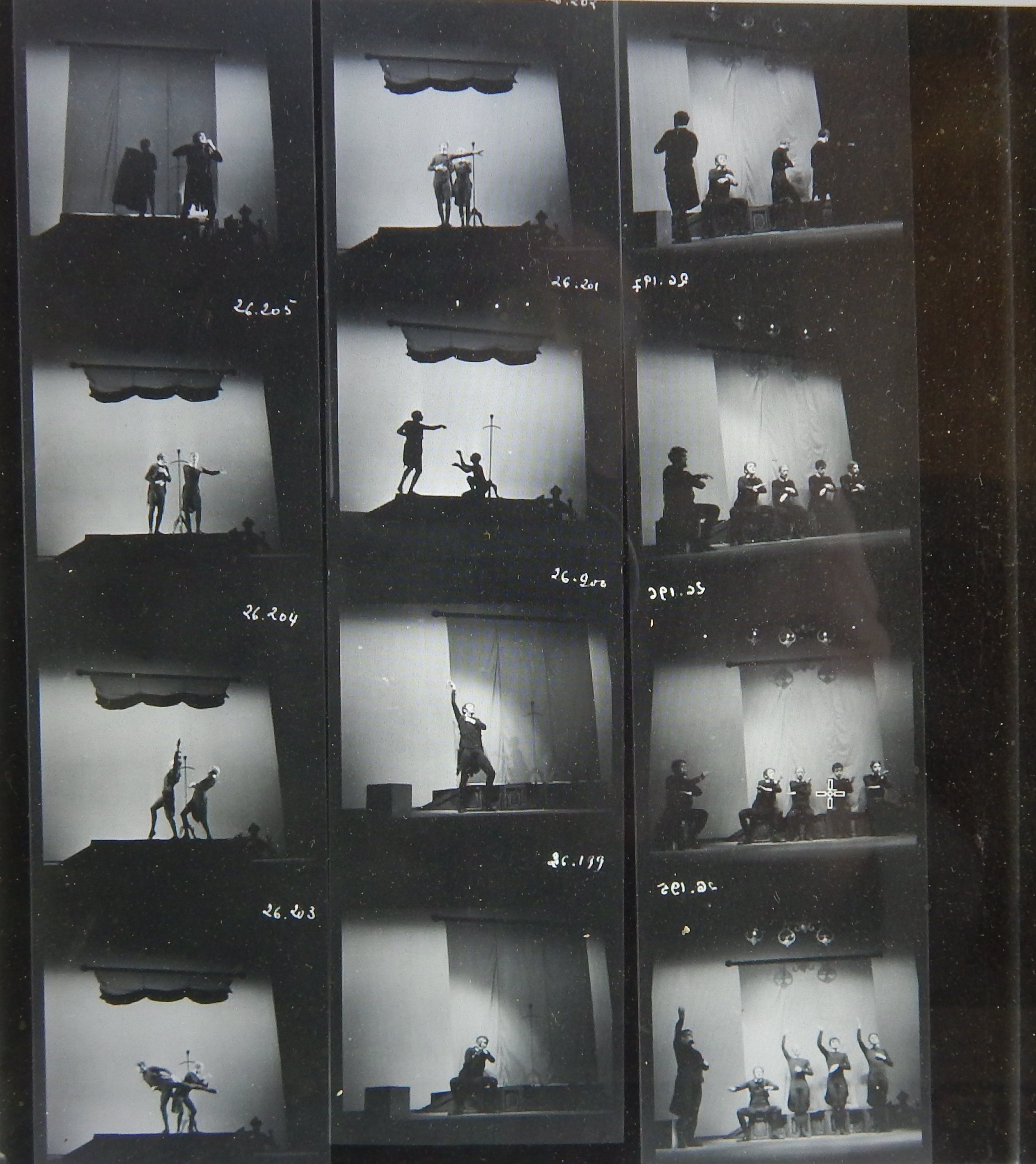
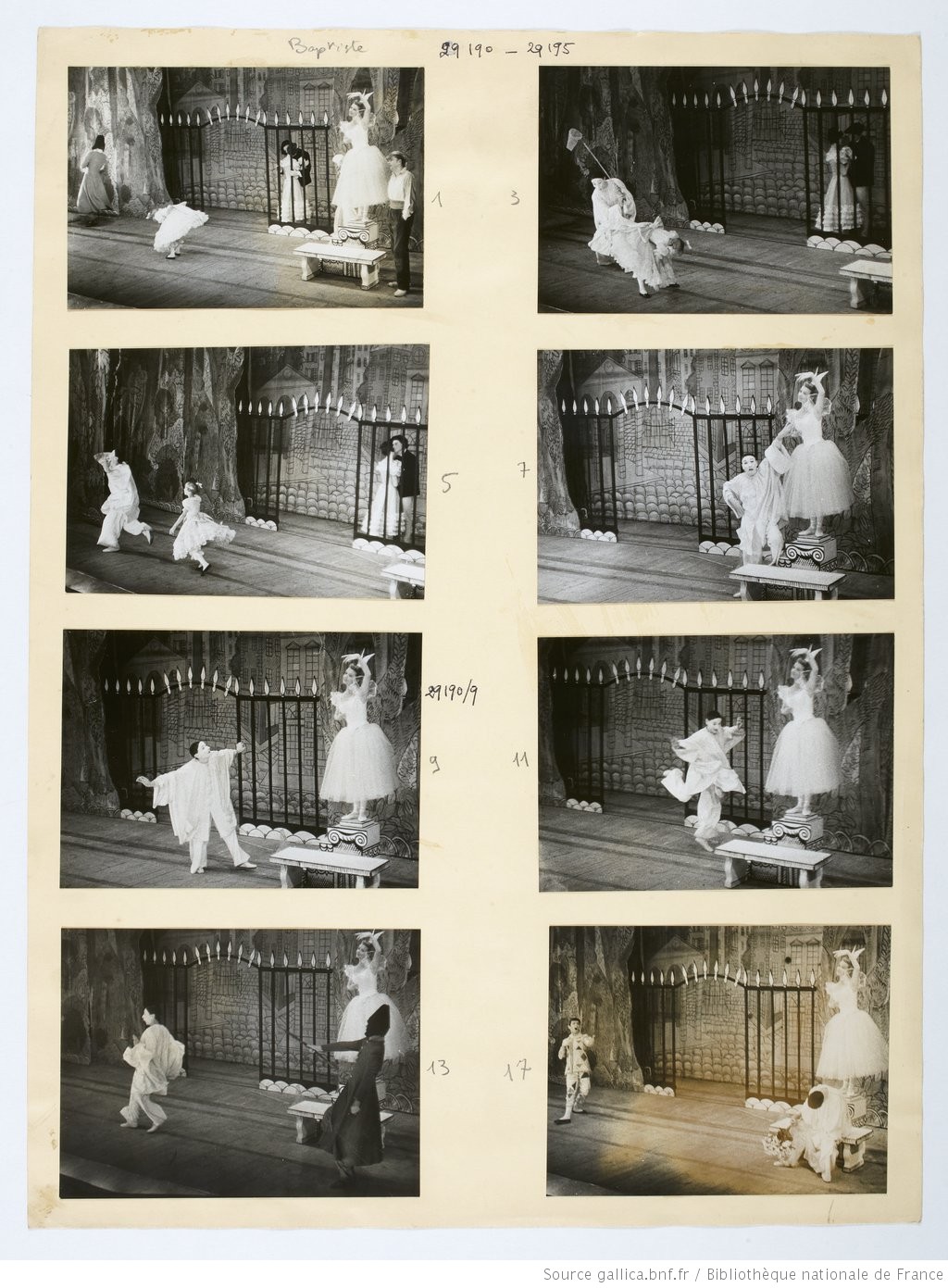
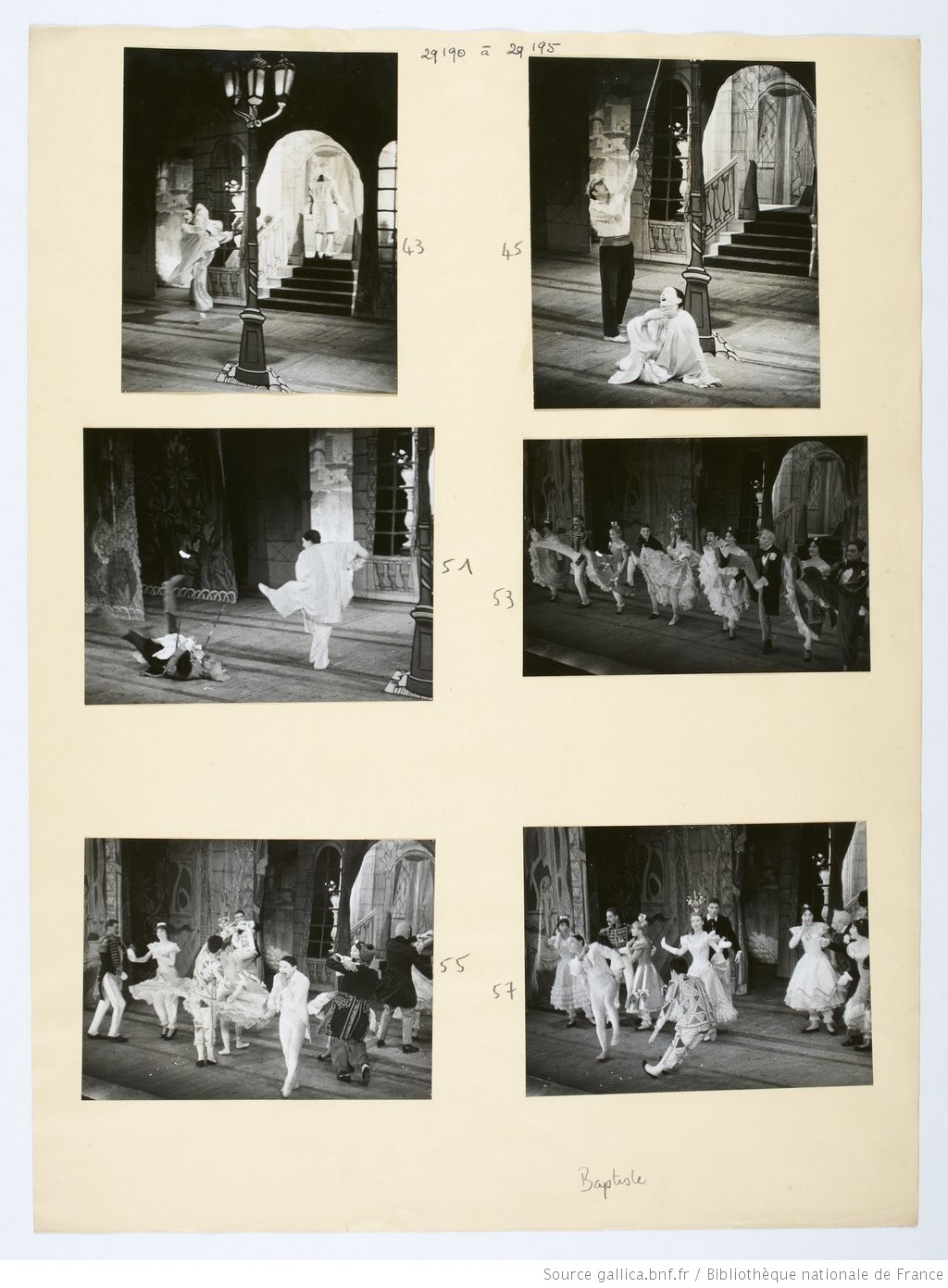
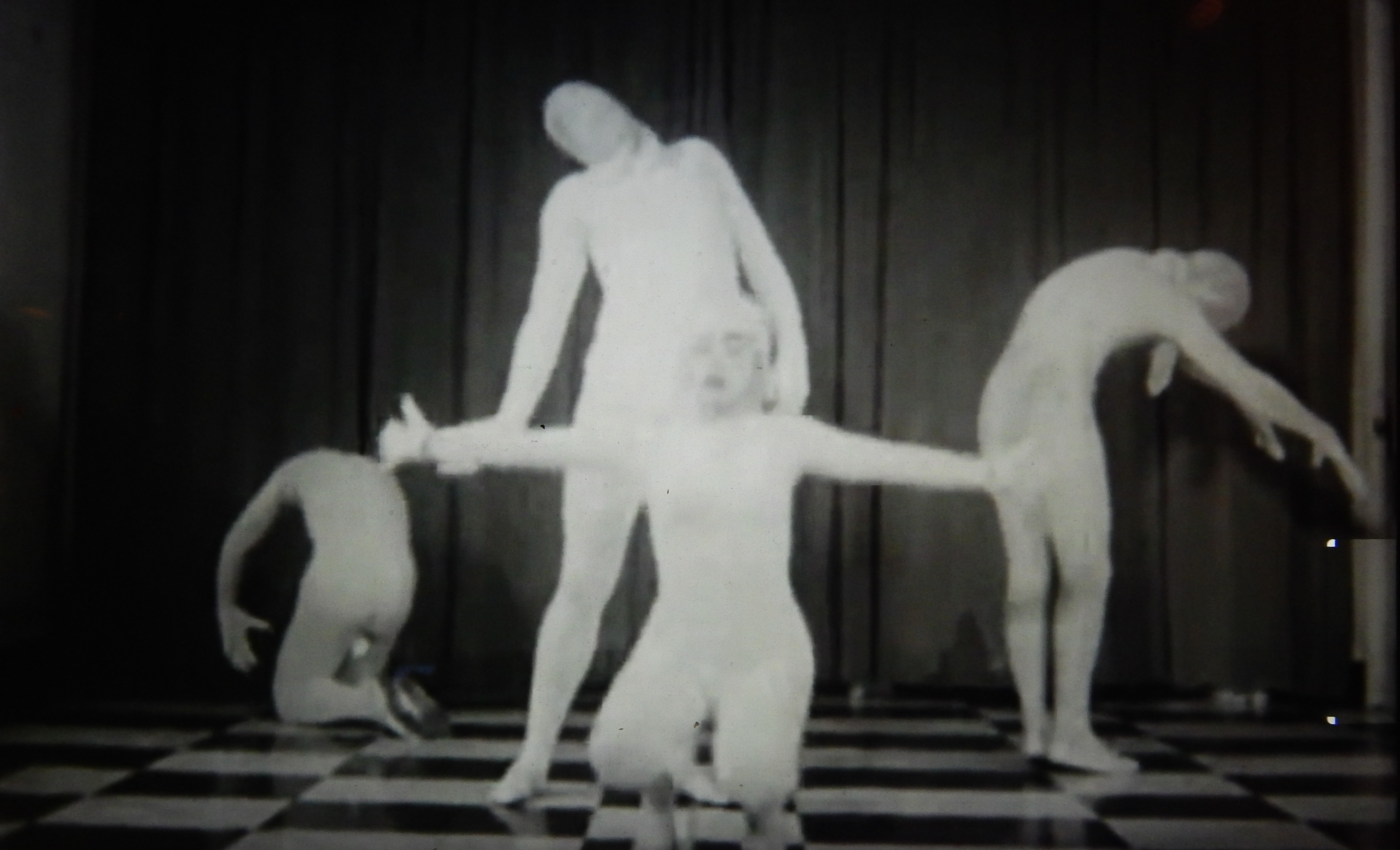
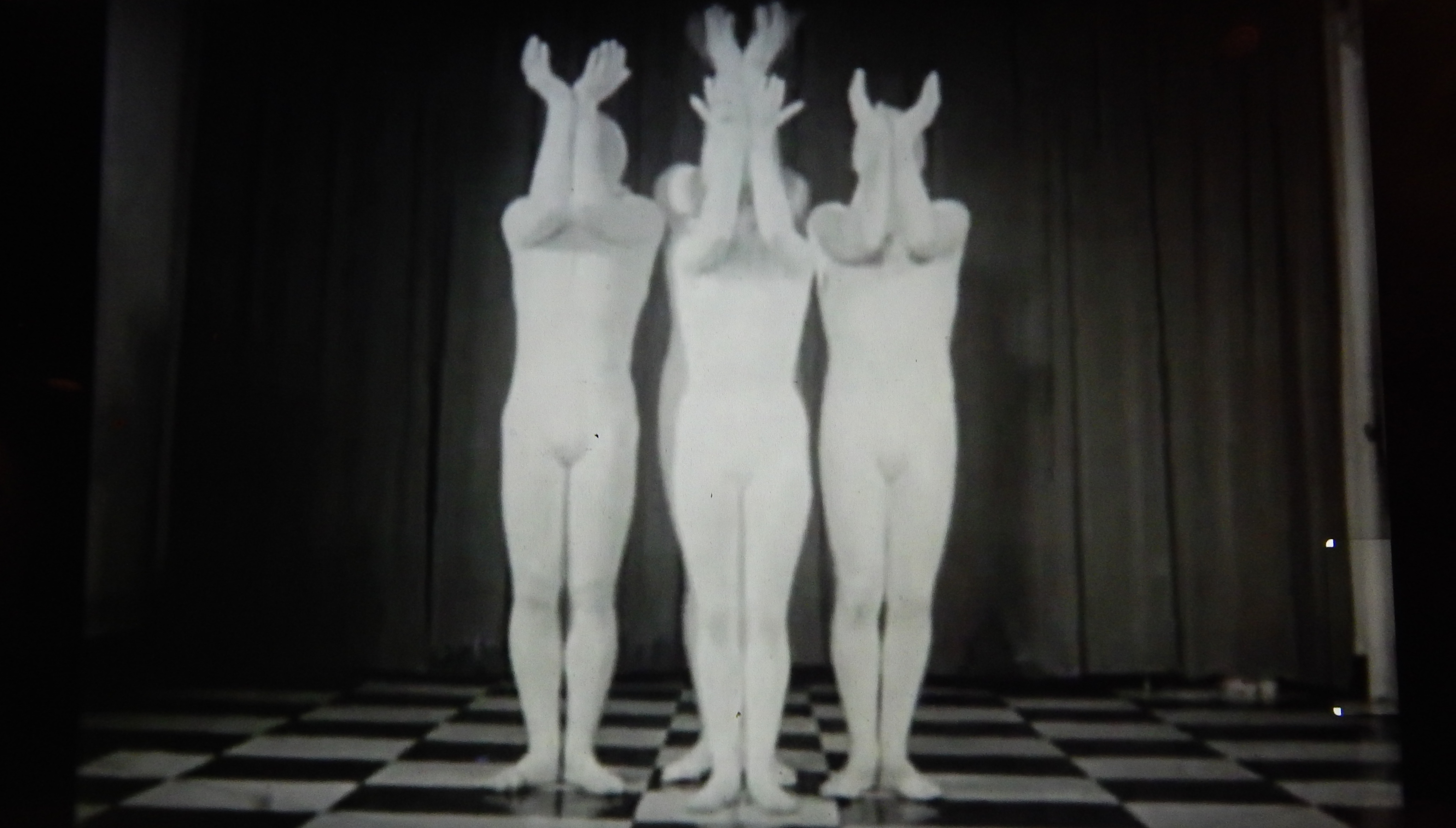

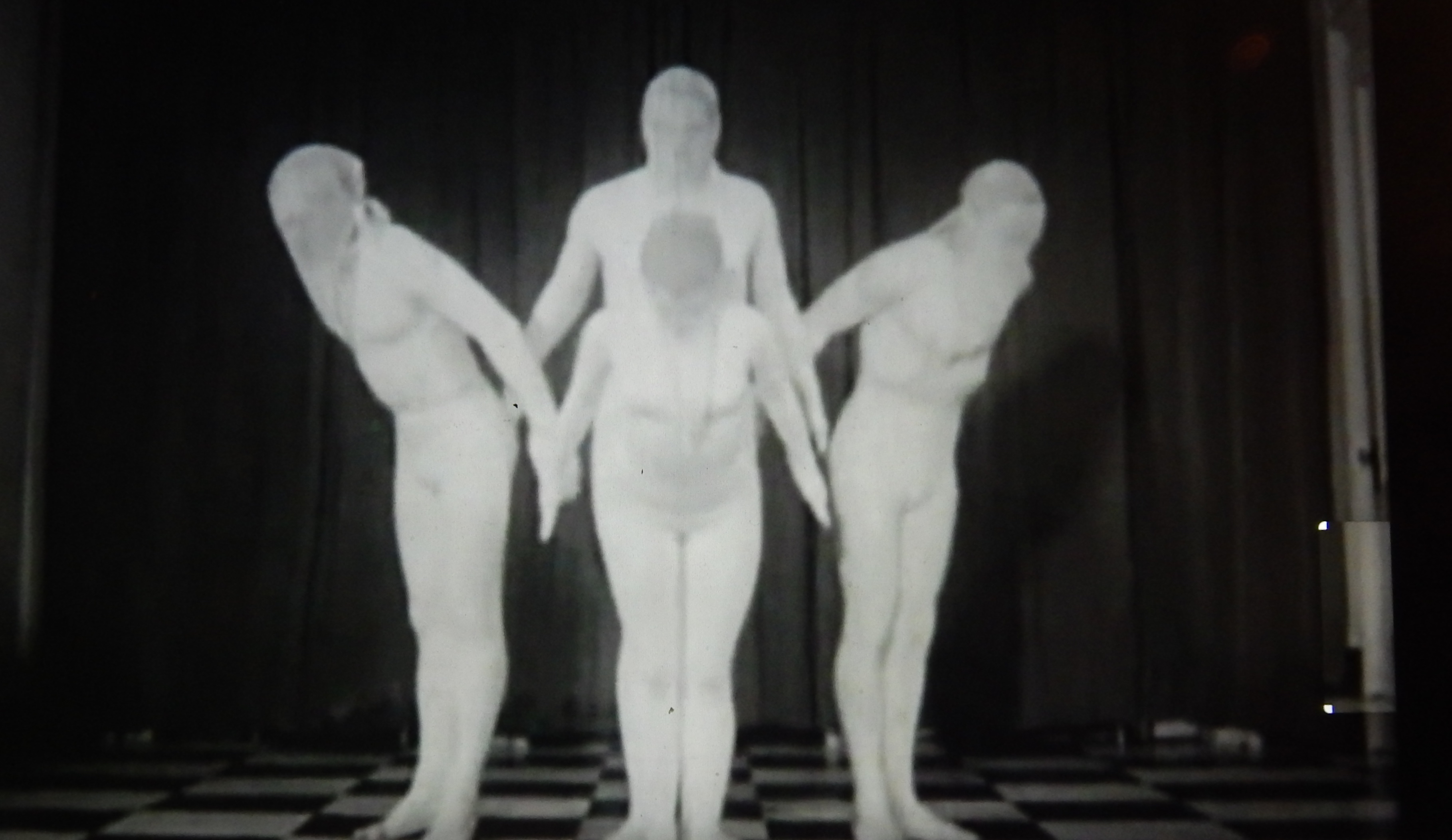

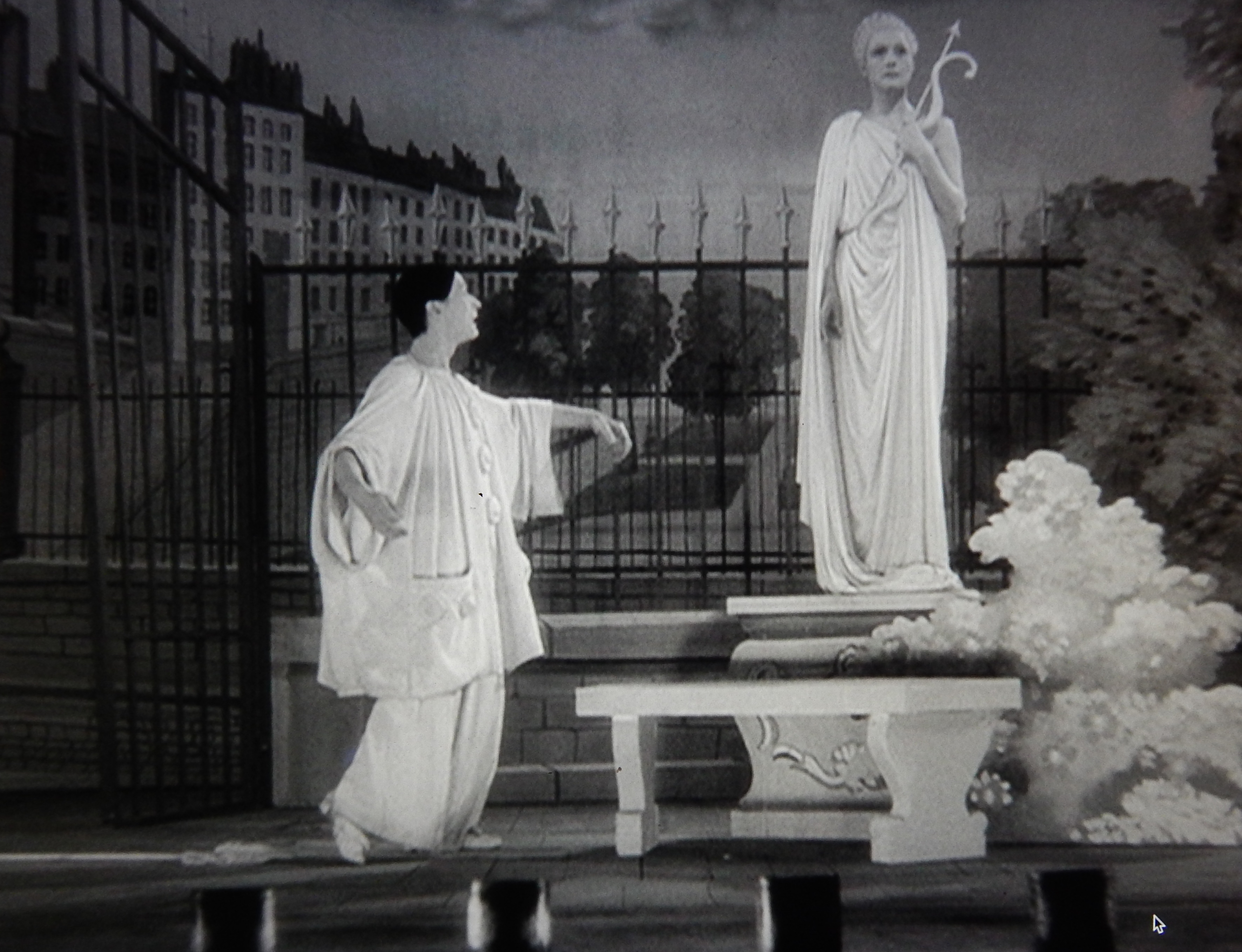
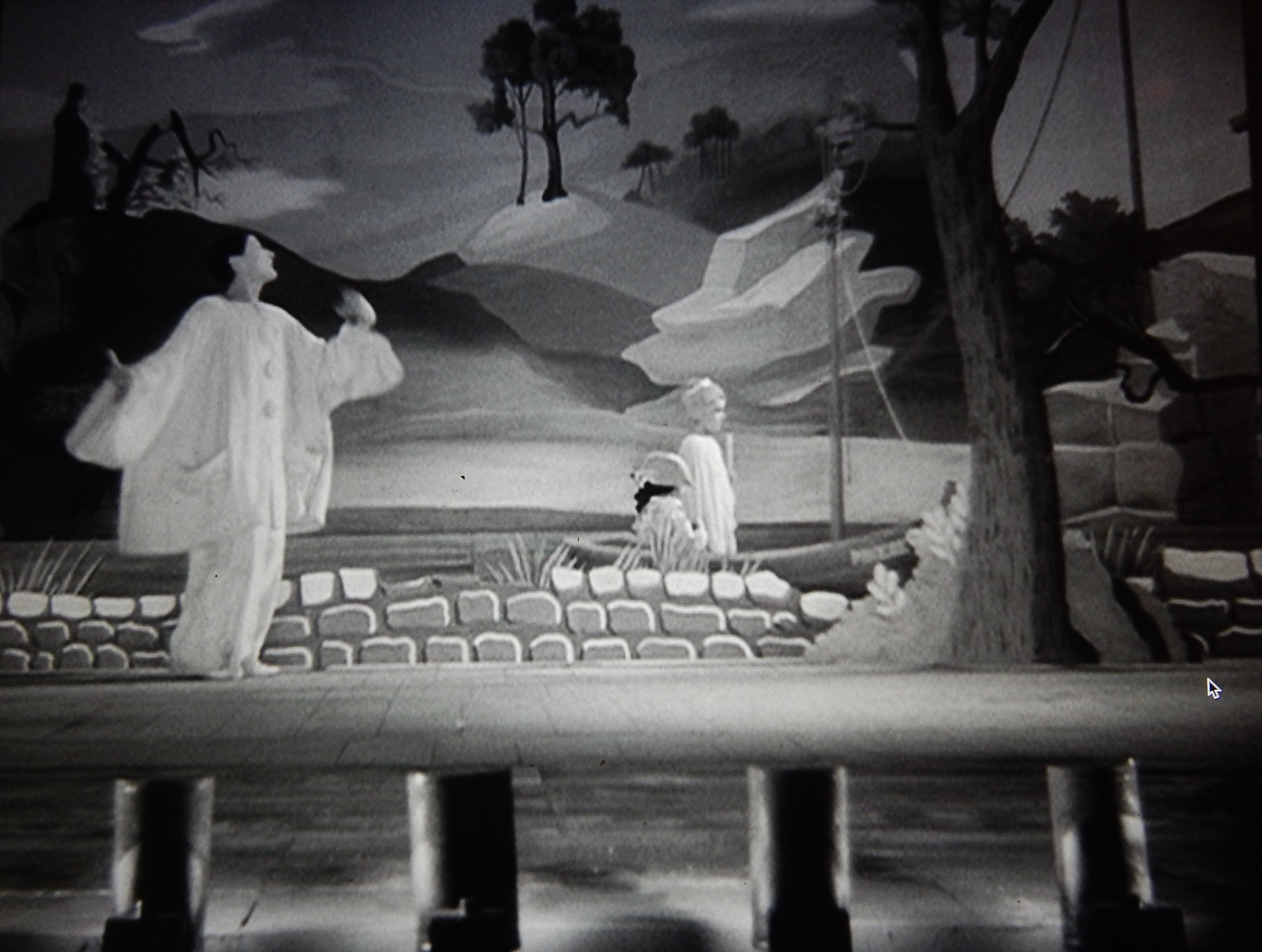

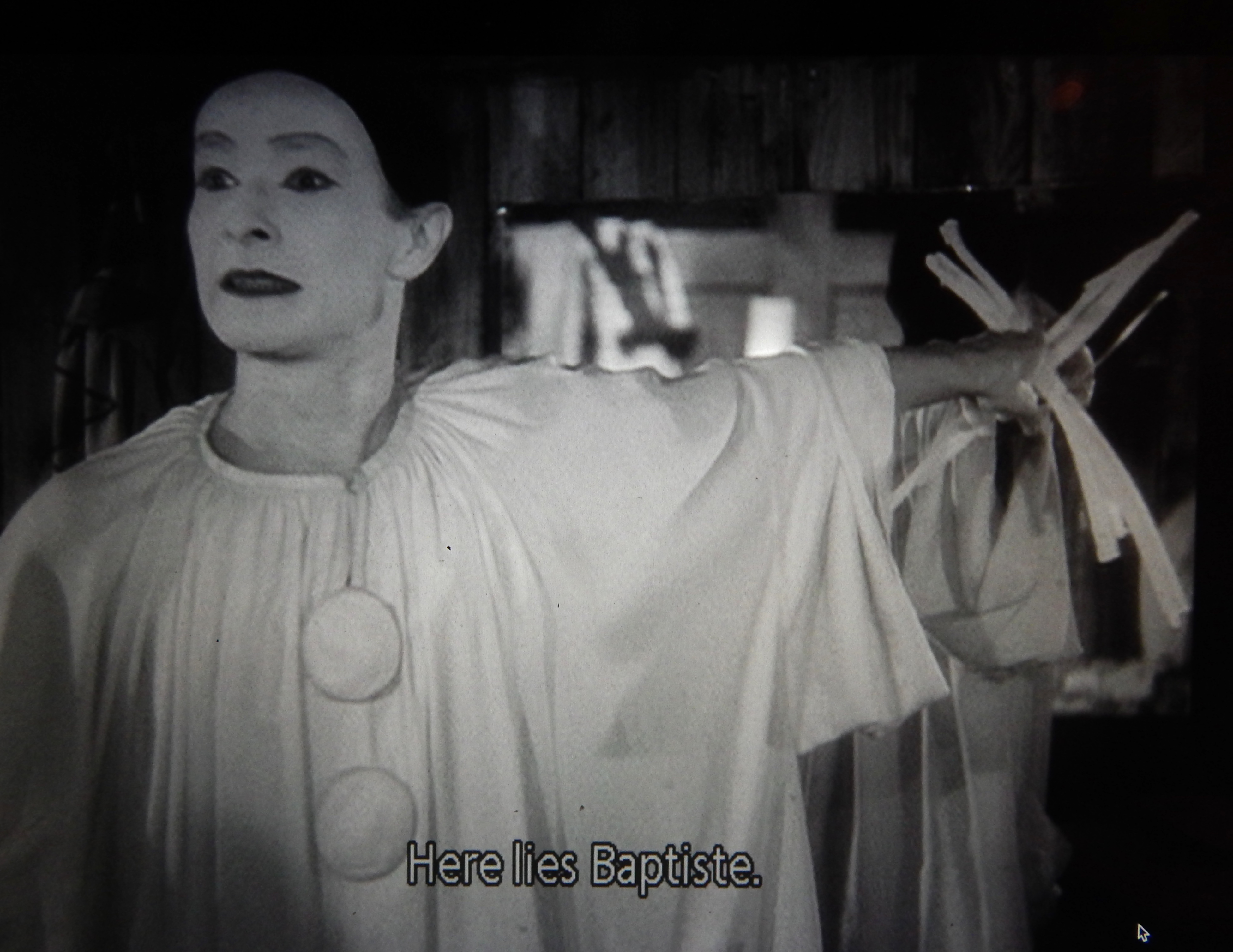
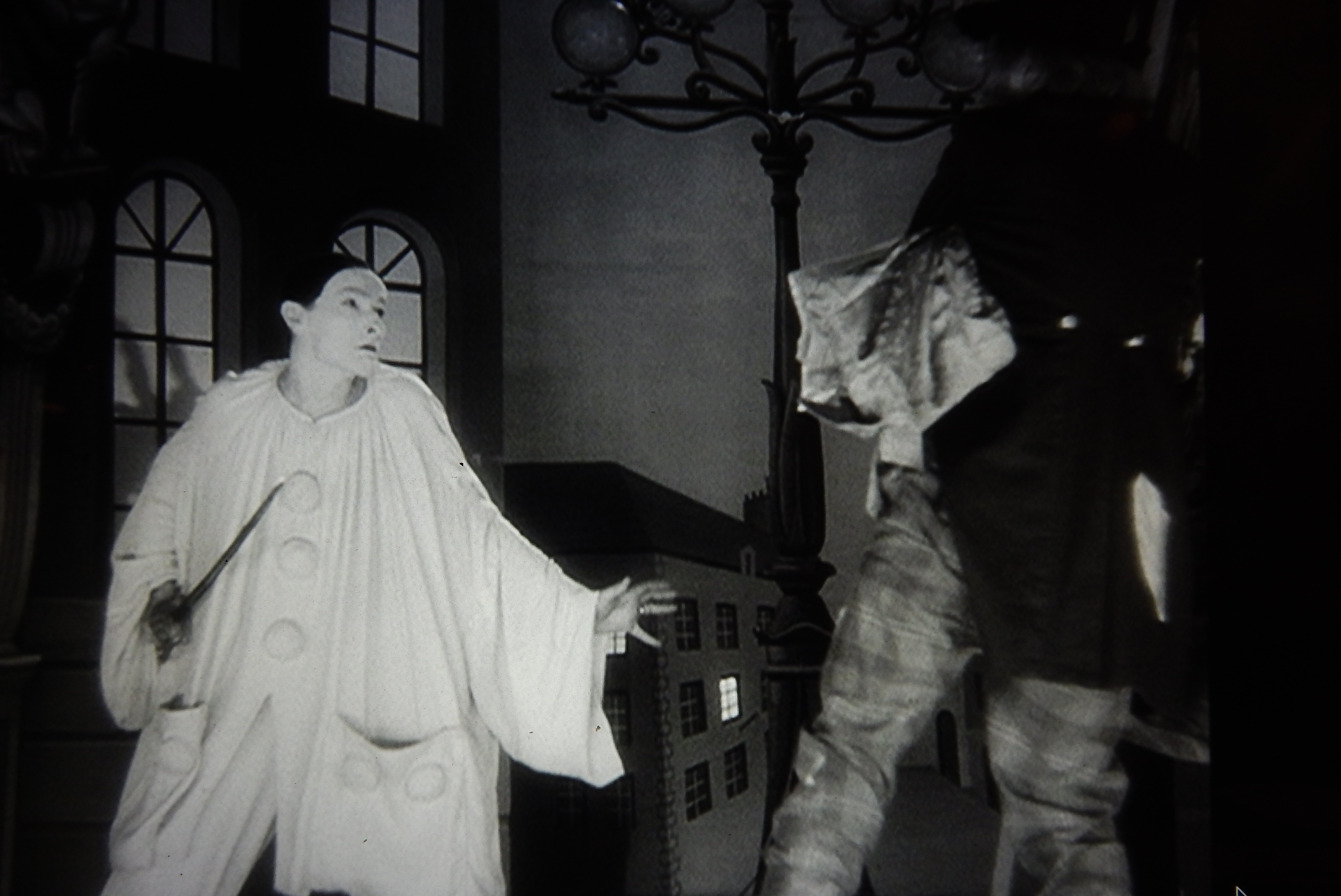
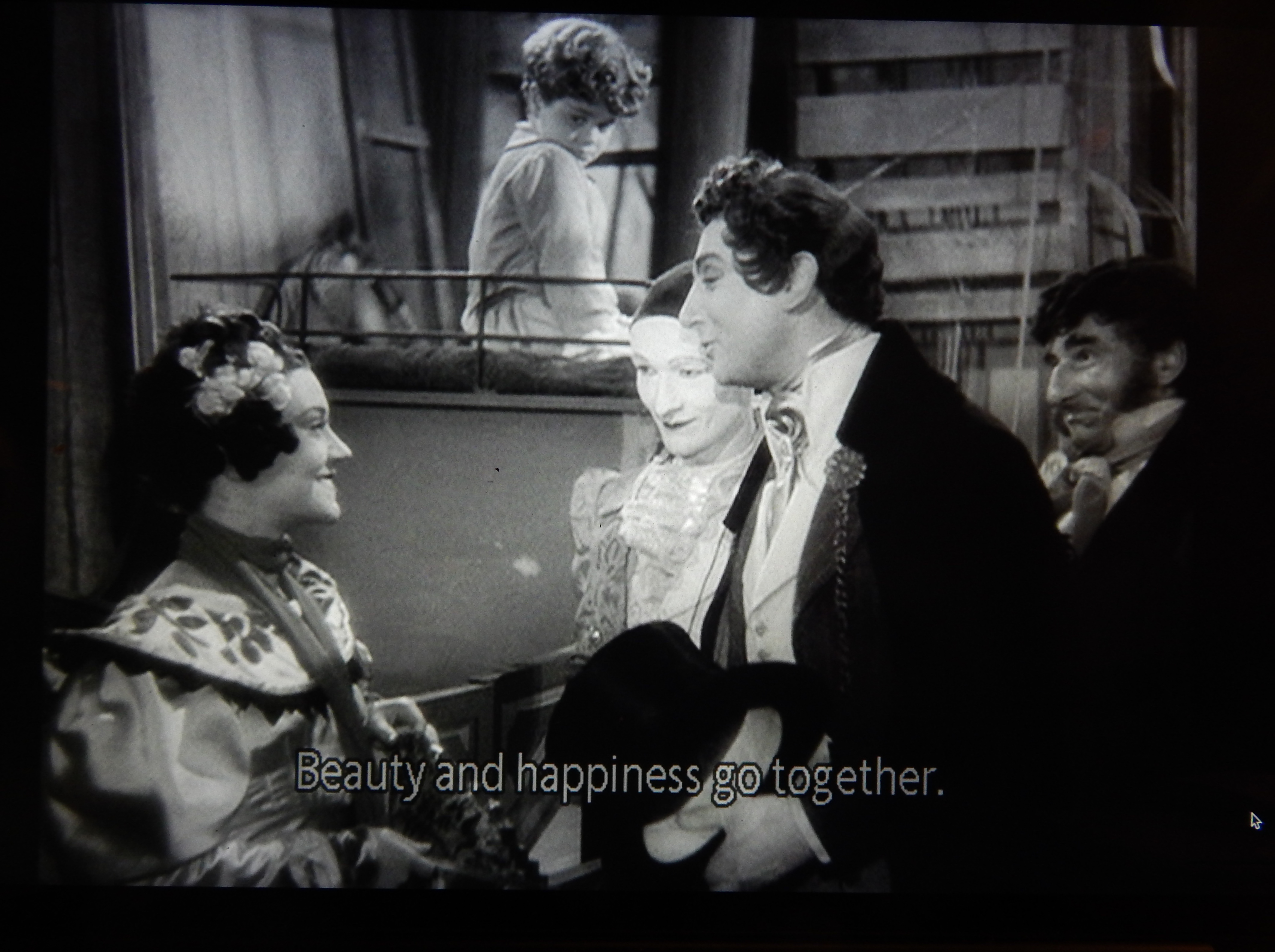


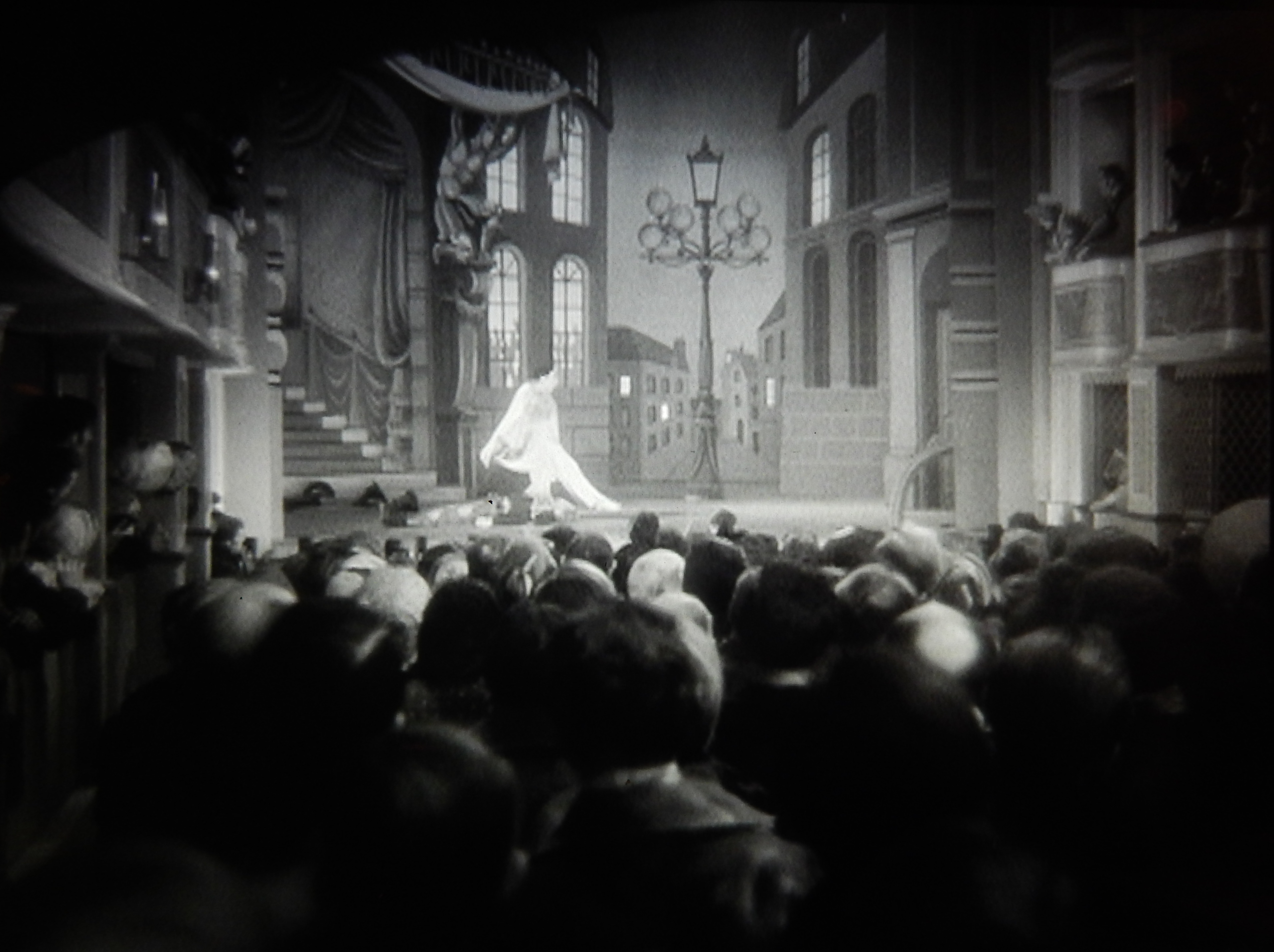


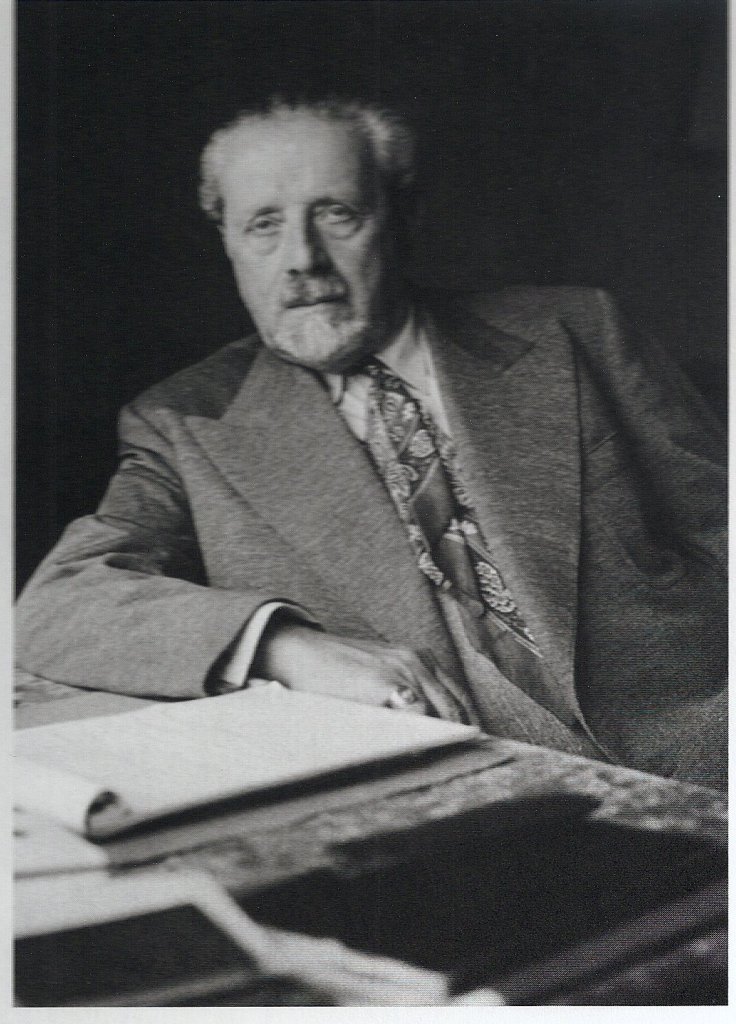


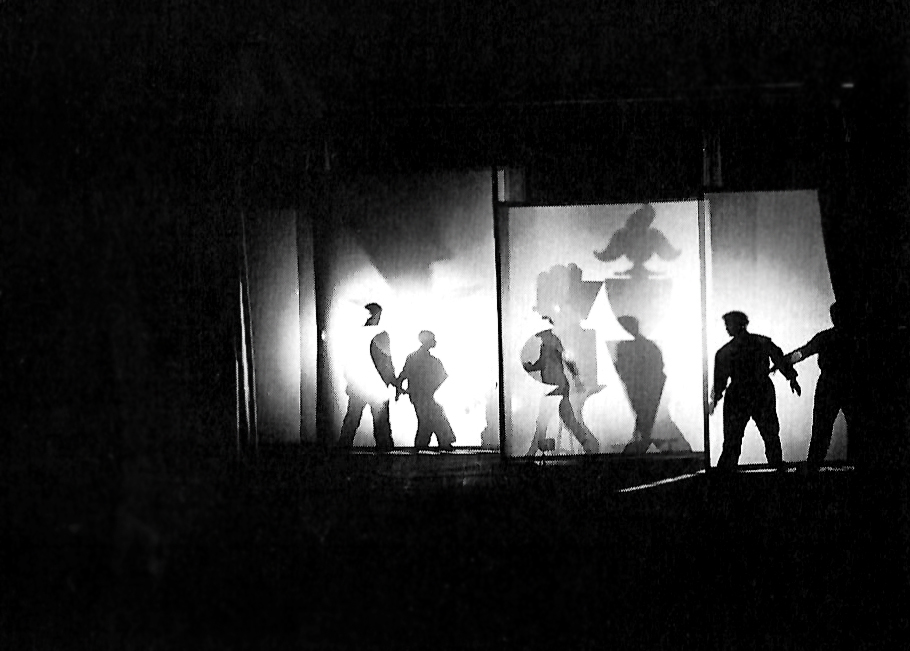
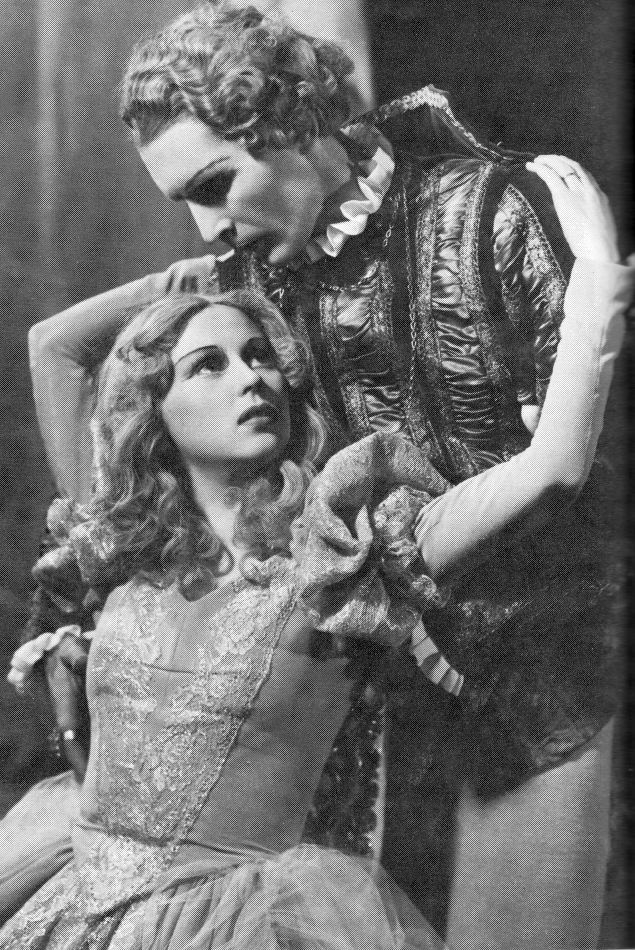

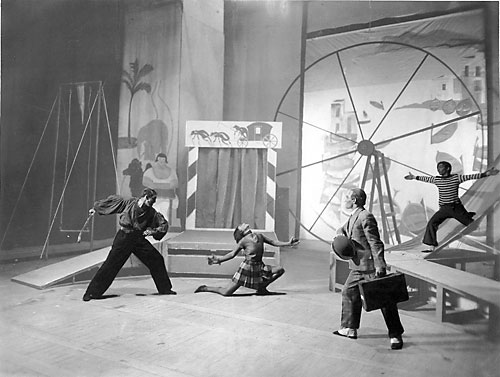
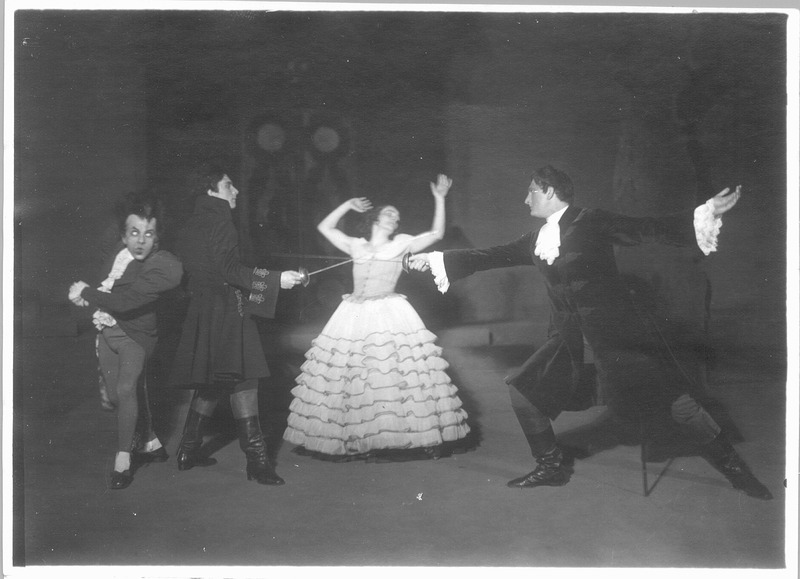
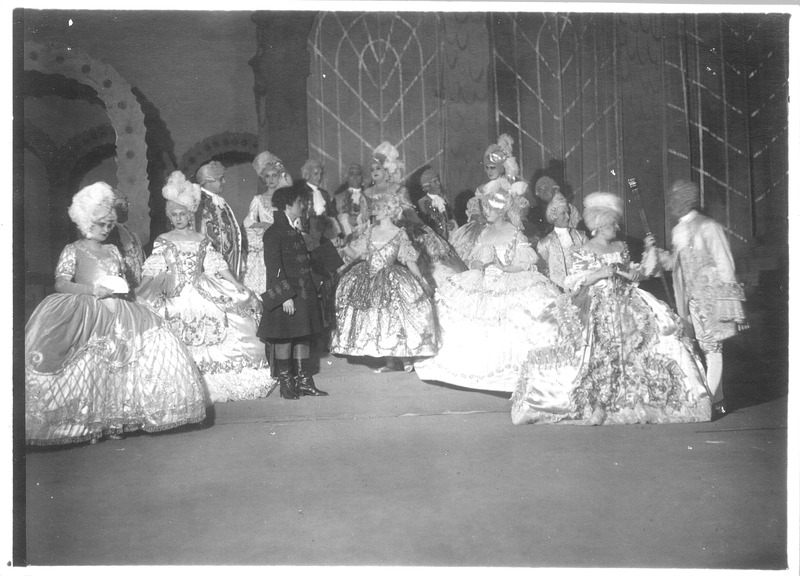


 Karl Toepfer