The pantomime riots of 14 CE arose out of a profound cultural shift that emerged with the new emperor. During the reign of Augustus, pantomimes were freedmen, like Pylades and Bathyllus, and perhaps mostly from distant regions of the empire. These pantomimes could treat their performances as a business, selling shows to those who found these entertainments useful in building political opportunities. Augustus curbed the “lawlessness” (Suetonius Augustus 45.4) of the pantomimes by instituting (2 CE) a rigid hierarchy of seating in the theater (Suetonius Augustus 44.1-2) that situated spectators according to their social rank; he also had actors scourged and banished for offending persons of superior rank; the lex Julia (18 BCE) had already codified the inferior status of actors. However, the erotic charisma of the pantomimes extended well beyond the theater, and Augustus’s laws were obviously ineffective in controlling it. Therefore, according to Tacitus, the Senate forbade knights to “surround” pantomimes as they “go forth” in public. Why would knights surround pantomimes on the streets? The most persuasive answer is that knights who favored or sponsored a particular pantomime moved in entourages through the streets as a way of proclaiming their affiliation and gathering audiences—a kind of promotional stunt or procession. Pantomimes received protection from the knights against hostile parties attached to rival pantomimes and political factions. Even though pantomimes may have received generous compensation under Augustus, it is difficult to believe they could earn enough to pay for fan clubs or claques, which Libanius (Orations 41.9), speaking of Antioch in the fourth century CE, claimed to reach as many as 400 persons per claque, although Alan Cameron (1976: 234) does contend that the pantomimes paid for their claques“to ensure that their act was adequately appreciated.” However, the only evidence he presents to support this assertion is a vague quotation from John Chrysostom (Homilies in Matthew 37. 6-7): claques “sell their voices to their bellies. For the sake of three obols they prostitute their salvation to the dancers,” which does not really clarify who pays the three obols (Leyerle 2001: 39). Indeed, he goes on to refer to sources, Eunapius (Vita Sophistrarium VI. 2. 8) and Suetonius (Nero 20. 3) that comment on emperors, Constantine and Nero, who paid for their theater claques, with Nero paying 40,000 sesterces to leaders of different sections within his imperial claque, which, Suetonius says, consisted of 5,000 young men “from the common people.”
William Slater (1994: 139-144) does not clarify why the knights surrounded pantomimes in the streets, but nevertheless he proposes that the riots resulted from the desire of knights to become pantomimes themselves. The knights, he says, were willing to risk the ignominy thelex Julianaimposed on them for pursuing careers on stage to acquire the huge sums of money pantomimes could earn. The unwillingness of Tiberius to provide sufficiently generous funding for the Augustalia contests, Slater argues, diminished this career option. The Emperor and the Senate, he contends, embodied a conservative Roman hostility toward the emasculating influence of the Greek gymnasium, with its oiled and perfumed bodies and pleasure in the display of male physiques, which the pantomimes apparently appropriated with great success. But this attitude seems to belong to the era of the Republic. What more likely agitated the Senate was the hooliganism and extortionate behavior of the claques than any threat to Roman morality from the seductive aura of Greek body culture. Presumably Tiberius did not want his administration evaluated according to the expectations and values identified with Augustus. If he accommodated the claques’ demand for greater pantomime subsidies, then the Emperor (and members of the Senate) risked getting caught up in an escalating cost of managing political ambitions that did not align with his own. By capping the cost of pantomimes, the Emperor and the Senate made it more difficult at least for knights to outbid each other to retain the services of pantomimes whose performances as “gifts” to the public played a significant role in forming and clarifying the constituencies of the performance sponsors. The idea behind the legislation was to make it harder to create pantomime stars by inflating their salaries or by associating star power with the money invested in a star and the claque attached to the star. While some knights may have announced a desire to appear on the stage and become stars themselves, it is quite possible that such announcements were a form of posturing, a ploy to publicize their ambition to shape a new, post-Augustean direction for themselves, and behaving as if they were exempt, immune, or indifferent to the lex Juliana helped to disclose this ambition. The dominant goal of these knights was to use pantomime performance to establish power bases that would enable imperial opportunities for them. From Tiberius’s perspective, a “new direction” implied moving away from the idea that aristocrats could buy constituencies and opportunities by allowing the imperial government to escalate the cost of those opportunities. Tacitus and Suetonius (Tiberius 46-47) describe the Emperor’s distaste for subsidies of almost any sort and his awareness that when he (or Augustus) had been charitable, their generosity did not make reliable friends. When the Senate heard the plea of Hortalus for a subsidy to his distinguished but financially troubled family, Tiberius withheld sympathy, for “if a man is to have nothing to hope or fear from himself, industry will languish, indolence thrive, and we shall have the whole population waiting, without a care in the world, for outside relief, incompetent to help itself, and an incubus to us” and “if we drain [the Treasury] by favouritism, we shall have to refill it by crime” (Tacitus, Annals II, 38; 1931: 441). The failure of Hortalus to improve his family fortunes even after Tiberius reluctantly provided him a subsidy could only reinforce the Emperor’s conviction that indulging aristocratic ambitions at state expense was not helpful in strengthening his own position. Tiberius’s aversion to making public appearances nourished his aversion to spending on public works projects, including, certainly, the theater, where apparently he believed many in the audience circulated unkind words about him (Suetonius, Tiberius 66). Tiberius was hardly the most exemplary proponent of the “bread and circus” philosophy of governance. Nevertheless, he appreciated the political value of pantomime performance, for he did not wish to eliminate it, only to curb the extortionist violence of the claques. The cap on star performer salaries meant that pantomime sponsors could not build constituencies around the status, popularity or wealth of star performers; constituencies would emerge in relation to deep uncertainty about the “real” economic value of the performance talent. But this uncertainty would actually encourage the expansion of pantomime culture rather than its decay.
The legislation of 15 CE led rather to the decay of the professional pantomime, to the decay of the commercial development of the art. Under Augustus, the incentive for becoming a pantomime arose from the belief that acquiring pantomime skills from those educated in the art according to the Greek model as processed by the Alexandrian school of pantomime was an appealing path to upward mobility within imperial society. Under Tiberius, it became very difficult for a professional pantomime to amass enough wealth to achieve serious, if indeed any, upward mobility. The law forbidding knights to enter the home of any pantomime had the effect of compelling aristocrats to summon pantomimes to their own homes if they wanted to do business with the performers. But even summoning the professional pantomimes might prove unhelpful in developing political ambitions if the supply of professionals remained limited and it was no longer convenient to outbid one’s rivals to obtain their services. The most efficient method for developing the pantomime culture was within the villa domain itself, by training slaves and freedmen to emulate the professionals. Villa owners could improve their status by their success in perfecting the talent of the people they “owned.” Under Tiberius, pantomime performance shifted away from independent, entrepreneurial ensembles to adjuncts of villa households. The rivalry between Bathyllus and Pylades assumed a legendary status in public consciousness, as rivalry between factions and between ensemble owners dominated the evolution of the art. Theaters became secondary or auxiliary sites of performance, which took place primarily in villas. The art became dispersed and fragmented as it spread further from Rome. Such codification of the art as derived from the Alexandrian school weakened as performers groomed within the villa milieu absorbed more local influences, tastes, and distinctions. Innovation in performance occurred less systematically and probably more often as ensembles responded to local opportunities, resources, and objectives. Competition between owners for constituencies most likely intensified the introduction of innovations and variations in performance more quickly than would have been the case had the Greco-Alexandrian model remained entrenched. The end of the Augustalia did not mean the end of public contests between pantomimes in Rome or elsewhere. But it did mean that success in the contests depended on unique or novel performance qualities rather than on how well performance honored Augustus or any subsequent emperor, especially Tiberius, who showed little interest in public competitions of any sort. While the Tiberian legislation of 15 CE led to the decay and probable extinction of a distinct professional class of pantomimes, it facilitated, accelerated, and expanded upward class mobility for slaves and freedmen who became pantomimes. Slaves who were pantomimes enjoyed higher status within the slave hierarchy than many slaves who were not pantomimes, and slave pantomimes could well believe that strong performance skills were a path to manumission. Freedmen who were pantomimes of course enjoyed even higher status if they were on a sponsor’s payroll or benefited from a sponsor’s investment. They achieved this status because of the claques attached to them, the entourages or gangs that presumably were also on the sponsor’s payroll. Within this villa-controlled organization of the art, pantomimes had little incentive to act independently of their owners or sponsors or to auction themselves off to the highest bidder. Violence between rival factions probably did not disappear altogether, but pantomime riots approaching, indeed exceeding, the magnitude of the 14 and 15 CE riots did not arise until much later in the empire, in the fourth century and far from Rome. The transition from Augustus to Tiberius clarified in public consciousness that the knights could not use their wealth, position, or resentments to build careers, power bases, or constituencies by financing extortionate violence. But the transition also confirmed that the pantomime was a valuable instrument of political power, a fundamental representation of the empire’s capacity to provide upward class mobility. The transition established that the pantomime was an art belonging, so to speak, to the aristocracy, and efforts to make it a “popular” art, as perhaps the knights from the tribune sector tried to assert through the riots of 14 and 15, would not succeed, no matter how big or passionate the fan clubs might become. Any art that is a “gift” to the public is not really popular. The public delighted in pantomimes and showed great and even quite discerning appreciation of their skills, but pantomime did not become an art that encouraged the public to see itself represented beyond the image of a solitary moving figure, within whom lived manifold mythic identities. The gift-economy of the pantomime milieu implied that both pantomimes and their audience always “owed” something to the gift givers. Pantomime codified a political compact between the aristocracy and the public (constituencies) that stabilized the hierarchical class structure of the empire and located the possibilities of class mobility (“metamorphosis”) entirely within the actions of a solitary individual rather than within the collective movements of a social class.
As the villa owners assumed greater responsibility for pantomime culture, they saw opportunities to use their pantomimes for other kinds of performance than entertainments in the peristyle, one of which included processions. Tacitus’s remark that the new law forbade knights to “surround” pantomimes in the streets suggests that in Augustus’s time, professional pantomime stars created their own processions as they moved about the streets with their entourages. Public processions had been a frequent and much appreciated feature of Roman and Italian life for a very long time, with the Etruscans, though not deeply interested in developing complex public urban spaces, nevertheless apparently enthusiastic about some kinds of processional spectacle that are difficult to decipher yet probably inspired imitation or emulation by neighboring societies (Steingräber 1986: 301; plates 64 and 65; Torelli 2000: 127, 239).
Processions were largely civic and communal activities that could occur on manifold occasions depending on the goals of their sponsors. A procession could celebrate a religious ritual, a birthday, a marriage, a harvest, an inauguration, the dedication of a building or a holiday; it could also accompany a funeral or the appearance of a government official. Processions appear to have been commonplace throughout the empire, yet information is very scarce about how they worked as performances. Even the most spectacular processions, associated with the infrequent “triumphs” in Rome honoring generals who achieved great victories (Beard 2007: 69), have little documentation to explain them and much ancient writing about the triumphs is tangled up with mythic or fanciful statements designed to advance a particular writer’s agenda long after the events described. In The Deipnosophistae (V, ii, 193c-203d; 1928: 377-421), Athenaeus, writing around 200 CE from a lost Greek source, described in great detail an enormous procession celebrating Dionysios staged nearly five hundred years earlier in Egypt by Ptolemy II Philadelphus. No document exists that describes a Roman procession in even remotely similar detail, although Appian, in The Mithridatic Wars (116-117, ca. 155 CE), does describe, in some detail, the triumph in Rome that Pompey sponsored in 61 BCE as memorable for its spectacular display of vast, sumptuous, and exotic plunder confiscated from the defeated Mithridates. Ptolemy Philadelphus’s procession was memorable not only for the many thousands of richly attired persons who paraded along with a huge entourage of exotic animals, but for the stupefying array of gold objects displayed in each section of the enormous event. Athanaeus provided lavish detail on this procession because the purpose of the procession was to display the immeasurable wealth of Ptolemy Philadelphus, to reveal an unsurpassable capacity for luxury. The Romans seemed to have experienced a conflicted understanding of the function of the triumph, which was an Etruscan invention (Dumezil: 1966 Vol. 2, 566): was the procession a representation of a sponsor’s or community’s wealth or of its power, for some commentators and the Senate itself viewed ostentatious displays of wealth as corrupting and leading to the decay rather than the consolidation of power? While the infrequent triumphs sponsored by victorious generals incorporated into their processions a display of the plunder they had confiscated from their defeated foes, the triumphal processions themselves functioned above all to display power, not wealth. The famous sculptural depictions of the triumphal procession on the Arch of Titus in Rome (82 CE) are remarkable for their elegant, vivid, commanding, and seriously (almost somberly) posed bodies, with the muscular horses of Titus’s chariot foregrounded to emphasize an idea of imperial power under the emperor’s reins that even the noble bodies around him cannot match. The section showing the procession somberly carrying the menorah and trumpets captured in Jerusalem in 70 CE is likewise remarkable for its skillful symbolic evocation of triumph over a culture that possessed great wealth—originally the menorah and trumpets were painted gold against a blue background (Piening 2013), which dramatizes effectively the idea of wealth as the object of conquest while the object of procession is to glorify the power of conquering bodies. But this image of the triumph idealizes the event. Supposedly triumphs required the approval of the Senate, which expected participants in the procession to present an image of dignity, nobility, an even solemnity, as perhaps modeled by the procession of nobles represented in the frieze of the Augustan Ara Pacis (13 BCE). However, as Mary Beard (2007: 67-68) has observed, some ancient writers reflecting on the triumphs, sometimes hundreds of years after they happened, complained that they were evidence and cause of decadent extravagance, a corrupting public appetite for luxury and ostentatious display of wealth. But the precipitous decline in triumphs during the imperial era had less to do with moral concern over presumed deleterious effects of extravagant displays of plunder and more to do with imperial usurpation and consolidation of large-scale public ceremonies. As Beard remarks: “it was not in the interests of the new autocracy to share with the rest of the elite the fame and prominence that a full triumphal ceremony might bring, especially military prominence” (2007: 70).
While the triumph may have been the summit of processional performance in the Roman world, it is by no means clear to what extent the extravagance or solemnity of triumphal processions modeled the use of pantomimes in commonplace processions throughout the empire. In his description of Pompey’s triumph celebrating the victory over Mithridates, Appian (XII.17) says that the procession included tableaux or staged scenes of Mithridates’ fall:
There were carried in the procession images of those who were not present, of Tigranes and of Mithridates, representing them as fighting, as vanquished, and as fleeing. Even the besieging of Mithridates and his silent flight by night were represented. Finally it was shown how he died, and the daughters who perished with him were pictured also, and there were figures of the sons and daughters who died before him, and images of the barbarian gods decked out in the fashion of their countries (Appian 1899 I: 410).
This procession occurred forty years before the apparent introduction of pantomimes to Rome. But Livy contended (History of Rome 39.6) (ca. 10-12 CE) that the triumph celebrating Cneius Manlius Vulso’s defeat of the “Asiatic Gauls” in 187 BCE, in which considerable riches confiscated from the Gauls were displayed, revealed that “it was through the army serving in Asia that the beginnings of foreign luxury were introduced into the City,” including “girls who played on the harp and sang and danced” at banquets. In other words, the use of performers in triumphal processions did not coincide with the introduction of pantomimes to Rome, and it can be assumed that during the imperial era the use of pantomimes in more commonplace processions was not an especially bold innovation. Most processions did not exist to display the wealth of the sponsoring community; they functioned to display the stability and unity of the community, its veneration of traditions, of heroes, gods, distinctive events (such as marriages, births, deaths, and harvests), and festive occasions. They probably followed formats that varied little from performance to performance, and some processions probably contained elements that resemble processions still performed in parts of Italy today. But the introduction of pantomimes into a procession does entail a unique political dimension because of the alignment of pantomimes with the factions or claques controlled by the ensemble owners. In other words, the presence of pantomimes in a procession could undermine communal unity, if pantomime owners and their factions were rivals for power and were not able to agree on the conditions under which public processions involving their pantomimes would prevail. Extant historical sources are not much help in clarifying how disruptive such potential for communal disunity was, but then the historical sources do not provide much evidence about how processions in general operated or how ambitious politicians built up their power bases at the local level. Nevertheless, after the legislation of 15 CE, nothing in the historical sources indicates that the presence of pantomimes in the streets or as performers in processions in Rome or elsewhere was a cause for concern at the imperial level.
Figure 65: Third century mosaics of religious processions. Top: The Triumph of Bacchus, Sousse Museum, Tunisia. Bottom: Dionysian procession, from El Jem, Musee National du Bardo, Tunisia.
It may seem as if an immense conservatism defined pantomime performance in relation to the triclinium. The banquet pantomime performance of Daphnis and Ariadne that Xenophon described around 380 BCE in The Symposium could perhaps have taken place at a banquet in 300 CE. The format of the banquet had hardly changed at all over seven hundred years: a small group of guests reclined around tables, tasted different, often exotic meals, engaged in “convivial” conversation, and after they finished eating, they sipped wine, while the host provided “intimate” entertainments that might include pantomimes. Guests often interacted with the performers, commented on the performers, compared them with other performers, which further inspired exchanges of gossip, anecdotes, displays of erudition, or philosophical commentary. The end of a banquet might well entail the initiation of sexual liaisons with other guests or with persons “made available” by the host. The evidence of triclinium entertainment from Xenophon, Petronius, Plutarch, and Macrobius indicates a remarkable continuity of structure and ambiance. The format was apparently so successful at achieving the social or political goals of villa banqueting that innovation seemed unnecessary, and one might assume that triclinium entertainments cultivated an aesthetic that encouraged improvisation without innovation.
However, the retention of conventions across many centuries does not mean that innovation was absent. During the imperial era, villa owners clearly escalated the atmosphere of luxury while dining by introducing beautiful wall paintings and mosaic floors, by using elaborately crafted serving utensils, by having male and female guests together, by perfuming the triclinium, by installing elegant divans and cushions for reclining, by serving new exotic dishes, and by expanding the number of persons serving the guests, which probably entailed increasing the diversity of entertainments offered guests. The evidence does not suggest that hosts during the imperial era sought to increase the number of guests in the triclinium; rather, some villa owners designed two or three triclinia in their villas, although it is not clear that they did host banquets involving more than one triclinium at the same time. Even if they did, the number of guests would still remain quite small compared with public feasts they sponsored. Dunbabin (1991: 136, 147) contends, on the basis of a mosaic fragment from Carthage, which she dates to the last quarter of the fourth century CE, that banqueters may have begun to sit in benches or chairs at long tables at that time, although Blanchard-Lemée (1996: fig. 45) thinks the scene depicts a feast in the fifth century CE; it also depicts a pair of dancers with crotali accompanied by an old man playing Pan pipes. These male crotali dancers are perhaps the most interesting feature of the fragment. The villa owner probably had no pantomimes if he wished to commemorate his status by depicting these two dancers, instead of performers who enjoyed much higher status as artists, although to be sure much of the image is missing. Why two dancers using crotali? It is doubtful that a second crotaleum was necessary to amplify a rhythmic pattern shared by both dancers, for the sound of a single pair of castanets was quite loud, especially in such a small space as a triclinium. More likely each dancer performed a separate rhythmic pattern to produce a complex rhythmic interplay of sound and movement, like a contest or duel of clicking and movement. The performance of such a dance would require considerable skill that one might encounter only very rarely. That perhaps was what the villa owner wished to commemorate in the mosaic: the innovation in banquet performance that he enabled. Banqueting was an intensely competitive activity for hosts, for banqueting functioned to enhance the status of the host and affirm his ability to advance people within the social hierarchy. Competition encourages innovation, and the imperial state apparatus encouraged aristocratic families to compete with each other for positions, opportunities, and honors within the bureaucracy and within the economic infrastructure. Banqueting operated like a contest in a culture that supported contests of all sorts. Innovation in banquet entertainment was necessary for hosts to establish their competitiveness in using the banquets to achieve social and political goals.
Innovation might involve a wide spectrum of entertaining performances: dwarf performers, bizarrely gifted acrobats, scantily clad women performing gymnastic stunts, such as the famous “bikini girls” in the fourth century CE mosaic of Room 38 at Piazza Armerina (Wilson 1983: 41). Iconographic evidence supports, up to a point, the notion that villa ensembles entertained audiences with a range of stunts and acrobatic dances. Artists over the centuries consistently celebrated innovative or “novel” aspects of performance. Artworks from the fifth century BCE to the fourth century CE show non-pantomimic dancers and acrobats as solitary figures who display adroit manipulation of props while moving. Figure 50a shows female caryatid dancers from the fifth century BCE performing the pyrrhic step while balancing crown-like “baskets” on their heads (Lawler 1974: 109-110). Fifth and fourth century BCE images include dancers performing with “clappers,” balancing on tables or pedestals while manipulating objects, and engaged in contortionism or nude twirling of their bodies. The third century BCE produced figurines of the so-called “veiled” female dancers in a variety of poses and movements that indicate the erotic charm of bodies undulating against the luxurious fabric wrapped around them. The Taranto National Museum contains two nude dancing figurines as a pair, and although it is not altogether clear if these two were meant to be seen together or are simply variations of a popular pose, the subtle differences between the two suggest a conscious effort on the part of the artist to treat the pose as a dynamic, theatrical phenomenon, as a way of comparing dancers with each other. In the second century BCE, dance figurines show even greater sophistication in cultivating tension between nudity, swirling diaphanous fabric, and elegance of movement [Figures 62b; Lawler 1974: 78, 103, 111, 132, 134]. The third and second century figurines reveal an unprecedented awareness of the dancing body as a source of interest when seen from any angle, not just a frontal or profile view, but the second century figurines suggest a new enthusiasm for exploring the expressivity of the face while dancing. A first century CE image introduces even greater complexities [Figure 62c]. Here the preoccupation with linking dance and nudity entails a pleasure in describing the elegant power of the dancing body to manipulate a complex assortment of props: the staff in one hand and an unidentified thing in the other; the fabric decorously looped around one arm, over the shoulder, down between the breasts, and over the other arm. The curious headdress somehow magnifies the ambiguity of the movement, simultaneously propulsive and twisting, to show the body in profile and frontal perspectives at the same time.
Figure 62: a) Fifth century BCE caryatid dancer, Berlin, Pergamon Museum, Photo: Weege (1926: 41); b) Second century BCE figurine dancers, Taranto Museo Nazionale, Photo: Caratelli (1983: Plates 587, 599); c) First century CE relief of a dancer moving with a thyrsus, hand mirror, and shawl; Weege contends (96) the dancer is a hermaphrodite, Photo: Weege (1926: 108).
First century mural paintings from Pompeii perpetuate the theme of graceful bodies moving with a range of props: a large tambourine, a platter, a pair of cymbals, and, most intriguingly, balancing a large basket of grapes on the head while carrying a thyrsus [Figure 8]. But these paintings are most informative for the measure of color they invest in dance. Nudity continues to seem an alluring feature of dance, but then one observes the effect of delicate, varied fabric colors in heightening the charm of watching dance and encouraging diaphanousness and fabric layering to compete with a possibly greater urge in dance to reveal the body. First century Pompeii also produced the strange sequence of wall paintings, now at the Naples Museum, depicting rope dancers suspended in a kind of sprawling, dark attic-garden above the gaudy panel of theatrical architecture that originally stood beneath them [Figure 63]. Marble dance figures from the second century indicate an expanded interest in showing relations between nudity and movement by exploring a wider range of dance positions than previous art encompassed (Dietrichs, 46-49, 60); here, at last, emerges a sense of dancers interacting with other bodies, or at least with each other, subsumed under the eternally popular theme of “maenads,” although a gravestone image of a naked teenage dancer from Aquinium (Hungary) manages to convey a congenial naturalistic perception of the dancer, freed from mythic idealization and thus reinforcing the view that nudity in performance was more a matter of theatrical convention than an element of artistic fantasy (Kob 1997: 171) [Figure 64]. Yet in a fourth century mosaic from Madaba, Jordan, a female dancer wears a long dress that does not flatter her body but which also does not impede perception of her delight in performing the fancy trick of clashing cymbals attached to her wrists with cymbals attached to her ankles; next to her dances a nude male or possibly a hermaphrodite, although Piccirillo describes the figure as a “satyr” (Piccirillo 1993: 76, fig. 33) [Figure 33].
Figure 63: First century wall paintings from Pompeii (House of Cicero) depicting acrobats performing on ropes. Photo: Guillaud (1990: Plates 26, 28).
Figure 64: Female dancer on a second or third century CE gravestone from Contra Acquincum (near Budapest). Photo: Kob (1997: 171).
Innovation therefore was a feature of villa entertainment because it strengthened the social competitiveness of villa owners. The introduction of pantomimes was itself a major innovation in the imperial villa culture. But this innovation resulted from an even larger innovation. With the establishment of the empire under Augustus, pantomime performance moved away from being an art of professionals who earned their living by performing in theaters, as was the case during the Hellenistic period, to an art owned by wealthy patricians who nourished the art through the slaves and freedmen attached to their estates. When Pylades and Bathyllus moved to Rome (22 BCE), Alexandria quickly lost its status as the center for learning the art of pantomime; the study of pantomime became decentralized. Performers learned the art primarily by watching other performers at entertainments, a situation that would encourage less standardization of performance and greater diversity of performance styles compared with a professionalization of the art, where regulatory guilds or associations tend to favor “standards” or protective conventions that assure appropriate “value” for the price paid to see the performance. During the imperial era, the “value” of pantomime performance did not depend on what audiences were willing to pay to see the performance; it depended on what social or political goals the performance aided the owner in achieving. In a sense, the value of the performance was a matter of the price the owner was willing to pay to achieve or sustain a “competitive” social status. The displacement of the cantica tragicaat the end of the Republic by the pantomime facilitated the displacement of theater by the villa as the primary site of pantomime performance, where voices belonged mostly to the guests and not to the performers. But to gain a deeper understanding of innovation in pantomime performance, it is best to examine a third zone of pantomime performance to comprehend the scope of innovation for the art.
Pantomime performance in the villa culture extended beyond the realm of dinner parties and exclusive occasions for small aristocratic and elite audiences. The owners of pantomime ensembles used their artists to pursue unique interfaces with the public to achieve political ambitions that the private entertainments alone could not achieve, although the villa performances were nevertheless crucial in developing this larger public interface.
Members of pantomime ensembles sometimes performed in religious or civic processions sponsored by wealthy citizens who wished to engage public attention to their seriousness about benefitting the communities wherein the processions occurred. Public processions to celebrate or commemorate a wide range of occasions were, of course, a feature of Roman cultural life for hundreds of years prior to the introduction of pantomimes. However, with the advent of the Empire and particularly with the enthronement of Tiberius as Emperor in 14 CE, a significant shift in the organization of processions occurred, at least in relation to the involvement of pantomimes. In the Annals (1.77), Tacitus, in a very enigmatic paragraph, refers to “disorders” or “disturbances” or some sort of excessive freedom (“licentia”) linked with theater in Rome that had started the year before (that is, in 14 CE), and the following year erupted into extensive rioting in which many civilians died as well as many soldiers attempting to quell the violence. When the Senate debated the matter, some elders considered actors to be the cause of the disturbances and proposed a law that would allow praetors to scourge actors. But a tribune of the people, Haterius Agrippa, opposed such a law, presumably because he believed it would exacerbate rather than curtail the violence, which would explain why Tacitus bothers to mention that Asinius Gallus then rebuked Haterius Agrippa, while Tiberius, who was present, remained silent, feigning an attitude of indulgence toward free senatorial debate. The Senate rejected the proposed law, and instead enacted “many” other laws that put an end to the unrest, at least for several years. Augustus, the Senate determined, had decreed that actors were exempt from scourging, and Tiberius had no inclination to overturn the previous emperor’s decree, although Suetonius (Augustus 45.4) remarks that Augustus ordered the whipping of actors who had misbehaved. The laws enacted by the Senate fixed the amount of pay actors received, Senators were forbidden to enter the house of a pantomime, knights should not surround pantomimes in the street or elsewhere appear as if they were players of the theater, and praetors had the authority to exile all those responsible for the disturbances.
Civilians and soldiers died when the soldiers constrained crowds attempting to attack a magistrate. In theory, magistrates were responsible for sponsoring the Augustalia, the musical and theatrical contests that celebrated Augustus on his birthday (23 September) or 12 October. Augustus had died on 19 August 14 CE. The magistrates may have felt that with the death of the emperor, it was not necessary or appropriate to continue the Augustalia. His successor, Tiberius, disclosed no enthusiasm for public entertainments and may well have believed that continuing the Augustalia was not helpful in establishing his authority to move the empire in a new direction. However, Dio Cassius, writing in the early third century, asserted (56.47.2) that the disturbances of 14 CE resulted when a pantomime refused to enter the theater for “the stipulated pay.” He says the tribunes convened the Senate on the day of the rioting to request more funding than the law allowed, which indicates a sense of urgency about the issue, but Dio then abruptly “ends [his] account of Augustus” with remarkable refusal to supply further details about this obviously ominous conclusion to the life of the man, Augustus, his history so ardently venerates (Swann 2004: 375-376). Perhaps he felt the less said the better. But Tacitus’s account of the riot of 15 CE suggests that in 14 CE, the Senate agreed to raise the pay of actors, and the following year, the instigators of the disturbances decided to pursue the same strategy of creating public havoc to extort greater funding for their theater entertainments. The strategy failed to intimidate the Senate and the new emperor. Or rather, having suppressed the riots through military action, the Senate took time to debate, less on how to prevent further riots, since the new regime had already made clear its willingness to resort to violent force to curb unruly crowds, but more on how to subordinate the theater culture to a new idea of how it should operate within the empire. After all, the Senate’s enactment of a law capping the pay of actors would seem to reject altogether the ostensible motive for the riots and to suggest that the rioters did not represent public sentiment as a whole, for neither the emperor nor the Senate sought to punish the general public by banning pantomime performances in the theater, although that option eventually found favor. Arthur Murphy’s 1753 translation of the passage in Tacitus is probably more accurate when he renders “At theatri licentia” as “theatrical factions” rather than as “the theater,” as in other translations (Tacitus 1832: 69). Tiberius and the Senate did not want to “scourge” the actors, because they did not believe the actors were at the root of the disturbances. The actors were pawns in a larger game played by factions attached to the actors. But these factions were under the control of knights or aristocrats who saw the pantomimes as useful in building political constituencies. The violence of the riots seems to have entailed more than an intense protest against the government’s unwillingness to spend more on the theatrical contests. The instigators of the violence saw the contests as foundations for the expansion of political power bases, and control over the contests was key to preserving these foundations, which Tiberius and the Senate regarded as dangerous. The riots attempted to demonstrate the power of theatrical factions, fan clubs associated with particular pantomimes, to define the political ambitions of the aristocrats who hired pantomimes to entertain their clients and constituents. The magnitude of the violence implies that it encompassed fighting between rival factions or at least rampaging meant to test the authority of the state to control the ambitions of the instigators. Competition between rival factions included the ability of individual factions to outbid others for the favor of a star pantomime, but the fees sought by the stars probably cost the instigators less than the cost of maintaining the fan clubs. The pantomime riots of 15 CE were about the costs the instigators were willing to pay to establish ambitious political identities. This apparently was not a problem as long as Augustus generously compensated the imperial pantomimes, and the pantomimes could not expect anyone to outbid the emperor who gave them access to Rome.
Figure 61: Mosaic of satyr and maenad from a mosaic at the Caddeddi Villa (Villa del Tellaro), Sicily, ca. 370-375 CE. Photo: R.J.A. Wilson for World Archeology.
Villa Pantomime and Eroticism
But this “intimate” scale does not mean that triclinium design was large enough to support only a solo pantomime performance. From the writings of Xenophon, Petronius, and Plutarch, it is evident that banquet entertainments followed conventions that, at least in terms of modes of performance, endured across hundreds of years. Sometimes banquet acts or scenes involved two performers, independent of musicians or assistants. In the final chapter (9.1-7) of The Symposium, Xenophon describes a sort of two-person pantomime as the culminating entertainment of the banquet; the performance could well have taken place at a banquet in Rome hundreds of years later, except that for his banquet Callias has hired a troupe of professional entertainers owned by a “Syracusan,” whereas of course during the imperial era, the host would own the entertainers. The performance depicts the marriage of Dionysus and Ariadne:
[A] sort of throne was first erected in the inner room abutting on the supper chamber. Then the Syracusan entered, with a speech: With your good pleasure, sirs, Ariadne is about to enter the bridal chamber set apart for her and Dionysus. Anon Dionysus will appear, fresh from the table of the gods, wine-flushed, and enter to his bride. In the last scene the two will play with one another. He had scarce concluded, when Ariadne entered, attired like a bride. She crossed the stage and sate herself upon the throne. Meanwhile, before the god himself appeared a sound of flutes was heard; the cadence of the Bacchic air proclaimed his coming.
At this point the company broke forth in admiration of the ballet-master. For no sooner did the sound of music strike upon the ear of Ariadne than something in her action revealed to all the pleasure which it caused her. She did not step forward to meet her lover, she did not rise even from her seat; but the flutter of her unrest was plain to see.
When Dionysus presently caught sight of her he loved, lightly he danced towards her, and with show of tenderest passion gently reclined upon her knees; his arms entwined about her lovingly, and upon her lips he sealed a kiss; she the while with most sweet bashfulness was fain to wind responsive arms about her lover; till the banqueters, the while they gazed all eyes, clapped hands and cried “Encore!” But when Dionysus rose upon his feet, and rising lifted Ariadne to her full height, the action of those lovers as they kissed and fondled one another was a thing to contemplate. As to the spectators, they could see that Dionysus was indeed most beautiful, and Ariadne like some lovely blossom; nor were those mocking gestures, but real kisses sealed on loving lips; and so, with hearts aflame, they gazed expectantly. They could hear the question asked by Dionysus, did she love him? and her answer, as prettily she swore she did. And withal so earnestly, not Dionysus only, but all present, had sworn an oath in common: the boy and girl were verily and indeed a pair of happy lovers. So much less did they resemble actors, trained to certain gestures, than two beings bent on doing what for many a long day they had set their hearts on. At last when these two lovers, caught in each other’s arms, were seen to be retiring to the nuptial couch, the members of the supper party turned to withdraw themselves; and whilst those of them who were unmarried swore that they would wed, those who were wedded mounted their horses and galloped off to join their wives, in quest of married joys. (Xenophon 1897: 397-398)
This “pantomime” as such does not include much physical action. Ariadne enters and for the most part simply sits on her throne; Dionysus performs most of the physical action, dancing before her, reposing at her knees, and then lifting her. The scene is primarily a sequence of poses, ending with the lovers passionately embracing before exiting–“retiring to the nuptial couch.” Ariadne stirs the audience by a mysterious action that reveals her pleasure in hearing the music—“a flutter of unrest”—even though she does “not even rise from her seat.” The idea of the scene is to awaken a beautiful emotion in the audience without relying on elaborate physical tricks—such as the girl dancing with hoops earlier in the banquet—or on language. In this milieu, nothing is more beautiful or intimate than two beautiful bodies drawn together. What pleases the audience above all is being close to the performance of erotic gestures and poses, and these do not require much space; indeed, they require a small space wherein the distinction between the real and the imaginary becomes blurred. The diners are close enough to the performers to see that they are not acting but actually love each other. This real emotion in the performers has the power to provoke intense erotic desire in the spectators, which brings the performance and the banquet to an end—or rather, allows erotic feeling to triumph over entertainment and representation. Intimacy of performance facilitates the realization of erotic desires within the spectators. At the conclusion of The Symposium, the married men, inspired by the erotic pantomime, hurry away to make love to their wives, while the single men drift into masturbatory reveries of carnal conjugality they expect someday soon to enjoy. In the Satyricon, after Encolpius, Asclytos, and Giton leave Trimalchio’s house and stumble back to the inn where they are staying, Encolpius attempts sexual activity with Giton, but Asclytos “steals” Giton and “carries” him away to his own bed, “where he wallowed around without restraint with a ‘brother’ not his own, while the latter, not noticing the fraud, or pretending not to notice it, went to sleep in a stranger’s arms, in defiance of all human rights” (Chap. 79). Pantomime performance created an atmosphere that urged spectators to materialize their erotic desires—that is, to regard the occasion for the performance as an opportunity for the gratification of sexual desires, which circulate within the dinner party as “gifts” or “favors” provided by the host. In The Golden Ass (Chapter X), Apuleius blatantly links pantomime to pornographic entertainment that dissolves distinctions between real and mimicked sexual performance. The reputation for licentiousness ascribed to pantomimes derived from their skill at suffusing the villa scene with an implicit or unspoken understanding of expanded permissibility in experiencing the relation between conviviality and intimacy. The movements, the poses, and the aura of the pantomime, always anyway the physical embodiment of a mythic level of reality, equated intimacy with sexual attraction, with the freedom of bodies to function as beautiful gifts. This power of pantomime to dissolve, in the villa milieu, the various social distinctions between bodies was why some owners would not even own pantomime ensembles and why other owners who did own ensembles might not use them to entertain guests whose “traditional” moral values echoed Cicero, who, in De legibus (2.39 ca. 43 BCE) denounced dancing at banquets as a “source of destruction” that will “overturn entire states.” Anthony Corbeill (1997: 104-107) argues that for late Republicans like Cicero and Lucilius, dancing at banquets by men, either performers or diners, was synonymous with pleasure in effeminacy and disclosure of homosexual inclinations; a pagan, Nonius (ca. 400 CE) remarks: “among the ancients, dancers or pantomimes were called cinaedi [queer sluts]” (Compendiosa Doctrina 1888: 8), and around 500 CE, a Syrian bishop, Jacob of Sarugh (ca. 451-521 CE), wrote several lengthy “homilies” (actually diatribes) against pantomime dancing, for it is “a foster-mother who teaches her sons to commit fornication” (Jacob of Sarugh 2008: 414); Craig Williams (1999: 194-196) provides further examples of Latin writers using the term cinaedus to describe dancers and pantomimes in a derogatory manner. But this centuries-long prejudice among moral conservatives against the power of pantomimes to undermine sexual inhibitions and to encourage the feminization of men was obviously not strong enough to constrain the increasing use of pantomime entertainments in the villa milieu. During the imperial era, laws were necessary to regulate (rather than suppress) pantomime performances for “private” audiences. Under Augustus, the lex Juliana (18 BCE) and lex Papia Poppea (9 CE) established a legal framework that simultaneously preserved the moral stigmatization of actors and yet allowed and perhaps even encouraged the villa culture to develop the erotic ambitions of pantomime entertainments. These laws, which defined adulterous relations and their penalties, clarified distinctions between actors and other social classes: persons of the senatorial class were forbidden to marry freed persons; neither freeborn persons or members of the senatorial class were allowed to marry persons who were actors or whose father or mother was an actor, according to the lawyer Ulpian (ca. 170-223CE) in one of his “fragments” (Tituli 13.2). The main concern of these laws was to prevent sexual desires from undermining class distinctions, so that marriage best served the state when it existed only within social classes and not across them. Moreover, the laws apparently exempted some categories of people from prosecution and penalties, and although the extent of these categories remains uncertain, actors and dancers, along with slaves, appear in virtually any list of exempt categories (McGinn 1998: 194-195). Aside from the shadowy lex Scantina, which was an anti-rape law, proscription of homosexual behavior and of those “who give themselves up to works of lewdness with their own sex” was not a feature of Roman law until Justinian published his Institutes in 533 CE (Justinian 1910: 505). In practice, these laws established that the state would not prosecute anyone for adultery who had sexual relations with persons belonging to an exempt category, and indeed, it is not altogether clear if unmarried persons could be prosecuted for adultery by having sexual relations with married persons outside of their social class (McGinn 1998: 195). These lacunae in the laws help explain why Messalina’s affair with Mnester, her plaything, did not distress Emperor Claudius so much as her liaisons with the aristocrat Gaius Silia. They also explain why for centuries the villa culture could build around pantomime performance a permissive atmosphere of sexual opportunities and “favors.” The voluptuous sensuality of pantomime movements and bodies, the constant invocation of bodily “metamorphosis,” and the assertion of pantomime performance that the most powerful or seductive “scenes” in life do not depend on speech or skillful use of language to dissolve the distinction between reality and representation imbued star pantomimes with a mysterious glamor, affirmed that even slaves could project a captivating aura, and stressed the authority of images, poses, and masks to achieve the realization of desires. This erotic allure of the pantomime extended well beyond the exclusive domain of villa entertainments and accounts for the great, enduring public fascination with pantomimes, for the eagerness of public audiences to accept pantomime performances in the theaters as important gifts bestowed upon them.
From the perspective of the imperial government, the marriage laws were strong enough to assure that pantomime performances did not disturb the social order, for it is difficult to find any further legislation effecting pantomimes until very late in the empire. Occasionally emperors such as Augustus, Tiberius, and Domitian banned or restored public performances of pantomimes in Rome or elsewhere, but these proscriptions and restorations, which arose from political calculations related to public fan clubs of pantomimes, covered only performances in theaters and were in any case imperial decrees subject to the whims or moods of the emperors who imposed them; they were not laws, they were not statutes requiring ratification from the Senate, for the decrees never constrained aristocratic access to pantomime performances in the villas, only aristocratic use of the pantomimes to stir and manipulate public sentiments. A combination of moral and sexual conventions, a government always careful to maintain clear categories of social identity that overwhelmingly privileged members of the aristocracy, and aristocratic ownership of pantomimes was sufficient to prevent the erotic allure of pantomime performance from escaping the control of it by the villa culture and becoming symbolic of a “new” social order, a “new” vision of freedom across the empire. If pantomime performance had been a commercial venture, it would be subject to laws, to contractual obligations, to court decisions, and to testimonies. But it was not; it was the property of an estate, and thus subject primarily to laws governing the formation and distribution of estates. In the late empire, many and perhaps most Christians understood pantomime performance as a much greater threat to the “new” social order they sought to build than managers of the state, even when Christian, ever supposed was the threat it posed in relation to any social order. No magnitude of public love for pantomimes, no measure of concern for state security, no level of Christian indignation, no condition of economic crisis, no power of artistic ambition, and no intimation of commercial opportunity could, until the the late second century CE, dislodge pantomime performance from the villa culture and the social and political goals it served so “intimately” and with such erotic intensity in the convivial ambiance of a triclinium.
Figure 54: Banquet scene depicted in a fresco in the triclinium of the House of Chaste Lovers, Pompeii, Italy, First Century CE. Photo: Alfredo and Pio Foglia, in Filippo Coarelli (ed.), “Pompéi : La vie ensevelie,” Paris: Larousse, 2005, 336.
Villa Performance
While theaters provided important opportunities for pantomime performance, it is good to remember that those opportunities were occasional rather than regular. Pantomime ensembles performed in theaters only because their owners saw some larger advantage to themselves in allowing their ensembles to perform in theaters as a “gift” to the audiences. For the most part, pantomimes performed for much smaller audiences consisting largely of persons belonging to the aristocracy or to the higher levels of government. Ownership of a pantomime ensemble was a measure of an aristocrat’s wealth, but it was a measure only to the extent that it could be displayed and shared with diverse audiences. For this reason, ownership of a pantomime ensemble probably conferred a greater image of wealth than simply owning slaves or houses or valuable commodities. A pantomime ensemble signified a superior capacity for luxuriousness insofar as one owned an ensemble for the purpose of “sharing” with others the beauty of its performance. It is not at all clear what hierarchy prevailed in relation to various capacities for luxuriousness through performance and spectacle. Was owning a pantomime ensemble a higher or lower measure of status than owning gladiators or a chariot racing team? Perhaps, if gladiator or chariot racing teams belonged to groups of investors rather than to a sole individual. Perhaps not, if the giving of gladiator contests or chariot races exerted greater impact on the public when the owners sought to use the spectacles to claim their influence over their audiences and thereby strengthen their political power. And perhaps such distinctions are not even helpful: some owners of pantomime ensembles probably invested in gladiatorial spectacles, even though the Empire kept pantomime performances and gladiatorial spectacles strictly separate, never combined. Moreover, in some parts of the Empire, owners assigned pantomime ensembles to support and agitate the fan clubs for the chariot teams in which the owners had invested. But the “giving” of gladiatorial spectacles and chariot races allowed aristocrats to exert influence primarily over large public audiences. While pantomimes also allowed their aristocratic owners to cultivate the favor of public audiences, they were even more useful in allowing their owners to exert their influence over other aristocrats and high-ranking officials from beyond the local environment. The major reason for owning a pantomime ensemble was to impress other aristocrats with an entertainment that was exclusive, designed for a privileged and chosen audience. Because access to pantomime performance depended on quite arbitrary circumstances, on the unique socio-political ambitions of pantomime owners, the public could regard the “gift” of pantomime performances as a more privileged activity than attending gladiatorial spectacles or chariot races, which, having become deeply institutionalized well before the establishment of the Empire, the public treated as an expectation, as entertainments “owed” it, as fundamental components of the “bread and circuses” philosophy of state governance. What bestowed exclusivity on pantomime performances was their occurrence in “private,” luxurious settings—the great houses and villas of those who owned the pantomime ensembles
Howe (2007: 13) observes that houses belonging to “the families of the 300 to 600 men of the senatorial order and the perhaps ten thousand of the ‘equestrian’, or business, class” […] were as much instruments of their social power as they were places of luxury and retreat.” He further remarks that, “This need for the elite to appear politically effective was the driving force behind a great deal of continuous innovation in Roman culture from the third century BC onward, from the importation of gladiatorial spectacles to aspects of Greek art and architecture” (14). “The wealth and drive” of the Roman elite “to create an effective and innovative show sparked an explosion of artistic creativity.
They assembled their resources to invent an innovative type of “lofty and lordly” seaside villa, with “libraries, picture galleries, and basilicas, outfitted in a manner not dissimilar to the magnificence of public works” and they continued to build them over the next two centuries, and build them ever more elaborately. The art and architecture which they commissioned to surround themselves and their highly political house guests, with their numerous allusions to classical divinities and legends, were as much an assertion of their erudition, “dignitas” and sophistication as were their collections of art, their libraries, their skilled cooks, their entertainers, their resident philosophers and poets, their exotic fishponds, and their jewels and silverware (15).
The scale of some estates was enormous, designed to support the lives and work of many persons, as Rostowzew explained in detail back in 1904 (Rostowzew 1990: 41-77) and as evidenced most spectacularly by the ruins of Hadrians’s Tivoli villa and the mysterious, gigantic residential complex of Piazza Armerina. Indeed, as the Empire grew older, villas became such self-sufficient communities that towns in Sicily and elsewhere decayed or lost their justification for development (Wilson 1983: 95). Estates as large and as luxurious as those described by Rostowzew (1990), Drerup (1957, 1990), Mansuelli (1990), and Bergman (2010) could easily have accommodated pantomime ensembles as part of the extensive staff required to make the properties effective in achieving their social, political, and recreational goals. Even if pantomime owners could not or did not wish to keep their ensembles in their villas or in the villas of others when they traveled, they could rent apartments for their performers, as was evidently the case in Pompeii and Ostia, at least when one considers the apparently thriving business in seasonal rentals of apartments and inns in those cities. But presumably an owner who could maintain a pantomime ensemble in villas enjoyed higher status than an owner who was improvising, so to speak, or in the early phase of his adventures in high society entertainments. Because nearly all pantomimes were slaves or freedmen, it is highly unlikely that an owner would expect a pantomime ensemble to do nothing but perform shows. Even if an ensemble gave a performance once a week, which would be exceptional rather than commonplace, especially when other or competing pantomime ensembles as well as other spectacles can claim the attention of audiences both aristocratic and popular, the owner would expect the members of the ensemble to perform other duties besides rehearsing and performing pantomime acts. A typical pantomime ensemble built around a single star performer would include a dozen or so persons, in addition to the star: two or three musicians, a chorus of maybe four or five, three or four acrobats and dancers, and an interpellator, as well as maybe three or four persons involved with off stage mechanical and production support. Only very large villas could accommodate this many persons in addition to the other servants the owner relied on to make the villa and his life operate as expected. Indeed, a major reason the pantomime evolved around a single star performer is that the resources to sustain a larger scale of production would emerge only if the aristocracy gave up its privileged access to the pantomime and allowed the state or municipalities to treat pantomime entertainment as public investment paid for primarily with taxes raised from the aristocracy. Such a public approach to pantomime performance would defeat the purpose of pantomime ensembles to establish degrees of exclusivity and distinction within the aristocracy and to establish the authority of the aristocracy to bestow “gifts” on the public if gifts were to remain a significant instrument for “swaying” sectors of a local or regional public. When it was convenient, owners could collaborate in merging pantomime ensembles to produce larger shows for larger and more public audiences. The Corinth performance described by Apuleius in Book X of The Golden Ass is an example of a larger production that would rely on performers from more than one owner. It is important to remember that, because of the dubious moral status ascribed to pantomimes and the performances, pantomime ensembles served their aristocratic owners rather than aristocratic households or any particular sector of the aristocracy. Pantomimes could provoke tensions and divisions within aristocratic circles and even within aristocratic families they entertained. In his epistles (Book 7, Letter 24, to Geminius), Pliny the Younger describes (ca. 80 CE) a woman, Ummidia Quadratilla, who “retained a set of pantomimes, whom she encouraged more than becomes a lady of quality,” but who apparently never encouraged her grandson, Quadratus, to see any of the pantomime performances she arranged.
Quadratus never witnessed their performances, either when she exhibited them in the theater, or in her own house; nor did she exact his attendance. I once heard her say, when she was commending her grandson’s oratorical studies to my care, that it was her habit, being a woman and as such debarred from active life, to amuse herself with playing at chess or backgammon, and to look on at the mimicry of her pantomimes; but that before engaging in either diversion, she constantly sent away her grandson to his studies: a custom, I imagine, which she observed as much out of a certain reverence, as affection, to the youth.
Indeed, Quadratus tells Pliny that “the first time I ever saw one of my grandmother’s freedmen dance” was at the Sacerdotal Games in which her troupe had entered the competition, after her death. Pliny commends Quadratilla for protecting her grandson from her pantomime entertainments while disparaging
a set of men of a far different stamp, [who] in order to do honour to Quadratilla (I am ashamed to employ that word to what, in truth, was but the lowest and grossest flattery) used to flock to the theater, where they would rise up and clap in an excess of admiration at the performances of those pantomimes, slavishly copying all the while, with shrieks of applause, every sign of approbation given by the lady patroness of this company. But now all that these claqueurs have got in pay is only a few trifling legacies, which they have the mortification to receive from an heir who was never so much as present at Quadratilla’s shows (Pliny the Younger 1915: 58-63).
The motive for writing about Quadratilla was that she left two thirds of her estate to her grandson—that is, she recognized in Quadratus sterling scholarly qualities, a “pristine dignity,” a superior capacity for “glory,” while nevertheless cultivating a base or corrupting enthusiasm for pantomime. But it is evident from the letter that in receiving the pantomime troupe from his grandmother as part of her will, Quadratus did not disband the troupe or sell it or give it away; he entered it into the competition of the Sacerdotal Games, and he assumed that, even if she shielded him from pantomime performances while she was alive, his grandmother believed the pleasures of pantomime performance would prove useful and engaging for him when she was no longer around to enjoy them herself. Presumably by entering his pantomime troupe in the Sacerdotal Games, Quadratus enhanced his prestige as a lawyer or politician, but not simply because he displayed the measure of his wealth by now owning a pantomime ensemble. Pliny’s letter reveals how pantomimes functioned as a major measure of aristocratic character: the “true aristocrat,” like Quadratilla and her grandson, does not scorn, discard, or shame the pantomimes; nor does the true aristocrat, unlike Quadratilla’s “claques,” suffer an “excess of admiration” for the pantomimes. The true aristocrat adopts a more detached attitude toward the pantomimes, for he sees them as serving a social and political purpose beyond entertaining their audiences: this detached attitude toward the pantomimes is what allows both the aristocracy and the public to believe in the integrity of the owner, to trust him with power.
Roman villas were as varied as the individuals and families that owned them. How pantomimes performed within villa settings depended on their skill in adapting to the unique or defining spaces offered by a villa. A generous capacity for improvisation was necessary to accommodate the peculiarities of space and occasion controlling villa performances. A few grandiose villas contained their own indoor theaters, and the peculiar features of performance of such theaters have been described above. But most villas did not contain theaters; performances took place in spaces considered appropriate in relation to the general components and functions of villa architecture, for even if villas varied according to the tastes and circumstances of their owners, the basic architectural organization of villas followed the general principles that Vitruvius described in De Architectura (Book VI, Chapters 1-6, ca. 20-15 BCE), wherein the author prescribes close attention to symmetry, carefully calculated structural proportions, and sensitivity to the proprietary functions of spaces. Andrew Wallace-Hadrill (1994: 38-61) explains in detail “the social coding of architectural form and decoration” shaping the “articulation” of Roman houses, wherein the richest houses maintained a pronounced distinction between “highly visible” and “invisible” areas that separated the display of luxurious living from the living and working quarters of servants. He stresses (44), however, that this distinction did not entail separation of private from public functions within the domestic spaces, for Roman civilization, especially at the highest levels, entailed an “incompatibility of public life with privacy,” at least to a degree that is alien to our own time. “The Greek house is concerned with creating a world of privacy, of excluding the inquisitive passerby; the Roman house invites him in and puts its occupants on display. Vitruvius’s contrast is not between space for visitors and space for family but between space for uninvited and for invited visitors” (45). Clearly only specifically designated spaces within the villa were appropriate for pantomime performance, with the peristyle being the most obvious, and the exedra and the cenatio possibly engaged for this purpose. Figure 55 shows a ground plan of a villa in Pompeii that lacks a theater, although a single ground plan does not indicate the variety and complexity of villa design. Wallace-Hadrill further observes (52) “the sheer proliferation of spaces for entertainment” in the “richer surviving houses of A.D. 79,” and Vitruvius (VI, 6, 2) recommended that the ideal villa contain at least three dining rooms, one each for spring, autumn, and summer. To some extent, then, the scale on which the owner desired or was expected to reveal his status and his capacity to entertain visitors determined the opportunities for pantomime performance within the villa, assuming that the owner appreciated the advantages of owning a pantomime ensemble, which, of course, not all owners did, although even owners who did not own ensembles might well host visitors who did own them and brought their performances as “gifts” for the host.
Figure 55: Ground plan for the villa Casa del Labirinto, Pompeii, first century CE, from Wallace-Hadrill (1994: 115), after Strocka (1991).
The peristyle seems the space most likely to provide the best environment for pantomime performance. Wallace-Hadrill (1994: 86-87), evaluating the statistical data on Vesuvian houses, points out that only 35% of the sites surveyed contain a peristyle, and of those that do, the size and style of the peristyles vary greatly, with only 14% having three or more colonnades and the average area in square meters ranging from 231 (no colonnade) to 1970 (8 colonnades). A peristyle is an unroofed space in the interior of the house; often, but not necessarily, the peristyle contained a garden, a fountain or pond, statues, a marble floor with mosaics, or a combination of these elements. A colonnade often surrounded the open space on three sides, with the fourth side usually a kind of portal entry to the peristyle from the entrance to the house and the atrium that greeted all who visited [Figure 56]. The function of the peristyle was to display the capacity of the owner to cultivate beauty and pleasure, although some peristyles apparently assumed the mundane task of growing vegetables. Owners whose villas lacked theaters could organize pantomime performances in the peristyle only if the design of the peristyle provided sufficient opportunities for the performances to reveal the superior luxuriousness the owner could command. In other words, pantomime performers, no matter how gifted at improvisation, would not have infinite capacity to adapt to any and every peristyle design. If an owner decided to acquire a pantomime troupe and did not own a villa with a theater but he did have a peristyle, then the peristyle would have to assume features that assured the owner of an effective merger of performance and peristyle to achieve an expected atmosphere of luxuriousness. A garden dense with plants might provide an elegant setting for the performances as long as the plants remained decorative elements within the organization of the peristyle and not a major opportunity to impress visitors. That is, for the owner of a pantomime ensemble, the design of the peristylewas subordinate to the goals of pantomime performance rather than pantomime performance subordinate to the splendor of the peristyle. For the peristyle to be an effective performance space, it must make the performance visible from viewing points in the corridors of three colonnades or corridors surrounding the performance space. The corridors themselves must be wide enough to accommodate spectators comfortably, even luxuriously. The peristyle does not have to be spacious; it needs only to be large enough to accommodate a handful of performers. The star pantomime does not require a large space in which to execute distinctive movement, and even acrobats who precede the pantomime or collaborate with the pantomime in an ensemble piece can produce remarkable dances or stunts within a fairly small space. Figure 57 depicts in the peristyle for the House of the Vetti in Pompeii with gardening, statuary, and pathway as imagined rather than actually excavated. But in this plausible configuration, the peristyle would provide an excellent performance space for pantomime entertainments, with the pantomime situated at either end of the peristyle or in the middle or at any point along the pathway. Good views of the performance would be available from divans or positions in the wide corridors of the colonnades. The plants do not obscure a view of the action; oil lamps could even support nocturnal performances. This configuration offers an elegant, luxurious, sufficiently spacious, and yet fairly intimate site for accommodating the peculiar attributes of pantomime performance. It is the kind of peristyle configuration that the owner of a pantomime ensemble would find highly useful for displaying the ensemble regularly to guests quite accustomed to privileged, luxurious entertainments.
Figure 45: Peristyle with colonnades in first century CE Villa of Mysteries, Pompeii. Photo: Public domain.
By contrast, the main peristyle of the Villa Poppaea (62 CE) at Oplantis appears designed to accommodate a larger scale of entertainment, although archeological evidence indicates the presence of a large tree in the space. However, the larger space may merely function to accommodate a larger audience rather than a larger performance ensemble. The Villa Poppaea contains another, smaller peristyle, as well as other spaces that could serve pantomime performance on this huge estate, in which the spectacular wall paintings indicate an intense enthusiasm at least for a theatrical domestic environment. A peristyle with some kind of garden would link theatrical performance to plants, water, sky, sunlight—that is, to a “natural” order of things or perhaps to an aristocratic power to cultivate theatrical identities as luxuriously as plants in a garden. The smaller peristyle at Villa Poppaea has a little wall around it, as does the peristyle at the Villa of Mysteries in Pompeii, and these walls would seem to impede effective viewing of performances within these charming, cozy spaces from the colonnade corridors that surround them. Yet a stage or platform set up within the peristyle could elevate the actors in a way that is preferable to having them perform at ground level. But peristyle pantomime performance in the villa milieu did not depend on an atmosphere of luxurious intimacy or cultivated integration with a garden. For example, the peristyle of Diocletian’s palace at Split (ca. 300 CE) apparently made no concession to a penchant for gardening [Figure 58]. While it is unclear if Diocletian or his entourage indulged any appreciation at all for pantomime performance, the configuration nevertheless evokes a highly theatrical atmosphere, with its steps, imperial archways, sculptured facades, and multiple opportunities for dramatic entrances (Wilkes 1986: 41-46). The much smaller peristyle in the Casa di Nettuno e Anfitrite at Herculaneum contains high walls rather than a colonnade, and beautiful mosaics decorate the walls to create a mysterious, cool, submerged atmosphere; indeed, three theatrical masks adorn the top of the shrine-like edifice perpendicular to the famous mosaic of Neptune and Aphrodite. Peristyle performance did not depend on nature, on an elegant garden, to demonstrate the capacity of the pantomime owner to provide his guests with an atmosphere of luxuriousness. Rather, a premium sign of luxuriousness was the ability of a pantomime ensemble to adapt comfortably to different settings. In the villa environment, the pantomime ensemble should impose its glamour on any space assigned to it, just as the organization of pantomime performance, with its discrete mythic scenes, songs, acrobatic interludes, and choral pieces, allowed for the reordering, truncation, expansion, or creation of individual moments to suit the mood, taste, or setting designated by the occasion, the audience, or the villa owner.
Figure 46: First century CE peristyle of the Casa di Vetti, Pompeii, with imagined rather than reconstructed garden. Photo: Sailko.
But, as Wallace-Hadrill observes, peristyles were only occasionally a feature of villa architecture. It was not necessary for a villa to contain a peristyle for the owner to support pantomime performances. Where else within a villa might a pantomime ensemble perform? The atrium might seem the space that most closely resembles the peristyle in architectural features, and atria were often as large as peristyles; indeed, the large atrium of the Villa Poppaea at Oplantis, with its flamboyant, theatrical wall paintings is certainly inviting as a performance space. But while the atrium, with its pool (impluvium), skylight (ocea), statuary or beautiful wall paintings, may provide a dramatic entrance to a house or villa, it is not an appropriate space for theatrical entertainment. The atrium functions as a transition zone between public and private spheres; it is like a lobby or vestibule. People enter and exit the house through the atrium, and the space must preserve that function during a performance. Not everyone living or working in or even visiting the house would have been a spectator of the performance, and their business on behalf of the house or in relation to other affairs should not disturb the performance. The atrium does not provide the atmosphere of privileged exclusivity that pantomime performance bestows upon its spectators in the villa milieu. Moreover, as Wallace-Hadrill indicates (87), even some large houses in Pompeii and Herculaneum did not contain atria, suggesting that “changing architectural fashions,” “a shift away from the atrium matrix” in the first century CE accounts in part for the absence of atria from a “group of handsome houses” at those sites.
Figure 47: Peristyle for Emperor Diocletian’s palace at Split (Croatia), ca. 300 CE. Photo: Public domain.
Another candidate as a performance space in the villa environment is the triclinium or dining room. It is not difficult to imagine that wealthy Romans would combine luxurious eating with luxurious entertainment; indeed, in popular mythology, banquets in the Roman Empire seem to require some sort of erotic performance often involving voluptuous dancing and perhaps epitomized by the Bible’s reference (Mark 6:22) to Salome dancing before Herod at his banquet in Judea. In the film Demetrious and the Gladiators (1954), the Empress Messalina (Susan Hayward) entertains the proto-Christian Demetrious (Victor Mature) in her palace triclinium that opens onto a peristyle garden in which eight or so young women in white chitons perform a chorus line dance that is somewhat closer to a Ziegfeld Follies number than to anything resembling ancient Roman choreography. In conventional Christian morality, the triclinium is a useful signifier of the hedonistic “decadence” of either upper class paganism or imperial appetites. While luxurious dining pleasures are invariably features of upper class living, it is nevertheless important to consider the pleasures of the triclinium in relation to basic realities.
In many villas, the triclinium was a fairly small room consisting of a round or rectangular table surrounded by three, seven, nine, or eleven couches, with each couch sitting one or two persons, although a few villas contained a triclinium with thirteen or fifteen couches. Seating was hierarchical in relation to the status of the host or the guest, if the guest enjoyed a higher status. Some triclinia contain couches of stone that form walls around a well-like space into which the table bearing food rested. But many villas preferred to use furniture couches of elegant design, which allowed the room to be used for other purposes than dining [Figure 59a]. A conventional size for the room was between 4.5 and 7.0 square meters, but larger spaces were feasible; Dunbabin (1991: 128, 130) mentions a villa in Africa (The House of Neptune in Acholla) that was 11.2 by 9.5 meters and another one in Numidia (Djemila) that is 27 meters long. Usually the door to the triclinium opened onto the peristyle to allow for a refreshing view while dining. The conventional seating of diners was to place them in a U-shape around the table bearing the food and facing the door or view onto the peristyle. Villa owners tended to avoid constructing a large triclinium that would seat more than 20 diners; they favored instead the construction of further triclinia, and some villas contained three or four triclinia (Dunbabin 1991: 130).
Figure 59: a) Reconstruction of a triclinium featuring a view to the peristyle in the background. Photo: Unidentified Spanish web source; b) Mosaic of a possible pantomime performance from the triclinium of a villa in Zeugma, Turkey. Photo: Zeugma Mosaic Museum.
The triclinium theatricalized the dining experience and thus provided a superb opportunity for the host to display his wealth and taste. Dining integrated eating and entertainment in a distinctive or memorable way that furthered the larger ambitions of the host, and the architecture of the entire villa evolved from the scale of entertainment the host pursued in relation to social and political goals. The room might contain a mosaic floor and wall paintings with themes related to dining, hunting, food, or food production. In 2002, archeologists uncovered a large, evidently second or third century CE mosaic in the triclinium of a villa in Zeugma, Turkey. The mosaic depicts an elegantly dressed woman, labeled Theonoe, attended by three other women and approached by a man (only partially visible due to damage) in a white tunic-robe bearing a laurel branch [Figure 59b]. The dramatic quality of the image has urged Görkay (2006) and Dunbabin (2010) to propose that the mosaic may depict a pantomime of the Theonoe myth, in which case the man in the white robeis actually her sister Leucippe disguised as a priest, who is searching for Theonoe, whom pirates had kidnapped years before. The artist does give Theonoe a distinctly mask-like visage, although it is not at all clear to what extent, if any, the image depicts an actual pantomime performance, as opposed to signifying that the myth of Theonoe was the subject of a pantomime performance. Just as importantly, though, the mosaic implies that the triclinium was the place within the villa where pantomime occurred (Görkay 2006: 28). In the triclinium, it was important to display the food artfully in beautiful bowls and platters, with the food itself often being of an exotic kind. The Apicius cookbook (ca. 370-410 CE) describes manifold recipes for dishes that require exotic ingredients or elaborate preparation. The food itself was a central component of the entertainment, and no competing entertainment should distract the diner from appreciation of the host’s cuisine, except possibly the use of musicians to provide decorative tones for the moment. Figure 60 depicts an exceptionally large, imperial-sized triclinium in which three musicians perform while a party of four dines. Diners evidently did not consume large amounts of food. The standard meal consisted of three courses: appetizers, a main meal, and some kind of dessert or refreshing fruit, with wine as the primary beverage. The spaces for accommodating the tables that bear the food were small, and the tables could not hold more than a couple of large platters. Servants might replace exhausted trays, platters, and bowls, but such disruptive rhythm of service would further inhibit the performance of theatrical scenes while eating. Moreover, conversation and convivial exchange of thoughts, stories, and ideas was essential to achieving the social or political goal of the dinner, with the food itself being an important motive for conversation, and sensible organization of the dinner would avoid entertainment that distracted diners from their own roles in developing an entertaining conversation. Indeed, for hosts who lacked the resources to provide opulent entertainments, the success of the occasion depended above all on the food and the conversation. But this implies that for those hosts who did have the resources to provide the occasion with more than food and conversation, the entertainment had to be of sufficient charm to focus attention and command appreciation for the host’s skill at developing superior performance talent.
Figure 60: A large, imperial-sized triclinium as imagined in 1823 by Jules (Giulio) Ferrario, Le Costume ancien et moderne; ou, Histoire du gouvernement, de la milice, de la religion, des arts, sciences et usages de tous les peuples anciens et modernes, d’après les monumens de l’antiquité et accompagné de dessins analogues au sujet, Europe, Vol. 1, Part 2, Milan: De l’imprimerie de l’editeur, p. 1047.
It is therefore doubtful that at well-designed dinner parties entertainers performed during the eating of the meal. Rather, they performed either before or, more likely, after the meal, as is indicated in Xenophon’s description of the banquet in The Symposium (9.1) when, “now the tables where removed […] and they had poured out the libation […] there entered now a Syracusan, with a trio of assistants: the first, a flute-girl, perfect in her art; and next, a dancing-girl, skilled to perform all kinds of wonders; lastly, in the bloom of beauty, a boy, who played the harp and danced with infinite grace” (Xenophon 1897: 297). But the inclusion of a performance entails a carefully planned timeline for the entire occasion. If the performance occurred before the meal, then the timing and duration of the performance would effect the preparation of the food, especially if servants involved in food preparation also participated as entertainers. If the performance occurred after the meal, then the meal itself would unfold within a schedule that accommodated the needs of performers to prepare costumes, masks, props, and performance instruments in time for their designated appearance. If dinners occurred in two or more triclinia, the coordination of meal-serving times and performance times entailed a carefully managed schedule that limited the amount of time for each activity, each course, and each act. Certain large households might have enough servants to allow for a division of labor between food staff and entertainment staff, but even so, the success of the host in managing the occasion would depend on organizing the time for dramatic impact and not on getting diners to forget about time. The villa dinner functions differently from the public, festival sort of banquets that the patrician class sponsored within towns and communities, where perhaps a more relaxed attitude toward time prevailed because much more time was available to consume and a great many more people participated in the event. Accommodating the technical requirements of the performers facilitated an optimum performance for the guests and strengthened the aura of privileged exclusivity associated with villa entertainments. Optimal performance also meant controlling the duration of the performance; it meant compressing as much excitement or pleasure into calculated “moments” so that the performance was distinctive and memorable. The evidence for conventional or typical performance duration times is very scanty. It is clear, however, that audiences in the imperial era showed little enthusiasm for detailed or protracted stories; they favored instead the performance of scenes, extracts, highlights, or memorable moments from stories already known to the audience. The narrative logic of performance developed in relation to a succession of scenes, acts, or stunts (“tricks”) that formed their own abstract emotional architecture rather than emerged from the emotional values internal to an imaginary world or story. The interest of performance centered on the metamorphosis of performers, not characters, which means, in a cultural milieu where only “old stories” had value and new stories seemed unnecessary, that stories existed primarily as raw material from which performers only extracted those “moments” that served the demonstration of metamorphosis, that supported whatever change in spectator attitude or disposition was useful in achieving the host’s social or political goals. Time did not increase in value because of a cumulative involvement with an imaginary world; it increased in value because of an intense, powerful collection of discrete “moments” that connected otherwise disparate identities or bodies. This notion of temporal value shaped theatrical performance as much as it did gladiatorial shows. Many and probably most villa entertainments did not include pantomimes; the host provided entertainments that aligned with his tastes, resources, and ambitions. Pliny obviously would not provide pantomimes at his dinner parties, even if he had the money to maintain them, and most likely he would not appreciate pantomimes as a guest at someone else’s party. Entertainments might include the reciting of poems, singing, dances, acrobatic feats, the execution of stunts, or combinations of these performance categories. Christopher Jones (1991: 191-192) compiles references from Xenophon, Athenaeus, and Plutarch to indicate the nature of “dinner theater” in the imperial era. Girls dancing or somersaulting with or between knives was apparently a recurrent stunt from the time of Xenophon (Symposium 2.1-2) to Plutarch (Questiones OC 7-8, 711). Athenaeus quotes a letter describing a party given by a Macedonian chief that featured an all-girl orchestra of sambuca players and a team of female acrobats somersaulting naked over swords, among other acts (129A, 130A). Xenophon describes a symposium performance (ca. 365 BCE) in which a girl dances with as many as twelve hoops fed to her by a boy while accompanied by a flute (2.8). The same girl also performs somersaults over a ring of knives (2.11), reads a poem while posing on a turning potter’s wheel (7.2), and then dances with the boy a scene from the tale of Dionysos and Ariadne (9.2-7). In the Oneirocritica (1.76 ca. second century CE), Artemidorus mentions similar acts as things people dream about, and he explains the portent of such dreams in relation to the status or identity of the dreamer. But what is significant in Artimedorus is that banquet entertainments that Xenophon described almost four hundred years earlier had maintained their charm not only because of the unique skill required to perform them, but because they possessed some power to portend or intimate fate.
In a huge section (chapters 28-73) of the Satyricon (ca. 60 CE), Petronius (ca, 27-66 CE) describes an extravagant dinner party in Puteoli given by the stupendously rich freedman real estate tycoon Trimalchio, who provides his several male guests with a seemingly endless series of fantastically exotic meals. Much of the entertainment for the party involves the serving of the meals by a vast number of servants. Indeed, Trimalchio has so many slaves that many do not even know who he is. But they are responsible for entertaining the guests by dancing or singing as they serve the ostentatious meals, by assisting Trimalchio in playing practical jokes on the guests, and by providing opportunities for the guests and Trimalchio to perform humorous scenes of their own improvisation. Much of the entertainment consists of gossip shared amongst the guests, the telling of bizarre stories, and the uninhibited bragging of Trimalchio about his accomplishments, possessions, and erudition. Several times, however, Trimalchio interrupts the conversation to allow his slaves to perform with scenes including a stenographer’s report on properties Trimalchio has acquired in the past year (chap. 53), yet another boy dancing on a ladder assisted by a “very boring fool” (chap. 54), a boy reciting a poem while impersonating Bacchus, another boy distributing lottery tickets whereby guests receive humorous gifts analogous to translating combinations of words into bizarre objects (chap. 56), and a troupe of actors performing a skit about Diomedes, Ganymede, and Helen that becomes integrated with the serving of food as an actor performing the insane Ajax attacks a roast hog and presents the guests with slices of pork skewered onto his sword (chap. 59). Trimalchio himself recites a couple of poems, and the guests entangle themselves more than once in his theatrical game playing by begging him to “pardon” slaves for their “mistakes” in performing or serving. At one point (chap. 53), he says he bought an acting ensemble, but ordered them to perform only Atellane farces, though he says that only rope dancers and horn players give him intense pleasure. In any case, he does not present his guests with an Atellane farce, and perhaps only the Diomedes and Ganymede skit comes closest to anything even remotely resembling a pantomime. The entire dinner is a fantastic theatrical debauch. The main performer, however, is Trimalchio himself, with his guests as subsidiary or supporting performers feeding off of his cartoonishly extravagant generosity; the performances by the slaves are merely incidental to the entertainment generated by the host and his guests. The Satyricon is a kind of satire on the power of unlimited wealth to plunge all expectation of pleasure in life, of “a good time,” into the realm of escalating, monstrous (though not ruinous) excess and hardly represents a typical villa dinner party. But the scene is nevertheless helpful in understanding how the villa entertainment worked: guests contributed significantly to the entertainment value of the occasion; the host played a major role as an entertainer; the occasion accommodated a large measure of improvisation; performances by slaves or professionals should not overshadow or undermine the luster or commanding charm of the host. Trimalchio’s dinner party is a profligate debauch because his only goal in giving it is to overwhelm his low status guests with the enormous magnitude of his wealth and personality. A host with a more ambitious goal would bring a much more disciplined approach to the event (with no doubt far less ribald effect), especially if his guests were of equal or higher status. Pantomimes do not appear at Trimalchio’s party perhaps because these would infuse the occasion with a seriousness or artistry that competes too strongly with the comic vulgarity of the host and his slacker guests. A pantomime troupe theoretically conveyed an aura of glamour and refined, “serious” luxuriousness on any occasion at which it performed. But this aura was acceptable only when it amplified rather than eclipsed the glamour of the troupe’s owner, which meant that the owner had to regulate carefully performances and access to the performers and had to maintain constantly the assumption that enjoying any connection at all with the pantomime ensemble was a major privilege granted exclusively by the owner and a basis on which to negotiate powerful privileges for the owner. Trimalchio wants nothing from his humble guests other than their awe or boundless gratitude, which, however, he does not really win. A host or hostess seeking to build alliances, assert influence, or achieve status elevation in relation to dinner party guests would produce a much more disciplined occasion than Trimalchio’s banquet; the use of pantomime scenes would function to confer glamour not only on the host but on the guests; above all the performance should create an exalted, seductive perception of the host as a gifted manager of life as a performance, as a powerful aesthetic experience, and as a reservoir of mysterious and irresistible manifestations of luxuriousness yet to come. Pantomime thrived in atmosphere of intense competition. Owners competed with each other in presenting their pantomimes, so it was important for an owner to pay serious attention to the quality, duration, and deployment of his pantomime troupe. But the glamour cast by the ensemble or its star could be dangerous when instead of enhancing the glamour of the owner it cast a shadow over him.
Much of the danger arose from the erotic allure of pantomime performance, especially for female spectators, and the danger could affect even the highest or most powerful levels of the imperial aristocracy. Messalina’s infatuation with her star pantomime Mnester, who earlier had been the lover of Poppaea Sabina, mother of Nero’s wife Poppaea, was part of a larger effort on her part to topple the regime (41-54 CE) of her husband, the Emperor Claudius, in 48 CE, and thus to expand her voracious appetite for power with a new husband and emperor, Gaius Silius, according to the Annales (109 CE) of Tacitus (Book XI). Empress Messalina and most of her huge entourage perished as a result of her libidinous excesses, although Claudius considered, but only briefly, sparing Mnester, because, as the actor pointed out, Claudius himself had said that Mnester should do whatever Messalina wanted after having already spurned her advances. But the freedmen surrounding Claudius persuaded him that sparing Mnester would only outrage those noble families whose members had died because they had belonged to Messalina’s entourage. In his chapter on the Emperor Domitian, Suetonius, in the Lives of the Twelve Caesars (ca. 120 CE), asserts that the Empress Domitia’s love for the imperial pantomime Paris caused the Emperor to banish and divorce her (apparently around 83 CE), although his love for her remained so strong that he recalled her and married her again a year or so later (12.3.1); he then supposedly had executed one of Paris’s students because the boy resembled too much the star pantomime (12.10.1), and he forbade pantomimes to appear on public stages, only in villas (12.7.1); he even expelled a quaester from the Senate for performing like a pantomime (12.8.1). Even if Tacitus and Suetonius merely accepted these stories uncritically in their efforts to discredit the Flavian dynasty, they inserted them with the idea that the reader would grasp the power of alluring pantomimes to destabilize governmental control over Roman society and over the most intimate relations between social classes, and also grasp that this allure was inherently unhealthy and always in tension with the best morality.
Intimacy of performance was, however, an essential component in establishing the exclusivity—and thus the allure for aristocratic audiences—of pantomime entertainments in the villas. The triclinium compelled a close physical relation between performers and audience. Even with a view onto the peristyle, the triclinium does not offer space for the performance of spectacular or elaborate physical actions by solo performers, let alone ensembles. The space before the diners was for most triclinia quite small. Some triclinia contained a kind of small corridor surrounded by the diners in which a performer might appear, but this feature was by no means pervasive in the design of triclinia. Performance at dinner parties revealed the advantages of building movement around the pyrrhic step, which allowed for complex and exciting movement of the torso, hands, and head without depending on a large stage for violent movement of the legs or any sense of a body rushing, leaping, or sweeping through space. The pyrrhic step provided elegant, dramatic transitions from one pose to the next; what most delighted the audience was the power and beauty of the pose. The “intimate” space of the triclinium was also what encouraged a performance aesthetic that favored soloists rather than groups of performers. The triclinium is an excellent space for displaying the skill of a talented and beautiful pantomime accompanied by no more than three musicians framed by the doorway opening onto the peristyle and assisted by an interpellator in the corner behind the pantomime and perhaps by another slave entering from the peristyle corridor according to cue to help the pantomime change masks or adjust costume. With so much villa entertainment linked to small audiences reposing in the triclinium, it is not surprising that pantomime became so strongly identified with a star soloist. This “intimate” scale of performance allowed owners to manage talent and resources for competitive entertainment without much strain and yet always within a domain of exclusivity advantageous to those who appreciated this art.
The imperial aesthetic of the ancient Roman dance-theater appealed to audiences through a complex of opportunities to exploit props, costumes and fabrics, facial expressions, nudity, peculiar movements and poses, luxurious color effects, acrobatic stunts, and the fusion of dancer and musician into a single figure. The performance of these “opportunities” further entailed interludes involving performances by musicians, choirs, singers, and narrators. A hypothetical sequence of acts preceding the star pantomime might include a rendition of the pyrrhic dance, which leads to an accompanied song, followed by a series of solo acrobatic stunts, a nude female dance duet, a poetic recitation with choir accompaniment, and a group dance of maenads with choir accompaniment. The audience is then ready to receive the herald’s grandiose proclamation of the star pantomime. This “loose” way of organizing theatrical entertainment, according to the talents of particular performers rather than to the storytelling needs of audiences, allows the theatrical producer to expand or contract the number of individual performance pieces to fit the circumstances of specific performance occasions. The evidence for these dance and acrobatic performances does not suggest an effort to impersonate imaginary characters, as in a drama, for the mask, such an important element of the pantomime itself, is conspicuously absent from the evidence of performance by the dancers and acrobats. Indeed, nudity, not masking, dominates perception of this theatrical pleasure. Dance and acrobatic performances were much more abstract than the pantomime; they focused exclusively on the excitement generated by different bodies rather than characters. But in resisting the urge, through impersonation, to show the “otherness” within bodies, the existence of “imaginary” identities, these pieces, individually, lacked the power to sustain audience interest beyond several minutes. It is therefore unlikely that a series of dances, stunts, and musical interludes lasted more than an hour, if even that long. The important thing is that the performers could reconfigure the hour and their talents in relation to a different emotional logic, so that, for example, the performance before the appearance of the star pantomime might begin with a maenadic dance and conclude with a pyrrhic dance, or dispense with a maenadic dance and include instead a rope dance by children wearing diaphanous costumes and glittering jewels. Obviously such entertainment depends on the efforts of a disciplined, professional troupe capable of conveying some measure of confidence in the idea of performance as a triumph of group or ensemble activity. And yet it is remarkable how rarely one encounters evidence of group dancing from the fourth century BCE onward. The images of the pyrrhic dance in the Acropolis Museum and the Villa Borghese are well known, as are occasional depictions of maenads linking hands. In contrast to the post-Hellenic eras, the fifth century Greek enthusiasm for depicting festival and cult group dances seems astonishingly abundant. And this diminishment of interest in depicting group dancing hardly coincides with a diminished interest, from the fourth century BCE onward, in the representation of group actions of great variety and complexity. Rather, with the Hellenistic era, the artistic imagination perceived dance as a phenomenon that amplified awareness of isolated individual figures rather than of group cohesion. The culture no longer perceived dance as a physical action that encourages and sustains the unison, choral identity ascribed to the festival, cult, and tribal groups of the pre-Hellenic era. Yet representation of group identity through dance by no means disappeared. On the contrary, a more complex perception of group dance emerged through the fragmentation of the performance ensemble across a sequence of pieces. This aesthetic encouraged the perception that unison group dance was either the pleasure of a provincial sensibility longing for village uniformity and synchronicity of movement or an image of myth-inspired communal coherence that was unable, due to individualizing impulses within it, to sustain itself beyond a brief “number” in a set of pieces. The dance section of the performance satisfies a need to see group unity as a power that extends across different bodies, moods, talents, and references without necessarily including everyone in the group at the same time and without requiring an imaginary set of references (a story) to show a connection between figures in one discrete segment to figures in another. What connects the performers to each other is an effort to bestow pleasure on the idea that an aesthetically satisfying group contained an assortment of individuals who represented different talents and different cultures in different relations to each other in different spatial and acoustic configurations that produced different sensations and emotional currents: different bodies moving differently nevertheless created a unified image of The Body. The sequence of songs, dances, stunts, musical interludes, and recitations absorbed influences not only from the Greeks, but from the Egyptians, the Etruscans, the Italians, and Near Eastern cultures, and the sequence as a whole proposed a body-centered rather than word-centered idea of group action that could combine and recombine disparate cultural strands. It is an aristocratic aesthetic of group identity, in contrast to a demotic aesthetic promoted above all through mass unison movement or, as in the case of the mimes and even the obscure performance of a tragedy, through the stabilization of performer identities by subordinating them to the imaginary “characterizations” of a story imposed upon The Body. This aristocratic perspective resists the idea of the group as a unity of class, ethnic, physiognomic, linguistic, or narrative identities and instead favors an idea of the group as a reconfigurable assortment of allegiances governed by the concept of a troupe or company rather than by the authority of a star, a story, or a synchronized mass ensemble.
Pantomime Performance in Theaters
The notion of reconfigurable relations between bodies allowed the pantomime troupes to perform in a wide range of spaces. The troupes did not depend on a particular set of spatial conditions for their performances to take place. Rather, performances took place in relation to occasions and circumstances determined by the owners of the troupes, the aristocratic patrons, who assigned their troupes to perform mostly in three types of spaces: 1) theaters; 2) villas; and 3) hippodromes. But pantomimes sometimes found assignment in other types of spaces, such as public and cult processions, and, most likely, at least in the later empire, nightclub or brothel environments. Freedom of bodily movement implied a freedom to inhabit all kinds of spaces and theatricalize them. The pantomime aesthetic transcended the spaces in which it materialized. The body of the performer was the dominant source of spectacle, and the scenic context was seldom more than the “reality” in which the performance took place. The idea that environment determines identity or character, which drives scenic art to achieve greater and greater complexity and detail, was completely alien to the pantomime culture. However, while government officials showed little or no inclination to ban pantomimes from particular spaces or sites, the culture as a whole determined that some spaces were not appropriate for pantomime performance. Pantomimes never appeared in the amphitheater, the site pervasively designated for the performance of gladiatorial combats and venationes. It is not clear why the pantomimes had no place in the amphitheater, but probably the primary reason was political. The owners or sponsors of pantomime ensembles aligned them with “factions” or fan clubs that a sponsor could mobilize on behalf of his political ambitions. Factions functioned like political parties—or rather, like guilds capable of testing political authority. However, Cameron (1976: 193-229), contradicting other scholars, argues that the factions, designated as “Blues,” “Greens,” “Reds,” or “Whites,” arose first with the pantomimes, who in the fourth century CE extended their successful organization of fan clubs to include enthusiasts for chariot teams in the hippodromes. The implication in Cameron is that the fans of chariot teams were above all fans of pantomimes, that owners of pantomime ensembles also owned chariot teams, and that, if the owners of pantomime ensembles and chariot teams were not the same, chariot teams sought pantomimes who brought with them a bloc of fans. In any case, gladiatorial fighters did not inspire fans clubs or factions, even if they had fans, even if, occasionally, aristocrats sponsored gladiators or gladiatorial teams, and even if, in the amphitheater, non-pantomime theater ensembles could perform tragic scenes of old dramas in which the death of a character entailed the actual execution of a condemned prisoner. Audiences might cheer the struggles and triumphs of a particular gladiator, and especially valiant gladiators could stir and unite entire audiences. But, as condemned men incapable of choosing any other life, they could not symbolize or represent a distinct political perspective within an audience, for they were representative of a doom or inescapable fate, not of any choice before the citizenry. Neither the pantomimes nor their audiences would find their pleasure in metamorphosis credible in the amphitheater, which rigidly reduced human identity to a vulnerable body hardened with muscle and armor. The gladiatorial contests appealed to a contrary aspect of a contradictory attitude toward the transformation of identity within the culture, and the culture accommodated this contradiction by separating the function of the amphitheater from any other space inhabited by the pantomimes, who were otherwise “free” to perform in any space that welcomed them. The culture did not assign a special place for them. When emperors or politicians regarded pantomimes as a menace or a troublesome influence on audiences, they banned them altogether from cities and compelled them to wander elsewhere.
Roman civilization invested enormous state and public resources in the construction of theaters, and during the Empire, the scale of investment in theater architecture, as a portion public spending, exceeded that of even those modern societies cultivating a supposedly generous attitude toward theatrical art. Provincial cities throughout the Empire built theaters of a monumental splendor that such cities or cities of comparable size or importance have seemed incapable of achieving since the collapse of the Western Empire in the late fifth century CE. The Romans regarded theaters as large-scale public works projects. The primary function of theater construction was to demonstrate the wealth, generosity, and power of the government and patrons who sponsored the construction. Cities and towns in the imperial era built theaters to signify their economic or social importance, and the signification of this importance depended more on the scale of construction than on the scale of public appetite for theatrical entertainment. Theater designers built according to the desires of patrons, not according to the needs of theatrical artists, which meant that theaters provided other kinds of activities besides theatrical performances. Indeed, most theatrical performances did not take place in the grand municipal theaters at all. The mimes operated more often in an improvised, mobile performance environment that found much of its audience in the street, while the pantomimes performed mostly in villas or in spaces obtained for them by their patrons. The state or municipalities owned theaters open to the public, but outside of the imperial family, neither owned pantomime ensembles. Thus ensembles did not establish residency in theaters; they performed there because their patrons bought time in the theaters. Unlike the mime companies, the pantomime ensembles, subsidized by their owners to demonstrate the wealth and access to luxurious pleasures of a family, did not perform with a commercial motive and therefore did not depend on attracting large audiences to sustain their existence, and even when they did attract large audiences, perhaps more so in the hippodromes than in the theaters, the pantomimes would hardly have regarded the size of the audience as an accurate measure of a “market value” ascribed to the pantomime aesthetic. Pantomime performances functioned primarily as “gifts” to audiences from the patrons, who sponsored performances as a way of defining and developing political constituencies, clienteles, or blocs of patronage beneficiaries. The calendar for performances did not conform to a public appetite for theater; rather, it operated according to the desire of sponsors to commemorate or honor some special occasion, such as a birthday, the visit of dignitaries, a marriage, or the manifestation of a god.
In short, pantomime performance and Roman theater architecture did not evolve in relation to each other. Theater builders did not design theaters around the needs of the pantomime aesthetic, and the pantomime aesthetic did not need theaters to achieve its fulfillment. Nevertheless, pantomimes sometimes performed in theaters, and when they did, their performances could take advantage of architectural features that were unique to Roman theater design. When the pantomime assumed a prominent status in Roman culture at the end of the first century BCE, the Romans had already begun to build theaters in stone and marble, emulating in more durable materials the opulence of the wooden theaters constructed in the east during the Hellenistic era. The enormous theater built in Rome by Pompey in 55 BCE, perhaps the largest theater ever built in the ancient world, established the determination of the Romans to regard theater architecture as a projection of civic power completely independent of whatever happened as performance within it [Figure 47].
Figure 47: Reconstruction of the Theater of Pompey, built in 55 BCE and operating throughout the Roman Empire. Photo: University of Caen.
The experience of being in the theater must in itself immerse the spectator in an aura of “greatness,” regardless of the motive that brought the spectator into the theater. Unlike the Greeks, the Romans viewed theater as a self-contained institution, separate from the natural world and in no way dependent upon a “beautiful” site for its justification. Because of their skill in building with arches, vaults, and stone foundations, the Romans could erect theaters on completely flat ground: they did not require, as the Greeks did, a hillside to support the audience. They situated a theater in a functional relation to other civic buildings, so that people saw the building as an extension of a unified or connected administrative domain or complex. At the same time, Roman theaters everywhere conformed to a set of architectural conventions that differentiated theatrical spaces from other performance spaces and assured a strict separation of performance categories within the culture.
In the archetypal Roman theater, the audience faced the stage in a perfect half-circle of concentric rows or rings of seats (the cavea) that rose above the lowest point in the theater, the orchestra, from between 30 and 45 degrees. The orchestra was also generally a half-circle that magnified the distance between the spectator and the action on the stage. The performance function of the orchestra is obscure when one considers its relation to the stage. Some theaters, such as Djemila (in Africa), Pompeii, and Herodes Atticus (in Athens), provide steps from the stage into the orchestra, indicating the passage of action from the stage to the orchestra (Bieber: 1961: 203, 212). But, according to documentation in Bieber (1961: 191, 206, 209), other theaters, such as Aspendus (in southern Turkey), Ostia, and Sabratha (in Africa), do not provide steps; moreover, at Ostia, for example, the stage is over five feet above the orchestra, making a transition of action from the stage to the orchestra awkward at best, although it is possible that in the same scene some action could enter the orchestra from the paradoi while other action entered the stage from behind the scaenae frons, without any action moving from the orchestra to the stage or vice versa. According to Vitruvius Pollio, in De architectura, 13-16 (ca. 15 BCE), the orchestra is reserved for spectators of high rank; therefore the stage must not rise above five feet to assure the visibility of the action to these spectators. But this explanation raises questions. Because the orchestra is a flat space, it could accommodate only a few spectators (who presumably supplied their own chairs) without blocking the view of others in this space. However, if these few privileged spectators sit on the periphery of the orchestra, the space also provides excellent opportunity for performance. Indeed, the orchestra seems designed precisely for this purpose. Bieber (1961: 215, 217) contends that in Greece, where the Romans did not build amphitheaters, gladiatorial combats, animal combats (venationes), and aquatic spectacles took place in the orchestra. These shows, she contends, are the reason why we find thick parapets surrounding some orchestras there. To further support her contention, she quotes Dio Chrysostomus (Oratio, XXXI, 121), who remarks (ca. 100 CE) on the slaughter of fighters “among the very seats in which the hierophant and other priests must sit.” If it is the case that gladiatorial combats took place in some theater orchestras, such as the Theater of Dionysus in Athens, it is not clear why the parapet is necessary, especially when it partially obscures the view of the action for high-ranking spectators seated behind the parapet in ornate stone chairs (Bieber 1961: 213). If the parapet completely walled the perimeter of the orchestra, spectators in the orchestra could reach their seats only through the paradoi. Gladiatorial combats seem feasible in the orchestra, though never on the scale that was possible in the amphitheater, but the orchestra was a doubtful site for wild animal fights and aquatic spectacles. The parapet was not high enough to contain animals, nor was the orchestra deep enough to hold water capable of supporting any aquatic spectacle (not to mention the difficulty of damming up the paradoi and sealing all the leaks in orchestra floor brickwork), although at Corinth, the evidence, dating from 217 CE, both architectural and iconographic, for animal fights in the orchestra is persuasive (Bieber 1961: 216-217, 252-253). At Pompeii, which had its own amphitheater for gladiatorial combats, the small theater contains a remnant of a parapet around the periphery of the orchestra, which itself has four rings of steps each wide enough to hold chairs for spectators (Bieber 1961: 175). The orchestra is too small for gladiatorial combats, although large enough for theatrical action. In general, then, the parapet most likely functioned to separate spectators according to some class or privileged distinction that arose from spectator proximity to the performers, which implies that the orchestra was an expected or frequent site of performance. However, this peculiar parapet class distinction does not appear to have been universal in ancient theater architecture anymore than the presence or absence of steps leading from the stage to the orchestra. It would seem therefore that the inclusion or exclusion of steps into the orchestra was a choice made by the builders of a theater and not the result of a universal assumption about the performance relation between the stage and the orchestra.
The issue of steps from the stage to the orchestra amplifies the possibilities of pantomime performance. The performer brings to the theater a repertoire of mythic scenes. But the choreography is flexible enough to adapt to a peculiar architectural configuration and spectator expectation whereby each mythic scene can 1) take place entirely on the stage, or 2) take place entirely in the orchestra, or 3) take place partially on the stage and partially in the orchestra (given steps into the orchestra), or 4) take place entirely on the stage with the musicians in the orchestra, or 5) take place entirely in the orchestra with the musicians on the stage, or 6) take place entirely in the orchestra or entirely on the stage, even though the architecture provides steps from the stage into the orchestra or the performers insert their own steps. The advantage of the orchestra is that it allows for depth of action in the sense of forward-backward movement. The advantage of the stage is that it allows for strong lateral, panoramic, frieze-like movement. Because of its ambiguous relation between orchestra and stage, Roman theater architecture offered greater freedom of action than the classical Greek theater, where all of the action took place in the full circle orchestra. The stage was actually an invention of the Hellenistic era, which saw the end of the orchestra as a site of dramatic action and which relegated the chorus (insofar as a chorus still had a place in the theater) to the orchestra (Bieber 1961: 117-119). In the Hellenistic theater, the stage was quite high above the orchestra (twelve feet or so). By elevating the action and pressing it more tightly against a decorative scenic backdrop or architectonic context, the Hellenistic theater, which emphasized the authority of performers and spectacle over that of authors and texts, achieved a monumentalization of theatrical action that was not possible within the orchestra alone. The Romans appreciated the monumental effect, but grasped that monumentality intensified by increasing the elevation and the scale of the scenic backdrop (the scaenae frons) rather than the stage (see Courtois 1989: 81). A low wide stage against a high backdrop reinforces the monumentality of human action more effectively than a high stage against a high backdrop, because a high stage cuts into the scale of the scaenae frons and intensifies the perception of the action as constrained on a kind of precipice that entails either a laborious ascent or an elevated remoteness of the actors from the spectators which was perhaps incongruous with their social status. The Roman scaenae frons could rise three stories and well over 100 feet, but the theater artists in the Roman theater world never appear to have considered staging action anywhere but on the low stage and in the orchestra.
At the advent of the Imperial era, the Roman stage (pulpitum) was already typically 30 meters wide and only about 5 meters deep. A wide, shallow stage prevailed everywhere the Romans built theaters, but the size and scale of the stages did not conform to any convention. At the Theater of Marcellus in Rome, completed about 15 BCE, the stage was about 45 meters wide and about nine meters deep. The theater held about 11,000 spectators. The North African theater at Sabratha, built around 200 CE, contained a stage that was 42.7 meters wide and 8.55 meters deep, although the cavea held only about 5,000 spectators (Caputo 1959: 26). At Lecce, the second century CE theater held about 6,000 spectators, but the stage was only 25 meters wide and 5 meters deep (D’Andria 1999: 28-29). It took me 33 steps to traverse the 30 meters width of the stage, which is 5 meters deep, in the large theater in Pompeii; this theater, transformed from a Greek to a Roman model between 200 and 80 BCE, held about 5,000 spectators (Bieber 1961: 171-173; Baker 2005). A proportionate correlation between stage width and seating capacity doesn’t seem valid. From a performance perspective, the obvious advantage of a wider rather than narrower stage is that a wider stage can hold more performers. But this advantage is obscure when considering that plays seldom had more than four persons on stage at once, and pantomimes, with musicians, seldom more than five. A wide stage could present several acrobatic performances at once, and, presumably, would enhance the display of spectacular stunts, such as a sequence of somersaults, leaps, flips, or canon-like dance movements. But widening the stage by ten or fifteen meters beyond the norm of thirty meters would not provide any special advantage in displaying even these actions, because the excitement of a stunt does not intensify by increasing the number of actions it takes to complete it, but by increasing the physical complexity of the stunt, which, given the size of the human body, seldom depends on increasing the space needed to accommodate the complexity. (This principle does not apply, however, to the performance of tightrope acts.)
The stage was usually built of wood; most likely its surface was painted with brilliant decorative patterns. The stage was shallow compared with theaters built since the Renaissance. The shallowness assured the expansion of action laterally and panoramically rather than trajectorally, although even at five meters depth, a performer still had sufficient room for the powerful display of backward and forward movements. At five meters, the stage comfortably could hold a rack displaying the pantomime masks, the performer lifting and turning the mask to all sections of the cavea, an assistant (or even two) helping the performer to attach costume accessories, and several musicians or a chorus behind these persons, though such crowding of bodies on such a wide stage was probably not common. Because the musicians followed the dancer, they most likely performed on stage with the pantomime, so they could see his or her movements. The extant iconography depicting the relation between musicians and dancer suggests that the musician or musicians stood to the left of the performer as seen by the spectator [e.g., Figure 5]. Conceivably the musicians could perform in the orchestra when the dancer was on stage, but then they would have to face the stage to see the performer and the sound would not radiate as effectively to the audience. The interpellator was probably also on stage, perhaps to the right of the performer as seen by the spectator, or at any rate on the opposite side of the performer in relation to the musicians, assuming the Roman fondness for panoramic or frieze-like sequencing of human figures in imagery. It is not clear what the advantage is of a left to right reading of the figures on stage that flows from chorus to musicians to pantomime to interpellator. If the arrangement was right to left, the effect would seem pretty much the same, and, lacking more abundant proof to support the left to right hypothesis, it might well have been the case with some ensembles that the musicians were on the right and the interpellator on the left, perhaps even switching positions within the same performance.
However, in later centuries, when the pantomime appears to have evolved beyond the glorification of a solo star pantomime, the Romans may have explored the options for producing “planes of actions” in the sense of introducing tensions between foreground and background actions. The enigmatic fourth century CE silver plate described by Jahn (1867) depicts three levels of action involving thirteen figures, with four each on the “top” and “bottom” levels and five in the middle level [Figure 39]. If one supposes that this entire image represents a single scene, then how would it look in a theater? The bottom level, with the masks displayed, could take place in the orchestra, while the torch-bearing dancers of the middle level perform on the stage. The top level, with a woman leading a female prisoner, could depict an action issuing from behind the scaenae frons and breaking up the dance: the strange machines on either side of the action at the top suggest levers for raising and lowering a curtain, although why the spokes radiating from the wheels do not extend throughout their circumference is yet another of many puzzling details in this bizarre theatrical scene (Jahn proposed, unpersuasively, that the devices are water organs). But an even more confusing depiction of depth of action occurs in the first century CE Pompeian painting of a pantomime discussed by Olga Elia (1965). The painter has crowded six figures together, including a rider on a horse [Figure 40]. They perform in or on the periphery of an orchestra-like stage or podium, but, unlike Jahn’s plate, the figures do not produce a unified effect. It is as if the artist wished to depict all at once different elements of a performance program (nude shield dances, equestrian stunt, dramatic scene, and actor stepping backstage to the prop room) without relying on a left-to-right sequencing of the discrete actions in the program. If we assume that the artist’s subject is “theater” rather than any particular mythic scene represented in the theater, then he has foregrounded the nude shield dancers because they perform closest to the audience, on the periphery of the orchestra, and perhaps they also performed first (if we are sorting for a consecutive sequence of actions). The dramatic scene then occurs deeper in space, and the horseman performs his act above or behind the spaces occupied by the other performers. If, however, we assume that the artist did indeed represent a mythic scene as might be seen in the theater, with so much extraordinary action happening all at once, then his picture confirms that in the first century CE the Romans treated the orchestra and the stage as a unified performance space that allowed for grandiose mythic scenes that could include exultant female warrior dancers celebrating on the periphery of the orchestra the union of the man and woman in the middle while the rider on the stage makes his horse and cape leap exuberantly.
But with either assumption, it is at least evident from this otherwise confusing picture and from the silver plate that the Romans saw action in the theater unfolding in planes as well as fresco-like on the stage. Apuleius’s description of “The Judgment of Paris” pantomime in The Golden Ass(ca. 152 CE) reinforces this point: the scene contains goats feeding on grass, a hill with a sprouting brook, and numerous figures dancing, parading, and posing. It is difficult to see how the spectacular swirl of action depicted could happen on a conventional Roman stage, though the author definitely assigns the action to the theater in Corinth. The author describes in succession the appearance of Paris, Mercury, Minerva, Juno, and Venus, who apparently do not leave the scene, for he describes them again and the large entourages that accompany them, playing music and dancing. Then: “After the judgment of Paris was ended Juno and Pallas departed away sadly and angrily, shewing by their gesture that they were very wroth and would revenge themselves on Paris; but Venus, that was right pleased and glad in her heart, danced about the theater with much joy, together with all her train. This done, from the top of the hill through a privy spout ran a flood of wine coloured with saffron, which fell upon the goats in a sweet-scented stream, and changed their white hair into yellow more fair” (Apuleius 1972: 259). A credible performance of this swarming spectacle in a conventional Roman theater would require most of the action to occur within the orchestra, with the goddesses and their entourages streaming in from the paradoi while the stage was reserved for Paris, Mercury, the goats, and the hill with the gushing stream. To produce the stream, theater technicians could have funneled water through the central door of the Corinth scaenae frons into the hill on stage that most likely would have concealed the door. Getting water to the theater was not a problem, for the remains of a fountain exist in the courtyard behind the theater. But the water might have been piped under the stage and funneled up into the hill on stage through a trap door. A cavern under the stage was a common feature of Roman stages, and the theater at Corinth appears to have accommodated one. Caputo (1959: Plate 15, Figs. 27 and 28) provides excellent documentation of the understage, less than two meters deep, at Sabratha, which indicates that trapdoors opened up only onto the stage, not into the orchestra. (See also Bieber 1961: 205 for an illustration of the understage at Dugga in Tunis.) Moreover, the Romans do not appear to have developed underground or catacomb-like spaces for their theaters as they did for their amphitheaters. With no deep underground space in which to store very large objects, like monumental statues or horses, it was quite difficult for anything larger than a crouching man to arise onto the stage from beneath it. But Apuleius does remark that, “by certain engines the ground opened and swallowed up the hill of wood” (Apuleius 1972: 259). Such an effect could happen fairly easily using the central door of the scaenae frons to feed the rigging that dismantled the hill. But to have the “engines” located in the understage would seem unnecessarily complicated and inefficient, given the tightness of the space under the stage and the difficulties involved in moving and operating the machinery in the space. But perhaps an effect such as Apuleius describes occurred using a combination of the central door and a sliding trapdoor that allowed parts of the hill to fall into the understage while other parts got pulled through the central door, assuming that the piping to produce the stream and wine spray was built into the scenery rather than into the theater.
Of course, the language in Apuleius is fiction: the author did not intend the reader to evaluate the passage on the basis of its accuracy in depicting an actual sequence of actions in the theater. Nevertheless, the extravagance of action he describes was plausible within the conventional Roman theater architecture of his era and well before that time. Indeed, the narrator describes with nearly perfect precision and detachment the mixture of wonder, enchantment, and expectation of a mysterious transformation of bodies that would most strongly motivate a person to attend the theater. The author’s objective is not only to satirize the provincial world the narrator encounters, but the whole concept of metamorphosis that was central to any understanding of “reality” in the pagan consciousness of that time. The pantomime scene is only one of many variations on the theme of metamorphosis in the book. But no matter how exaggerated the scene may appear, the author has to present it in a way that was familiar to his reader in order to set up the real object of his satire, which is the metamorphosis of theater into a spectacle of death, when the narrator, the ass, suddenly discovers himself implicated in the theatrical action: the audience expects him to copulate with a vile adulterous woman in a “bed finely and bravely prepared, shining with tortoise-shell of Ind, rising with bolsters of feathers, and covered with silk and other things necessary” (Apuleius 1972: 259). Following this degradation, wild animals would tear apart the woman and devour her. With this section of the book, Apuleius shows how the glamorous pleasures of pantomime performance mask a dark, bestial, malignant desire in the audience for the degradation, slaughter, and punishment of others. The object of satire is not so much the extravagances of the theater as the Roman obsession with the metamorphosis of theater into reality, which means the staged, aesthetic transformation of life into death. Apuleius apparently anticipated by more than sixty years the actual transformation of the theater at Corinth in 217 CE into a site capable of offering theatrical spectacles, gladiatorial combats, and animal fights, although whether any of these spectacles were combined to the extent that he imagined in The Golden Ass remains unknown.
Perhaps the most impressive, dominant feature of Roman theater architecture, the scaenae frons was an elaborately decorated wall rising behind and high above the stage. In many theaters, the height of the scaenae frons was equivalent to the height of the highest point in the cavea, sometimes more than thirty meters. The scaenae frons for the theater in Orange, built in the first century CE, rose 36 meters. The typical facade contained three stories, with the first story somewhat higher than the upper two. In the early years of the Empire, a two-story scaenae frons was typical, and in the eastern part of the Empire two-story walls remained the norm [Figure 48]. The first story usually contained a central door onto the stage flanked by two slightly smaller doors, although some theaters did contain as many as five or six doors on the first story. The second and third stories also contained doors, but these did not open onto any staging area as such. While it was not impossible to stage spectacular stunts using the upper stories, the primary purpose of these levels was to bestow magnificence and grandeur upon the theatrical enterprise. All stories offered elaborate configurations of columns, niches, statues, tabernacles, entablatures, podia, and pediments. Twenty columns per story was normal, although the enormous wall at Sabratha used 32 columns on each of its three stories (Bieber 1961: 206; Caputo 1959: 27). Some columns supported niches holding tabernacles and statues. The life-sized or larger statues, sometimes twenty or more, represented gods, muses, or emperors. Niches often indented the wall, and sometimes the indentations were curved. The elaborateness of the façade seems to have depended entirely on the amount of money the builders had to spend. The low wall supporting the stage itself also contained elaborate decoration that functioned in unison with the ornamentation of the scaenae frons. On this low wall appeared sculpted friezes; some theaters constructed niches for the insertion of more statues, and these niches could be curved inward, as at Sabratha, Ostia, Dugga, Djemila, or Pompeii, or set into cave-like tabernacles, as at Leptis Magna.
Figure 38: Reconstruction of the scenae fronsof the South Theater of Jerash, Jordan, ca. 100 CE, from Ian Browning (1982).
The niches exude an enigmatic aura. The evidence for their theatrical function comes primarily from wall paintings, most particularly from the images in the House of the Gladiators in Pompeii. But the evidence is confusing. Bieber contends (1961: 232) that a painting in the House of the Gladiators depicts a pantomime performance of Apollo and Marsyas, with the actor posing for each role in each of the niches, left to right, in the sequence in which he performed them [Figure 49]. However, it is difficult to see how the niches functioned practically, given the architectural conditions the painter describes. Both the regiaand the two flanking hospitalia appear to enclose the posing figures in columned pillars that would obscure the view of any spectator not seated directly in front of the stage. The shadows cast by these enclosing structures would further complicate efforts of spectators to see the poses ascribed by the artist, who pays no attention at all to the intricate shadow effects his elaborate architectural scheme would produce. In this and other paintings from the House of the Gladiators, the artist even attaches half doors to the niches, further amplifying the drama of bodily revelation or pose, especially since some of the bodies (actors and athletes) are nude. Most likely the artists have produced composite images that strive to idealize things they have seen in performance and things the performance urges the spectator to imagine. It is therefore plausible that pantomimes used the regia and the hospitalia, with their little staircases, to present the poses that initiate and end the movements of the pantomime, although in reality these niches would have to dispense with the columns if spectators were to appreciate the dramatic effect of the poses. Probably these paintings refer to niches specially built of wood for use in an indoor theater; niches of the sort depicted do not seem to belong to the architecture of the large outdoor theaters, which sometimes contained statues but otherwise could not function as the artists for the House of the Gladiators represent them. At any rate, the regia and the hospitalia function as extensions of the scaenae frons, the purpose of which is to transform all action occurring before it into an eternal monument, with human figures ever seeking to become statues, immortal beings frozen in poses of physical or expressive perfection. The painting of Apollo and Marsyas shows a nude male holding a lyre in the regia, while on either side of him are clothed males speaking from a pulpitum, which would suggest that the artist saw the pantomime musicians as taking their positions either in the regia or in a niche and the interpellator assuming a position in the pulpitum or in a similar indentation of the scaenae frons. The visibility of these figures was perhaps not vital to the performance, and indeed, by placing them in these shadowy niches, the performance would become more mysterious, as voices and music emanated from bodies the spectator could not see distinctly.
Another mysterious scenic effect associated with the scaenae frons involves the use of curtains in the niches or doorways. Bieber (1961: 201, 203-206, 216) inventories the archeological evidence of shaft holes inserted into doorways and niches to provide curtain rods in theaters in Orange (France), Dugga (Tunisia), Merida (Spain), Sabratha (Libya), and Corinth (Greece), all built mostly in the second century CE. Radke-Stegh (1978: 69-77) surveys even more theaters, contending that throughout the empire curtains were a common feature of theaters by the middle of the first century CE. She cites literary sources that propose the introduction of theater curtains from Greece in 133 BCE, and by 56 BCE, when Cicero made reference to a theater curtain in his defense of Caelio, it was easy to associate the lifting of a curtain with the revelation of an action one was not supposed to see. It does seem that the use of curtains was by the second century CE pervasive or conventional, although Radke-Stegh argues (85-86) that after the second century they lost their appeal, ostensibly because spectators felt that the use of curtains interrupted the excitement of the performance. But how the curtains functioned in pantomime performance remains obscure. The idea that a huge curtain encompassed the entire length of the scaenae frons remains in dispute, with skeptics probably holding the more convincing position (Radke-Stegh: 70-71), although it is possible that smaller, indoor theaters did have curtains that spanned the entire scaenae frons. However, two types of curtain had no connection to the theater architecture. The aulaeum was a tapestry attached to a large frame to form a screen that concealed the performers until the performance began. Phaedrus, in Book V, Fable 7 (ca. 45 CE), describes this curtain as “falling” as a pantomime commences. Radke-Stegh found no evidence to support the idea that the aulaeum served to separate scenes from each other or assumed any other function than to signify the beginning of the performance by “sinking” (80). Ovid and Virgil make reference to ornamental designs and figures stitched into the tapestry, an effect presumably applied to curtains for doorways and niches (81), with the sponsors of the performance paying for the weaving of the images into the fabric. The Romans also used the term siparium to refer to theater curtains, but almost entirely in relation to performances by mimes, who performed before the curtain and then went behind it when completing a scene or preparing to enter a scene (Beare 1955: 260). The siparium appears to have consisted simply of a large, heavy cloth hung on a movable or easily dismantled frame; this contrasted sharply with the more opulent aulaeum and signified a less refined or vulgar level of performance that supposedly “did not belong in the theater,” even when, in the second century CE, mimes began performing tragedies and comedies in theaters (Reich 1903: I, 608).
Figure 49: First century wall paintings from Pompeii (House of the Gladiators) showing theatrical performances occurring on stages with columns and niches (hospitalia) that would obscure the spectator’s view of the action if performed on an actual stage. Photos: from Bieber (1961: 232-233).
How curtains functioned in the doorways and niches is more difficult to ascertain, even though the archeological evidence for their existence is abundant and pervasive. An ambivalent attitude toward curtains seems to emerge from the historical record: the Romans provided abundantly for their use, yet theaters did not use them in a way that has elicited much insight from the artifacts of history. The wall paintings are not especially helpful or at least the artists do not find curtains useful in embellishing their architectural fantasies. Bieber publishes a pair of images of marble sarcophagus friezes in the Louvre that depict actors performing before siparia (250), although these images suggest that the artist has sculpted a curtain as a convenient and less demanding way of signifying “theater” than deploying a theater architectural trope. More interesting is a painting in the Naples Museum that shows a group of women seated around a small table watching another woman, standing, apparently about to begin a dance accompanied by a tibia player at the table who raises her instrument [Figure 41]. A curtain hangs behind them, and peering behind the curtain are a man and a woman, servants presumably. The dancer appears to hold a ball in her right hand while raising with her left hand a curious object, perhaps some kind of wand or incense holder. The curtain functions to seal off from whatever is behind it any view of the unfolding dance scene, so that what the painter depicts is probably not a theatrical but a ritual performance the excitement of which depended upon an atmosphere of secrecy. Curtains closed off a doorway or niche from the spectator, and as long as they remained closed, the spectator anticipated that eventually they would open to reveal a figure of beauty hidden behind them. In other words, curtains were a device for concealing and revealing particular bodies and costumes at special moments rather than a conventional component of performance that identified the entrances and exits of performers. The Romans apparently associated curtains with the execution of mysterious actions; they projected a symbolic significance rather than served a practical function, since the Romans did not seem to use them to cool rooms or to shut out light. This point achieves reinforcement by examining the painting of a pantomime published by Elia [Figure 40]. Above the action on the stage hangs a large piece of fabric looped into a kind of bow that resembles a canopy. The purpose of this canopy is quite obscure, though it does fill the space above the performers with a great but pliant weight that at least bestows upon the scene an opulence or luxuriousness otherwise lacking in the architecture itself. That probably was the primary purpose of curtains in pantomime performance: when the patrons felt like spending money on them, they signified a transitory luxuriousness, an ephemeral and velourous plushness, neither hiding nor revealing anything, but contrasting glamorously with the frozen eternity signified by the scaenae frons.
Figure 50: Top: Theoretical relations between the masts, the rigging, and the velum to produce a canopy for protecting spectators or performers from the sun in a Roman theater. From Graefe (1979: 156). Bottom: Reconstruction of theater at Aspendus, Turkey, with velum. From Izenour 1977.
Figure 51: Possible configurations of the canopy extended from the top of the scaenae fronsover the stage of the theater in Aspendus, Turkey. From Graefe (1979: 158).
Figure 52: Reconstruction of the theater at Aspendus, Turkey, showing shadows cast by the velum rather than by the roof over the stage. From Lanckoronski (1890: Plate XXVII).
Another transient feature of the monumental theater architecture was capable of introducing a mysterious effect on pantomime performance. This was the vela, an enormous canopy or screen that shielded spectators from the sun and cast deep shadows on the stage. In use as early as 69 BCE and apparently a Roman invention, it was a complicated apparatus that involved a mechanical releasing of masts 30 meters in length from which unfurled large velum, linen, or canvas sheets or “sails,” richly colored, that extended over a large section of the audience; the Romans never developed a solution for covering the entire theater and the orchestra as well as seats close to it never received protection from the sun. Graefe (1979) produced a very detailed treatise on the vela erunt. He annotated all of the many literary references to the canopy, identified all the structures throughout the Roman world that employed the canopy, and described the intricate engineering required to make it work. Figure 50 from Graefe (156) shows one of several theoretical relations between the masts, the rigging, and the velum; it also shows the extent to which the canopy covered the audience at the theater in Aspendus in Turkey (160-180 CE), although it is possible that this theater had a permanent roof (Graefe, Plate 24); and Figure 51 shows a possible arrangement of the canopy extended from the top of the scaenae frons over the stage of the theater in Aspendus. But the velum primarily protected spectators from the sun. It is possible that, through precision use of ropes and pulleys, engineers were able to build canopies capable of tilting up and down and thus when hoisted at an angle more than parallel to the floor of the theater also able to cast a greater shadow over the theater. The theaters never used the velum to protect spectators from rain or wind; the cloth was too fragile to withstand these elements, and it was better to cancel performances due to these elements than to believe that any sort of engineering could defeat them (13-14, 165). Unlike amphitheater performances, which often lasted from early in the morning until dark, performances in theaters occurred only occasionally and lasted maybe three or so hours, usually in the afternoons. The theater used the vela only if the sponsors of a show could afford to pay for its operation, which was expensive and required numerous operators (9), and if the sponsors could they advertised that the canopy would be drawn as an added lure for spectators (8), although the social rank of spectators determined their seating in the theater. But because of the technological limitations of the canopy engineering, even some spectators of fairly high rank might not receive protection from the sun. Of course, a theater’s relation to the movement of the sun ultimately controlled the movement of shadows across the audience and the stage. The evidence for the vela seems most prevalent in theaters facing north, where spectators had the sun at their backs (167); theaters that faced south or west allowed the scaenae frons to cast a great shadow over the stage, although the theater at Aspendus, which faced southeast, had a vela that deepened significantly the shadow already cast by the scaenae frons, as depicted in Figure 52. Even without the vela, the complex architectural configurations of the scaenae frons created an intricate distribution of shadows that became increasingly elaborate and extensive as the sun moved closer to the horizon. Indeed, it may be that covering the stage with a vela was a way to reduce the complexity of shadows cast by the scaenae frons and to create an even, if subdued, level of illumination on the stage. With a theater facing north or east, however, the vela might not have prevented sunlight from saturating the stage. Unfiltered sunlight on the stage may have been very intense for spectators, but one must remember that the scaenae frons was for the most part painted in rich colors that absorbed rather than reflected the light. Even so, bright light would make jewels and metallic costume accessories, as well as powerfully dyed fabrics, gleam intensely, as Nero apparently understood when, according to Cassio Dio (Epit. 62 (63, 6)), he ordered everyone in the theater, on stage and in the audience, to wear gold he provided, and the stage itself contained numerous gold decorations meant to shine extravagantly in the sunlight. But for most theaters, an elaborate scaenae frons would create a labyrinth of shadows that lengthened as the sun sank toward the western horizon. The movement of the shadows across the scaenae frons and even across the stage produced the impression of an animate architecture given life, so to speak, by the performance that motivated an audience to witness the gradual engulfing of the performers in shadows. The degree to which the performers exploited or at least adapted to the interplay between light and shadow on the stage or in the niches amplified the mystery of the performance. Even if a theater had a hard roof over the stage, as was the case at several sites, the scaenae frons would still have created impressive shadow effects insofar as the roof, tilted upward in a calculated relation to the movement of the sun, permitted sunlight on the façade while allowing shadows to encroach upon the stage. The use of a velum canopy would produce another effect. The linen sheets were dyed in brilliant colors, and as the sunlight hit them, the sheets functioned like a filter to soften the light and color it, saffron, red, or blue. Lucretius (4, 74-84) describes (ca. 55 BCE) the mysterious effect of the vela on the entire theatrical experience:
And commonly
The awnings, saffron, red and dusky blue,
Stretched overhead in mighty theaters, Upon their poles and cross-beams fluttering, Have such an action quite; for there they dye And make to undulate with their every hue The circled throng below, and all the stage, And rich attire in the patrician seats. And ever the more the theater’s dark walls Around them shut, the more all things within Laugh in the bright suffusion of strange glints, The daylight being withdrawn. And therefore, since The canvas hangings thus discharge their dye From off their surface, things in general must Likewise their tenuous effigies discharge, Because in either case they are off-thrown From off the surface. So there are indeed Such certain prints and vestiges of forms Which flit around, of subtlest texture made, Invisible, when separate, each and one
(Translation by William Ellery Leonard).
Lucretius (ca. 99-55 BCE) suggests that the vela did more than shade the spectators and the performers; it turned them into phantasmal figures, “vestiges of forms,” who reflected “strange glints” and disclosed the “subtlest” intimation of mortality, an exquisitely aestheticized aura of death.
The Romans amplified the mysterious effect of shadows by sometimes building a smaller kind of theater covered by a solid roof made of wood, the Odeon, an invention of the Greeks. This smaller theater usually seated at most only a few hundred spectators, although some odea achieved a capacity of 5,000-6,000 spectators. The odeon functioned primarily as a site for concerts and lectures, but it is likely that pantomimes performed more often in odeathan in the grandiose “open” theaters, since those families that owned pantomime ensembles were the likeliest to have the resources to build private odea on their villas or subsidize municipal odea. The design of an odeon followed the basic Roman model for theater architecture: a half-circle for the audience, an orchestra, a raised stage and a scaenae frons with doorways, niches and tabernacles, a backstage scaenae, paradoi, and multiple entrances and exits. The scale of the architectural elements was reduced, although the width of the stage, if not the depth, remained in some cases the same as in the big theaters (20-30 meters); smaller odea had a scaenae frons of only one instead of two stories, as imagined by the wall artists of the House of the Gladiators. Illumination within these roofed theaters is difficult to explain. In 1980, Meinel published an impressively thorough analysis of odea. After examining in detail the construction of odea in Pompeii, Athens, Pergamon, and Corinth, he proposes that illumination within the odeon resulted from a series of windows built into the walls of the theater but situated high above the stage and indeed above the highest level of the audience (42, 55, 75-76). These windows, he speculates (for the physical evidence for their existence has vanished), would all be the same size, all reside on the same plane, and reside on three walls but not on the wall holding the scaenae frons and the stage. The number of windows needed to produce “enough light” is not clear. He suggests that at Corinth, the odeon contained 23 windows based on the evidence of the number of pillars supporting the roof (75), but this supposition is weak without more knowledge of the size of the windows. He does not speculate on the number of windows for other odea. The theater designer George Izenour, who seems not to have consulted Meinel, devoted much less space to lighting in his book on roofed theaters of antiquity while devoting a large amount of space to the unresolved problem of “overreverberation” in odeum acoustics, which was not a major issue for pantomime performance. The excellent architectural reconstructions of odea imply, however, that he, too, believed that the Romans used windows high above the audience to illuminate the interior space (Izenour 1992: 72, 82, 88, 94, 98, 106-107, 118, 125. 131) [Figure 50]. Yet it is difficult to see from these speculative drawings how the windows could have illuminated more than a portion of the audience (or any of the stage) at particular moments of the day. Indeed, it is difficult to believe that no matter how many windows of whatever size were set so high above the stage and away from the scaenae frons that much light ever hit the stage. The light entering the windows would become diffused mostly at the upper level of the theater. Even fairly large windows or apertures have limited power to illuminate much space beyond the immediate vicinity of the opening. Only light coming directly opposite from the stage would have much chance of bringing good illumination to the stage, and that would happen only if the theater stood in a position to allow sunlight to enter through windows high in the back of the theater to penetrate downward and deeply to the stage. But the sun might be able to do that only momentarily, and in any case its movement would create a rapidly shifting web of shadows on the stage, depending on the size of the windows and the amount of space between them, with the brightest light rising up the scaenae frons and away from the action on stage. The most practical way to illuminate with sunlight the stage under the roofed theater is to build a kind of skylight immediately before the scaenae frons, although Meinel contends that lighting for the stage of the Pompeii odeon came from doorways on each side of the paradoi leading to the stage (Meinel 1980: 42). It was not beyond the ingenuity of Roman engineering to construct hatches or gables on the roof that would permit sunlight to pour directly down onto the stage. However, no evidence exists to suggest that the Romans actually constructed such skylights, although they certainly understood the principle well through their skill at atrium design and at devising the captivating ocula of the Pantheon in Rome (126 CE). The purpose of a roof over the odeon is to permit performances when the sun does not shine, when the sky is overcast or it is raining, or when it is night. The primary purpose of the windows is to provide ventilation: as warm air rises, windows at a high level allow cool air to circulate throughout the interior of the building. To enter an odeonwas to enter a cool, dark space that shaded all of its occupants from all the heat, noise, distractions, and elemental intrusions of the world. While the windows may have ushered in some feeble light upon the stage, the primary illumination of the stage came from oil lamps. Torches provide a unique, warm, shimmering, flickering glow that illuminates flesh and fabrics in ways that one will not see in natural or even electric light. Colors become softer and yet more gleaming when suffused with the color of the flame. Research teams have used 3D graphics and animation to reconstruct interior light in ancient times. These research teams have modeled ancient interior lighting conditions in different spaces by measuring the properties of light when it pours through windows at different times of the day, showing that the light hardly diffuses evenly but is concentrated in beams that shift direction significantly as a result of the movement of the sun, leaving much of the interior space in darkness or in considerable shadow (cf., Chalmers 2001). Teams also simulated interior scenes lit by flame after calculated the properties of flame in relation to the positioning of lamps and the properties of different fuel sources, with the chief fuel source being olive oil, which was the common fuel source for oil lamps in the Roman world. These investigations reinforce the assertion that light from oil lamps creates a warm, soft, orange-gold glow that makes figures in wall paintings more “alive” than with electric light or even with sunlight and mosaic floors more vivid and gleaming. In an odeon, however, lighting with lamps entailed some complexity. To avoid impeding action on the stage and to avoid obscuring the action from the spectators, lamps on tripods were best placed in the orchestra and against the paneling that raised the stage above the orchestra. If the action encompassed the entire length of the stage (20-30 meters), which is unlikely, then about 20 lamps on tripods, each capable of producing about 200 candelas of luminosity, would create an eerie footlight glow on the performers. Lamps might also be placed inside the hospitalia or regia or perhaps next to the little staircases leading into these niches. It is also possible that the Romans used candelabras suspended over the stage, although the light from such contraptions would not have helped much in illuminating the action beneath them. The rate of fuel consumption in ancient oil lamps is uncertain and dependent on the amount of fuel in the lamp and the thickness of the wick, with torches consisting primarily of linen rags soaked in oil wrapped around a stick, although the Romans devised a torch that mixed sulfur with lime and continued to burn even when doused with water. Of course, a problem with oil lamps is the smoke they emit. Presumably the drafts created by the multiple entrances to the theater and the windows allowed the smoke to dissipate quickly and waft upward toward the high ceiling and the accelerating air current. It’s not clear if the smoke produced any sort of “veil” on the performance; digital simulation research has yet to yield any confident answer in regard to the effect on performance of smoke from the oil lamp technologies used by the Romans. Figure 53 documents an effort to simulate the effect of oil lamps on a university stage. The images show six torches spaced two feet apart with a masked actor placed before a curtain. While this documentation is not scientific in replicating exactly the conditions that would prevail in an odeonor villa during ancient times, it does reveal the peculiar ambience that torchlight bestows upon performance and the catacombian effect of light from flames that would motivate the Romans to build roofed theaters and to watch the pantomimes perform in enclosed spaces regardless of the time of day or the weather.
Figure 53: Experimental pantomime performance using oil-fueled torch lamps to simulate indoor (odeion) performance conditions at San Jose State University, November 2012. Composite photo of a single figure (from video): Karl Toepfer
Roman theater architecture systematically sought to dramatize the ephemerality of performance with the eternality of the mythic and institutional power structures that made the performances available. The movement of light and shadow within the theater intensified the contrast between the brevity of life and the infinity of death by intensifying the extent to which action occurs under very fleeting conditions, some of which are the result of a natural order that transcends human designs. The authority of the social order to which all persons in the Empire belonged achieved reinforcement from this architectural collaboration with a “greater” natural order and the mythic apparatus for acknowledging it. Even in the odeon, life seems “small” in scale compared with “the order of things” that designed the theater and the occasions for which it was used. As Lucretius intimated in the passage from De res natura, what was most alluring about attending the theater was the evocation of a phantasmal dimension to life when performance collaborated with architecture to exploit the modulating tension between light and shadow.
Perhaps the most mysterious costume accessories associated with the pantomimes were masks. Lucian asserted that the pantomime’s “mask itself is most beautiful, and suited to the drama that forms the theme.” But he also insisted that pantomime masks did not look like those used in the performance of spoken tragedies and comedies. The pantomime mask’s “mouth is not wide open, as with tragedy and comedy, but closed, for he has many people who do the shouting in his stead” (Lucian 1936: 241). Yet it is not certain that masks were always part of every pantomime’s performance. Apuleius, in his description of the “Judgment of Paris” pantomime, made no mention of masks worn by any of the many performers in the scene, and other literary commentators on the pantomime avoid explicit reference to masks. Fulminating against the idolatry of the theater, even Tertullian, in De spectaculis (XXIII), treated masking in the pantomime above all as a matter of transvestism (men impersonating women), a worse manifestation of masking than the facial masks of tragic actors in the spoken drama, although he did not explicitly separate pantomimes from the conventional use of masks in performance. In the Porto Maggiore frieze, the figure of Agave holds high a mask designating the head of Pentheus, but she herself appears not to wear a mask [Figure 3]. The mysterious, apparently late Empire silver plate examined by Otto Jahn (1813-1869) appears to depict a pantomimic performance involving the handling of torches by some of the dancers. Masks are displayed but the several performers either do not wear masks or the artist represents the performance as if the spectator cannot distinguish the mask from the performer’s actual face (Jahn 1867: 74-82, Tafel CCXXV) [Figure 30]. Bieber (1961: 231-232), supported by Elia (1965: 177), proposed that a spectacular wall painting at Pompeii, in the House of Pinarius Cerialis, depicted a pantomime representation of the contest between Apollo and Marsyas [Figure 31a]. But although Bieber assumes that masks were a pervasive element of pantomime performance, none of the several figures in the painting, a couple of whom are naked, appears to wear a mask, and the scene does not even contain images of masks as autonomous, decorative symbols, such as appear in so many other paintings. On the other hand, the visual evidence does not seem to reinforce the assertion (e.g., Bieber 1961: 237) that the mimes always performed without masks, for they do wear masks in perhaps the most famous images of them.
Figure 30: Engraving of an enigmatic performance on a silver plate described by Otto Jahn in 1867 displaying masks in uncertain relation to the performers, late fourth century CE.
The Roman mask culture followed a complicated aesthetic because it arose from an inclination to treat masking as both an efficacious, stabilizing value and an obstacle to clarity of perception. In the 1961 edition of her book, Margarete Bieber provided a comprehensive, though not complete, survey of the archeology and representations of masks in Greco-Roman antiquity. Her evidence reveals that the Roman preoccupation with masks manifested itself in two conflicting ways. On the one hand, masks could possess the status of a kind of fetish object, a thing worth representing in itself because its meaning transcended any relation to an impersonation by a particular person. On the other hand, masks served a performative function to dramatize the belief that a particular person projected “other” or multiple identities and was thus capable of “metamorphosis.” The performative and fetish functions entailed different mask aesthetics.
Figure 31a: First century CE wall painting from the Pinarius Cerialis, Pompeii depicting a pantomime performance of the contest between Apollo and Marsyas, with curtain suspended above the action, from Elia (1965).Figure 31b: First century Pompeiian wall painting of a woman holding a thyrsus accompanied by a tibia player before a large curtain, with a pair of performers or servants standing outside the curtain. The painting apparently depicts a ritual performance. Photo: Naples Archeological Museum.
But before discussing these two functions, let me examine the Roman preoccupation with masks itself. The Greeks did not share the same preoccupation. For them, at least in the Athenian theater of the fifth century BCE, masks belonged above all in the theater and enjoyed little, if any, importance outside of it in the sense that the Greeks regarded masks as symbols of a basic condition defining humanity. They saw the mask as a device for concealing the identity of the actor, so that audiences would not confuse the actor with the role. The mask allowed the actor to assume roles that otherwise he would be afraid to play, and by freeing the actor from public misperception or censure, the mask also freed dramatists to deal with messy themes, motives, or characters that are independent of those who enact them in a designated space, the theater, at a designated time, the festival. When the acting of plays was the privilege of aristocrats, the mask served to protect the actor from his inclination to play roles that in some way compromised the dignity of his social class. The mask preserved a distinction between a “real” identity and a mythic or imaginary identity.
By the time the Romans began to consider that theater might be a worthwhile pleasure, in the third century BCE, actors had long since ceased to enjoy a privileged status anywhere in the ancient world. They now belonged to the lowest classes; many of them were slaves. Audiences expected performances that entailed a display of exceptional prowess, glamour, charm, or ingenuity. They required professional performers governed, not by literary ideals, but by audience tastes and commercial motives. It was not to the advantage of a professional actor to hide his identity. On the contrary, success as an actor depended on the extent to which performance was the revelation of the performer’s unique personality. In the pantomime, after all, nudity was a pervasive attraction. Masks did not separate a “real” identity from an imaginary one; rather, they signified how a single personality projected multiple identities. People wore different masks in different situations, so that no mask was a completely reliable image of a person’s character. Indeed, from this perspective, the face itself was a mask, and the concept of a “real” identity implied a dynamism, fluidity, and instability of being. The idea of a “real” identity as something essential or absolute was a myth or, from the Roman perspective, an illusion. Masks codified a will to self-transformation, and acting was a cultural codification of a human power to achieve metamorphosis. Thus, the pantomimes displayed their masks before wearing them. Thus, actors sometimes wore masks and sometimes did not, or some actors in a play wore masks and some did not. Thus, visual artists represented theatrical scenes in which figures do not wear masks, even if in performance they actually did. The mask was an object that a performer chose to use because it dramatized his own body in a unique way and not because the cultural milieu, seeking to regulate the representation of “character,” imposed it upon the actor as a “convention.”
Roman culture tolerated and even encouraged the perception of human identity as something divided by contradictory images of itself. Masks symbolized a constant conflict within the self insofar as they possessed a value independent of their practical use for an actor. To make masks and collect or display them as decorative emblems is to fetishize or objectify a desire to respect, honor, or at any rate appreciate the power of this “eternal” yet masked conflict defining human identity. Bieber presents many examples of bronze, stone, and terra cotta masks and masked figurines that apparently decorated homes throughout the domain of Roman civilization; these examples she supplements with images of masks in paintings. These masks assume stereotypical qualities that easily separate into symbols of either tragedy or comedy, with comic masks much more numerous than tragic. Whether tragic or comic, the masks project a uniform, even monotonous sameness of expression. The tragic mask is always a variation on a cry of horror or dismay, and the comic mask is always a variation of a grotesquely distorted laugh or grin. The bulging or hollowed out eyes, the gaping mouths, the corkscrew hairstyles (tragedy) and balding pates (comedy) that define these masks are actually caricatures of masks rather than of social types. The presence of these artifacts theatricalized an environment. To display a masked figurine or a painted image of a mask or a frieze of persons holding such masks was to announce: “Here we acknowledge the power of masks, independent of whoever wears them, insofar as they are grotesque exaggerations of identity pervasively and eternally imposed on humans by myth or rather, by a human inclination to mythologize a fundamental conflict within all human identity between tragic and comic conditions.” These often elaborately carved stone, marble, terra cotta, or frescoed masks, with their permanence and sometimes monumental dimensions (such as the mask towers at the theater of Ostia [Figure 32]), signified immutable identities or conditions imposed upon people rather than assumed by them. For this reason, the mask artifacts have little connection with the performance masks used by pantomimes. While such fetish masks may bear some resemblance to the masks actually used by mimes and tragedians, their autonomous, rigidifying power merely reinforced the inferior social status of the performers and constrained their ability to represent the power of “metamorphosis.” Indeed, even the tragic masks on actors in representations of theatrical scenes are such caricatures of tragic expression that they often evoke an atmosphere of bizarre comedy or at any rate fantastic remoteness, as if to suggest that the tragic condition was more absurd than anxiety-inducing. This quaint remoteness seems only amplified when tragic actors appear on “stilts” (okribantes) that “elevate” their bodies and attempt to make them “larger than life”; as already noted, Lucian viewed the performance of tragic scenes by actors using stilts and exaggerated masks as “ridiculous.” And Philostratus (Apollonios Tyana, V, 9) describes the provincial performance of a tragic scene in Spain in which the actor, “walking on high stilts” and “with a wide open mouth,” had only to speak to frighten the unsophisticated spectators out of the theater, as if they were “persecuted by a demon.” Philostratus invites his reader to see this confusion of the demonic with the human as amusing. But it is amusing only because the description of the actor’s performance is itself amusing (Philostratus, 1912: 483-485). Certainly the tragic masks seem merely weird compared with the powerful aura of foreboding or doom cast by a masked gladiatorial helmet.
Figure 32: Mask towers at the theater in Ostia, second or third century CE, displaying masks not worn by pantomimes. Photo: Karl Toepfer.
Julius Pollux (180-238 CE), in his Onomastikon, described 28 types of tragic masks (IV, 132-142) and 44 types of comic masks (IV, 143-155). Bieber (1961: 245) believed this inventory surveyed “the typical wardrobe of the traveling troupes” and as a result could give “only a small selection of those used in different periods.” If this is true, then both tragedy and comedy were the responsibility of the same ensemble and the social status of the actors remained constant whether they performed in tragic or comic scenes. Pollux classified masks for both genres according to social class, gender, and age. But each category of classification contained significant variation. For example, in the “young man” category, the inventory listed eight masks for tragedy and eleven for comedy; tragedy provided eleven “women’s” masks but comedy only five. However, tragedy included no “courtesan” masks, while comedy supported seven, as well as masks for two “young servant maids.” Tragedy inspired masks for six different “old men” but no old women, while comedy had opportunities for nine old men and three old women. Tragedy needed only three “slave” masks while comedy required seven. Pollux’s catalogue implies that the masks used by a single ensemble displayed a much wider range of expressions and differentiating attributes than the fetish artifacts depicted in Bieber’s treatise. Masks served to demonstrate the individuality, not only of characters and actors, but of the mask makers. The fetish masks probably functioned in much the same way as Venetian carnival masks do today: they signified a kind of permissive or carefree atmosphere; they were not an image of a standardized, uniform code of representing characters that spectators expected actors to use. Theater mask makers required pliant materials to carve or mold the details that bestowed individuality upon a face. Perhaps some masks were ceramic or even metallic, but most were probably made of wood or wax, then varnished and delicately painted. Unlike the fetish masks, theater masks were delicate objects that showed the mask maker’s skill at combining unique physiognomic details with expressive textural and color effects. The pliancy of the materials perhaps does not mean the performers wore masks that were “realistic” in the sense of simulating the face of a real person. Rather, performers favored masks that produced a refinement or subtlety of expression one would never expect in a fetish mask. Some actors simply relied on cosmetic coloring of their faces; Maiuri (1953: 94) contended that the actress playing the courtesan in Figure 33 employed “the thickly powdered face of the typical hetaira.” The grotesque physiognomic exaggerations of the fetish mask, especially the huge mouth, were probably not a consistent feature even of the mime or tragic performances of literary drama. A Terence manuscript from the fourth or fifth century CE precedes each play with a miniature display of masks for all the characters in the text. Of the masks displayed, fewer than half have the enlarged mouth, and even in miniatures that purport to depict scenes from the plays, only some actors wear masks with gaping mouths—indeed, some characters, chiefly female, appear not to wear masks at all [Figures 12, 34] (Jones and Morey 1931). The point is that even in the performance of literary drama and farcical mimes, actors relied as much on their faces as on masks to signify the emotional life of characters. A comparison between faces and masks was a fundamental element of performance.
Figure 33: Masked characters performing a scene from a mime comedy, first century CE wall painting from Pompeii. Photo: Maiuri (1953).
In any case, as Lucian insisted, the gaping mouth mask had no practical value for the pantomimes. Such a mask hardly amplified the mood of aristocratic voluptuousness the pantomime sought to cultivate. The physical beauty of the performer was essential to the power of the genre, and only masks that somehow heightened this beauty were acceptable. Following John Jory, Marie-Hélène Garelli discusses in some detail four clay feminine pantomime masks, dating from the second or third centuries CE, deposited in the British Museum and in the Römisch-Germanischen Museum in Cologne that show the mouths closed. “The masks do not appear to show any emotion,” and they come from Dura-Europas, Timgad (Algeria), Arroniz (Northern Spain), and Germany, thus indicating a widespread performance convention of allowing the performer to infuse a scene with a specific emotion through physical action rather than expecting the mask to signify an emotion with a character (Garelli 2007: 220-221, figures 9 and 10; Jory 2001). In the fourth century CE silver plate described by Jahn in 1867, the artist has depicted a mysterious, torchlight pantomime scene of inscrutable solemnity [Figure 30]. Four masks are on display before the scene, but no one in the scene obviously wears one, none of the masks feature the gaping mouth, and when thirteen unmasked performers appear behind four mounted masks, it may be that the masks merely constitute symbolic décor and have no representative function within the performance itself. Or it may be that the masks merely signify that one is viewing a theatrical scene, and without the masks one would not know that the artist sought to represent a theatrical scene, because in the theater it was not easy to distinguish myth from reality—that is, it was not easy to distinguish the actor from the character he played because it was not altogether easy to distinguish mask from face. The sort of “beautiful mask” that achieves this effect of fusing reality with myth appears in a first century CE wall painting from the Casa del Braccialetto d’Oro in Pompeii [Figure 35].
Figure 34: Masks on display as depicted in miniatures illustrating the Terence manuscripts from the fourth or fifth centuries, from Jones and Morey (1931).Figure 35: Roman wall painting from the First Century CE, Pompeii (House of the Golden Bracelet) depicts sexually ambiguous masks with closed mouths. Photo: Public domain.
The painting depicts two masks side-by-side, yet remarkably lifelike, as if to create some uncertainty in the viewer about whether a mask or a face is the object of representation. It’s not even clear if the masks assume male or female identities; perhaps the mask on the right signifies Dionysos. These masks, with their idealized rather than grotesque physiognomy and their refined, mysterious emotional coloring, suggest the kind of masks favored by the pantomimes (Dierichs 1997: 58). When an actor held such a mask next to his face, the effect was much more dramatic than if he held some variation of the gaping mouth mask of comedy or tragedy, for it was always more dramatic to reveal that the difference between the ideal and the real was lessthan the absurd difference between the real face and a grotesque deformationof the face resulting from a fetishized eternal, immutable tragic or comic condition of humanity. Further evidence that the pantomimes used idealizing or at any rate physiognomically attractive masks comes from a fourth century CE ivory relief discovered in Trier (deposited now in Berlin) that depicts a female pantomime holding up three masks in her right hand while holding a lyre in her left [Figure 36]. These masks do not have gaping mouths. Bieber contended that the masks “represent a hero, a heroine and a youth,” while the “sword, crown, and lyre indicate the content of the Fabula Saltica” (1961: 236).1But an especially startling feature of the image is how closely the mask nearest the face of the pantomime resembles her own face. The artist’s effort to carve the three masks together reinforces the perception that each face is the metamorphosis of the other, that the mythic face is embedded in the real face, and that the real face is itself but a mask. Pantomimes used masks to the extent that masks idealized a condition of metamorphosis and the mutability of human identity: masks dramatized the ability of a person to choose or assume an identity rather than the power of fate to determine identity. The Trier ivory relief provides an exquisite representation of this theatrical condition of metamorphosis. The artist places the pantomime’s lyre next to her sword, and, having clothed her in a flowing palla, he nevertheless further contrasts her sword with the nakedness of her belly and navel. With her crown, lyre, sword, masks, and nudity, the pantomime provokes great uncertainty as to what her “essential” identity is. The crown, if that is what it is, perhaps bestows a queenly aura on her. But the important thing is that she embodies the imperial idea of multiple identities absorbed into a single female body.[1]
[1]Bieber (1920: 125) earlier believed that this pantomime figure was male, but the care with which the artist sculpted the figure’s breasts with a chiton yet insisted on exposing a feminized navel and belly makes it difficult to understand why Bieber even supposed the figure was male.
Figure 36: Fourth century ivory relief from Trier depicting a female pantomime. The pantomime holds masks with closed mouths. Photo: Edith Hall.
The aesthetic appeal of pantomime costumes depended on the use of accessories. Pantomimes could strengthen the theatrical effect of their performances by the wearing of beautiful helmets, brooches, tiaras, sashes, wreaths, fibulas, or jewels. Performers could supplement accessories with props, such as swords, shields, wands, torches, mirrors, or flowers. Apuleius mentions numerous props and accessories in his description of the pantomime in Corinth. Mercury wore “little wings of gold” and carried a gold apple. Juno wore a “white diadem upon her head” and brandished a “regal scepter.” Minerva “had on her head a shining helmet, whereon was bound a garland made of olive branches, having in one hand a target or shield, and in the other shaking a spear as she would fight.” Castor and Pollux wore “pointed helmets with stars.” Accompanying Minerva were “two young men, armed and brandishing their naked swords in their hands.” The many Cupids in Venus’s retinue carried torches, while the “comely Graces” scattered before her “garlands and loose flowers.” In the Porto Maggiore frieze, the dancer playing Agave, clad in a diaphanous tunica, swings a sword in one hand and raises the severed head of Pentheus in the other [Figure 3]. In the mysterious image of a theatrical performance engraved onto a fourth century CE silver plate (Parabiago Plate), several performers wear fitted sleeves, peculiar headpieces, and flowing pallas [Figure 28]. Impersonators of Hercules most likely carried a lion skin or a club or both. The cuirassed breastplate, which might contain elaborate, gleaming ornamentation, was another accessory that pantomimes could affix to their bodies with great dramatic flair and then display with further flamboyance through powerful shifts from pose to movement (Gergel 1994). In the painting from the Casa del Medico in Pompeii depicting some sort of pantomime of a tribunal performed by dwarfs (supposedly the Judgment of Solomon), several figures wear cuirassed breastplates as well as plumed helmets [Figure 8]. The palla was a large scarf worn by women and its functions were manifold, not least of which was to bestow a dramatic effect on the woman who wore it [Figure 16]. “The variety in methods of draping the palla around the figure was endless. When of exaggerated length, it was wound many times around the body and over the shoulders; if the texture were of the flimsiest, it would be wound many more times, with the two ends trailing on the ground or carried over the arms” (Norris 1924: 115). When worn by dancers, the pallaemphasized a voluptuous, flowing, rippling quality, as indicated in a series of images from Pompeii showing partially nude female dancers (maenads) moving as if floating in space. The equivalent of the pallafor men was the pallium, although this garment, “associated with philosophers” and “all learned men, including orators” (Norris 1924: 107), probably was not so widespread among men as the pallawas among women. However, the pallium (like the palla) was useful in producing a decorative display of the nude body, as indicated in numerous images of nude males posing with a pallium draped around the shoulders or around the waist. In these pervasive instances, the pallium functions less as a veil than to signify a discarded veil—or rather, perhaps, to signify a veil that follows the will of the performer rather than the custom of a society [Figure 17].
Figure 28: Fourth century silver plate (Parabiago Plate) depicting a procession honoring Cybele attended by armed guards (Korybantes), the leading two performing the pyrrhic step. Photo: Museum of Archeology, Milan, Giovanni Dall’Orto.
The Romans developed a wide variety of footwear in styles that drifted in and out of fashion over long periods of time. As with other garments, footwear was a marker of social status based less on types of shoe than on the quality of materials used to make the shoe. For pantomime performance, only some types of show were appropriate. Pantomime performers required shoes that allowed them to move freely and at the same time metamorphose into different identities. To change shoes implied an action as dramatic as changing a mask or a mantel if it was to interest an audience. Lucian (1936: 239) therefore complains about actors in tragic spoken dramas who produce a “repulsive and at the same time frightful spectacle” by being “mounted upon high clogs” or kothurni, the platform boots of archaic Greek origin that attempted to make the performer achieve “disproportionate stature.” The available visual evidence supports his contention that kothurni had no place in pantomime performance. Indeed, the vast majority of dancers in images perform barefoot. However, we must welcome the possibility that pantomimes employed, for theatrical effect, sandals or boots that they ornamented with jewels, tassels, or luxuriously designed thongs or straps. A painting from Pompeii (House of the Golden Cupids), depicting Jason before Pelias, shows a man in a blue tunica wearing elegant gray boots, an especially dramatic detail when one considers how rarely painters felt inclined to described any kind of footwear. In the Milan silver plate, ca. 350 AD, depicting Cybele in a chariot pulled by lions, dancing soldiers wear ornate boots, and their movements suggest they perform the pyrrhic step [Figure 28]. The famous Villa of Mysteries fresco, from the first century CE, features a female angel who wears memorably elegant high boots while swinging a whip, presumably at the person to whom she directs her gaze, the half-naked kneeling woman painted on the wall at a right angle to the angel [Figure 29]. The upper body of the angel is naked and only a palla, yellow and trimmed in purple, wraps around her waist. The boots therefore imply an obscure symbolic significance, like the whip and the wings, and indeed they enhance the erotic appeal of the figure by bestowing a touch of constricting severity that contrasts ambiguously with the flowing palla and dance-like movement of the body. Mielsch (2001: 42-43) suggests, without great confidence, that the boots, worn by so naked a woman, serve to represent Lyssa, who “embodied the wildness or enthusiasm of the Dionysian cult in Tarentino and Etruscan images from the fourth century BCE.” But female performers and even male performers impersonating female characters may well have used the calceus, a laced shoe boot of Etruscan origin that completely enclosed the foot in a soft hide (Bonfante 1975: 203). The visual evidence associates the calceus entirely with aristocratic figures. The statue of an empress, dating from the fourth century CE, now in the Norwegian Institute in Rome, displays the exquisite charm of her shoe boot, studded, according to L’Orange, with pearls (L’Orange 1971: 97). But excavations in many sites, “from Britain to Dura-Europos,” indicate that classes of persons outside the aristocracy wore the calceus (Goldman 1994b: 119). The calceus, like the sandal or the boot, could be a beautiful accessory in itself, and this beauty was significant for performance insofar as it amplified the unique, star identity of the pantomime rather than reinforced the “authenticity” of the character impersonated.
Figure 29: Fragment of a wall painting from the Villa of Mysteries, Pompeii, showing an angel wearing boots, First Century CE. Photo: Karl Toepfer.
Indeed, the display of nudity shaped audience perception of the pantomime much more than the display of extraordinary costumes. The pyrrhic movement was originally a display of warrior nudity [Figure 9]. Visual artists for centuries pervasively depicted dancers in various degrees of nudity. Recently, Pierre Cordier (2005) has described at length the extent to which imperial Roman civilization encouraged and discouraged the display of nudity according to an elaborate, uninscribed code that designated when the display of nudity was appropriate, depending on the social relations between those displaying their nudity and those viewing it. Nudity was appropriate in art only in relation to certain themes; it was appropriate in public only in relation to particular functions, including the theater and bathing, but never in relation to a situation in which nudity leveled distinctions between social classes or social status. Indeed, the code may have been so intricate that it regulated degrees of exposure of the body, thus encouraging in the pantomime scenes in which otherwise nude performers wore masks. Art that represented mythic themes was abundant with nude or partially nude figures, and in images related to Dionysos (Bacchus), nudity was almost inescapable [Figure 27]. The pantomime sought to “bring to life” the sort of mythic images that appeared in paintings, friezes, sculptures, and mosaics; performance functioned to affirm the “reality” of myth, although perhaps it would be more accurate to say that myth functioned to affirm the idea of a “reality” that existed beyond the power of the culture to define or control it but within the power of individuals to experience. In The Golden Ass, Apuleius uses the “Judgment of Paris” scene to show how the “perfect beauty” of the naked and almost naked bodies of the male and female performers has the effect of metamorphosing a glamorous myth of selecting the most beautiful body into the communal “reality” (that is, pleasure) of enjoying the bestial degradation of a murderous, “wicked harlot.” Literary chroniclers sometimes make disparaging remarks about the immodesty of the pantomimes to indicate the moral decadence of the culture about which they are writing. In his Roman History, written about 30 CE, Veillius Paterculus (19 BCE–31 CE) explains (ii.83) how the “treacherous” general Glaucus Plancus, assigned by Caesar to guard his former employer Cleopatra, staged a banquet pantomime in which he performed the role of Glaucus the Nereid, “a dance in which his naked body was painted blue, his head encircled with reeds, at the same time wearing a fish’s tail and crawling upon his knees” (Veillius 1924: 227). Nearly six hundred years after Plancus performed his dance, Procopius, in the Secret History, described (9.15) how Theodora (500-548 CE), future empress of Byzantium, displayed her nudity before pantomime audiences. By referring to state regulation of nudity, he makes clear that nudity was an expected feature of pantomime performance:
She would throw off her clothes and exhibit naked to all and sundry regions, both in front and behind, which the rules of decency require to be kept veiled and hidden from masculine eyes. […] Often in the theater, too, in full view of all the people she would throw off her clothes and stand naked in their midst, having only a girdle about her private parts and her groins—not, however, because she was ashamed to expose these also to the public, but because no one is allowed to appear there absolutely naked; a girdle around the loins is compulsory. With this minimum covering she would spread herself out and lie face upward on the floor. Servants upon whom this task was imposed would sprinkle over her private parts, and geese trained for the purpose used to pick them off one by one with their bills and swallow them. Theodora, so far from blushing when she stood up again, actually seemed to be proud of this performance. […] Many times she threw off her clothes and stood in the middle of the actors on the stage, leaning over backwards or pushing out her behind to invite both those who had already enjoyed her and those who had not been intimate yet, parading her own special brand of gymnastics (Procopius 1966: 83-85).
Lucian defended the pantomime against accusations of excessively voluptuous nudity by ignoring them, although these, of course, eventually became an obsessive feature in the anti-theater diatribes of early Christian propagandists, such as Tertullian, for whom the pantomimes best typify that “immodesty of gesture and attire which so specially and peculiarly characterizes the stage” (Tertullian, De spectaculis, 10.84). Instead, Lucian justified what for him were the merely modest costumes of the pantomimes by condemning the affection of actors for ludicrously extravagant costumes in the performances of spoken literary dramas: “As far as tragedy is concerned, let us form our first opinion of its character from it outward appearance. What a repulsive and at the same time frightful spectacle is a man tricked out to disproportionate stature, mounted upon high clogs, wearing a mask that reaches above his head, with a mouth that is set in a vast yawn as if he meant to swallow up the spectators! I forbear to speak of pads for the breast, for the paunch, wherewith he puts on adscititious, counterfeit corpulence, so that the disproportion in height may not betray itself the more conspicuously in a slender figure” (Lucian 1936: 241). In any case, a costume was significant and beautiful, not because it accurately or glamorously bestowed rank, importance, class, or wealth upon either the character or the performer, but because, along with sensuous movements, it invited the spectator to evaluate the whole performance in relation to the erotic appeal of the performer’s body. Pantomime identified erotic appeal with the “incarnation” of a mythic persona. But to say that pantomime “reduced” erotic appeal to the incarnation of a mythic persona is to miss the point of this art and to betray an anxiety about the phenomenon of incarnation that did not afflict audiences in antiquity.
Figure 27: Nudity of mythic identities appears in a wall painting from Pompeii, first century CE, showing Andromeda and Perseus, in the Museo Nazionale, Naples. Photo: Maiuri (1953).
Figure 35: Reconstruction of ancient Roman pantomime using torchlight as created during the Empire, San Jose State University, 2012. Photo: Karl Toepfer.
Costume
Pantomime costumes emphasized the beauty of the performer’s body and movement. In the pantomime aesthetic, luxuriousness implied above all a refined physical sensuality. Performers selected and designed costumes on the basis of how well the costumes made them look. The “authenticity” of a costume had nothing to do with revealing the impersonated character, nor did it have much to do with glorifying the status or rank of the character impersonated. They glorified the performer. In the fourth century CE, Libanius defended pantomimes for their use of gold embroidery in their tunics (Libanius 1908: Paragraph 52). He also defended the wearing by male pantomimes of feminine costumes, for these, like the adorning of long hair, signify an artistic imagination, an urban luxuriousness, not moral degeneration (Paragraphs 52-56; Malloy 2014: 156-157). Pantomimes employed costumes that allowed them to move freely while glorifying the contours of their bodies. Such costumes were slight variations on the basic clothing worn by virtually all people in the ancient world, the chiton or tunic for males and the peplumor stolafor females [Figures 3-5, 14, 15]. Roman culture did not invest much significance in elaborate designs or complex weaving practices that designated the wearer’s capacity for luxurious effects until after the Christianization of the Empire, when the Byzantine royalty introduced increasingly opulent patterns into fabrics to signify rank and wealth. “Roman clothing was simple and elegant, practical and comfortable. Based on the rectangles that came directly from the loom, first in wool and linen, then in cotton, in silk, and in combinations of fibers, the basic garments for men, women, and children were the tunica, toga, peplum, stola, palla, and pallium” (Goldman 1994a: 217). These garments could be dyed in a wide range of colors in different shades or intensities: yellow, green, blue, purple, pink, violet, orange, turquoise, black, and indigo; and some parts of the Empire, particularly Egypt, developed industries that specialized in producing borders, hems, or trims that could be sewn (sometimes with cloth-of-gold) onto the basic garments (Sebesta 1994). But the beauty of a dye and the quality of the cloth were for the Romans a more important sign of wealth or status than the splendor of designs sewn onto the cloth. Cloaks or mantels worn with the tunica(male chiton) could provide dramatic color contrasts, and different cloaks served different functions. A short cloak such as the abolla, a variation of the chlamys, was largely decorative and symbolic and associated with the military, as was the somewhat larger paludamentum, whereas all classes wore the paenula, which often provided a hood. The laenaand the lacernawere variations of the abollabut designed for summer and winter wear respectively (Norris 1924: 71-72). In one of his letters on oratory, the Numidian lawyer-rhetorician Fronto (ca. 100-160 CE) referred to pantomimes who use the same scarf to signify a swan’s tail, the hair of Venus, the wrath of the Furies, and “many other things” (Fronto 1867: 157). Another male garment was the pallium, a kind of large scarf that, when worn with a paenula, was looped over the right should, “then across the breast to the left shoulder again, falling down to the back” (Norris 1924: 108). The tunicaamong the Romans did not contain sleeves until the third century CE, when the emperors Commodus and Heliogabulus adopted the dalmatica, although not without inspiring much condemnation. The sleeved tunic nevertheless became a widespread fashion, but hardly because this sort of long shirt had long been in use among Dalmatian peasants and also among the Asian people from whom Heliogabulus was descended (Norris 1924: 98-99) [Figures 11, 17]. Norris, however, says (99) that the dalmatica was “always worn without a belt,” which means that it was not effective in emphasizing the contours of the wearer’s body, but more effective than the tunica in displaying embroidered ornamental designs; whereas the tunica, remaining pervasive well into the middle ages, brought the fabric close to the body through sashes, cord belts, or bands (“girdles”). Nothing in the visual record suggests that the pantomimes ever favored unbelted tunics or peplums, even after the Christianization of the Empire, for it was the Christians who made the dalmatica into a kind of opulent curtain for disguising rather than revealing the body (cf. Wyles 2008).
The toga is the costume most peculiarly identified with the Romans, and it seems that all Romans wore it up until the fourth or early third centuries BCE. But because it projected such a powerful nationalistic aura even before the third century BCE, lawmakers began regulating the wearing of the toga, so that by the second century BCE, its use was primarily ceremonial and symbolic and limited to aristocratic males. The toga maintained its ceremonial function until the end of the Empire, but it was not a form of dress that anyone was likely to see outside Rome or even outside state or aristocratic-sponsored occasions in Rome (Stone 1994; Wilson 1924; Goette 1990). While comic dramas of the third and second century BCE fell into genres defined by the different togas the characters wore, the pantomime completely avoided this costume. The toga was simply too historical or too local in its symbolic resonance to evoke the mythic ambience of the performance. The grand dignity associated with the costume, not to mention its encumbering constraint of the body, made it unsuitable for dancing; indeed, a performer perhaps risked censure or punishment for ridiculing the national dignity by dancing in a toga. A few scholars assert or insinuate that Roman prostitutes and adulteresses wore “plain” togas to signify their low status (Stone 1994: 13; Sebesta 1994: 50). Such an insinuation is the only credible basis for considering the possibility that the toga had any place in the pantomime culture. But the evidence for this insinuation derives from passages in Juvenal (Satires 2.6) and Martial (2.39; 10.52) in which prostitutes actually do not wear togas. Rather, Juvenal describes how decadent homosexuals dress up as women at orgies (it’s not clear that they wear togas), and Martial, in the two epigrams, provides even less reliable evidence, because in neither case does he refer to a woman wearing a toga. Instead, he ironically invokes the toga as a symbol of a national dignity that an adulteress and her lover and a eunuch fail to embody. This is hardly convincing evidence that “the toga—a mark of manhood—was often worn by prostitutes” (Martial 1921: 67), and so the idea that the toga had any place in the pantomime culture must still find a foundation.
The stola worn by girls and women was a long tunica whose belt or “girdle,” fastened around the waist or under the breasts, allowed the hem to rise or fall. It was a supremely elegant dress that emphasized the female form by clinging to the body. It consisted of a large piece of cloth that draped around the body while affixed over the shoulders by pins, brooches, or fibulas [Figure 17]. The upper part of the stola was sometimes densely crinkled, but the garment as a whole in any case magnified the folds in the cloth shaped by the contours of the body, most notably in the pelvic area. “The whole garment was evidently cut much longer than was convenient, and was always raised by an invisible belt or cord at the waist, giving the turned under effect […]. The foldover edge made a line just above the hips; in some instances horizontally, in others curving upward at the center, this being due to more material being pulled through the belt at the sides to make the skirt even” (Norris 1924: 32). Because the stola required so much cloth, the wearer saved money by using material sometimes thin enough to be diaphanous. A male performer impersonating a female character would have little difficulty in slipping a stola over a tunica, especially if assisted by one or two members of the ensemble, and this bit of “metamorphosis” could prove theatrically exciting by striking an effective pose while the assistants attached gleaming pins or brooches and looped the belt around the waist before offering the mask to the actor. It is, however, not so easy to imagine a female performer wearing a stola who metamorphoses into a male character wearing a tunica. But if female performers, who appeared at least from the second century CE onward, conformed to the conventions of the pantomime, then they were expected to impersonate characters of both sexes. Knowledge of performances by women pantomimes is so scarce in the written sources that it is perhaps the case that public morality did not encourage the writers whose testimony is extant to discuss the work of these artists. The most obvious way for a female performer in a stola to metamorphose into a male character is for her to have her assistants take off her stola and put on her tunica. Her momentary nakedness provides a dramatic effect that is competitive with the male opportunity for metamorphosis. In The Golden Ass, Apuleius, describing the “Judgment of Paris” pantomime in Corinth, comments on the abundant nudity of male and female performers, especially Venus, who “appeared all naked, saving that her fine and comely middle was lightly covered with a thin silken smock, and this the wanton wind blew hither and thither, sometime lifting it to testify the youth and flower of her age, sometime making it to cling close to her to show clearly the form and figure of her members” (Apuleius 1972: 256-257). It is doubtful that women in the pantomime business saw much profit by embodying or even symbolizing the virtues or sacral dignities expected of well-born Roman matrons and monumentalized through worship of the Vestal Virgins. The pantomime appealed to its aristocratic patrons and to a diverse sector of the public because it promised release or freedom from the constraints on happiness and sexual morality imposed by state, familial, and communal ideals of virtue and sobriety. It offered privileged access to aesthetic rather than moral values, and the display of beautiful bodies was the strongest manifestation of this privilege.
Figure 34: Woman holding a lyre in her left hand while plucking a little harp with her right hand. The women behind her prepare to assist her in performing a concert. The fresco, dating from the First Century CE, is from an unknown site in Pompeii. Photo: Alfredo and Pio Foglia, in Filippo Coarelli (ed.), “Pompéi: La vie ensevelie,” Paris: Larousse, 2005, page 169.
Summary of Components Supporting Pantomime Musical Accompaniment
Theater music in the Roman world functioned according to a hierarchical system of signification. Music that was appropriate or satisfying to audiences of the pantomime conformed to rules or conventions governing the forms of music, the types of musical instruments, and the roles of musicians in performance. In the pantomime aesthetic, the focus of perception was always the star dancer-actor, and music was subordinate to the ambitions of the star. The music therefore always followed the movements of the dancer and shifts in tonality or rhythms resulted from physical cues given by the dancer. The star performers did not build dances around given pieces of music; rather, the accompaniment functioned like a soundtrack, with music especially composed for the performance of a scene or given pieces heavily edited to fit the objectives of the dancer. Nevertheless, star performers faced severe constraints on their power to use music, although at the time, it is possible that no one even acknowledged the intensity of these constraints, so ingrained were the conventions controlling the production of music in the ancient world. Music amplified the idea that performance revealed the individuality of the performer rather than the power of an identity achieved through repetition or uniformity of shared traits. Theater orchestras were small and contained no doubling of instruments; hippodrome orchestras contained some doubling to produce a louder sound. But instruments for the theater were limited to the lyre, cithara, tibia, syrinx, organ, tympanum, cymbals, crotali, scabellum, and bells, and never were all these instruments allowed to play together. Instruments were appropriate only for particular scenes and not any scene. An orchestra containing more than three musicians was quite rare. Singers might appear in the pantomime program, but seldom as accompaniment for the star pantomime’s movements. The theater favored instruments that allowed the musicians to move while playing, so that making music was synonymous with dancing. Pantomime musical performance was largely a female profession, with some instruments, such as cymbals, performed exclusively by women. The trumpets and horns played in the hippodrome or in processions for state functions “belonged” to the military and only men were permitted to play them. The music itself derived from the complicated system of “modes” developed by the Greeks. But in Roman times, the pervasive taste was for a musical aesthetic that deviated substantially from the musical ideals that created the mode system. Audiences appreciated intensely chromatic effects that “moved” the listener toward deeper emotional engagement with the “reality” of the performance. Music stirred rather than calmed. But lyrical and melodic structures prevailed over rhythmic structures as the foundation of emotional provocation. Complex drum patterns requiring two hands were virtually non-existent, not because of any taboo or superstition against drumming, but because the Roman culture could not even imagine a way in which drumming might be interesting. The sole drum used by the culture, the tympanum, could not produce a complex rhythm and functioned more to provide an important tone than a rhythmic underpinning. The subordination of rhythm to melody actually allowed music to adopt a wider range of rhythmic structures than music dominated by a strong “pulse.” Complex melodies encouraged unusual rhythmic structures, which in turn enhanced the instability defining relations between time and movement. Synchronization between movement and the “beat” was not a significant sign of choreographic virtuosity. Music functioned more like a comment on the action rather than a determinant of it, a way of cueing the audience’s response to the action. By depressing the value of the “beat,” pantomimes dramatized the “freedom” of the performer from an external power, including even the mythic identities they enacted. In the imperial aesthetic of the pantomime, both music and myth were subordinate to the star performer’s ambition to treat myth as something that “belonged” to him, like a set of jewels, rather than anything that controlled or usurped him. The unstable tension between music and movement was the key to the performer’s “transcendence” of language, for it was always language that was the great constraint on the freedom to move, to metamorphose glorified by the imperial aesthetic.


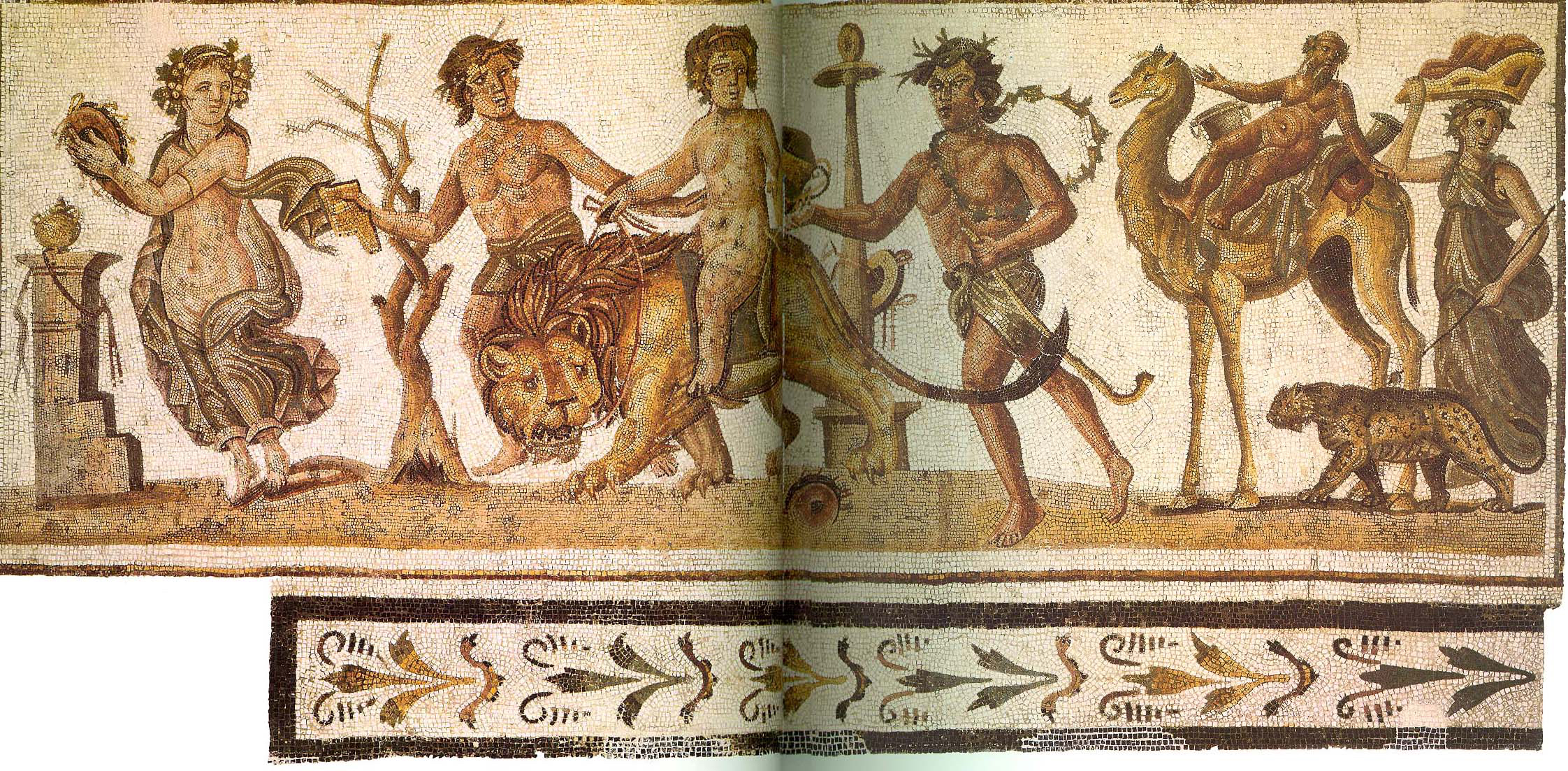
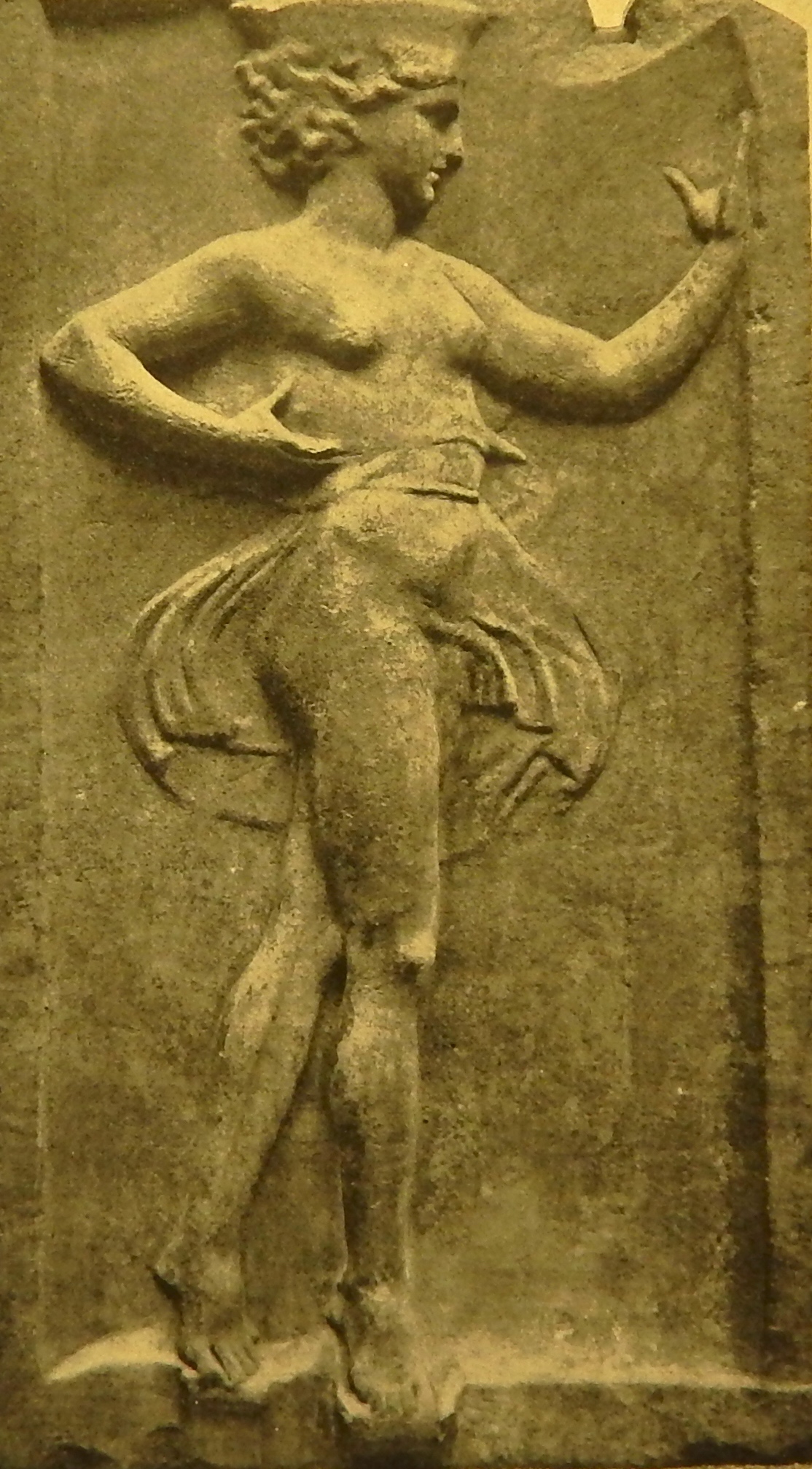

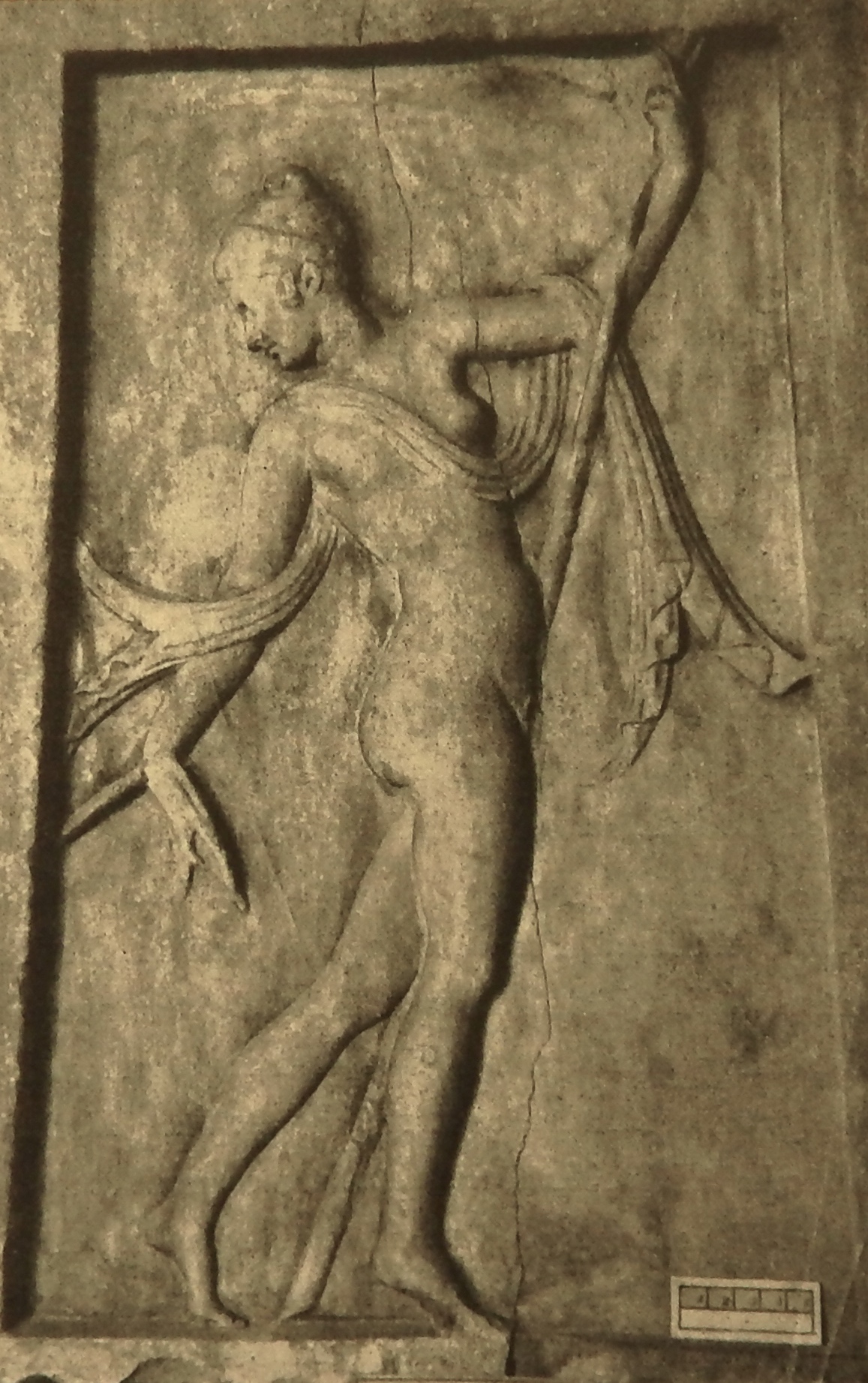

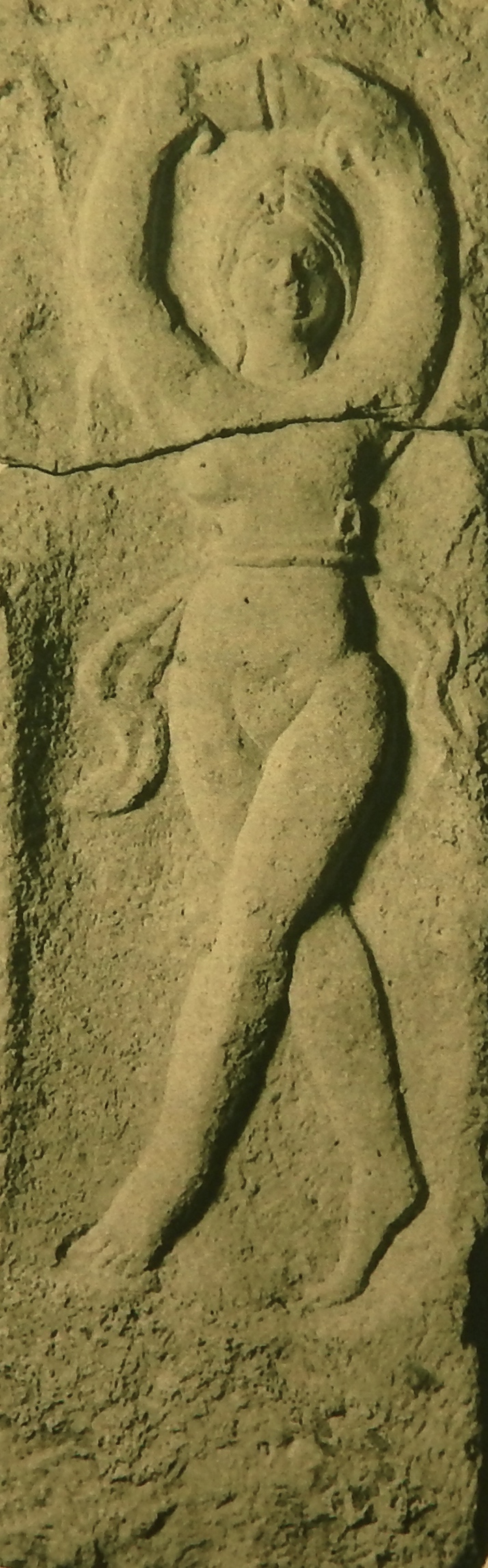
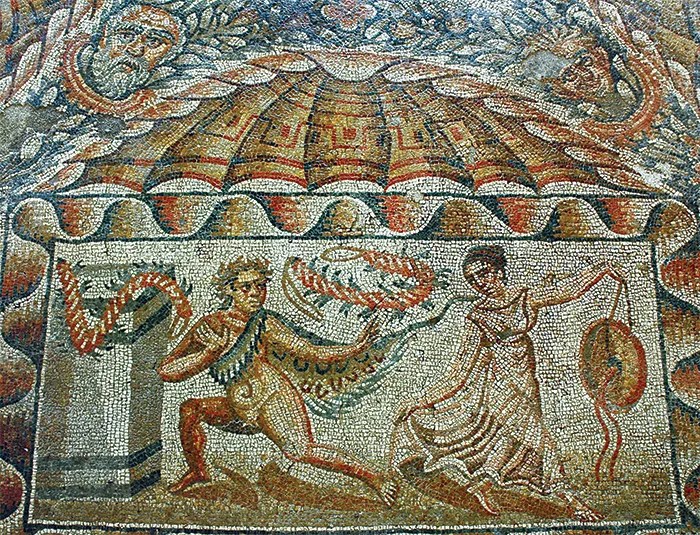
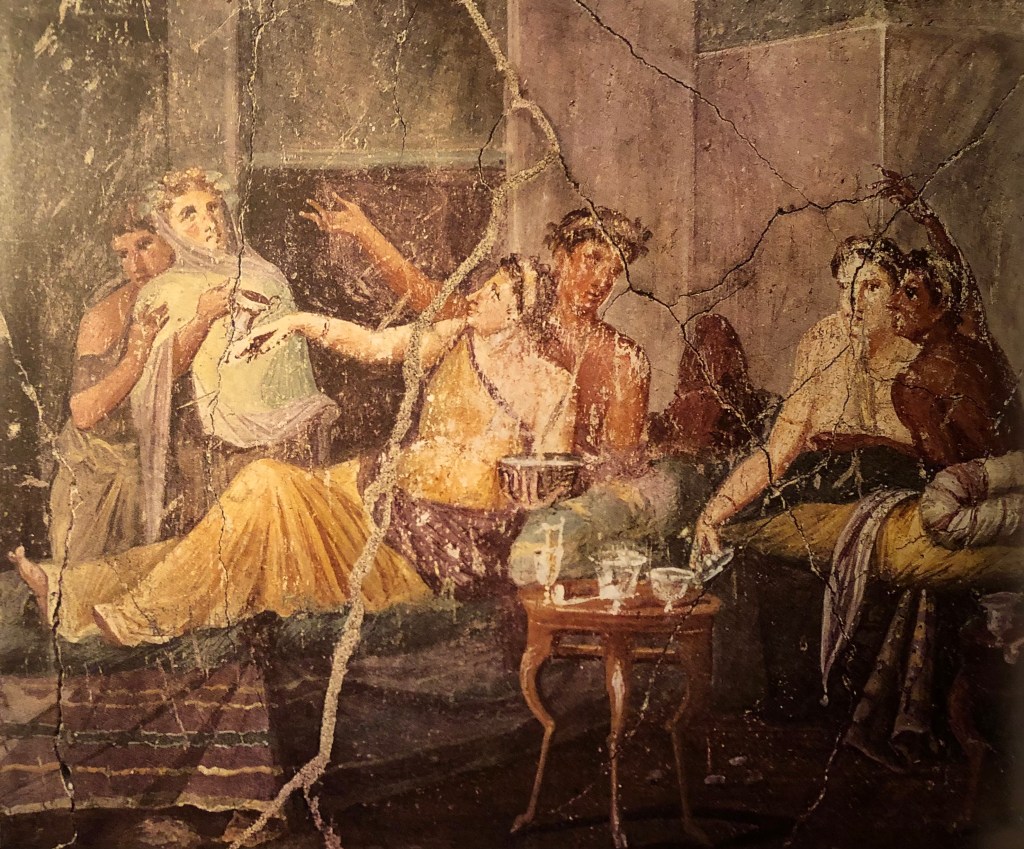
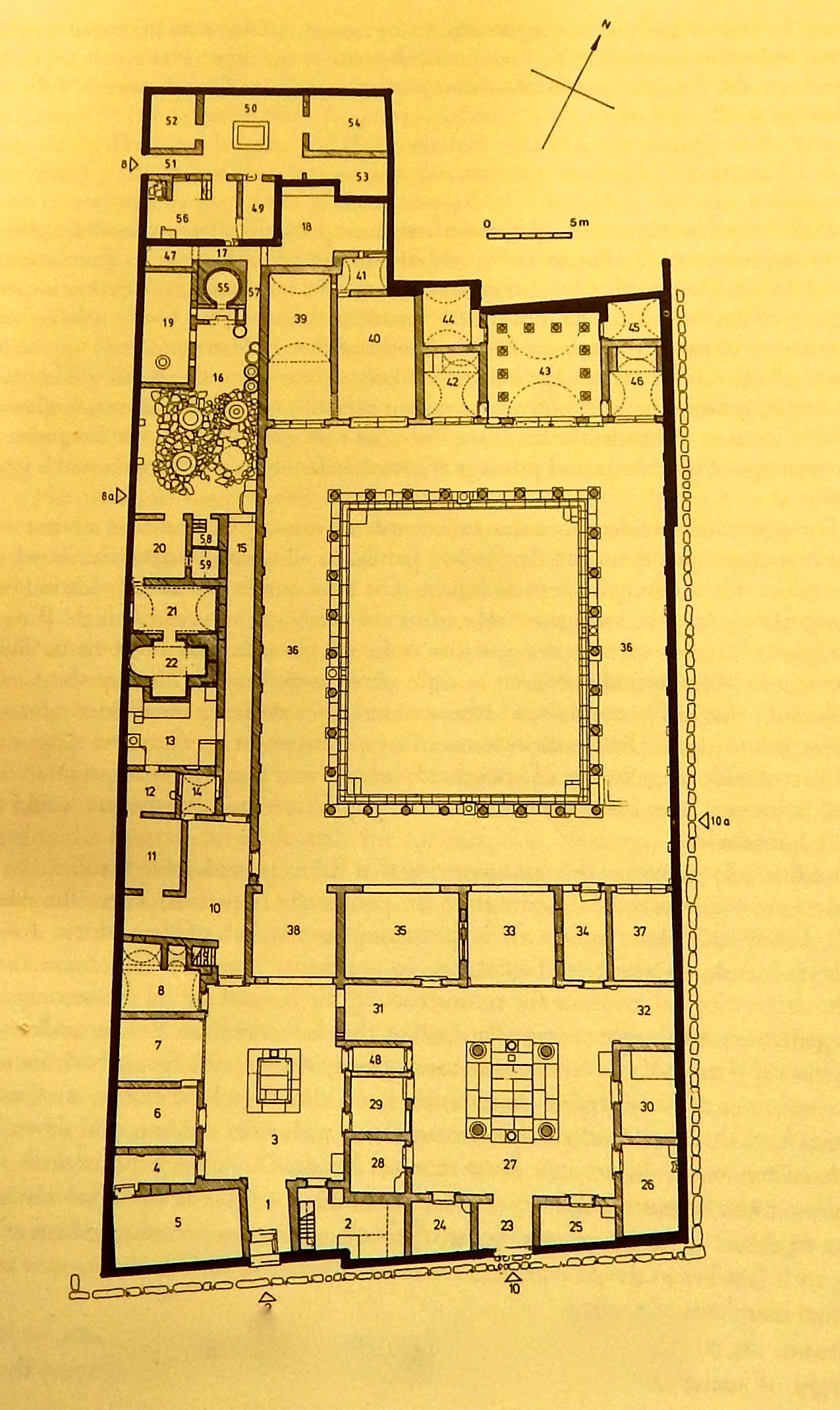
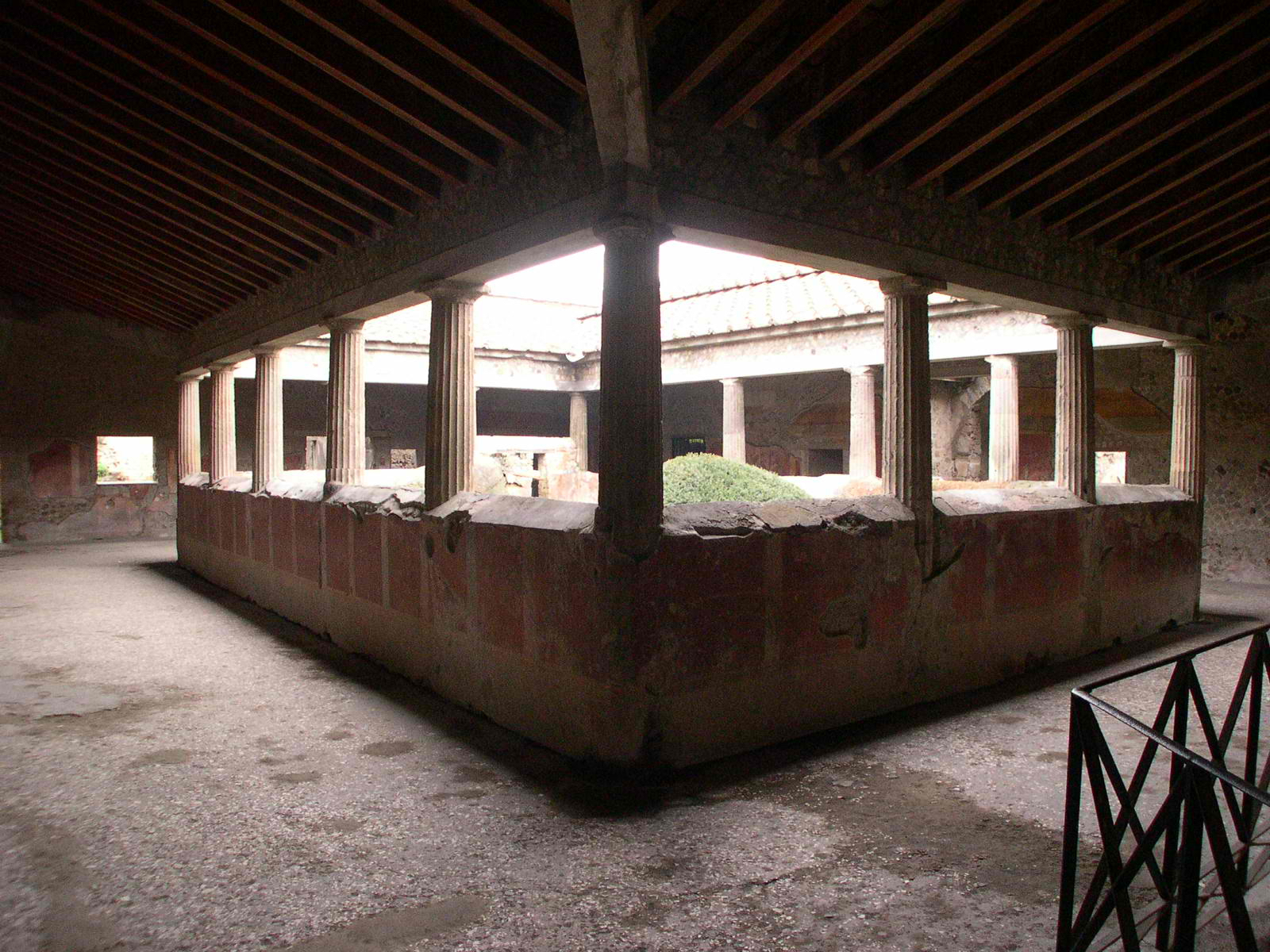
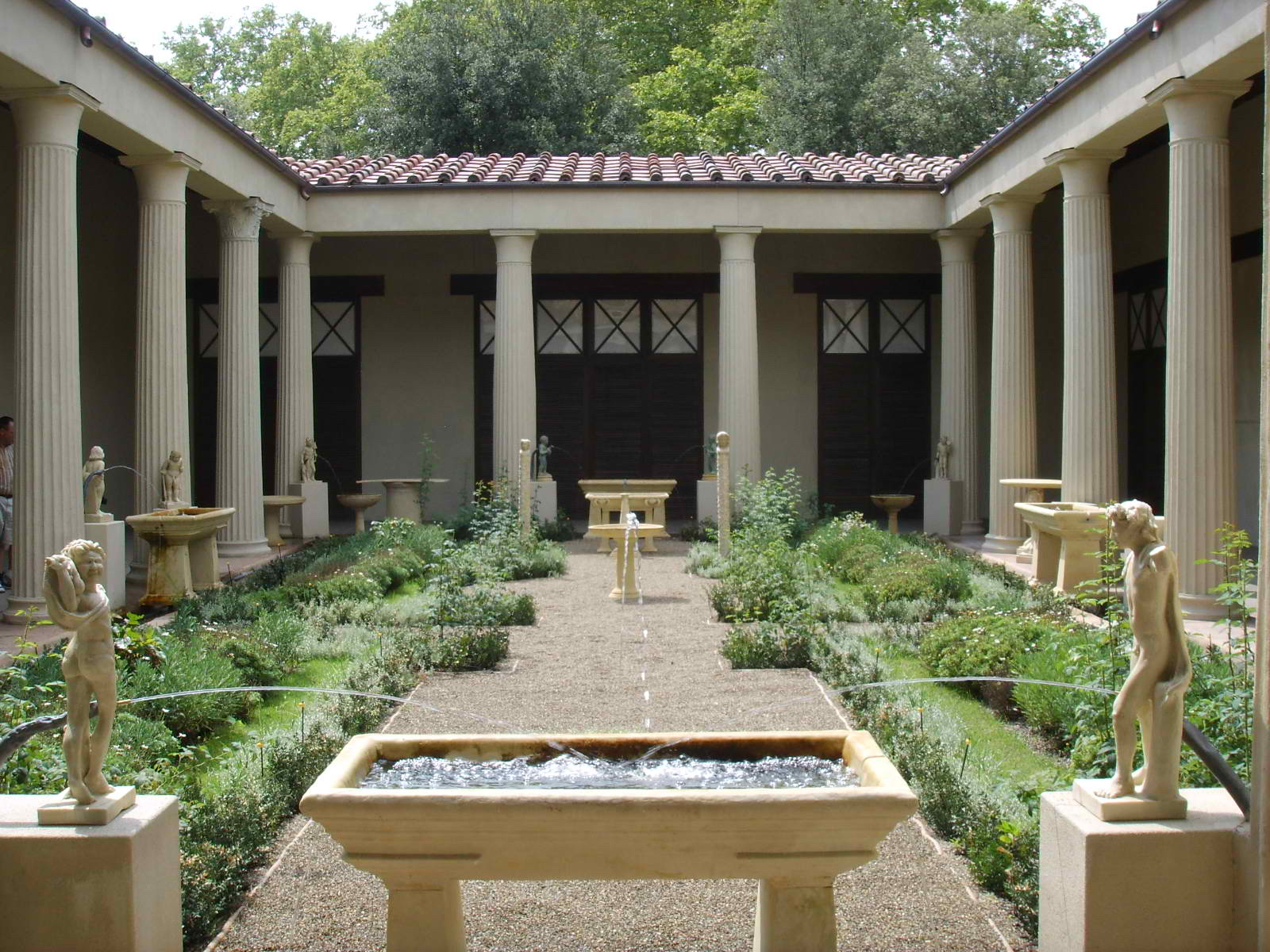
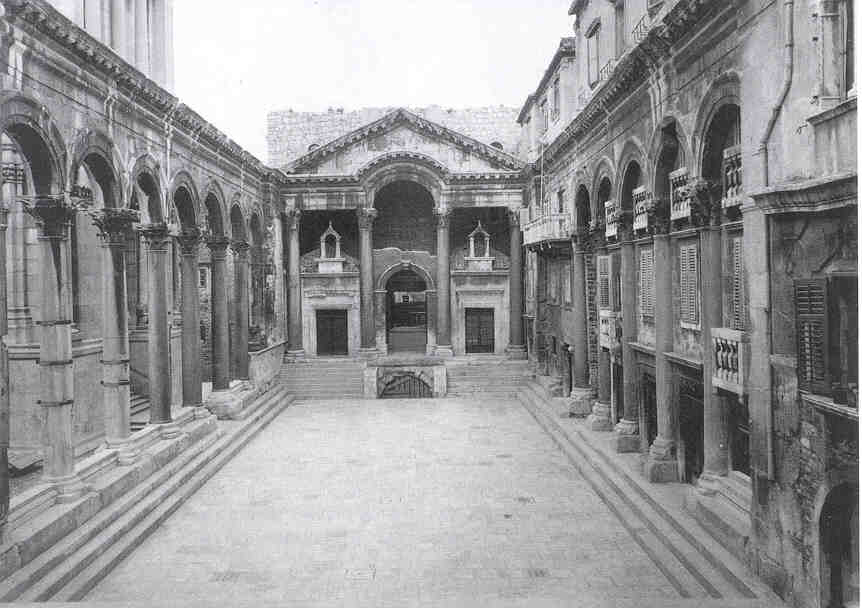
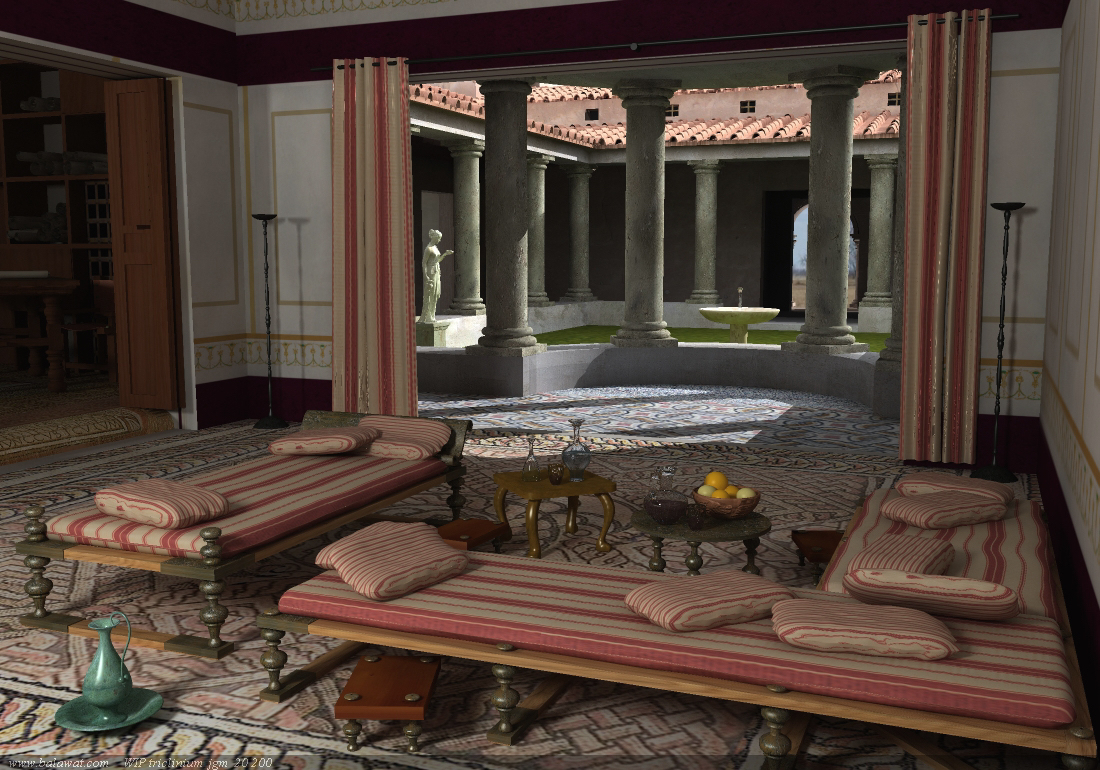
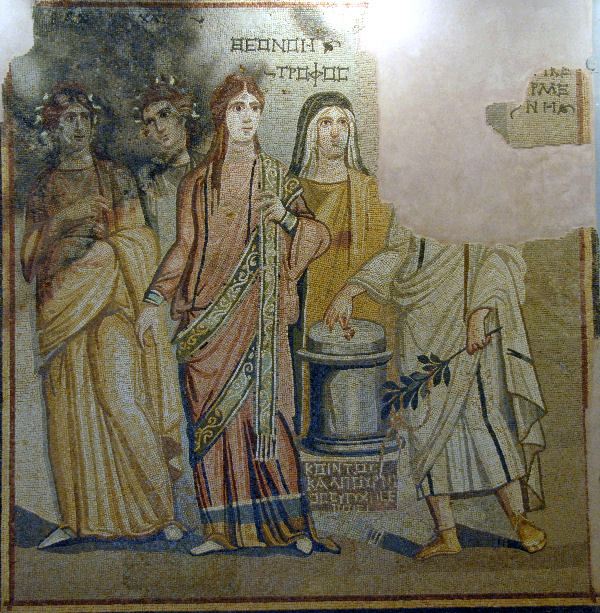

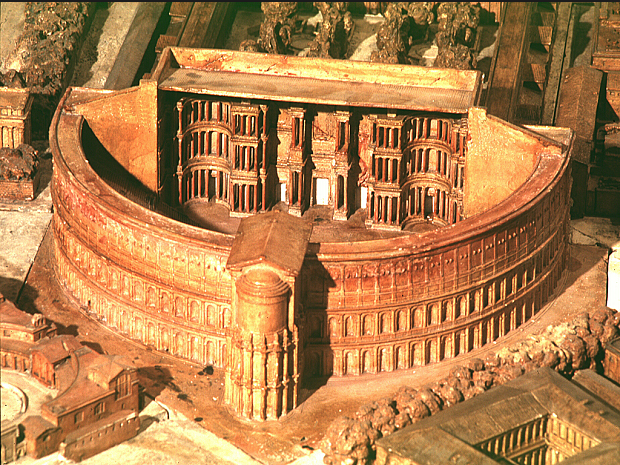
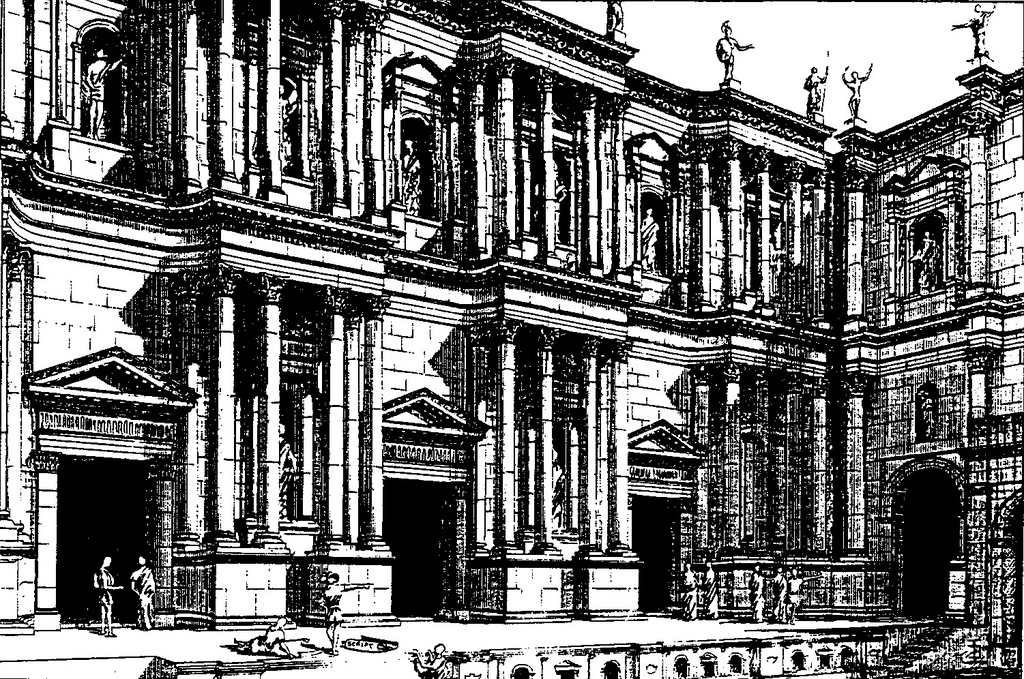
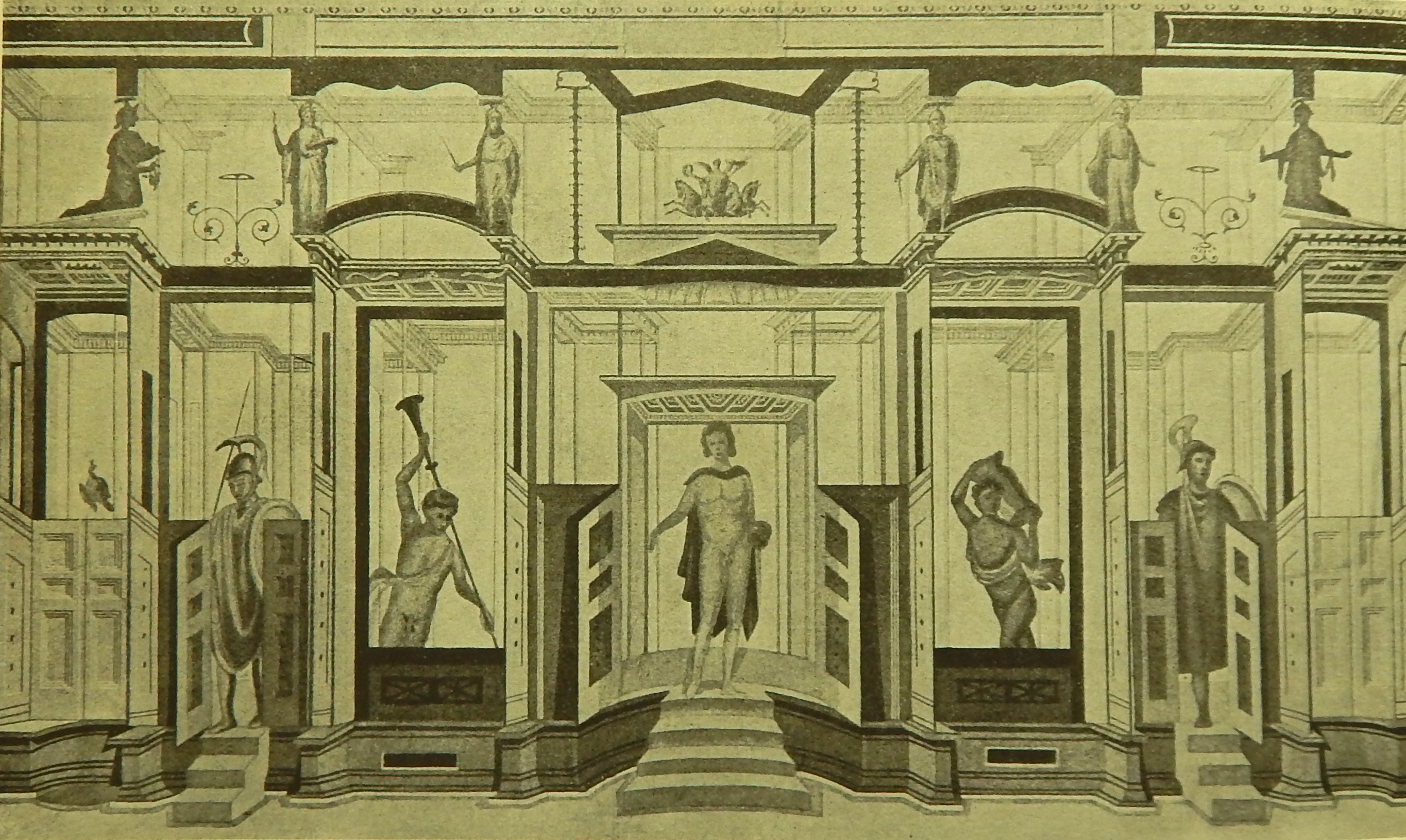
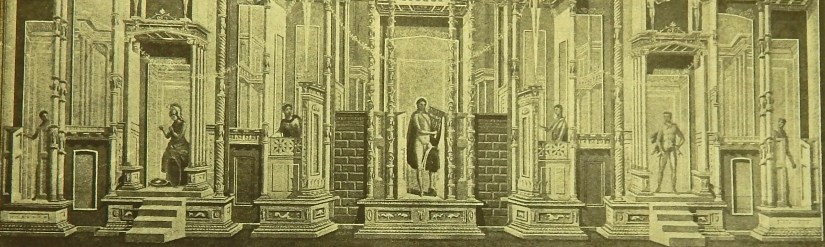
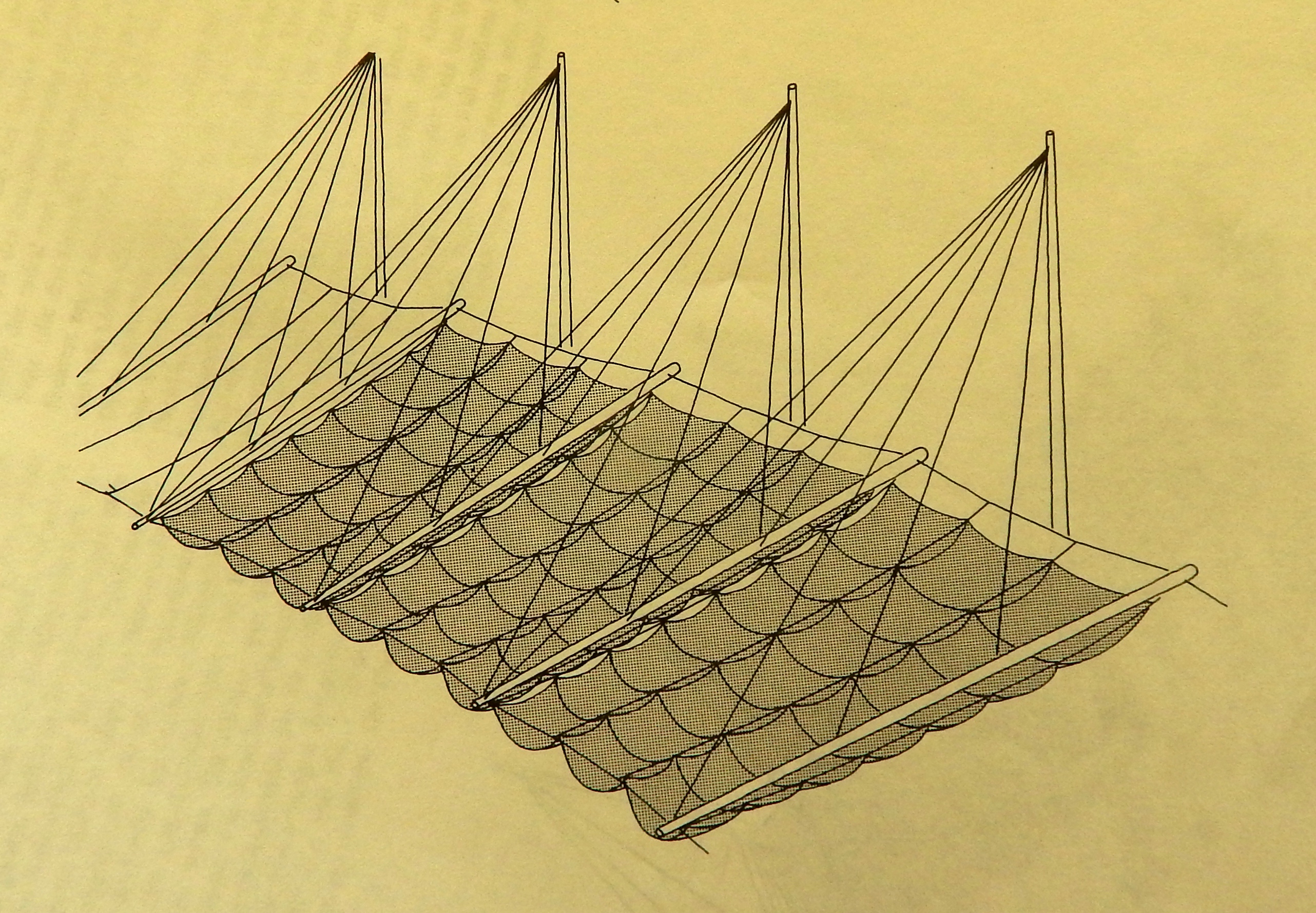
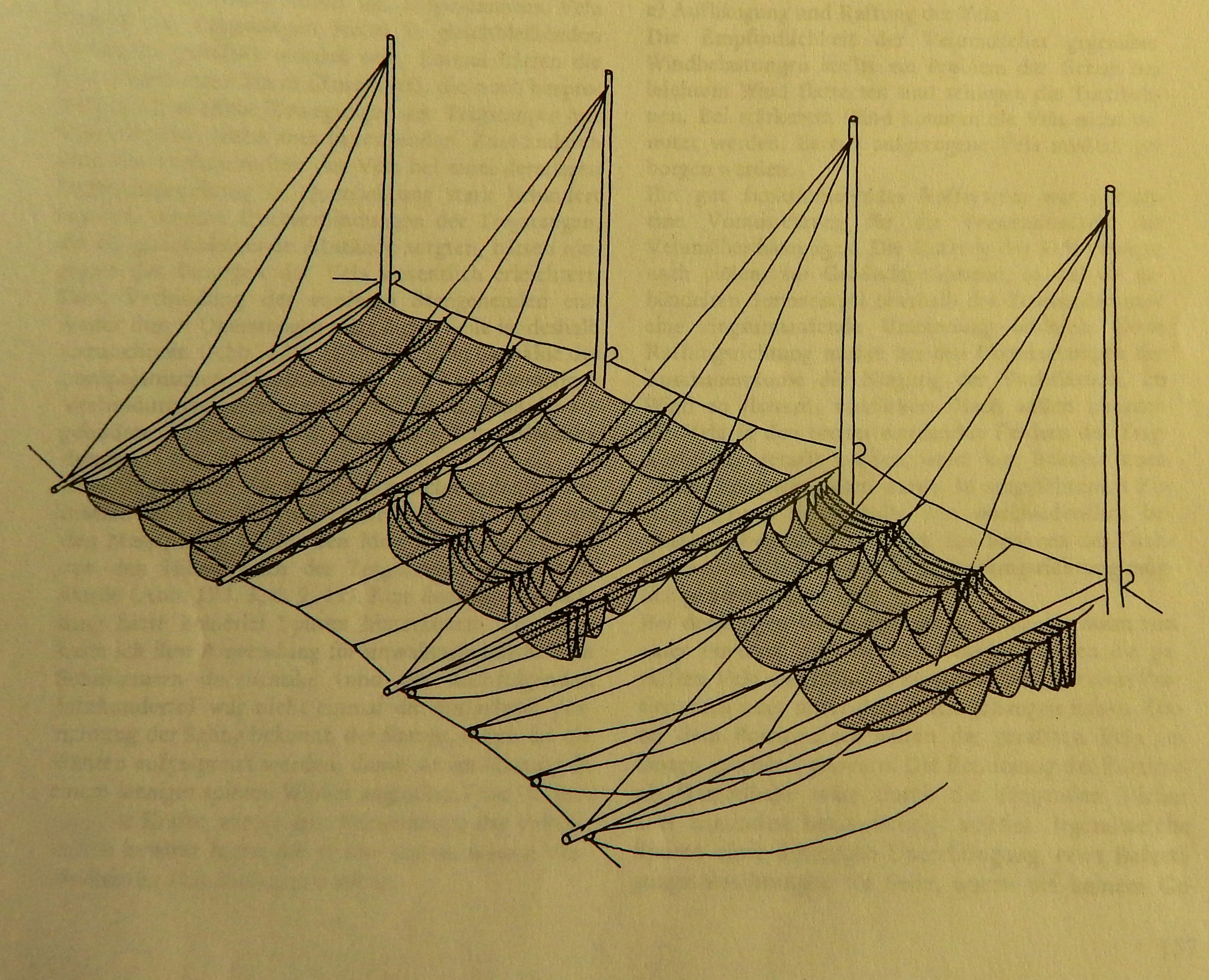

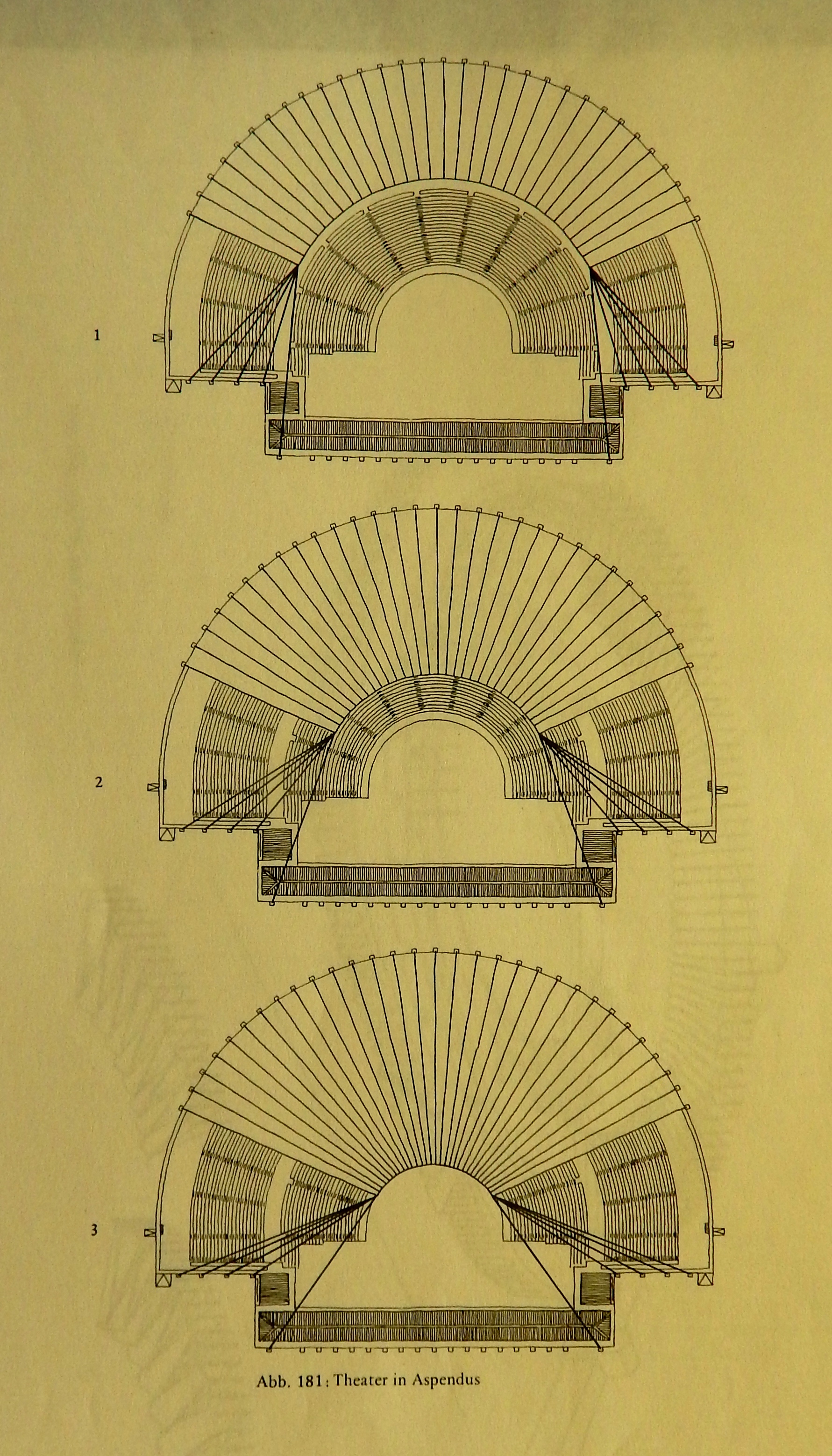
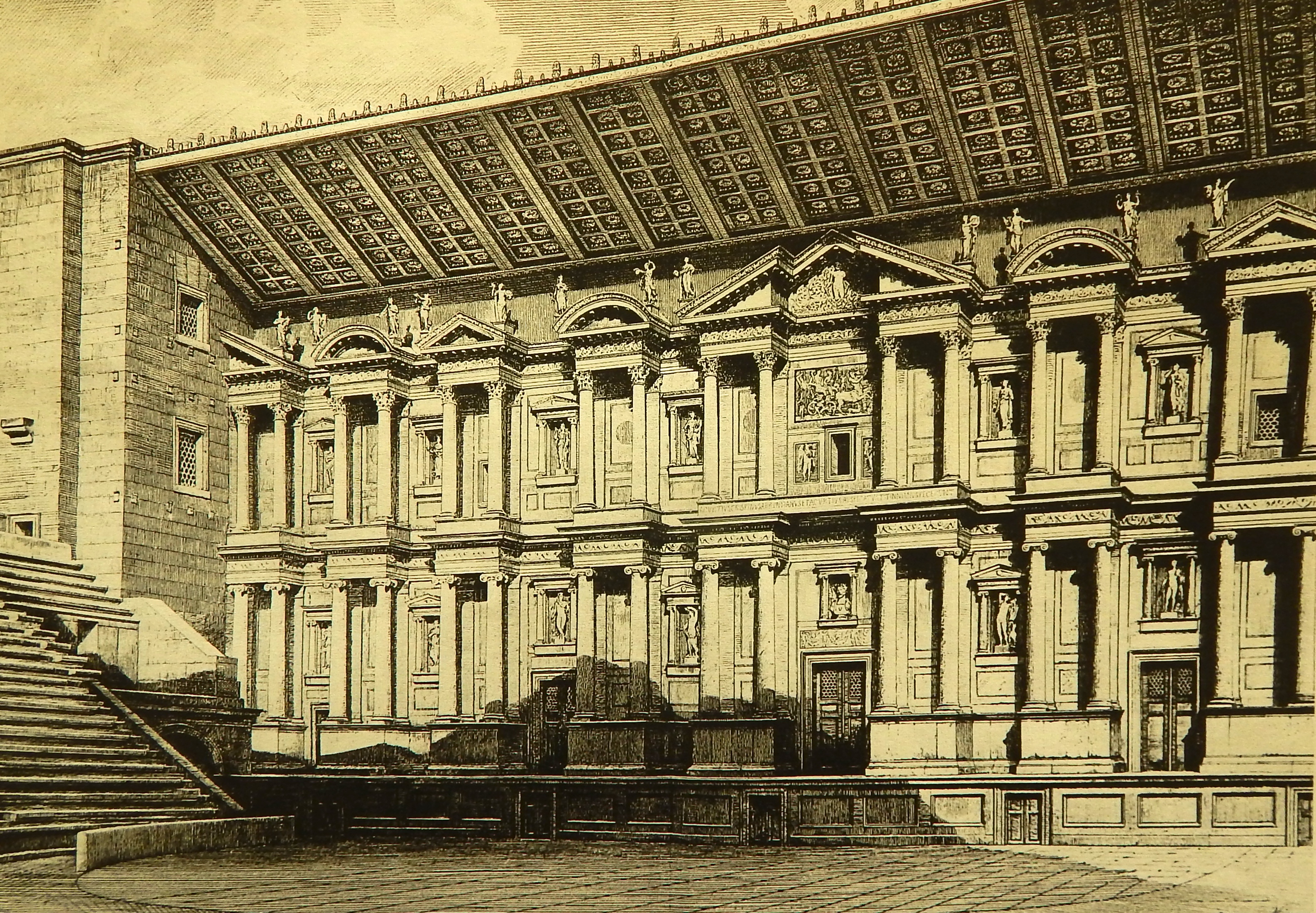
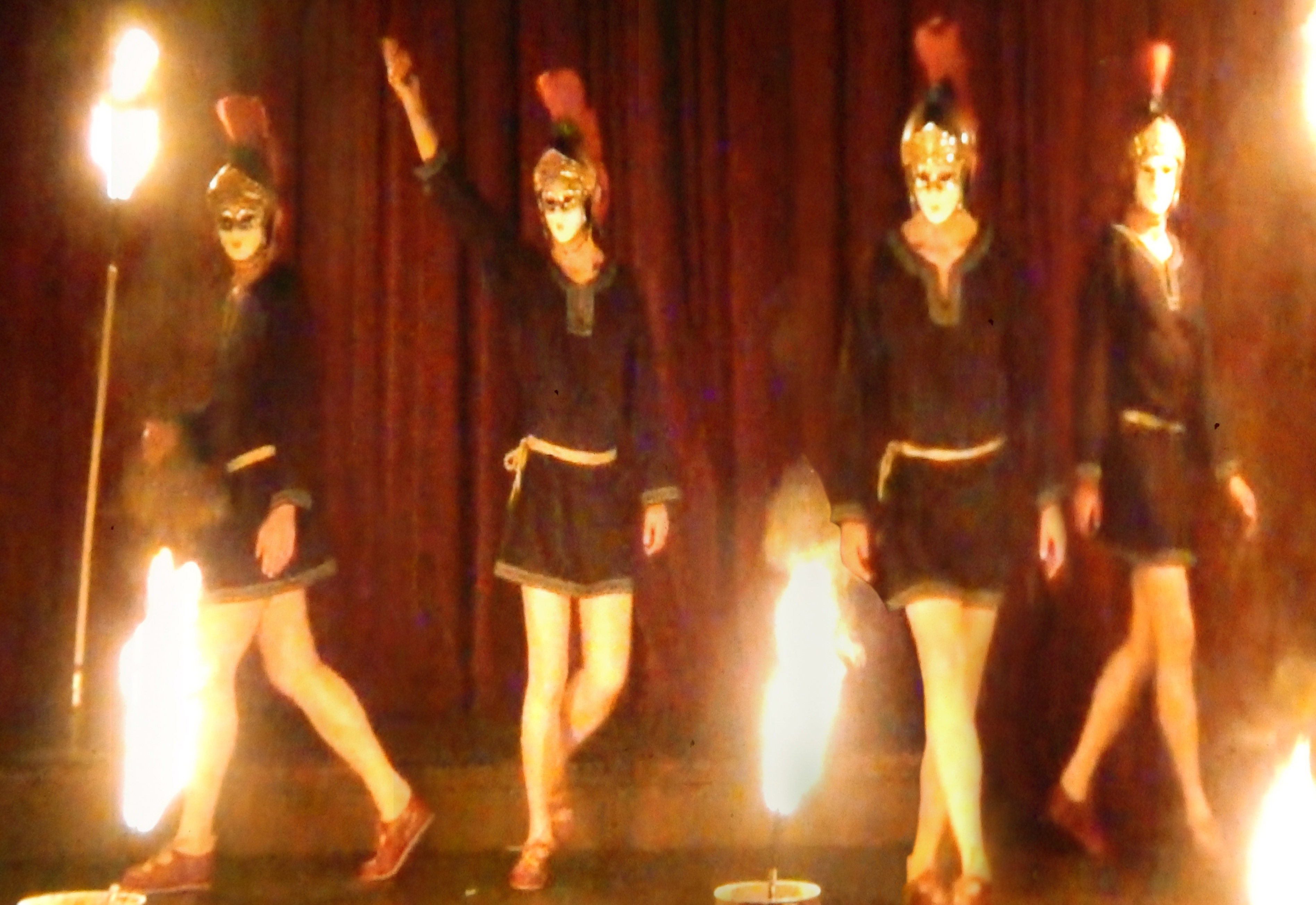

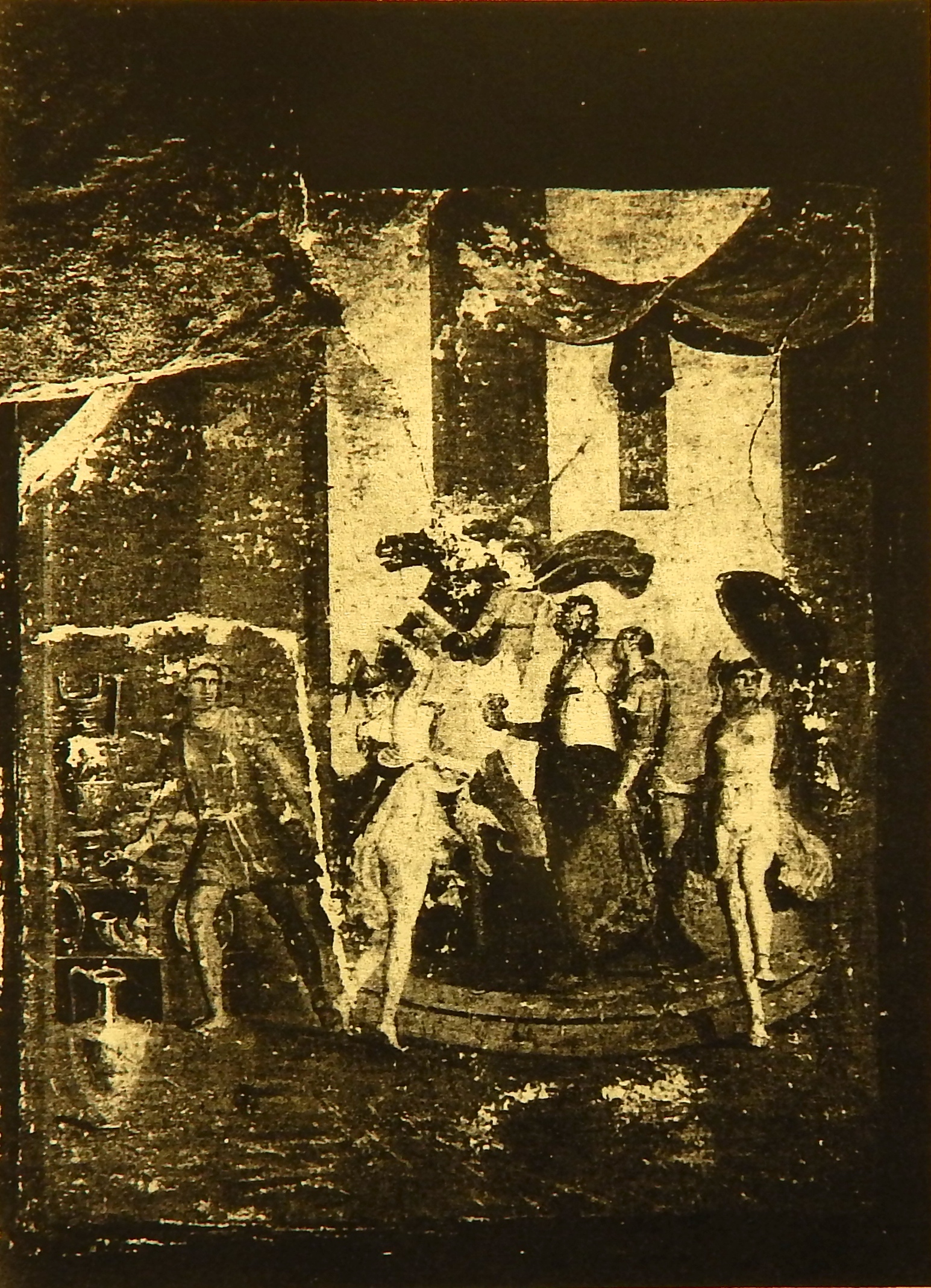

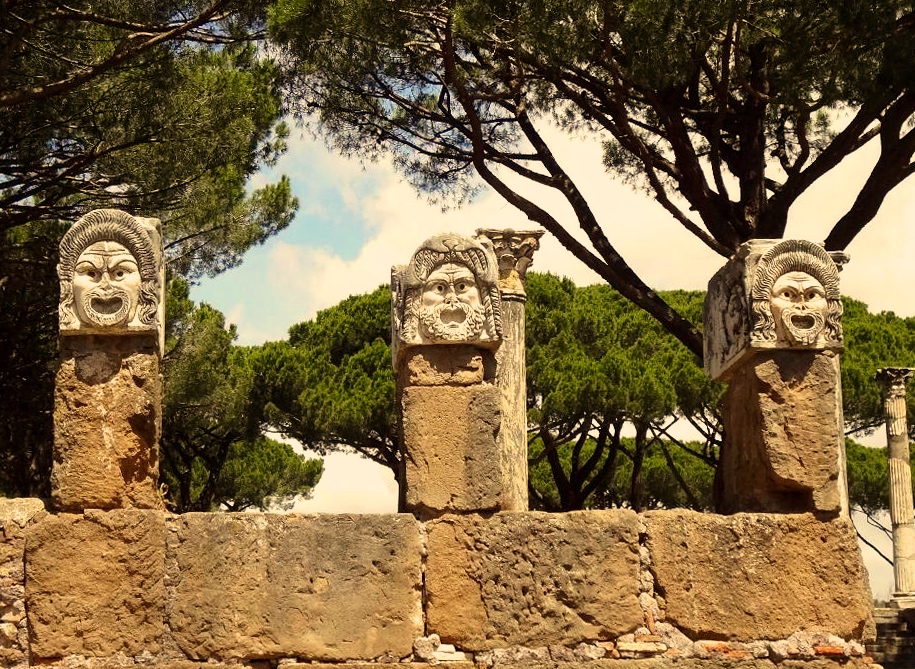


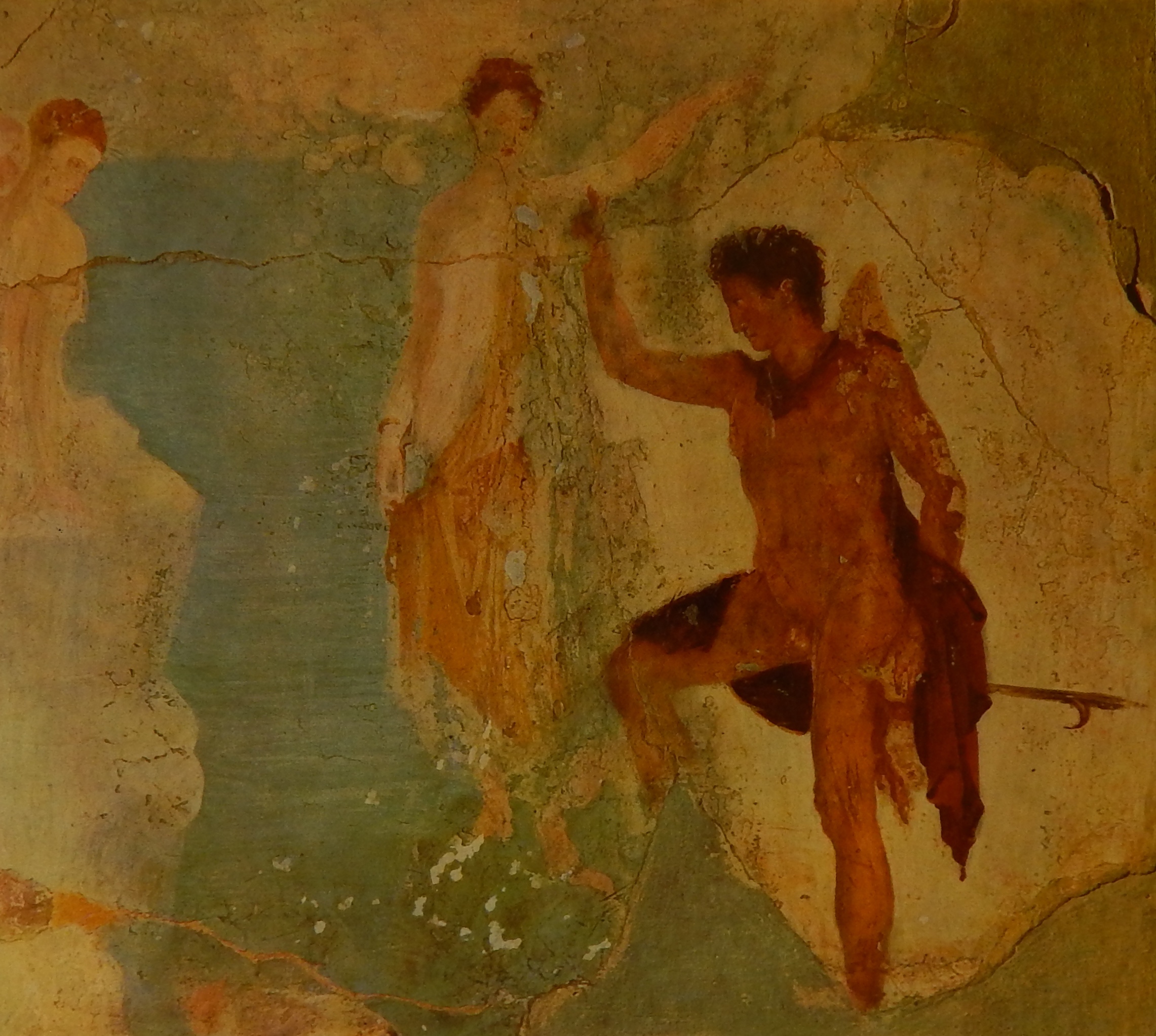

 Karl Toepfer