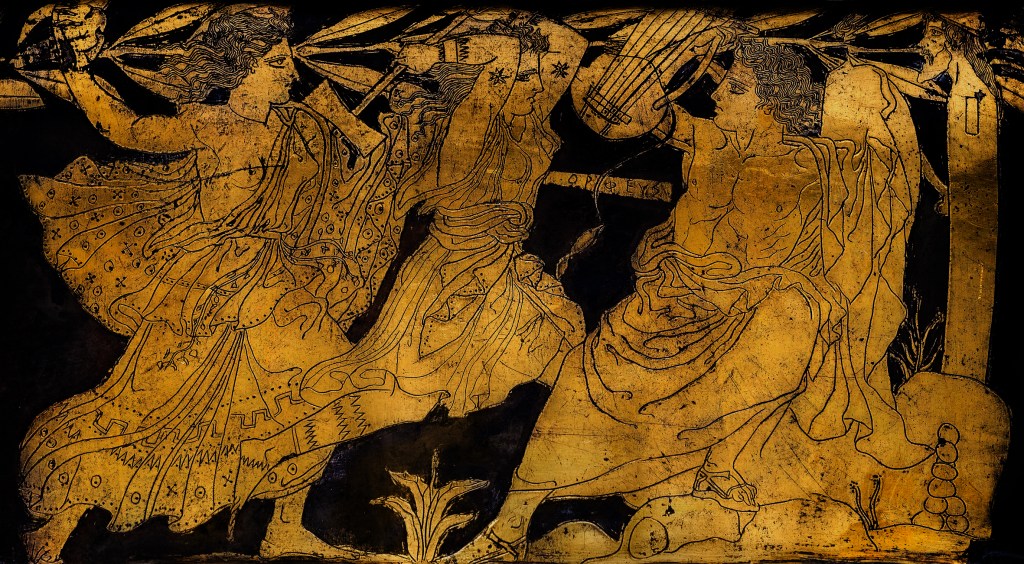
The Death of Orpheus, detail from a silver kantharos, 420-410 BCE, part of the Vassil Bojkov collection, Sofia, Bulgaria. Photo source: Wikipedia.
Orfeus and the Maenads: Two Modes of Ecstatic Discourse in Stagnelius’s Bacchanterna (1822). This essay first appeared in Scandinavian Studies, Winter 1992, Vol. 4, No. 1, 26-52. It was reprinted in Mary Denison (ed.), Nineteenth Century Literary Criticism, 61, Detroit: Gale Research, 1997, 264-277.
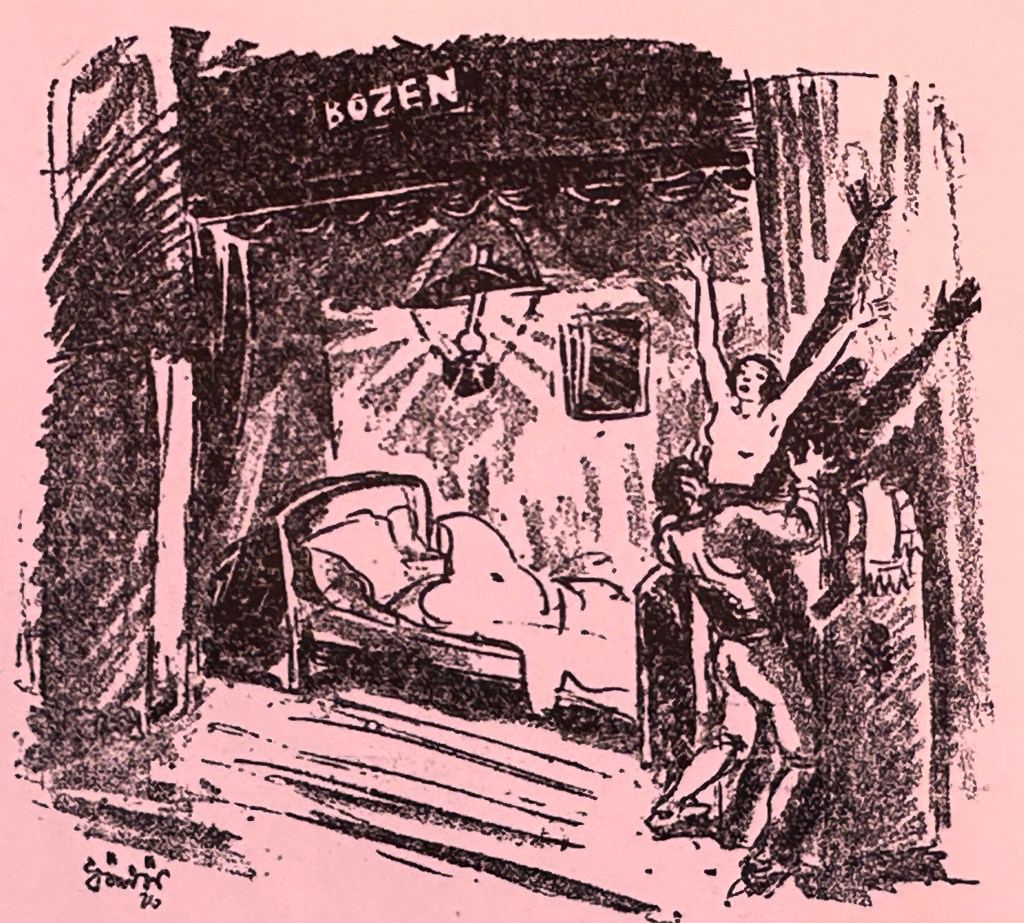
Expressionist scene sketch by Gündür for a production of Arnolt Bronnen’s Die Exzesse (1923) at the Theater in der Königgrätzer Straße, Berlin, directed by Heinz Hilpert (1890-1967), 1926.
This essay was written in 1991, but for a variety of reasons, I did not publish it and moved on to other projects. Some of these reasons I explain in note 9 at the end of the essay. I have made only very minor changes to the original manuscript, and thus references to work produced after 1990 occur only in the illustrations and notes. I forgot about the essay until I discovered it in an ancient, neglected file. It is especially interesting for its description of highly imaginative student experimental performance work.
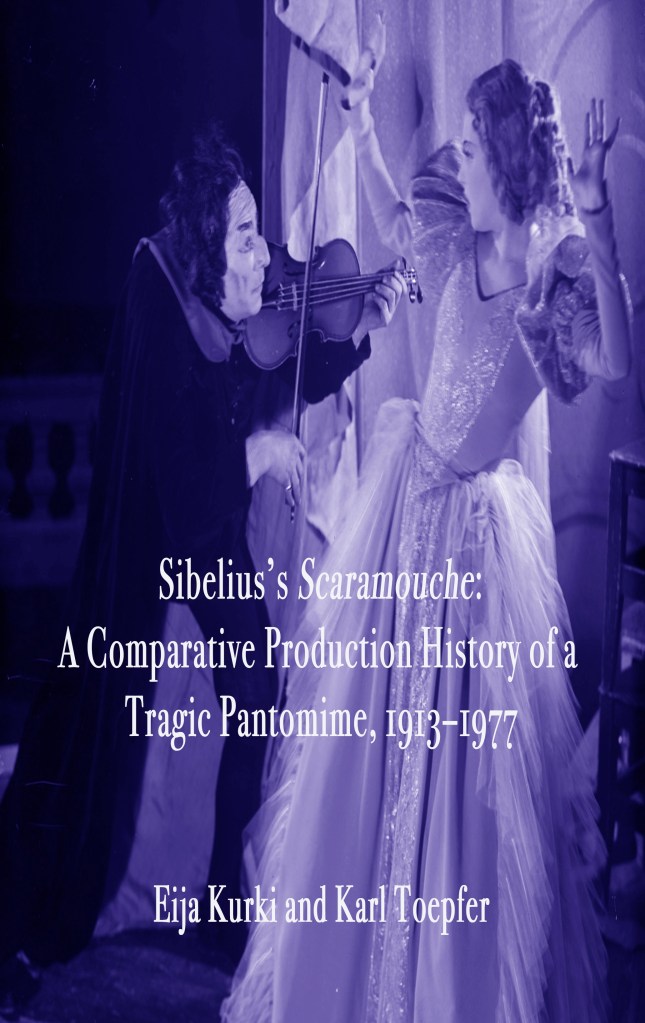
Cover photo: Alexander Saxelin as Scaramouche and Eva Hemming as Blondelaine in Scaramouche, directed by Maggie Gripenberg, Helsinki, 1946. Photo: Tenhovaara Studio; Finnish National Ballet
This book, a collaborative effort with Finnish scholar Eija Kurki, describes the historical context for the Scaramouche tragic pantomime created by Poul Knudsen and Jean Sibelius in 1913. The pantomime had numerous productions in various European countries between 1922 and 1977, and the book examines all of them according to all available evidence. The text explains the historical and cultural significance of the pantomime and how it uniquely explores a dark and complex intersection of female sexuality, marriage, and class control of erotic desire. The authors examine productions of Scaramouche from the premiere production in Copenhagen in 1922 to the last major production in Karl-Marx-Stadt, East Germany in 1977, including productions in Finland, Norway, Sweden, Latvia, France, Germany (1927), and Denmark (1950). The comparative approach to production history, accompanied by many illustrations, allows the reader to see Scaramouche as more than a historical object; it is a historical agent, causing a remarkable array of actions and responses to its themes and strange perspective on sexuality rather than a unifying feeling across languages and eras. The book is innovative in its unprecedented international scope relative to theatrical production history. Few, if any, production histories compare evidence from so many different languages and decades. The reader encounters a huge number of “voices” responding to Scaramouche in media reviews, memoirs, and other sources, and therefore understands how productions of the pantomime “awakened an avalanche of language” up to 1977, while since then, though scholars now claim it to be one of Sibelius’s major achievements, it has disappeared entirely from the stage for mysterious reasons that the book attempts to identify.
170 pages, over 100 illustrations.
PDF of the book Sibelius’s Scaramouche: A Comparative Production History of a Tragic Pantomime, 1913–1977.
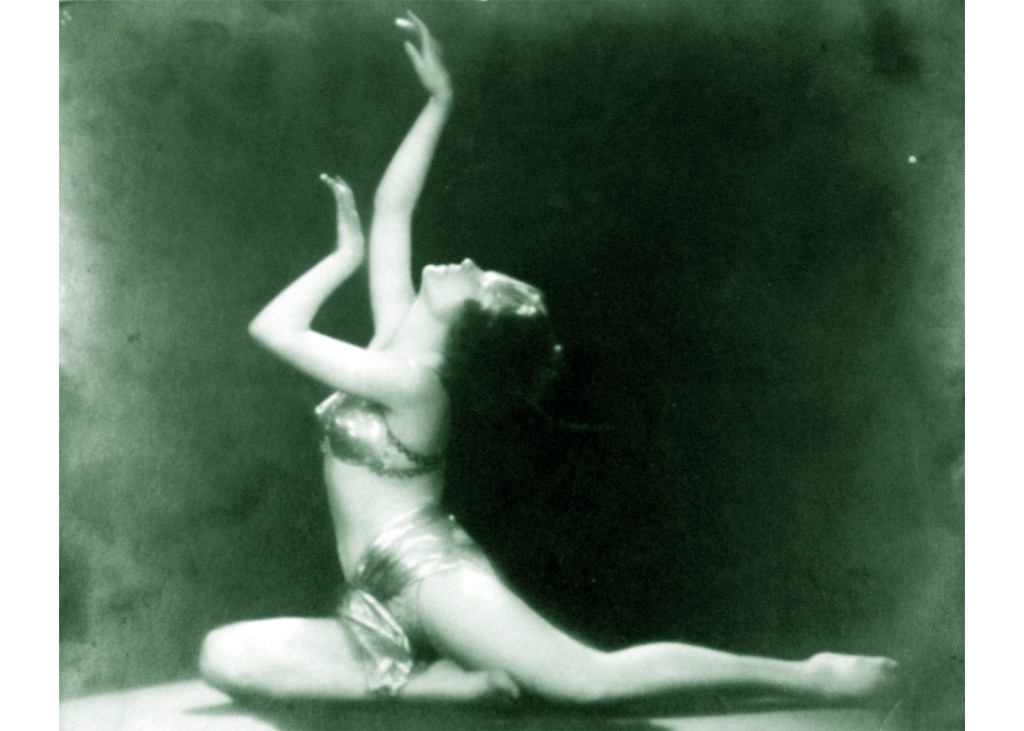
Ella Ilbak (1895-1997) performing “The Flame,” photographed by Henry Goodwin (1878-1931), Stockholm, 1924. Photo source; Moderna Museet, Stockholm.
This is the keynote address I gave for the conference “Dancing Body: Modern Dance in the Whirlwind of Time” at the Estonian Theater and Music Museum, Tallinn, Estonia, 10 October 2024.
Melina Forte in Ramona, 2016. Photo Charly Borja, from Mimo Dinamico (2023). Ramona is a one-woman mime piece in which Forte brings to life the recurring character of Ramona Montiel in paintings by Argentine artist (1905-1981).
My book, Pantomime:The History and Metamorphosis of a Theatrical Ideology, covers a wide range of pantomime forms from the Roman Empire to the present time, but the book, although enormous, is by no means a complete history of this art, and much about the history of pantomime remains to be told. For example, when I wrote my book, I knew that Latin American countries had a history of exploring pantomime, but I was able to write about pantomime in only one country: Chile. Information about pantomime culture in the many other countries of Latin America was extremely difficult, if not impossible, to obtain, mostly because, to write a history of pantomime on a global scale, requires access to digitized bibliographies, archives, and publications. When I wrote my book, such access was not available to the extent necessary to feel confident in writing the history of pantomime in any country other than Chile. Moreover, covering the history of pantomime in all of Latin America was probably too big a task for a book that was already too large for most readers.
However, a reader of my book in Argentina, Victor Hernando, contacted me and informed me of a book he has recently published on pantomime in Argentina, Mimo Dinamico: Dimensiones dramatúrgicas de la acción, Buenos Aires: Inteatro, 2023. A digital edition of the book is available for free here. Hernando, who teaches at the Instituto de Artes del Espectáculo in Bueno Aires, has been active in Argentine pantomime since the 1970s as a performer, director, teacher, theorist, and historian. He founded the mime journal Movimimo in 1979 and is still an editor for it. In Mimo Dinamico, Hernando extensively develops many ideas he introduced in his smaller book Mimografias (1996). He has spent most of his life exploring the uniqueness and significance of Argentine pantomime history, and he brings a refreshingly intellectual approach to the concept of “mime” as understood in relation to the French application of the term. His book shows how the concept of mime mutates under the pressures of national history and reality; it does not transcend or “survive” history as a constant, autonomous power.
Mimo Dinamico contains three large sections. The first section presents a general history of pantomime in Argentina. But Hernando prefaces this history with a brief account of how mime evolved in France from Jacques Copeau’s founding of the Theater du Vieux Colombier in 1913 to the formation of the “corporeal grammar” theory of Copeau’s student Etienne Decroux in the 1940s, because ideas about pantomime in Argentina since 1950 have largely evolved from Decroux’s somewhat mystical control of the term “mime.” Before 1950, evidence of pantomime culture in that country remains very difficult to locate, and Hernando mentions only the Spanish-Argentine director and playwright Antonio Cunill Cabanellas (1894-1969), who began directing silent films in Buenos Aires in 1915, but perhaps more importantly, as a founder of the National School of Dramatic Art in 1957, he established a curriculum in pantomime. Up to that time, inspiration for Argentine pantomime derived largely from seeing the work of Decroux’s two most famous students: Marcel Marceau, who performed in Buenos Aires in 1951, and Jean-Louis Barrault’s performance in the film Les Enfants du paradis (1945). The first Argentinian to study directly under Decroux was Jaime Jaimes (1931-2019), who did not begin his studies in Paris until 1956. A few other Argentinians, including Maria Escudero (1926-2005) and Ángel Elizondo (1932-2022), studied under Marceau or Decroux, but Hernando makes clear that Decroux’s influence over Argentine pantomime was remote, tenuous, and heavily filtered through mime teachers inspired rather than educated by Decroux. Consequently, Argentine mime emerged and developed in a far more improvised manner than adherence to Decroux’s dogmatic pedagogical system permitted. Hernando’s history of Argentine pantomime is largely a sweeping account of how the concept of mime lacked any central control over it and subsequently became diffused throughout the country as a mode of signification “free” of any rigid, formal, or domineering system of acquisition. This phenomenon leads Hernando to adopt an unusual approach to Argentine pantomime history. While he acknowledges that a few figures, such as Escudero and Elizondo, made important contributions to the mime culture, he does not identify anyone as a dominant, controlling, or even powerful “leader” of mime in Argentina. Most of the historical section simply lists the many names of people involved in mime or pantomime since 1950s. Hernando’s purpose is to show the expanding population of mime people across time. He occasionally mentions specific productions, publications, or schools established by mime artists, but he does not discuss any of them in detail or in relation to any decisive impact on mime culture. Production companies and schools come and go, yet the mime culture grows regardless of the fate of any company or school. This is not a history of pantomime defined by the careers of “great artists” or progress toward the establishment of prestigious national cultural institutions like the opera. Nor is this a history of distinctive works that form some sort of “canon” affirming the cherished value of pantomime within national culture. Hernando avoids discussing any critical apparatus, journalistic, academic, or commercial, for evaluating the achievements of mime performance, and he does not identify the socio-economic origins of those who choose careers in mime or the unique conditions that motivated them to become mimes. Instead, he wishes to show Argentine mime history as an expanding collective national project involving a multitude of lives about whom no history could be large enough to describe in any detail. Mime in this book appears as a significant, powerful experience for more and more Argentinians regardless of the art’s success in creating “great” personalities, works, or institutions. Mime culture was by no means confined to Buenos Aires, as Hernando carefully identifies those responsible for initiating and sustaining the art in Rosario, San Miguel de Tucumán, Mendoza, Córdoba, Santa Fe, San Juan, and elsewhere in the country. He describes a historical process whereby, in the 1950s and early 1960s, persons interested in mime oriented themselves toward Europe and French models (Decroux, Marceau, Lecoq) of performance; by the end of the 1960s, mime cultural energy had shifted away from Europe, spreading outward from Buenos Aires to other cities throughout Argentina. In the 1990s, Argentinian mime cultural began radiating beyond national borders to form alignments with mime artists and organizations in various South American countries. The emphasis on a collective historical experience of mime implies a leftwing political identity for the study and practice of mime, and Hernando notes how, during periods of dictatorial regimes, the Argentine government dissolved production companies, suppressed performances, and drove some artists, such as Escudero, into exile. Participating in the mime culture was a far more dangerous activity than it ever was for those more intimately affiliated with Decroux.
Ivan Tisocco and Lucas Maíz in Parabellum, 2021. Buenos Aires. Photo: Movimimo Archive, Mimo Dinamico.
The second large section of the book discusses theoretical issues related to the practice of mime in Argentina. Because mime grew in Argentina without issuing from any central authority or controlling set of goals and principles, such as Decroux’s “corporeal grammar,” the language used to describe, explain, and justify mime was unstable and open to constant variation and extension. Hernando spends numerous pages explaining why it is difficult to define the term “mime” within the Argentine context, because the term applies to various forms of pantomime ex-communicated by Decroux and his disciples, to ideas of “silent theater” that ignore the precepts Decroux imposed on the term “mime,” and even to performances that include speech. Indeed, Argentinians linked mime much more closely to theater (scenery, costumes, music, lighting and sound effects) than was acceptable to Decroux, who made no secret of his profound aversion to public performance as a goal of mime education. Hernando’s focus is on mime as a communal activity, which he equates with the formation of ensemble performances, the interaction of two or more bodies on stage. For Decroux, the primary goal of mime education is the spiritual purification of individual bodies. For Hernando, the purpose of mime is to create communal “action,” meaning interaction between bodies that builds unity across sources of division. Through his complex discussion of mime definitions, he implies that language is a chief source of communal division. Mime therefore functions to reveal a “poetic” connection between bodies concealed by the language controlling perception of them through speech. Bodies should tell “stories” that speech suppresses or cannot tell. An interaction between two or more bodies entails a narrative, a sequential organization of actions invested with emotional significance for an audience. The main challenge facing Argentine mime is not how to achieve identity as a mime, but how to sequence actions performed by interacting bodies without using speech. Constructing pantomimic narratives that reveal hidden “poetic” connections between bodies is incredibly difficult because the bodies must “act” in ways that performers must discover rather than learn. To explain his own process of narrative construction, Hernando plunges into a convoluting whirlpool of language, a bewildering abundance of concepts, theoretical terms, and semiotic categories of his own invention (e.g., “visual signifiers,” “paralinguistic gestures,” “discursive matter,” “semantic level,” “corporeity,” “narrative modulation,” among many others), all of which guide the reader toward the dominant idea that “dynamic mime implies thinking of mime as a visual art.” How, in collaboration with others, does one construct an emotionally resonant narrative of “dynamic” interaction between bodies without relying on a literary text that prescribes actions, without a scenario that the performers must learn? Mime narrative construction, as Hernando understands it, is a process of discovering “poetic” corporeal significations that lie outside an initial intention, outside a predetermined message. In the dynamic mime narrative, bodies guide performers and spectators to a new understanding of a hidden or suppressed poetic “level” of communication unmediated by the social effects of language, such as class distinctions, gender role assignments, political structures or concentrations of power. Hernando then describes his own elaborate process of narrative construction and discovery. He does not treat his process as a model that others should follow; rather, he wants to show how any attempt to construct an emotionally resonant mime narrative is a very complicated mental activity involving the discovery, analysis, and organization of images, “visual signifiers,” and a visual design that would otherwise remain hidden if narrative construction began with a text rather than with the body. A dynamic mime narrative involving two or more performers requires a director, someone outside the zone of performance who can shape the visual design according to a logic that functions on a collective rather than individual level of signification. Much of the second section consists of an articulation or theorization of the cognitive process that he, as a director, applies when constructing a dynamic mime narrative as a visual design. He introduces many terms and concepts that serve more to complicate than clarify the process of “thinking” with corporeal images, but one term he introduces seems fundamental to the construction of dynamic mime narratives: “mimage” (mimaje), a word inspired by Barrault’s comments in a 1935 letter regarding his pantomime production of William Faulkner’s As I Lay Dying (1930): “This mimo, I am convinced, smells neither of pantomime, nor of school, nor of aesthetics (or of the tableau vivant, so unpleasant); it tries to be purely animal . . . This work does not exist as a text. It can only exist if a group of actors and a director work on a stage” (Jean-Louis Barrault, Mi vida en el teatro, Madrid: Fundamentals Editorial, 1975, p.104). As I understand Hernando, each performing body contains a hidden or dormant image of life or freedom in relation to any abstract theme or identity (he calls it, rather confusingly, “the initial text,” presumably because you need at least a word to initiate any complex human activity, like theater). The process of externalizing this image through corporeal action is mimage. Different performers externalize different images in response to the same abstraction. When two or more performers are together in the performance space, it is the task of the director to “design” the relation between these unique, perhaps even contradictory images. The design process is mysterious, so complex that I am not sure Hernando himself understands it well enough to explain it with the clarity needed to apply it to contexts other than his own. But the concept of mimage is useful as a starting pointing for building dynamic mime narratives: one begins by unlocking an image in the body in response to some abstract concept; another body releases a different corporeal action in relation to that abstraction. The director, however, does not work with the abstract concept nor with the images within the bodies, but with the visual design of the corporeal actions. In this way, one “thinks in images,” one allows bodies, rather than textually inscribed “characters,” to communicate with each other and reveal a life we cannot see when language, written or spoken, mediates our perception of bodies.
Final scene of KaKuy, 1982. Photo Gabriel Chame, from Mimo Dinamico.
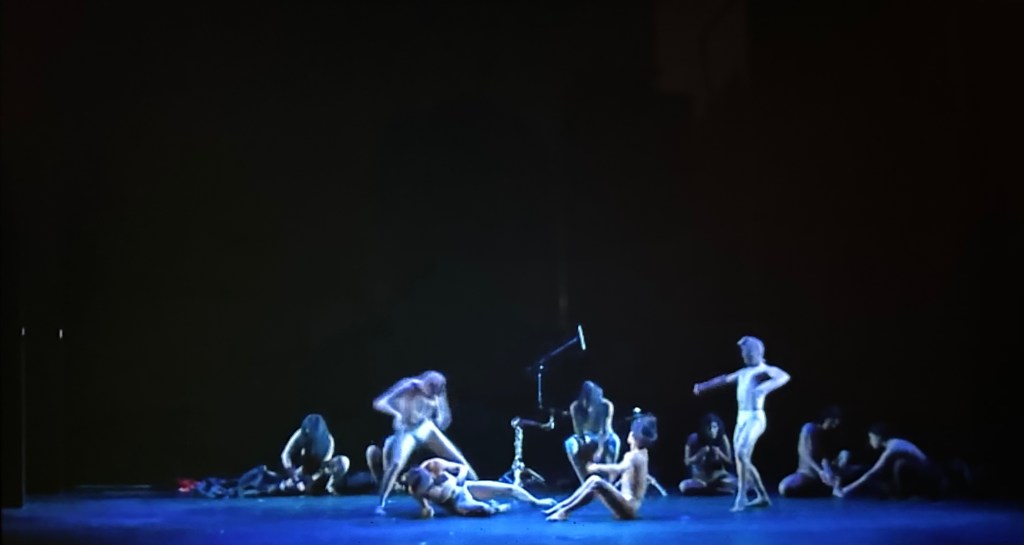
In the third large section of the book, Hernando how his “dramaturgical” principles emerged from a production he directed in 2012, Kloketen, which premiered in Buenos Aires that year. Kloketen was a 30-minute dynamic mime in eight images involving a cast of fifteen persons. The initiating image for the production was the Hain ceremony performed by the Selknam people, a Native American tribe that inhabited Tierra del Fuego until their virtual extinction around 1950. A further inspiration was Ángel Elizondo’s production of Kakuy for the Argentine Mime Company in 1978. This work enacted a Native American “legend” that explained the origin of the kakuy bird, whose song closely resembles the sound of a sorrowful human cry for help: two brothers live with their cold, unappreciative, demanding sister. One of the brothers persuaded her to join him in climbing a very tall forest tree to look for a special honeycomb. At the top of the tree, he abandoned her, chopping off the branches, so that she could not climb down. She called out her brother’s name in vain until she transformed into the bird. Elizondo’s production was significant because its “look toward the primitive” achieved an experience of freedom for mime that was unprecedented. The production involved considerable nudity that disturbed the military dictatorship, which soon banned performances within the country. Kloketen had a more anthropological than mythic relation to its Native American inspiration, but the Selknam, too, were remarkable for living completely naked in the cold, harsh climate of Tierra del Fuego, although Hernando’s production appears not to have used nudity as intensely as Kakuy. The Selknam tribe performed a ritual called the Hain that initiated boys into manhood: boys entered a large dark hut called the Hain where they remained until the end of the ritual, which consisted of terrifying female spirits invading the dark hut and testing the boys’ capacity to overcome their fear of these female avatars of death. Men within the tribe performed these spirits supervised by a shaman. But the purpose of Kloketen was not to reenact this ritual, for the production includes half a dozen female performers, whereas the Hain excluded all women from it (Selknam girls participated in all-female ritual initiation). Rather, the goal of the production was to imagine an alternative Argentine community created entirely through corporeal action; it was to imagine a society outside of the structures imposed upon it by language, which justifies colonialism, class divisions, racism, sexism, and violent, oppressive hierarchies. The controlling idea here is that another, presumably happier way of living in Argentina emerges from mimage, from transforming, through corporeal interaction, an “initial text” or image (the Hain ritual) into the “visual design” for another society as embodied by the mime ensemble. Some of this political goal as well as some of the dynamic mime dramaturgical principles seem evident in a video presentation of Kloketen available on YouTube here. But one should not view the video performance as providing a clear correspondence between bodily actions in the video and Hernando’s complex theory of how to produce those actions; nor does the video make explicit the political value or significance of its peculiar organization of corporeal signs, its visual design. What the viewer sees, rather, is a mysterious performance in which it is clear that understanding or creating another way of life depends on seeing bodily interactions unfiltered by language and the rules it produces for controlling bodies and concealing within them the images of another life. It is a powerful message assigned to mime.
Scene from Kloketen video, 2014, YouTube, from Area de Mimo channel.
The book concludes with several appendices that document the production of Kakuy and Kloketen, list numerous Latin American mime conferences and events since 1973, and present testimonials of various mimes involved with Hernando’s production and organizational activities. The book includes a bibliography containing rare references to books on pantomime not only in Argentina but elsewhere in Latin America. To say the least, Mimo Dinamico offers an exceptionally insightful overview of pantomime in Argentina.
“La contorsionniste” (1955-1963) by Dutch artist Pyke Koch (1901-1991), from Carel Blotkamp (b. 1945), “Pyle Koch,” Paris: Institut Néerlandais, 1982. For an overview of the history of contortionism, see Ariane Martinez, “Contorsion, une histoire de la souplesse extrême en Occident (XIXe-XXIe siècles),” Paris: Société d’Histoire du Théâtre, 2021.
“Twisted Bodies: Aspects of Female Contortionism in the Letter of a Connoisseur,” The Drama Review 43, 1 (T161), Spring 1999, 104-136.
Danish ballet dancer Vivi Flindt (b. 1943) in “Salome,” choreographed by Flemming Flindt in the Copenhagen Circus Building, 1978. Photo: Per Pejstrup, from Hanne Brandt, “Når cypressen blomstrer–et portraet af Vivi Flindt,” Copenhagen: Lindhardt & Ringhof, 2001, p. 67.
A moment from the dance Marche Fúnebre (Moscow, 1921), choreographed by Kasjan Goleizovsky, music by Nikolai Medtner, photograph by Daniil Demutsky. Depicted: K. Kuznetsova, Tat’iana Miroslavskaia, and L. Gai. From: Nicoletta Misler, The Russian Art of Movement 1920-1930, page 211. My essay on “The Revenger’s Tragedy” makes no reference to this image, which merely evokes the sinister mood of the play and my essay.

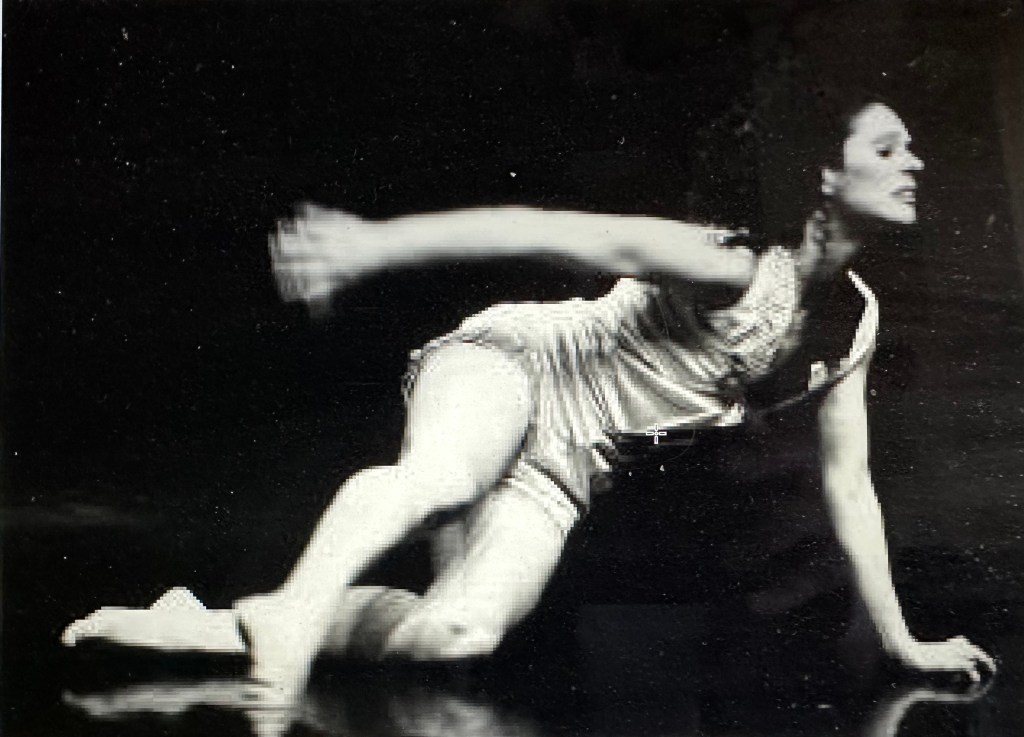
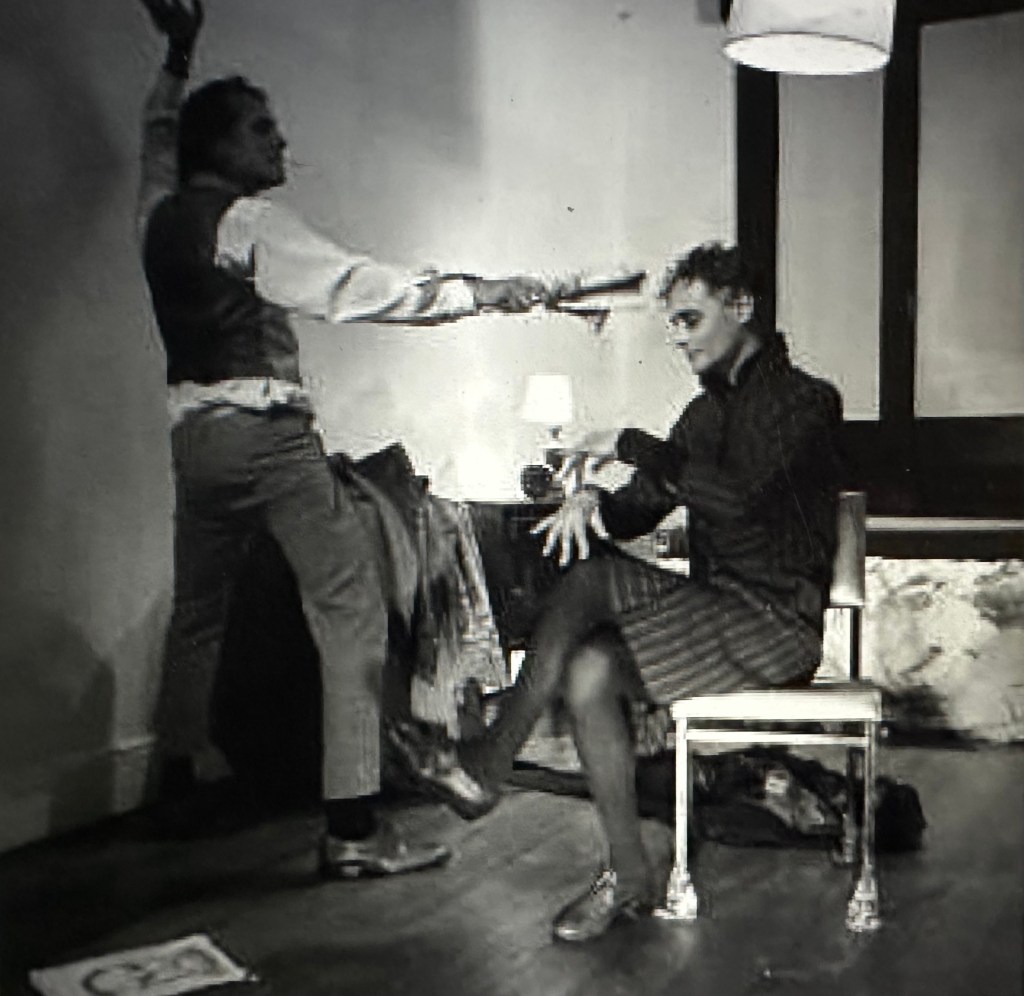
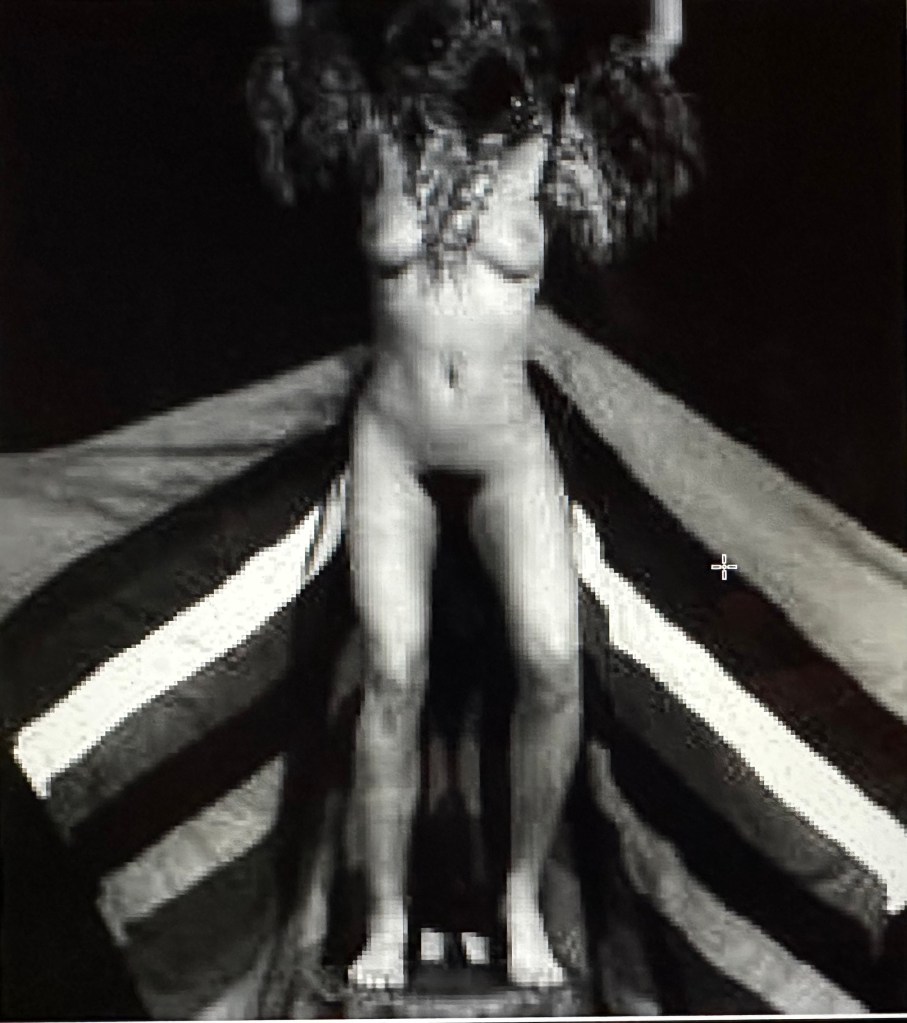

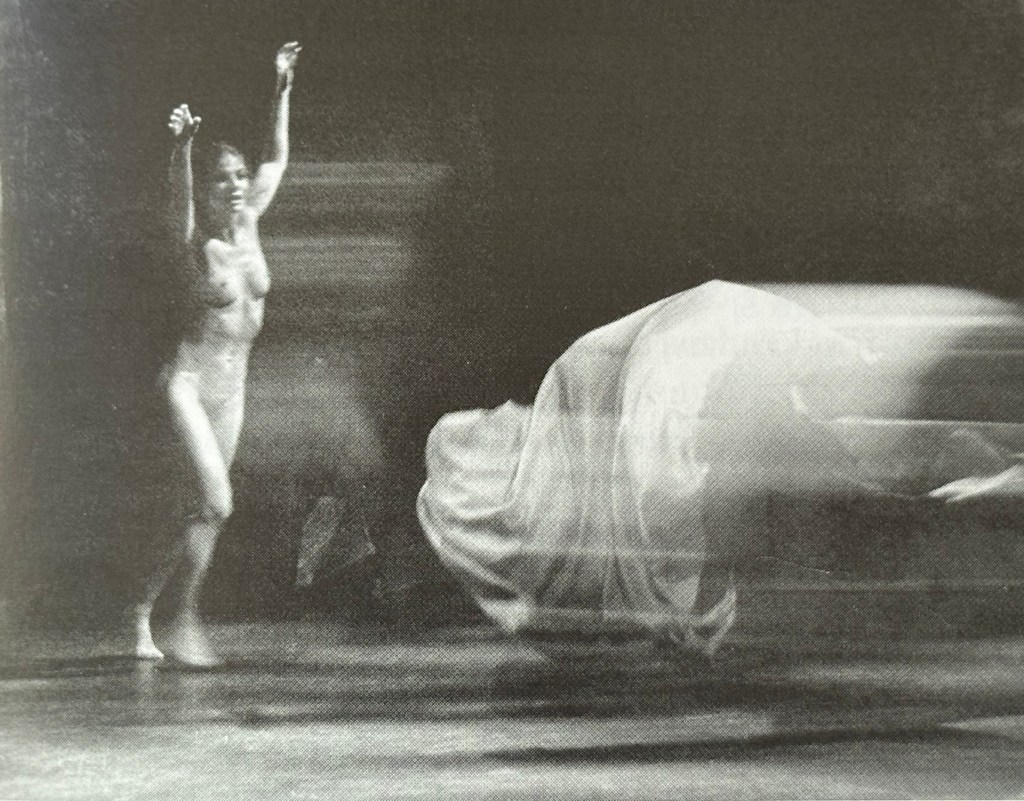
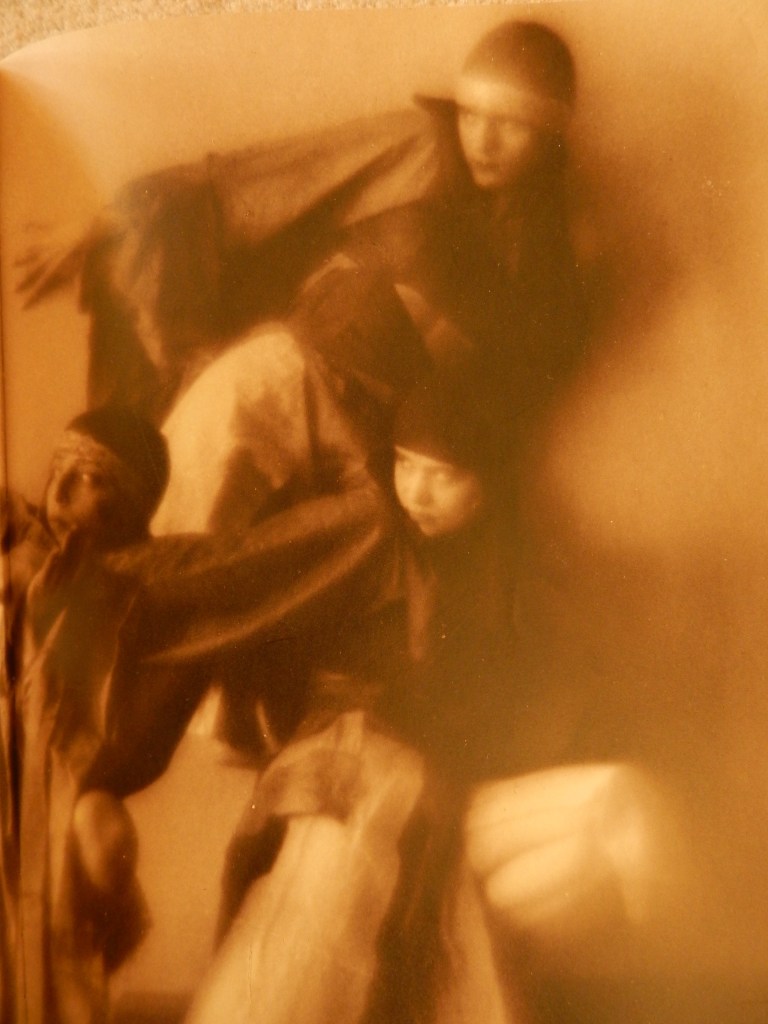
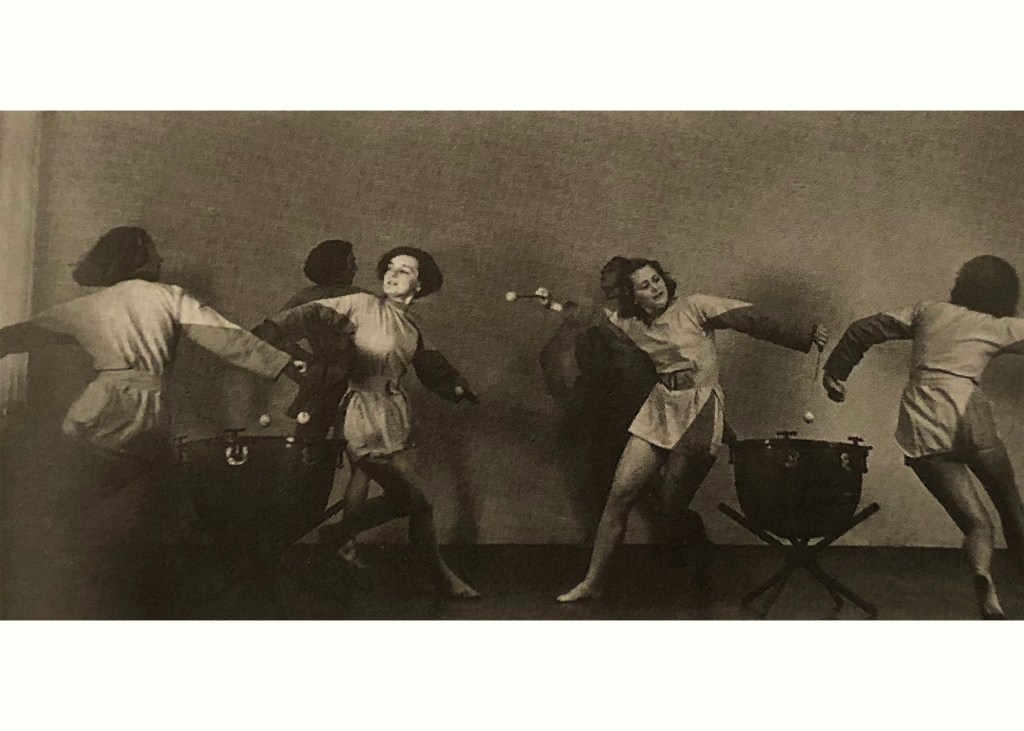
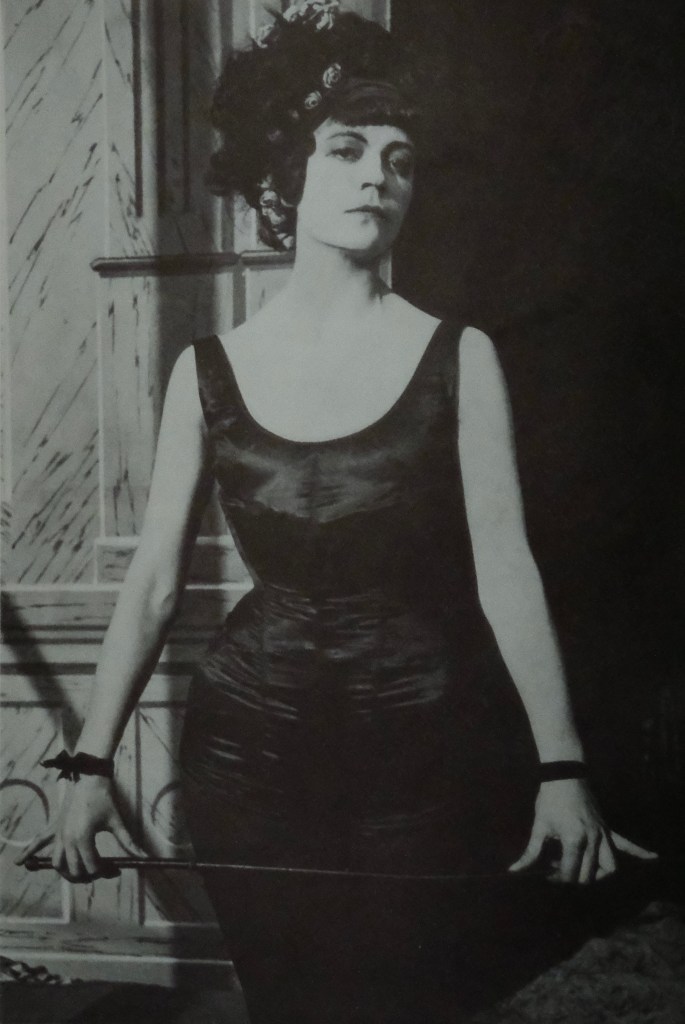
 Karl Toepfer